

Here's something you might be interested in.
Ask a Hipster — Advice you didn't know you needed
Big Screen — Movie commentary
Blurt — Music's inside track
Booze News — San Diego spirits
Classical Music — Immortal beauty
Classifieds — Free and easy
Close to Home — What it’s like on the street where you live
Cover Stories — Front-page features
Drinks All Around — Bartenders' drink recipes
Excerpts — Literary and spiritual excerpts
Feast! — Food & drink reviews
Feature Stories — Local news & stories
Fishing Report — What’s getting hooked from ship and shore
From the Archives — Spotlight on the past
Golden Dreams — Talk of the town
The Gonzo Report — Making the musical scene, or at least reporting from it
Letters — Our inbox
Movies@Home — Local movie buffs share favorites
Movie Reviews — Our critics' picks and pans
Musician Interviews — Up close with local artists
Neighborhood News from Stringers — Hyperlocal news
News Ticker — News & politics
Obermeyer — San Diego politics illustrated
Outdoors — Weekly changes in flora and fauna
Overheard in San Diego — Eavesdropping illustrated
Poetry — The old and the new
Reader Travel — Travel section built by travelers
Reading — The hunt for intellectuals
Roam-O-Rama — SoCal's best hiking/biking trails
San Diego Beer — Inside San Diego suds
SD on the QT — Almost factual news
Sheep and Goats — Places of worship
Special Issues — The best of
Street Style — San Diego streets have style
Surf Diego — Real stories from those braving the waves
Theater — On stage in San Diego this week
Tin Fork — Silver spoon alternative
Under the Radar — Matt Potter's undercover work
Unforgettable — Long-ago San Diego
Unreal Estate — San Diego's priciest pads
Your Week — Daily event picks
John Perkins' hunt for feral art
"Whatever else we are doing, we will make art."
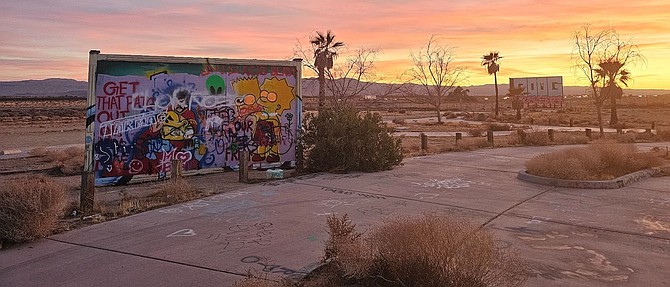
“The art that speaks to me most,” says John Perkins, "is the art that seems most in tune with the fact that humans just have an art-making instinct. Whatever else we are doing, we will make art." Perkins first realized this years ago at Burning Man, from which he returned with a passion for what he calls “feral art," a term he borrows from LA Lowbrow artist Robert Williams.
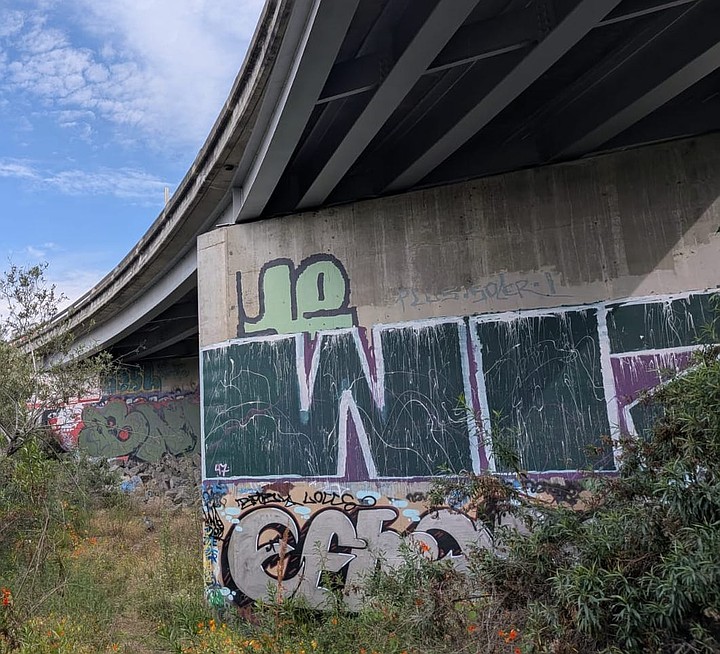
Here in San Diego and its environs, Perkins finds feral art — where else? — during his exploration of the city's open spaces, its concrete canvases, its underground tunnels, its abandoned displays. It's not all edifying. “There’s going to be a lot of profanity and a lot of [obscenity], but even this has an august pedigree.” What he means here is that the ancient practice of graffiti has apparently always involved humor, some of it puerile. And it's not all profound; sometimes, even often, it arises from the simple wish to see one’s name written somewhere. Consider some of the 12th-century runic graffiti from the ancient site of Maeshowe on Orkney:
That mound-breaker of a man, Vigleikr, carved these runes high up.
Ingigerth is the most beautiful of all women.
These runes were carved by the man most skilled in runes in the western ocean.
Generally speaking, I detest graffiti, and I’m honest with Perkins about this. He grants that not crazy about all of it, either. But he does think it rates better than the consistent bombardment he undergoes from advertising, over which he has almost as little control over as the illegally produced art we’re talking about. “The human expression to say ‘I was here’ — that, I have a lot more affection for, even at the risk of it being slightly destructive, than the entire heft of advertising, which is just, ‘Feel bad about where you are so that you buy something.'”
Perkins faces some challenges and limitations to his efforts at exploration. San Diego’s homelessness crisis has led to the occupation of many formerly empty outdoor spaces. Perkins says that he does not like to stumble into someone’s living room, and that this can happen a lot nowadays. He adds, without a hint of mockery, that these “living rooms will also belong to people who are often following very different hygiene protocols." All that means no trespassing through someone’s current home place.
Another rule: he will not break anything or break into anything. Because he is “a very large man,” that means there are some constraints regarding where he can comfortably fit. And being a father means he wants to avoid anything too dangerous. He describes himself as a “neophyte” and “more risk-averse” than some explorers, but adds that he has been “a mile-ish underground”, which is about a mile farther than I would ever like to be.
His first local foray began in Devil’s Sandbox Open Space Park (32.7682620, -117.1124098), from which he accessed a storm drain. It was extremely dark, inhabited by at least one wailing bat, wet on the ground, and kept going and going. Black goop of some kind of (melted?) plastic material hung, stalactite-like, from the top of the tunnel, over which hundreds of cars passed in surprising quiet. In Perkins’ way of seeing it, here was “an entire alien ecosystem that’s not built for you. It reminds me a little bit of, there’s this whole Lovecraftean notion of things at a Cyclopean scale… This wasn’t built for me. I get that sometimes around large-scale infrastructure.”
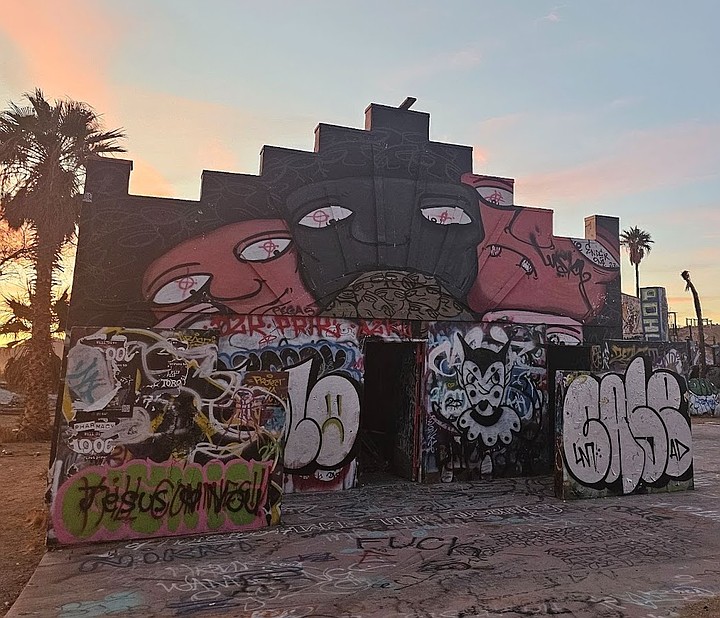
This site, and the others he tells me about, all have this in common: their aesthetic interest comes from a combination of engineering, human embellishment, decay, and the passage of time. The intersecting of the personal and the public. One or more of these elements may be more present than others. In this case, his interest was not in graffiti, but in the place itself, its structure. The dark tunnel and its secret world had their own allure.
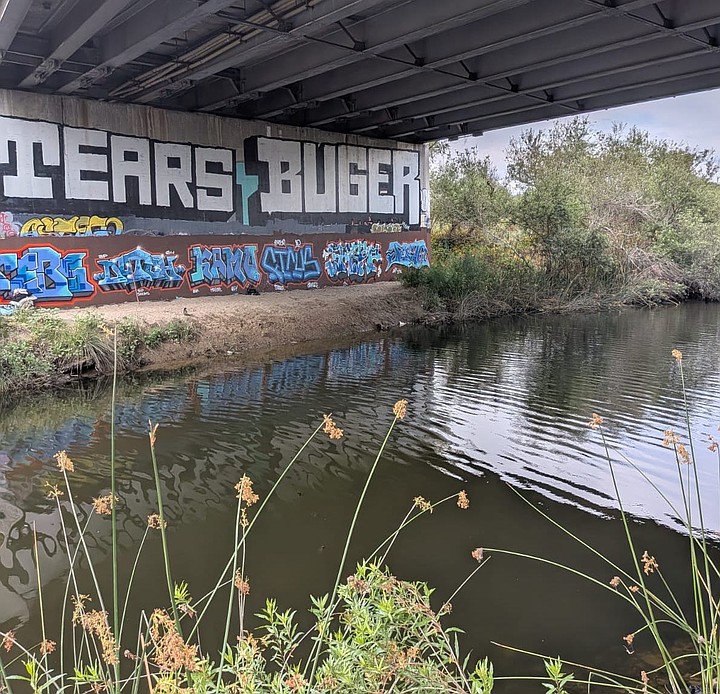
That was his first spot, but he recommends the Morena Underpass (32.7611700,-117.1976980) as a better option for the curious beginning urban explorer. There is nothing underground, and you can stay on trails of one kind or another. “It's kind of like Chicano Park, but less official. And there’s a whole update cycle.” I ask what it means, and he explains that an unspoken pact seems to be at work here that involves leaving a completed work up for some weeks or months before painting over it completely and starting something new — not entirely unlike the rotating of a museum exhibition.
Here's something you might be interested in.
John Perkins' hunt for feral art
"Whatever else we are doing, we will make art."

John Perkins' hunt for feral art
"Whatever else we are doing, we will make art."
“The art that speaks to me most,” says John Perkins, "is the art that seems most in tune with the fact that humans just have an art-making instinct. Whatever else we are doing, we will make art." Perkins first realized this years ago at Burning Man, from which he returned with a passion for what he calls “feral art," a term he borrows from LA Lowbrow artist Robert Williams.
Here in San Diego and its environs, Perkins finds feral art — where else? — during his exploration of the city's open spaces, its concrete canvases, its underground tunnels, its abandoned displays. It's not all edifying. “There’s going to be a lot of profanity and a lot of [obscenity], but even this has an august pedigree.” What he means here is that the ancient practice of graffiti has apparently always involved humor, some of it puerile. And it's not all profound; sometimes, even often, it arises from the simple wish to see one’s name written somewhere. Consider some of the 12th-century runic graffiti from the ancient site of Maeshowe on Orkney:
That mound-breaker of a man, Vigleikr, carved these runes high up.
Ingigerth is the most beautiful of all women.
These runes were carved by the man most skilled in runes in the western ocean.
Generally speaking, I detest graffiti, and I’m honest with Perkins about this. He grants that not crazy about all of it, either. But he does think it rates better than the consistent bombardment he undergoes from advertising, over which he has almost as little control over as the illegally produced art we’re talking about. “The human expression to say ‘I was here’ — that, I have a lot more affection for, even at the risk of it being slightly destructive, than the entire heft of advertising, which is just, ‘Feel bad about where you are so that you buy something.'”
Perkins faces some challenges and limitations to his efforts at exploration. San Diego’s homelessness crisis has led to the occupation of many formerly empty outdoor spaces. Perkins says that he does not like to stumble into someone’s living room, and that this can happen a lot nowadays. He adds, without a hint of mockery, that these “living rooms will also belong to people who are often following very different hygiene protocols." All that means no trespassing through someone’s current home place.
Another rule: he will not break anything or break into anything. Because he is “a very large man,” that means there are some constraints regarding where he can comfortably fit. And being a father means he wants to avoid anything too dangerous. He describes himself as a “neophyte” and “more risk-averse” than some explorers, but adds that he has been “a mile-ish underground”, which is about a mile farther than I would ever like to be.
His first local foray began in Devil’s Sandbox Open Space Park (32.7682620, -117.1124098), from which he accessed a storm drain. It was extremely dark, inhabited by at least one wailing bat, wet on the ground, and kept going and going. Black goop of some kind of (melted?) plastic material hung, stalactite-like, from the top of the tunnel, over which hundreds of cars passed in surprising quiet. In Perkins’ way of seeing it, here was “an entire alien ecosystem that’s not built for you. It reminds me a little bit of, there’s this whole Lovecraftean notion of things at a Cyclopean scale… This wasn’t built for me. I get that sometimes around large-scale infrastructure.”
This site, and the others he tells me about, all have this in common: their aesthetic interest comes from a combination of engineering, human embellishment, decay, and the passage of time. The intersecting of the personal and the public. One or more of these elements may be more present than others. In this case, his interest was not in graffiti, but in the place itself, its structure. The dark tunnel and its secret world had their own allure.
That was his first spot, but he recommends the Morena Underpass (32.7611700,-117.1976980) as a better option for the curious beginning urban explorer. There is nothing underground, and you can stay on trails of one kind or another. “It's kind of like Chicano Park, but less official. And there’s a whole update cycle.” I ask what it means, and he explains that an unspoken pact seems to be at work here that involves leaving a completed work up for some weeks or months before painting over it completely and starting something new — not entirely unlike the rotating of a museum exhibition.
Comments