

Here's something you might be interested in.
Ask a Hipster — Advice you didn't know you needed
Big Screen — Movie commentary
Blurt — Music's inside track
Booze News — San Diego spirits
Classical Music — Immortal beauty
Classifieds — Free and easy
Close to Home — What it’s like on the street where you live
Cover Stories — Front-page features
Drinks All Around — Bartenders' drink recipes
Excerpts — Literary and spiritual excerpts
Feast! — Food & drink reviews
Feature Stories — Local news & stories
Fishing Report — What’s getting hooked from ship and shore
From the Archives — Spotlight on the past
Golden Dreams — Talk of the town
The Gonzo Report — Making the musical scene, or at least reporting from it
Letters — Our inbox
Movies@Home — Local movie buffs share favorites
Movie Reviews — Our critics' picks and pans
Musician Interviews — Up close with local artists
Neighborhood News from Stringers — Hyperlocal news
News Ticker — News & politics
Obermeyer — San Diego politics illustrated
Outdoors — Weekly changes in flora and fauna
Overheard in San Diego — Eavesdropping illustrated
Poetry — The old and the new
Reader Travel — Travel section built by travelers
Reading — The hunt for intellectuals
Roam-O-Rama — SoCal's best hiking/biking trails
San Diego Beer — Inside San Diego suds
SD on the QT — Almost factual news
Sheep and Goats — Places of worship
Special Issues — The best of
Street Style — San Diego streets have style
Surf Diego — Real stories from those braving the waves
Theater — On stage in San Diego this week
Tin Fork — Silver spoon alternative
Under the Radar — Matt Potter's undercover work
Unforgettable — Long-ago San Diego
Unreal Estate — San Diego's priciest pads
Your Week — Daily event picks
Black Oak highlights our higher mountains, peak viewing conditions for the Orionid shower
New moon is on Tuesday
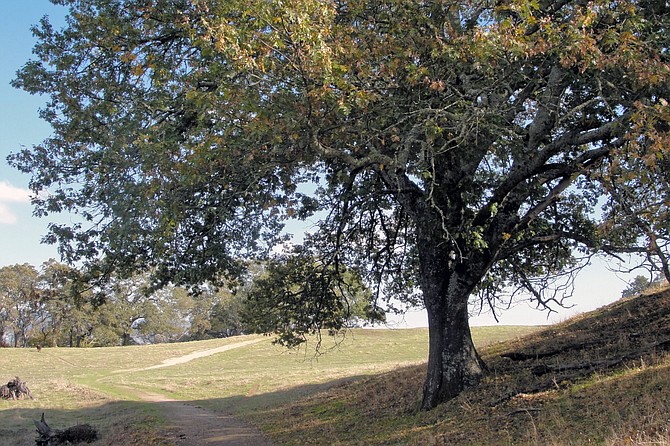
California Black Oak (Quercus kelloggii) is also known as Kellogg Oak.
The Tawny Hues Of The Black Oak Tree's Foliage are just beginning to highlight the slopes of San Diego County’s higher mountains. Named for the dark coloring of its bark, especially when wet, the black oak is the only deciduous oak native to the county. Associating with pines, firs, cedars, various evergreen oaks, and occasionally chaparral, the black oak lends true autumn coloring to mountain ranges such as the Laguna and Palomar mountains.
The New Moon Arrives On Tuesday, October 21 and will be only 11% visible by the week’s end. The sunrise and sunset continue to get closer together until Daylight Savings Time ends on November 2. The sun rises at 6:56 am today (Oct 20) and sets at 6:09 pm. The daylength will be under 11 hours by the end of the month.
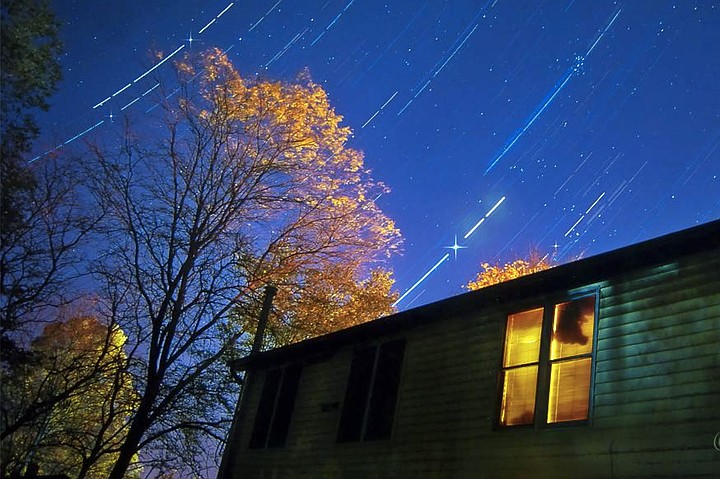
This year's shower will fall on the new moon, creating optimal viewing conditions.
The Orionid Meteor Shower, one of the year’s five best annual showers, peaks on the morning of Tuesday, October 21. The new full moon will provide ideal viewing all night long. With these conditions, you should see a meteor every few minutes, and possibly more during the most favorable hours of 4 am to 6 am. The Orionids seem to radiate from the constellation of Orion, hence their name.
Here's something you might be interested in.
Black Oak highlights our higher mountains, peak viewing conditions for the Orionid shower
New moon is on Tuesday

Black Oak highlights our higher mountains, peak viewing conditions for the Orionid shower
New moon is on Tuesday
California Black Oak (Quercus kelloggii) is also known as Kellogg Oak.
The Tawny Hues Of The Black Oak Tree's Foliage are just beginning to highlight the slopes of San Diego County’s higher mountains. Named for the dark coloring of its bark, especially when wet, the black oak is the only deciduous oak native to the county. Associating with pines, firs, cedars, various evergreen oaks, and occasionally chaparral, the black oak lends true autumn coloring to mountain ranges such as the Laguna and Palomar mountains.
The New Moon Arrives On Tuesday, October 21 and will be only 11% visible by the week’s end. The sunrise and sunset continue to get closer together until Daylight Savings Time ends on November 2. The sun rises at 6:56 am today (Oct 20) and sets at 6:09 pm. The daylength will be under 11 hours by the end of the month.
This year's shower will fall on the new moon, creating optimal viewing conditions.
The Orionid Meteor Shower, one of the year’s five best annual showers, peaks on the morning of Tuesday, October 21. The new full moon will provide ideal viewing all night long. With these conditions, you should see a meteor every few minutes, and possibly more during the most favorable hours of 4 am to 6 am. The Orionids seem to radiate from the constellation of Orion, hence their name.
Comments