

Here's something you might be interested in.
Ask a Hipster — Advice you didn't know you needed
Big Screen — Movie commentary
Blurt — Music's inside track
Booze News — San Diego spirits
Classical Music — Immortal beauty
Classifieds — Free and easy
Close to Home — What it’s like on the street where you live
Cover Stories — Front-page features
Drinks All Around — Bartenders' drink recipes
Excerpts — Literary and spiritual excerpts
Feast! — Food & drink reviews
Feature Stories — Local news & stories
Fishing Report — What’s getting hooked from ship and shore
From the Archives — Spotlight on the past
Golden Dreams — Talk of the town
The Gonzo Report — Making the musical scene, or at least reporting from it
Letters — Our inbox
Movies@Home — Local movie buffs share favorites
Movie Reviews — Our critics' picks and pans
Musician Interviews — Up close with local artists
Neighborhood News from Stringers — Hyperlocal news
News Ticker — News & politics
Obermeyer — San Diego politics illustrated
Outdoors — Weekly changes in flora and fauna
Overheard in San Diego — Eavesdropping illustrated
Poetry — The old and the new
Reader Travel — Travel section built by travelers
Reading — The hunt for intellectuals
Roam-O-Rama — SoCal's best hiking/biking trails
San Diego Beer — Inside San Diego suds
SD on the QT — Almost factual news
Sheep and Goats — Places of worship
Special Issues — The best of
Street Style — San Diego streets have style
Surf Diego — Real stories from those braving the waves
Theater — On stage in San Diego this week
Tin Fork — Silver spoon alternative
Under the Radar — Matt Potter's undercover work
Unforgettable — Long-ago San Diego
Unreal Estate — San Diego's priciest pads
Your Week — Daily event picks
"Rainbow Season" is here, acorns drop as autumn color wraps up
Great viewing conditions for Leonid meteor shower tonight

Rainbow over the Children's Pool, La Jolla
“Rainbow Season” Arrives With The First Rains Of Late Fall. Scattered showers are best for rainbow watching: sunlight refracting and reflecting through the raindrops causes two bows to appear — an intense circular arc at 42˚ and a bigger but weaker arc at 51˚ from the antisolar point (the point in the sky diametrically opposed to the sun’s position). From November through mid-February, the sun never gets higher than 42˚ above the horizon as seen from San Diego, so (rain and sunlight permitting) the brighter of the two arcs may appear above the horizon at any time of day. In spring and summer, rainbows are never seen in the sky around midday because the sun is too high — and the antisolar point is too low.
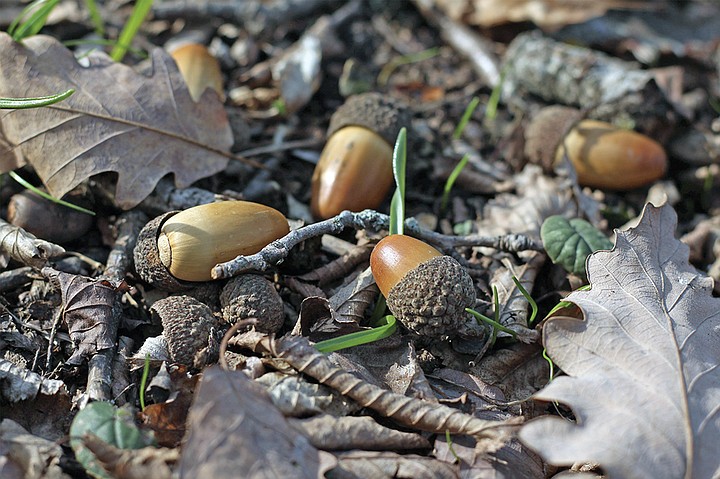
Woodpeckers are stuffing acorns into pine trees.
Acorn Dropping Reaches A Crescendo early this month in the Cuyamaca, Laguna, and Palomar Mountains. Wiry scrub oaks, massive canyon live oaks, and the golden-leaved black oaks all contribute to the growing collection of acorns littering the ground. Acorn woodpeckers are busy stuffing acorns into the small holes they drill into the bark of pine trees. Beneath the trees, the browns of bracken fern and the reds of poison oak are among the last expressions of autumn color we’ll see in the mountains this year.
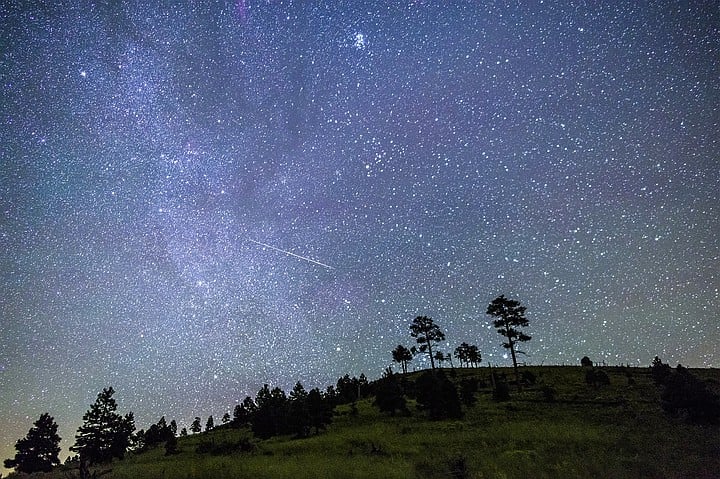
The Annual Leonid Meteor Shower Peaks on November 17–18. This moderate meteor shower should average 10 to 15 meteors per hour. The sky will be quite dark as the moon will be a waxing descent and only 5% full and viewing conditions will improve drastically after midnight. If you are watching for shooting stars, look toward the part of the night sky furthest away from the Moon. All Leonid meteors appear to radiate from the constellation of Leo, which currently lies high in the south at dawn.
Here's something you might be interested in.
"Rainbow Season" is here, acorns drop as autumn color wraps up
Great viewing conditions for Leonid meteor shower tonight

"Rainbow Season" is here, acorns drop as autumn color wraps up
Great viewing conditions for Leonid meteor shower tonight
Rainbow over the Children's Pool, La Jolla
“Rainbow Season” Arrives With The First Rains Of Late Fall. Scattered showers are best for rainbow watching: sunlight refracting and reflecting through the raindrops causes two bows to appear — an intense circular arc at 42˚ and a bigger but weaker arc at 51˚ from the antisolar point (the point in the sky diametrically opposed to the sun’s position). From November through mid-February, the sun never gets higher than 42˚ above the horizon as seen from San Diego, so (rain and sunlight permitting) the brighter of the two arcs may appear above the horizon at any time of day. In spring and summer, rainbows are never seen in the sky around midday because the sun is too high — and the antisolar point is too low.
Woodpeckers are stuffing acorns into pine trees.
Acorn Dropping Reaches A Crescendo early this month in the Cuyamaca, Laguna, and Palomar Mountains. Wiry scrub oaks, massive canyon live oaks, and the golden-leaved black oaks all contribute to the growing collection of acorns littering the ground. Acorn woodpeckers are busy stuffing acorns into the small holes they drill into the bark of pine trees. Beneath the trees, the browns of bracken fern and the reds of poison oak are among the last expressions of autumn color we’ll see in the mountains this year.
The Annual Leonid Meteor Shower Peaks on November 17–18. This moderate meteor shower should average 10 to 15 meteors per hour. The sky will be quite dark as the moon will be a waxing descent and only 5% full and viewing conditions will improve drastically after midnight. If you are watching for shooting stars, look toward the part of the night sky furthest away from the Moon. All Leonid meteors appear to radiate from the constellation of Leo, which currently lies high in the south at dawn.
Comments