

Here's something you might be interested in.
Ask a Hipster — Advice you didn't know you needed
Big Screen — Movie commentary
Blurt — Music's inside track
Booze News — San Diego spirits
Classical Music — Immortal beauty
Classifieds — Free and easy
Close to Home — What it’s like on the street where you live
Cover Stories — Front-page features
Drinks All Around — Bartenders' drink recipes
Excerpts — Literary and spiritual excerpts
Feast! — Food & drink reviews
Feature Stories — Local news & stories
Fishing Report — What’s getting hooked from ship and shore
From the Archives — Spotlight on the past
Golden Dreams — Talk of the town
The Gonzo Report — Making the musical scene, or at least reporting from it
Letters — Our inbox
Movies@Home — Local movie buffs share favorites
Movie Reviews — Our critics' picks and pans
Musician Interviews — Up close with local artists
Neighborhood News from Stringers — Hyperlocal news
News Ticker — News & politics
Obermeyer — San Diego politics illustrated
Outdoors — Weekly changes in flora and fauna
Overheard in San Diego — Eavesdropping illustrated
Poetry — The old and the new
Reader Travel — Travel section built by travelers
Reading — The hunt for intellectuals
Roam-O-Rama — SoCal's best hiking/biking trails
San Diego Beer — Inside San Diego suds
SD on the QT — Almost factual news
Sheep and Goats — Places of worship
Special Issues — The best of
Street Style — San Diego streets have style
Surf Diego — Real stories from those braving the waves
Theater — On stage in San Diego this week
Tin Fork — Silver spoon alternative
Under the Radar — Matt Potter's undercover work
Unforgettable — Long-ago San Diego
Unreal Estate — San Diego's priciest pads
Your Week — Daily event picks
Fall birds are already arriving, Perseid meteor shower peaks tonight
Katydids are making noise during warm nights
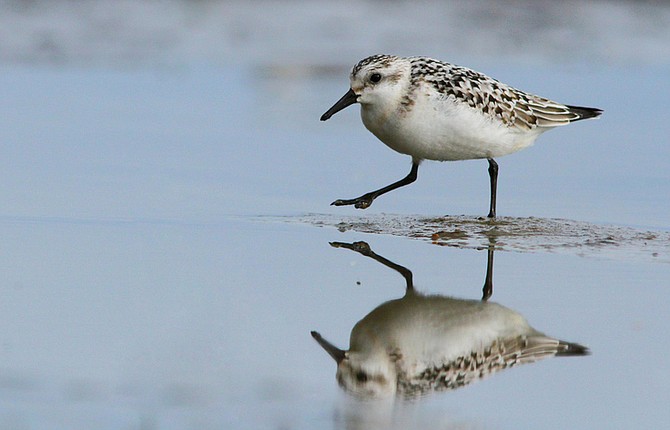
juvenile sanderling, Calidris alba
Shore Birds Migrating Southward are beginning to arrive in San Diego County. Through fall and winter, various ducks, sandpipers, and plovers will be spotted in increased numbers in the county’s coastal wetlands. Best bird-watching spots include the Tijuana River estuary, south San Diego Bay, the San Diego River flood channel, Peñasquitos Lagoon, San Elijo Lagoon, Batiquitos Lagoon, and Buena Vista Lagoon.
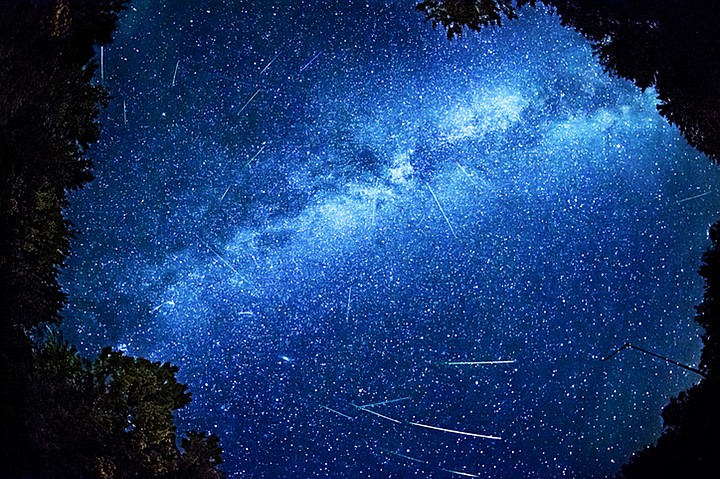
Perseid Meteor Shower, August 12, 2013
The Perseid Meteor Shower, the best known of the many meteor displays that return annually, will be peaking August 11-13, but will take place under poor conditions this year due to bright moonlight. Because the moon was just full on Saturday, it will still be nearly full just into its waning gibbous phase. But during the hours between 1 am and dawn (4:30 am) on the mornings of Monday, August 11, Tuesday, August 12, and Wednesday, August 13, 50-70 meteors per hour should be visible streaking across the sky — as long as that sky is clear of clouds and unobstructed by foreground buildings or landscaping. When observed in past years under moonless conditions, up to 100 meteors per hour have been seen. Trekking to the mountains or desert to get a better view far from city lights may yield only marginal improvements this year, because the sky will already be brightened by the moon’s glare. Instead, try keeping your back to the moon to help improve conditions. For best viewing results, lie in a comfortable position facing northeast, under an open sky. Strong coffee is advised.
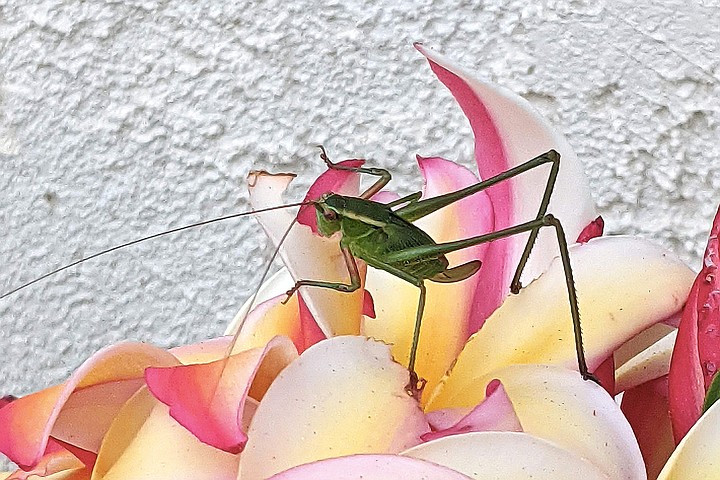
A Mexican Bush Katydid munches on a plumeria flower.
Katydids Are Singing Quite Loudly this time of year. Nocturnal and most active in the warmer months, male katydids vibrate their wings together in a process called stridulation to establish territory and attract mates. Their call has been described as sounding like “Katy-did, Katy-didn’t” looped over and over, whereas grasshoppers make a short, chirping sound. They are often confused with grasshoppers, but katydids have antennae which are longer than their bodies, while grasshoppers have much shorter antennae. Katydids are also nocturnal omnivores, while grasshoppers are diurnal herbivores.
Here's something you might be interested in.
Fall birds are already arriving, Perseid meteor shower peaks tonight
Katydids are making noise during warm nights

Fall birds are already arriving, Perseid meteor shower peaks tonight
Katydids are making noise during warm nights
juvenile sanderling, Calidris alba
Shore Birds Migrating Southward are beginning to arrive in San Diego County. Through fall and winter, various ducks, sandpipers, and plovers will be spotted in increased numbers in the county’s coastal wetlands. Best bird-watching spots include the Tijuana River estuary, south San Diego Bay, the San Diego River flood channel, Peñasquitos Lagoon, San Elijo Lagoon, Batiquitos Lagoon, and Buena Vista Lagoon.
Perseid Meteor Shower, August 12, 2013
The Perseid Meteor Shower, the best known of the many meteor displays that return annually, will be peaking August 11-13, but will take place under poor conditions this year due to bright moonlight. Because the moon was just full on Saturday, it will still be nearly full just into its waning gibbous phase. But during the hours between 1 am and dawn (4:30 am) on the mornings of Monday, August 11, Tuesday, August 12, and Wednesday, August 13, 50-70 meteors per hour should be visible streaking across the sky — as long as that sky is clear of clouds and unobstructed by foreground buildings or landscaping. When observed in past years under moonless conditions, up to 100 meteors per hour have been seen. Trekking to the mountains or desert to get a better view far from city lights may yield only marginal improvements this year, because the sky will already be brightened by the moon’s glare. Instead, try keeping your back to the moon to help improve conditions. For best viewing results, lie in a comfortable position facing northeast, under an open sky. Strong coffee is advised.
A Mexican Bush Katydid munches on a plumeria flower.
Katydids Are Singing Quite Loudly this time of year. Nocturnal and most active in the warmer months, male katydids vibrate their wings together in a process called stridulation to establish territory and attract mates. Their call has been described as sounding like “Katy-did, Katy-didn’t” looped over and over, whereas grasshoppers make a short, chirping sound. They are often confused with grasshoppers, but katydids have antennae which are longer than their bodies, while grasshoppers have much shorter antennae. Katydids are also nocturnal omnivores, while grasshoppers are diurnal herbivores.
Comments