

Here's something you might be interested in.
Ask a Hipster — Advice you didn't know you needed
Big Screen — Movie commentary
Blurt — Music's inside track
Booze News — San Diego spirits
Classical Music — Immortal beauty
Classifieds — Free and easy
Close to Home — What it’s like on the street where you live
Cover Stories — Front-page features
Drinks All Around — Bartenders' drink recipes
Excerpts — Literary and spiritual excerpts
Feast! — Food & drink reviews
Feature Stories — Local news & stories
Fishing Report — What’s getting hooked from ship and shore
From the Archives — Spotlight on the past
Golden Dreams — Talk of the town
The Gonzo Report — Making the musical scene, or at least reporting from it
Letters — Our inbox
Movies@Home — Local movie buffs share favorites
Movie Reviews — Our critics' picks and pans
Musician Interviews — Up close with local artists
Neighborhood News from Stringers — Hyperlocal news
News Ticker — News & politics
Obermeyer — San Diego politics illustrated
Outdoors — Weekly changes in flora and fauna
Overheard in San Diego — Eavesdropping illustrated
Poetry — The old and the new
Reader Travel — Travel section built by travelers
Reading — The hunt for intellectuals
Roam-O-Rama — SoCal's best hiking/biking trails
San Diego Beer — Inside San Diego suds
SD on the QT — Almost factual news
Sheep and Goats — Places of worship
Special Issues — The best of
Street Style — San Diego streets have style
Surf Diego — Real stories from those braving the waves
Theater — On stage in San Diego this week
Tin Fork — Silver spoon alternative
Under the Radar — Matt Potter's undercover work
Unforgettable — Long-ago San Diego
Unreal Estate — San Diego's priciest pads
Your Week — Daily event picks
Interview: El Cajon's own, cinematographer Adam Lee
Meet Adam and director Kelsey Taylor this weekend
Happy accident.
Local boy makes good! Say hello to El Cajon’s favorite cinematographic son, Adam Lee. Not only will you be able to watch as Adam casts an atmospheric spell over the Pacific Northwest in To Kill a Wolf, you’ll be able to meet him — along with writer and director Kelsey Taylor — at the 4 pm screenings this Saturday and Sunday at Edwards Mira Mesa. We watch enough movies at home. It’s time to get off our couches and see a film that demands the big screen treatment!
Read my review here.
Scott Marks: Let's get the essentials out of the way first. You hail from these parts.
Adam Lee: I was born and raised in El Cajon. I went to high school in East county and was kind of affiliated with the Asian Film Foundation. After high school, I left for LA to go to film school. At this point, I've spent as much time in Los Angeles as I have in San Diego.
When in San Diego, what's your favorite place for Mexican food?
I have a number of spots in East County. Alberto's in Rancho Santa Fe near my old high school is a big one.
Growing up, what film influenced you the most?
I was a kid when I first saw The Good, The Bad and The Ugly and it really stuck in my craw. There’s something about the way it was put together, the sequencing of shots in a particular order, and the alchemy of the two that really interested me. This was before I knew what a cinematographer was. The film has always stuck with me and has instilled in me a great love of filmmaking.
You and director Kelsey Taylor have collaborated on dozens of shorts. Is there still a market for shorts and if so where can we see them?
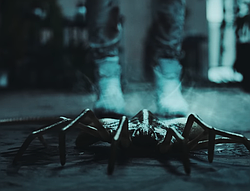
Kelsey and I went to film school together. We've kind of grown up making films together. The shorts world is sort of our playground to figure out what it's like putting things together, working on set. Many of them exist online in different capacities, some more hidden than others. Alien: Specimen is readily available on the Alien Anthology page. It was a lot of fun to step into that cinematic universe. We had a modest budget, relatively speaking, and it was great to play in that playground. The short we did after that, Alone in Tombstone, was a testing ground for our feature. We wanted to see what we could do with a limited crew. Oddly enough, it came about through Southwest Airlines. It was sort of a branded content short; it didn't really have anything to do with Southwest Airlines other than they were sponsoring a film about going to a different place. Going back to The Good, The Bad and The Ugly, it was a modern Western set in the town of Tombstone. So, yeah, the internet is littered with our shorts.
Video:
Short: ALIEN: SPECIMEN
What possessed you to shoot To Kill a Wolf in Academy ratio? Don't you want people to see it?
(Laughing) That's a great question. It's ironic, the film is literally playing in theaters right now in that aspect ratio. When we shot the film, we didn't honestly ever imagine it would get a theatrical release. So many independent films of our scale never get shown that way. We wound up going with that aspect ratio because they liked how boxy it felt and how storybookish it felt. We spent two days shooting in different aspect ratios. There was something about that ratio that felt right each time we saw it. We went with the change, threw our fates up to the movie gods and just did it. Seeing it in a theater, there's something about that aspect ratio. I didn't realize how the verticality of the trees would play out on such a grand scale in the theater. It's also the perfect size for shooting human faces in close up.
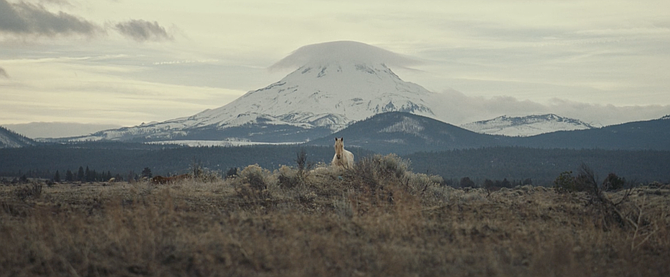
There's a shot when they're riding to Grandma's house that I wanted to ask you about. It's a white horse center frame with a mountain behind it. I'm sure you had a lot of B-roll to choose from. Why did the shot make it?
Kelsey and I went out two weeks before we started shooting. We purchased a car we were going to use and shot a lot on highway 97 that travels the state of Oregon. We had driven that road a lot and we knew it well. There were a few places where we wanted to capture the feeling of Central Oregon. We've seen horses in the past and it wasn't as if we were looking to shoot a horse. We pulled off, and there was something about seeing the mountains and that horse. We had forgotten about it until during the edit. There's something about that shot that feels so right. The agriculture and the farming seems to sums up that area perfectly. To be honest, it was a happy accident.
Here's something you might be interested in.
Interview: El Cajon's own, cinematographer Adam Lee
Meet Adam and director Kelsey Taylor this weekend

Interview: El Cajon's own, cinematographer Adam Lee
Meet Adam and director Kelsey Taylor this weekend
Happy accident.
Local boy makes good! Say hello to El Cajon’s favorite cinematographic son, Adam Lee. Not only will you be able to watch as Adam casts an atmospheric spell over the Pacific Northwest in To Kill a Wolf, you’ll be able to meet him — along with writer and director Kelsey Taylor — at the 4 pm screenings this Saturday and Sunday at Edwards Mira Mesa. We watch enough movies at home. It’s time to get off our couches and see a film that demands the big screen treatment!
Read my review here.
Scott Marks: Let's get the essentials out of the way first. You hail from these parts.
Adam Lee: I was born and raised in El Cajon. I went to high school in East county and was kind of affiliated with the Asian Film Foundation. After high school, I left for LA to go to film school. At this point, I've spent as much time in Los Angeles as I have in San Diego.
When in San Diego, what's your favorite place for Mexican food?
I have a number of spots in East County. Alberto's in Rancho Santa Fe near my old high school is a big one.
Growing up, what film influenced you the most?
I was a kid when I first saw The Good, The Bad and The Ugly and it really stuck in my craw. There’s something about the way it was put together, the sequencing of shots in a particular order, and the alchemy of the two that really interested me. This was before I knew what a cinematographer was. The film has always stuck with me and has instilled in me a great love of filmmaking.
You and director Kelsey Taylor have collaborated on dozens of shorts. Is there still a market for shorts and if so where can we see them?
Kelsey and I went to film school together. We've kind of grown up making films together. The shorts world is sort of our playground to figure out what it's like putting things together, working on set. Many of them exist online in different capacities, some more hidden than others. Alien: Specimen is readily available on the Alien Anthology page. It was a lot of fun to step into that cinematic universe. We had a modest budget, relatively speaking, and it was great to play in that playground. The short we did after that, Alone in Tombstone, was a testing ground for our feature. We wanted to see what we could do with a limited crew. Oddly enough, it came about through Southwest Airlines. It was sort of a branded content short; it didn't really have anything to do with Southwest Airlines other than they were sponsoring a film about going to a different place. Going back to The Good, The Bad and The Ugly, it was a modern Western set in the town of Tombstone. So, yeah, the internet is littered with our shorts.
Video:
Short: ALIEN: SPECIMEN
What possessed you to shoot To Kill a Wolf in Academy ratio? Don't you want people to see it?
(Laughing) That's a great question. It's ironic, the film is literally playing in theaters right now in that aspect ratio. When we shot the film, we didn't honestly ever imagine it would get a theatrical release. So many independent films of our scale never get shown that way. We wound up going with that aspect ratio because they liked how boxy it felt and how storybookish it felt. We spent two days shooting in different aspect ratios. There was something about that ratio that felt right each time we saw it. We went with the change, threw our fates up to the movie gods and just did it. Seeing it in a theater, there's something about that aspect ratio. I didn't realize how the verticality of the trees would play out on such a grand scale in the theater. It's also the perfect size for shooting human faces in close up.
There's a shot when they're riding to Grandma's house that I wanted to ask you about. It's a white horse center frame with a mountain behind it. I'm sure you had a lot of B-roll to choose from. Why did the shot make it?
Kelsey and I went out two weeks before we started shooting. We purchased a car we were going to use and shot a lot on highway 97 that travels the state of Oregon. We had driven that road a lot and we knew it well. There were a few places where we wanted to capture the feeling of Central Oregon. We've seen horses in the past and it wasn't as if we were looking to shoot a horse. We pulled off, and there was something about seeing the mountains and that horse. We had forgotten about it until during the edit. There's something about that shot that feels so right. The agriculture and the farming seems to sums up that area perfectly. To be honest, it was a happy accident.
Comments