

Here's something you might be interested in.
Ask a Hipster — Advice you didn't know you needed
Big Screen — Movie commentary
Blurt — Music's inside track
Booze News — San Diego spirits
Classical Music — Immortal beauty
Classifieds — Free and easy
Close to Home — What it’s like on the street where you live
Cover Stories — Front-page features
Drinks All Around — Bartenders' drink recipes
Excerpts — Literary and spiritual excerpts
Feast! — Food & drink reviews
Feature Stories — Local news & stories
Fishing Report — What’s getting hooked from ship and shore
From the Archives — Spotlight on the past
Golden Dreams — Talk of the town
The Gonzo Report — Making the musical scene, or at least reporting from it
Letters — Our inbox
Movies@Home — Local movie buffs share favorites
Movie Reviews — Our critics' picks and pans
Musician Interviews — Up close with local artists
Neighborhood News from Stringers — Hyperlocal news
News Ticker — News & politics
Obermeyer — San Diego politics illustrated
Outdoors — Weekly changes in flora and fauna
Overheard in San Diego — Eavesdropping illustrated
Poetry — The old and the new
Reader Travel — Travel section built by travelers
Reading — The hunt for intellectuals
Roam-O-Rama — SoCal's best hiking/biking trails
San Diego Beer — Inside San Diego suds
SD on the QT — Almost factual news
Sheep and Goats — Places of worship
Special Issues — The best of
Street Style — San Diego streets have style
Surf Diego — Real stories from those braving the waves
Theater — On stage in San Diego this week
Tin Fork — Silver spoon alternative
Under the Radar — Matt Potter's undercover work
Unforgettable — Long-ago San Diego
Unreal Estate — San Diego's priciest pads
Your Week — Daily event picks
Now Playing: TO KILL A WOLF (2024)
Director Kelsey Taylor inverts the old warning against talking to strangers; in this case, the stranger is the only semi-decent person in the piece.
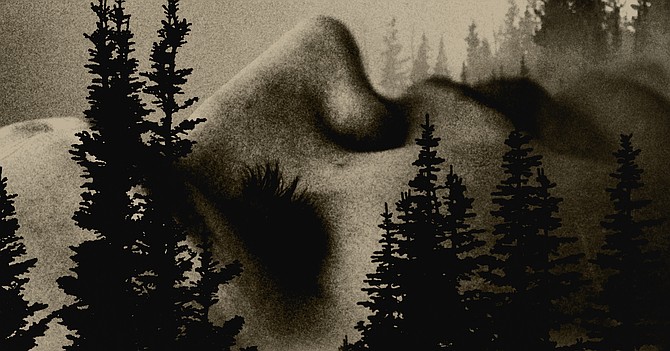
The hills have eyes, all the better to see you with, my dear.
TO KILL A WOLF (2024) Writer & Director: Kelsey Taylor / Cinematographer: Adam Lee (1.33:1) / Design: Juliana Collins / Editor: Dawson Taylor / Composers: Sara Barone & Forest Christenson / Acted by: Ivan Martin, Maddison Brown, Kaitlin Doubleday, Michael Esper, Dana Millican, & David Knell / Distributor: All The Better Productions / USA / Not Rated / Length: 92 mins.
Georges Méliès' 1908 film version of Little Red Riding Hood is a cinematic touchstone to some degree, as it marked the first entry in a whole pack of Big Bad Wolf stories. In this latest Red incarnation, opening Friday exclusively at Edwards Mira Mesa, the beast walks upright, there is no red hooded cape, and poor grandma is dead at the outset. But those are all superficial trappings. To Kill a Wolf, first time writer-director Kelsey Taylor’s variation on the bedtime fable of a child predator in wolf’s clothing, is closer in spirit to the fairy tales written by Charles Perrault — and later refashioned by the Brothers Grimm — than any of its big-screen counterparts.
Video:
Trailer: TO KILL A WOLF
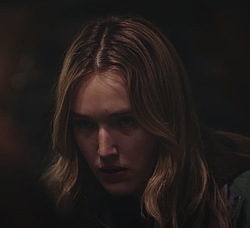
Due to a doomful past, The Woodsman (Ivan Martin, successfully unsympathetic) lives a life of self-imposed seclusion alone in a cabin tucked away in a remote corner of the Pacific Northwest. The house and all its contents were a gift from the former owner, who took pity on him. A ball of contradictions, our hero picks up cigarette money from a rancher (David Knell), who pays him to help cut back on the local wolf population by dotting his property with jaw traps. Days pass; The Woodsman uses a metal detector to sweep the woods for fresh captures. If a trap is sprung, he releases the contents; empty traps are detonated so as not to cause any other animals harm. He doesn't kill to eat, instead dining on canned goods cuisine at a gas station food mart. Really, he’s a relatively humane type, give or take a decorative stuffed raccoon, poised to attack and hanging from the ceiling. (There’s an amusing story to go with it that I won’t spoil.)
It's a monotonous existence, until the day he finds he doesn't need his metal detector to locate a wounded creature: the girl we saw running through the woods before the opening credits. A gentleman to a fault, The Woodsman places the unconscious Dani (Maddison Brown) atop a stretch of tarp and drags her back to the house. Part of the fascination lies in watching as Taylor twists the familiar fable, reshuffling the narrative to keep audiences guessing. The film is chopped up timewise to the point where, were we back in the days of 35mm, we might suspect that the projectionist had gotten the reels out of order. But after working backwards for a couple of reels, the chronology eventually catches up with itself somewhere in the middle. Taylor inverts the old warning against talking to strangers; in this case, the stranger is the only semi-decent person in the piece.
Before Dani's arrival, the mood of The Woodsman has pretty much dictated the pace of the action. But Dani’s presence finds her host suddenly living and thinking for two. He not only takes pleasure in their sparsely-worded exchanges, he appears to enjoy having someone to look after, no matter how much he grumbles about making the long trip to Grandma’s. Dani is a quick thinker; when the rancher shows up to find The Woodsman gone and a 17-year-old holding down the fort, she introduces herself as his niece. Brown brings a level of realism to a character whose emotions have been cauterized by a seamy-sided uncle who should have been the adult in the room.
Alcoholics in movies are almost as common as 20 minutes' worth of trailers before the show. On the way to Grandma’s house, the two stop for dinner at a roadside bar and grill. Up until now, there hasn’t been any indication that The Woodsman was a drinker. It isn’t until the waitress yells “Last call,” and the bartender, tapping another customer’s beer, comes between the lens and a thirsty-eyed Woodsman that we begin to wonder. In one compact, dialogue-free take, lasting less than 30 seconds, we are made aware of his addiction. Before it’s over, the reason for his abstention will be made painfully apparent.
They arrive at Grandma’s house to find the place vacant and grandma dead. A flashback later brings the wolf to our door in the form of Carey (Michael Esper), an overnice psychologist married to Dani’s rancorous aunt Jolene (Kaitlin Doubleday). We’ll end it here, lest something slip and spoil the mystery.
The one thing that stands out almost as much as the deft storytelling is the pleasure cinematographer Adam Lee takes shooting in the 4 x 3 Academy ratio which, with rare exception, up and died in the mid-'50s when CinemaScope and VistaVision won the size-battle over television. It was a wise choice and one Lee was definitely up for. (For more on his decision to go square, check out our interview.)
If you are going to make a monster movie, make a monster movie! To Kill a Wolf doesn't boast wolfmen designed by Rick Baker, nor enough money in the budget to earmark much in the way of special effects. So much the better. Isn’t it time we grew up and did away with the derivative parade of anonymous leather-faced predators hiding behind hockey masks and Ghostfaces that for decades have defined the norm in monster movies? Along with Nazis, no monster fits the bill better than a degenerate predator. To Kill a Wolf puts a face on child endangerment. ****
Here's something you might be interested in.
Now Playing: TO KILL A WOLF (2024)
Director Kelsey Taylor inverts the old warning against talking to strangers; in this case, the stranger is the only semi-decent person in the piece.

Now Playing: TO KILL A WOLF (2024)
Director Kelsey Taylor inverts the old warning against talking to strangers; in this case, the stranger is the only semi-decent person in the piece.
The hills have eyes, all the better to see you with, my dear.
TO KILL A WOLF (2024) Writer & Director: Kelsey Taylor / Cinematographer: Adam Lee (1.33:1) / Design: Juliana Collins / Editor: Dawson Taylor / Composers: Sara Barone & Forest Christenson / Acted by: Ivan Martin, Maddison Brown, Kaitlin Doubleday, Michael Esper, Dana Millican, & David Knell / Distributor: All The Better Productions / USA / Not Rated / Length: 92 mins.
Georges Méliès' 1908 film version of Little Red Riding Hood is a cinematic touchstone to some degree, as it marked the first entry in a whole pack of Big Bad Wolf stories. In this latest Red incarnation, opening Friday exclusively at Edwards Mira Mesa, the beast walks upright, there is no red hooded cape, and poor grandma is dead at the outset. But those are all superficial trappings. To Kill a Wolf, first time writer-director Kelsey Taylor’s variation on the bedtime fable of a child predator in wolf’s clothing, is closer in spirit to the fairy tales written by Charles Perrault — and later refashioned by the Brothers Grimm — than any of its big-screen counterparts.
Video:
Trailer: TO KILL A WOLF
Due to a doomful past, The Woodsman (Ivan Martin, successfully unsympathetic) lives a life of self-imposed seclusion alone in a cabin tucked away in a remote corner of the Pacific Northwest. The house and all its contents were a gift from the former owner, who took pity on him. A ball of contradictions, our hero picks up cigarette money from a rancher (David Knell), who pays him to help cut back on the local wolf population by dotting his property with jaw traps. Days pass; The Woodsman uses a metal detector to sweep the woods for fresh captures. If a trap is sprung, he releases the contents; empty traps are detonated so as not to cause any other animals harm. He doesn't kill to eat, instead dining on canned goods cuisine at a gas station food mart. Really, he’s a relatively humane type, give or take a decorative stuffed raccoon, poised to attack and hanging from the ceiling. (There’s an amusing story to go with it that I won’t spoil.)
It's a monotonous existence, until the day he finds he doesn't need his metal detector to locate a wounded creature: the girl we saw running through the woods before the opening credits. A gentleman to a fault, The Woodsman places the unconscious Dani (Maddison Brown) atop a stretch of tarp and drags her back to the house. Part of the fascination lies in watching as Taylor twists the familiar fable, reshuffling the narrative to keep audiences guessing. The film is chopped up timewise to the point where, were we back in the days of 35mm, we might suspect that the projectionist had gotten the reels out of order. But after working backwards for a couple of reels, the chronology eventually catches up with itself somewhere in the middle. Taylor inverts the old warning against talking to strangers; in this case, the stranger is the only semi-decent person in the piece.
Before Dani's arrival, the mood of The Woodsman has pretty much dictated the pace of the action. But Dani’s presence finds her host suddenly living and thinking for two. He not only takes pleasure in their sparsely-worded exchanges, he appears to enjoy having someone to look after, no matter how much he grumbles about making the long trip to Grandma’s. Dani is a quick thinker; when the rancher shows up to find The Woodsman gone and a 17-year-old holding down the fort, she introduces herself as his niece. Brown brings a level of realism to a character whose emotions have been cauterized by a seamy-sided uncle who should have been the adult in the room.
Alcoholics in movies are almost as common as 20 minutes' worth of trailers before the show. On the way to Grandma’s house, the two stop for dinner at a roadside bar and grill. Up until now, there hasn’t been any indication that The Woodsman was a drinker. It isn’t until the waitress yells “Last call,” and the bartender, tapping another customer’s beer, comes between the lens and a thirsty-eyed Woodsman that we begin to wonder. In one compact, dialogue-free take, lasting less than 30 seconds, we are made aware of his addiction. Before it’s over, the reason for his abstention will be made painfully apparent.
They arrive at Grandma’s house to find the place vacant and grandma dead. A flashback later brings the wolf to our door in the form of Carey (Michael Esper), an overnice psychologist married to Dani’s rancorous aunt Jolene (Kaitlin Doubleday). We’ll end it here, lest something slip and spoil the mystery.
The one thing that stands out almost as much as the deft storytelling is the pleasure cinematographer Adam Lee takes shooting in the 4 x 3 Academy ratio which, with rare exception, up and died in the mid-'50s when CinemaScope and VistaVision won the size-battle over television. It was a wise choice and one Lee was definitely up for. (For more on his decision to go square, check out our interview.)
If you are going to make a monster movie, make a monster movie! To Kill a Wolf doesn't boast wolfmen designed by Rick Baker, nor enough money in the budget to earmark much in the way of special effects. So much the better. Isn’t it time we grew up and did away with the derivative parade of anonymous leather-faced predators hiding behind hockey masks and Ghostfaces that for decades have defined the norm in monster movies? Along with Nazis, no monster fits the bill better than a degenerate predator. To Kill a Wolf puts a face on child endangerment. ****
Comments