

Here's something you might be interested in.
Ask a Hipster — Advice you didn't know you needed
Big Screen — Movie commentary
Blurt — Music's inside track
Booze News — San Diego spirits
Classical Music — Immortal beauty
Classifieds — Free and easy
Close to Home — What it’s like on the street where you live
Cover Stories — Front-page features
Drinks All Around — Bartenders' drink recipes
Excerpts — Literary and spiritual excerpts
Feast! — Food & drink reviews
Feature Stories — Local news & stories
Fishing Report — What’s getting hooked from ship and shore
From the Archives — Spotlight on the past
Golden Dreams — Talk of the town
The Gonzo Report — Making the musical scene, or at least reporting from it
Letters — Our inbox
Movies@Home — Local movie buffs share favorites
Movie Reviews — Our critics' picks and pans
Musician Interviews — Up close with local artists
Neighborhood News from Stringers — Hyperlocal news
News Ticker — News & politics
Obermeyer — San Diego politics illustrated
Outdoors — Weekly changes in flora and fauna
Overheard in San Diego — Eavesdropping illustrated
Poetry — The old and the new
Reader Travel — Travel section built by travelers
Reading — The hunt for intellectuals
Roam-O-Rama — SoCal's best hiking/biking trails
San Diego Beer — Inside San Diego suds
SD on the QT — Almost factual news
Sheep and Goats — Places of worship
Special Issues — The best of
Street Style — San Diego streets have style
Surf Diego — Real stories from those braving the waves
Theater — On stage in San Diego this week
Tin Fork — Silver spoon alternative
Under the Radar — Matt Potter's undercover work
Unforgettable — Long-ago San Diego
Unreal Estate — San Diego's priciest pads
Your Week — Daily event picks
Mr. Shadow recruits rap legend Ice Cube for "Certified G'z"
"I said, 'The worst thing he could do is say no.'"

Jose Anguiana was raised in Little Italy and first discovered rap when he was around five years old. Born in 1980, he had been introduced to the genre by the likes of Run-DMC, The Fat Boys, Big Daddy Kane, and the Beastie Boys — all of whom, especially the latter, had a big influence on him. By the time he was nine, he had written his first rap, which chronicled a trip to Disneyland with his father. “We were broke,” he explains. “My mom didn't even go with us because she had to work. So, for my dad to take a day off of work and take me to Disneyland when I was nine, it’s just really awesome. And then to experience Disneyland, I don't know why, I just felt the need to write a rap about it.”
By the time Anguiana was in his teens, he was selling guns and drugs, and it was during a stint in juvenile hall that he started to write raps that ventured beyond the Happiest Place on Earth. His first experiments with actually rapping to a beat were conducted via tech that could be described as either an archaic version of Garageband or the ultimate two-track recorder on a budget. “Funny story is, there were producers and there was even a recording studio in my neighborhood, but I didn't know nothing about it. Me being a younger cat, I would just do what a broke little dude like myself would do. I would get a cassette with instrumentals, and I would have a double-deck cassette player at my house. And I would play the beat on one and I'd push record on the other one. And as the beat was playing, I was rapping to it and it would capture my voice. So that's how I would do it.”
By 1997, Anguiana had recorded a single, “Till I Die,” and was hustling to get it played on San Diego radio. He was only 16 when he went into the Jammin’ Z90 offices to pitch his wares. “[Lisa Vasquez - Z90 Program Director] told me she'd give me one minute in her office after rejecting me. I just kept on persisting, and she was like, ‘Okay, I'm gonna give you one minute, and then that's it.’ She played a verse and was hooked after that. She took me to the DJ that was playing on that Sunday and told him to play my song after commercials. She even asked me, ‘What do you go by? What do they call you?’ I'm like, ‘Shadow, that's my neighborhood name,’ And she threw the 'mister' in front of it. So that's how it became Mr. Shadow. And here we are, 30 years later.”
The song began to gain traction in other radio markets, and Vasquez got the newly minted “Mr. Shadow” on the road. “That song was so hot that people would hire me,” Anguiana says. “Promoters would call me and be like, ‘Yo, I have a car show. You want to come perform?’ And I'm like, ‘Dude, I only got one song.’ They're like, ‘Man, that song is so dope. That's all you need.’ So here I was going through El Centro, Arizona, Texas, LA, Riverside, and, you know, everything in between, man. It was pretty crazy.”
His first big gig was in Tijuana in front of 600 people. Even with his Chicano roots, the show was intimidating for such a young artist. “They just gave the DJ the instrumental and said, ‘Okay, you're going up in five minutes.’ And I was like, ‘Dude, what do I do?’ I didn't know anything about crowd control and interacting with the crowd. I didn't even know what to do when I was on stage, but as soon as the beat kicked on, it was on, man. I was just walking back and forth, and everybody was loving the song. I think it helped me a lot that they all had their hands up and were like, ‘Oh yeah, we heard this on the radio.’ So, it was cool, but the first few shows were nerve-wracking because I didn't know what to do.”
Fast-forward 28 years and Mr. Shadow has sold over 200,000 albums, has toured internationally, and is regarded as one of the truly iconic Chicano rappers. His latest venture is a joint single called “Certified G’z” featuring the prolific Pomona rapper Kokane and Ice Cube, a former member of one of Anguiana’s favorite bands, N.W.A. The collaboration came together thanks to Kokane having longtime connections with N.W.A. (he is featured on two songs on 1991’s Efil4zaggin), as well as having recruited Ice Cube to perform a song on his recent Da Funkin Adventures Of Dr. Kokanstine triple album. Anguiana pitched the idea of trying to get Ice Cube on the single when Kokane was down in San Diego, recording a different song with him. “I said, ‘How complicated do you think it would be to try to get Ice Cube on a song for my album?’ He's all, ‘Man, he doesn't do features, dog. It took me years to get him on my album. And we go back to NWA.’ I said, ‘Well, the worst thing he could say is no.’”
Video:
Mr. Shadow: "Certified G'z"
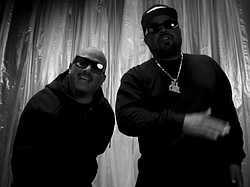
“We sent it to Ice Cube. He’s like, ‘I want to hear Shadow on it first.’ When he said that, I was like, okay, he just wants to make sure I'm not whack. That’s cool. So, I got in the studio, and I wrote the verse. I recorded it and we sent it off. And then he got back the same day we sent it. He’s like, ‘Okay, cool. Let’s work.’ I was like, what? No way, bro.’ Me and my manager, we're still processing it. I mean, he’s one of the biggest artists in the world.”
Here's something you might be interested in.
Mr. Shadow recruits rap legend Ice Cube for "Certified G'z"
"I said, 'The worst thing he could do is say no.'"

Mr. Shadow recruits rap legend Ice Cube for "Certified G'z"
"I said, 'The worst thing he could do is say no.'"
Jose Anguiana was raised in Little Italy and first discovered rap when he was around five years old. Born in 1980, he had been introduced to the genre by the likes of Run-DMC, The Fat Boys, Big Daddy Kane, and the Beastie Boys — all of whom, especially the latter, had a big influence on him. By the time he was nine, he had written his first rap, which chronicled a trip to Disneyland with his father. “We were broke,” he explains. “My mom didn't even go with us because she had to work. So, for my dad to take a day off of work and take me to Disneyland when I was nine, it’s just really awesome. And then to experience Disneyland, I don't know why, I just felt the need to write a rap about it.”
By the time Anguiana was in his teens, he was selling guns and drugs, and it was during a stint in juvenile hall that he started to write raps that ventured beyond the Happiest Place on Earth. His first experiments with actually rapping to a beat were conducted via tech that could be described as either an archaic version of Garageband or the ultimate two-track recorder on a budget. “Funny story is, there were producers and there was even a recording studio in my neighborhood, but I didn't know nothing about it. Me being a younger cat, I would just do what a broke little dude like myself would do. I would get a cassette with instrumentals, and I would have a double-deck cassette player at my house. And I would play the beat on one and I'd push record on the other one. And as the beat was playing, I was rapping to it and it would capture my voice. So that's how I would do it.”
By 1997, Anguiana had recorded a single, “Till I Die,” and was hustling to get it played on San Diego radio. He was only 16 when he went into the Jammin’ Z90 offices to pitch his wares. “[Lisa Vasquez - Z90 Program Director] told me she'd give me one minute in her office after rejecting me. I just kept on persisting, and she was like, ‘Okay, I'm gonna give you one minute, and then that's it.’ She played a verse and was hooked after that. She took me to the DJ that was playing on that Sunday and told him to play my song after commercials. She even asked me, ‘What do you go by? What do they call you?’ I'm like, ‘Shadow, that's my neighborhood name,’ And she threw the 'mister' in front of it. So that's how it became Mr. Shadow. And here we are, 30 years later.”
The song began to gain traction in other radio markets, and Vasquez got the newly minted “Mr. Shadow” on the road. “That song was so hot that people would hire me,” Anguiana says. “Promoters would call me and be like, ‘Yo, I have a car show. You want to come perform?’ And I'm like, ‘Dude, I only got one song.’ They're like, ‘Man, that song is so dope. That's all you need.’ So here I was going through El Centro, Arizona, Texas, LA, Riverside, and, you know, everything in between, man. It was pretty crazy.”
His first big gig was in Tijuana in front of 600 people. Even with his Chicano roots, the show was intimidating for such a young artist. “They just gave the DJ the instrumental and said, ‘Okay, you're going up in five minutes.’ And I was like, ‘Dude, what do I do?’ I didn't know anything about crowd control and interacting with the crowd. I didn't even know what to do when I was on stage, but as soon as the beat kicked on, it was on, man. I was just walking back and forth, and everybody was loving the song. I think it helped me a lot that they all had their hands up and were like, ‘Oh yeah, we heard this on the radio.’ So, it was cool, but the first few shows were nerve-wracking because I didn't know what to do.”
Fast-forward 28 years and Mr. Shadow has sold over 200,000 albums, has toured internationally, and is regarded as one of the truly iconic Chicano rappers. His latest venture is a joint single called “Certified G’z” featuring the prolific Pomona rapper Kokane and Ice Cube, a former member of one of Anguiana’s favorite bands, N.W.A. The collaboration came together thanks to Kokane having longtime connections with N.W.A. (he is featured on two songs on 1991’s Efil4zaggin), as well as having recruited Ice Cube to perform a song on his recent Da Funkin Adventures Of Dr. Kokanstine triple album. Anguiana pitched the idea of trying to get Ice Cube on the single when Kokane was down in San Diego, recording a different song with him. “I said, ‘How complicated do you think it would be to try to get Ice Cube on a song for my album?’ He's all, ‘Man, he doesn't do features, dog. It took me years to get him on my album. And we go back to NWA.’ I said, ‘Well, the worst thing he could say is no.’”
Video:
Mr. Shadow: "Certified G'z"
“We sent it to Ice Cube. He’s like, ‘I want to hear Shadow on it first.’ When he said that, I was like, okay, he just wants to make sure I'm not whack. That’s cool. So, I got in the studio, and I wrote the verse. I recorded it and we sent it off. And then he got back the same day we sent it. He’s like, ‘Okay, cool. Let’s work.’ I was like, what? No way, bro.’ Me and my manager, we're still processing it. I mean, he’s one of the biggest artists in the world.”
Comments