

Here's something you might be interested in.
Ask a Hipster — Advice you didn't know you needed
Big Screen — Movie commentary
Blurt — Music's inside track
Booze News — San Diego spirits
Classical Music — Immortal beauty
Classifieds — Free and easy
Close to Home — What it’s like on the street where you live
Cover Stories — Front-page features
Drinks All Around — Bartenders' drink recipes
Excerpts — Literary and spiritual excerpts
Feast! — Food & drink reviews
Feature Stories — Local news & stories
Fishing Report — What’s getting hooked from ship and shore
From the Archives — Spotlight on the past
Golden Dreams — Talk of the town
The Gonzo Report — Making the musical scene, or at least reporting from it
Letters — Our inbox
Movies@Home — Local movie buffs share favorites
Movie Reviews — Our critics' picks and pans
Musician Interviews — Up close with local artists
Neighborhood News from Stringers — Hyperlocal news
News Ticker — News & politics
Obermeyer — San Diego politics illustrated
Outdoors — Weekly changes in flora and fauna
Overheard in San Diego — Eavesdropping illustrated
Poetry — The old and the new
Reader Travel — Travel section built by travelers
Reading — The hunt for intellectuals
Roam-O-Rama — SoCal's best hiking/biking trails
San Diego Beer — Inside San Diego suds
SD on the QT — Almost factual news
Sheep and Goats — Places of worship
Special Issues — The best of
Street Style — San Diego streets have style
Surf Diego — Real stories from those braving the waves
Theater — On stage in San Diego this week
Tin Fork — Silver spoon alternative
Under the Radar — Matt Potter's undercover work
Unforgettable — Long-ago San Diego
Unreal Estate — San Diego's priciest pads
Your Week — Daily event picks
Mexican Corals may continue to bloom until late Spring, early sings of "May gray"
Snakes have begun to emerge
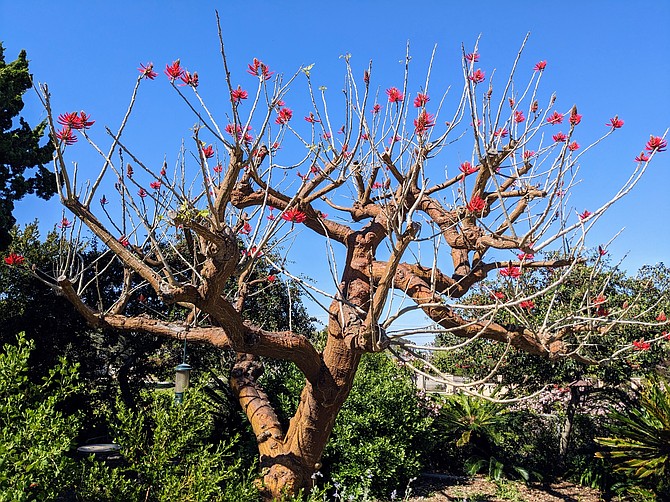
Mexican Coral Trees, or “Naked Corals,” are showing their stuff this season by bearing flamelike flowers on the tips of their twisting, often leafless branches. Commonly planted as park and freeway landscaping, this and other species of coral are blooming along State Route 94, Interstate 5 through Oceanside, along Harbor Drive near the airport, at the San Diego Zoo, on the lawns in front of San Diego City College downtown, and on the San Diego State University campus. The bloom may continue into late spring, when the naked corals will cover themselves with eight-inch long leaves, just in time to provide shade for the warm months. This time of year they are a favorite stop for hummingbirds.
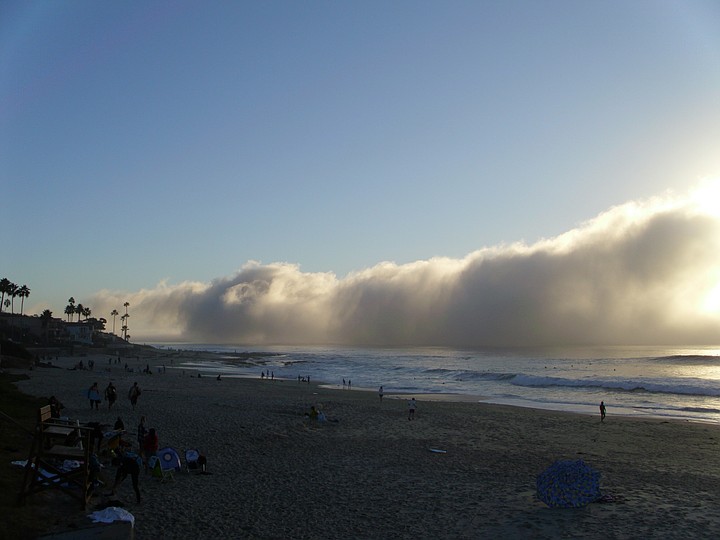
Taken at Pacific beach with the marine layer forming:
Warmer Temperatures and Increased Humidity coincide with the subtle onset of San Diego’s spring season. By April’s end, the intermittent showers, Santa Ana winds, cold nights, and crystal-clear, sundrenched days of winter will likely be distant memories. The nocturnal, low overcast hugging the coast, which may linger until the late morning, will gradually build into “June gloom” — the days-long episodes of perpetual overcast most common during May and June.
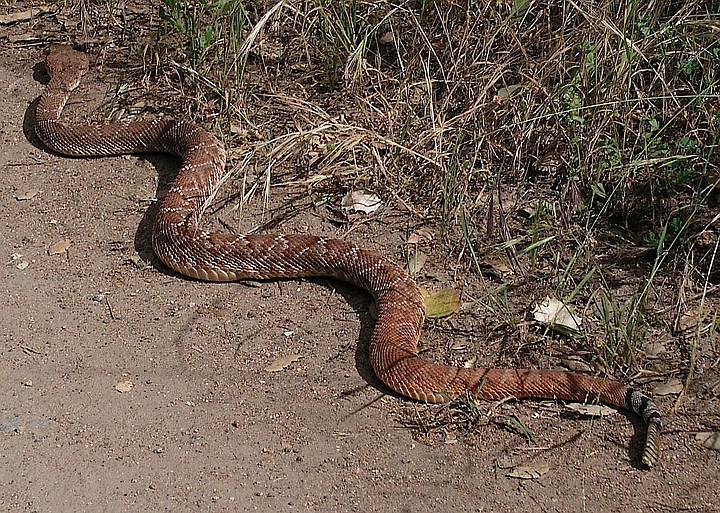
Red Diamondback Rattlesnake (Crotus ruber), Blue Sky Ecological Reserve, Poway, May 7th, 2011.
Snakes, Encouraged by Recent Warm Temperatures, have already emerged from burrows and rock crevices to hunt for prey throughout the county's lower elevation hillsides and canyons. Gopher snakes, garter snakes, king snakes, rosy boas (all harmless), and three varieties of rattlesnakes — red diamond, speckled, and Southern Pacific rattlesnakes (all poisonous) — have been sighted. Close encounters with rattlesnakes are not uncommon wherever residential properties abut undeveloped land — a common situation throughout San Diego County.
Here's something you might be interested in.
Mexican Corals may continue to bloom until late Spring, early sings of "May gray"
Snakes have begun to emerge

Mexican Corals may continue to bloom until late Spring, early sings of "May gray"
Snakes have begun to emerge
Mexican Coral Trees, or “Naked Corals,” are showing their stuff this season by bearing flamelike flowers on the tips of their twisting, often leafless branches. Commonly planted as park and freeway landscaping, this and other species of coral are blooming along State Route 94, Interstate 5 through Oceanside, along Harbor Drive near the airport, at the San Diego Zoo, on the lawns in front of San Diego City College downtown, and on the San Diego State University campus. The bloom may continue into late spring, when the naked corals will cover themselves with eight-inch long leaves, just in time to provide shade for the warm months. This time of year they are a favorite stop for hummingbirds.
Taken at Pacific beach with the marine layer forming:
Warmer Temperatures and Increased Humidity coincide with the subtle onset of San Diego’s spring season. By April’s end, the intermittent showers, Santa Ana winds, cold nights, and crystal-clear, sundrenched days of winter will likely be distant memories. The nocturnal, low overcast hugging the coast, which may linger until the late morning, will gradually build into “June gloom” — the days-long episodes of perpetual overcast most common during May and June.
Red Diamondback Rattlesnake (Crotus ruber), Blue Sky Ecological Reserve, Poway, May 7th, 2011.
Snakes, Encouraged by Recent Warm Temperatures, have already emerged from burrows and rock crevices to hunt for prey throughout the county's lower elevation hillsides and canyons. Gopher snakes, garter snakes, king snakes, rosy boas (all harmless), and three varieties of rattlesnakes — red diamond, speckled, and Southern Pacific rattlesnakes (all poisonous) — have been sighted. Close encounters with rattlesnakes are not uncommon wherever residential properties abut undeveloped land — a common situation throughout San Diego County.