

Here's something you might be interested in.
Ask a Hipster — Advice you didn't know you needed
Big Screen — Movie commentary
Blurt — Music's inside track
Booze News — San Diego spirits
Classical Music — Immortal beauty
Classifieds — Free and easy
Close to Home — What it’s like on the street where you live
Cover Stories — Front-page features
Drinks All Around — Bartenders' drink recipes
Excerpts — Literary and spiritual excerpts
Feast! — Food & drink reviews
Feature Stories — Local news & stories
Fishing Report — What’s getting hooked from ship and shore
From the Archives — Spotlight on the past
Golden Dreams — Talk of the town
The Gonzo Report — Making the musical scene, or at least reporting from it
Letters — Our inbox
Movies@Home — Local movie buffs share favorites
Movie Reviews — Our critics' picks and pans
Musician Interviews — Up close with local artists
Neighborhood News from Stringers — Hyperlocal news
News Ticker — News & politics
Obermeyer — San Diego politics illustrated
Outdoors — Weekly changes in flora and fauna
Overheard in San Diego — Eavesdropping illustrated
Poetry — The old and the new
Reader Travel — Travel section built by travelers
Reading — The hunt for intellectuals
Roam-O-Rama — SoCal's best hiking/biking trails
San Diego Beer — Inside San Diego suds
SD on the QT — Almost factual news
Sheep and Goats — Places of worship
Special Issues — The best of
Street Style — San Diego streets have style
Surf Diego — Real stories from those braving the waves
Theater — On stage in San Diego this week
Tin Fork — Silver spoon alternative
Under the Radar — Matt Potter's undercover work
Unforgettable — Long-ago San Diego
Unreal Estate — San Diego's priciest pads
Your Week — Daily event picks
January is our coldest month, Ceanothus blooms early
San Diego's waterfalls should be at their best
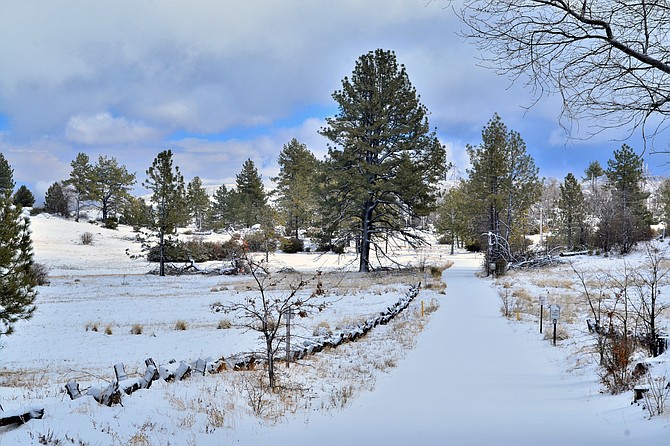
A snowy road in the Cuyamaca mountains.
Recent Chilly Days and Nights only confirm that San Diego’s lowest temperatures (according to more than a century of weather records) tend to occur during the month of January. January’s mean temperature at Lindbergh Field is about 55 degrees Fahrenheit. (July’s mean is a balmy 70 degrees.) To experience much colder temperatures, journey to the Cuyamaca Mountains; -1 and -4 degree readings — the lowest in the county — were once recorded there.
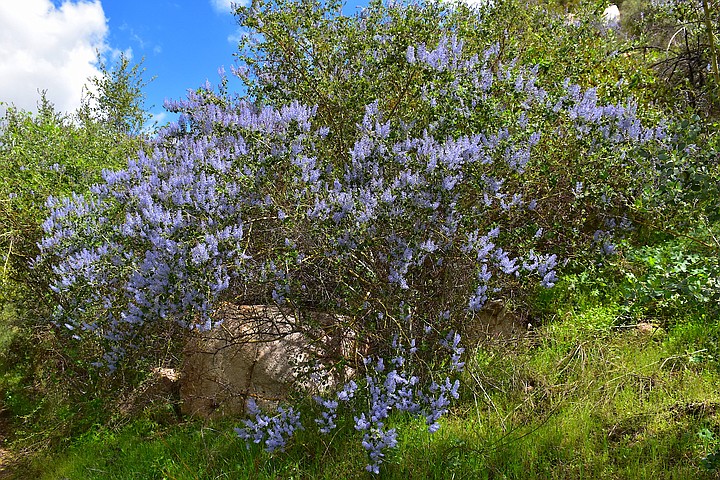
San Diego Mountain Lilac (ceanothus cyaneus), on the right (east) fork of the Rattlesnake Canyon trail, in Poway.
Ceanothus, or Wild Lilac, normally a late-winter or early-spring blooming native plant, can sometimes be triggered by rain and sunny winter days to bloom early around coastal and inland San Diego County. Blue- and white-flowering varieties of ceanothus are common wherever native sage-scrub and chaparral vegetation grows, from the bluffs of Torrey Pines to the edge of the Anza-Borrego Desert. Black Mountain Open Space Park is a great place to see California lilacs sprout in spring.
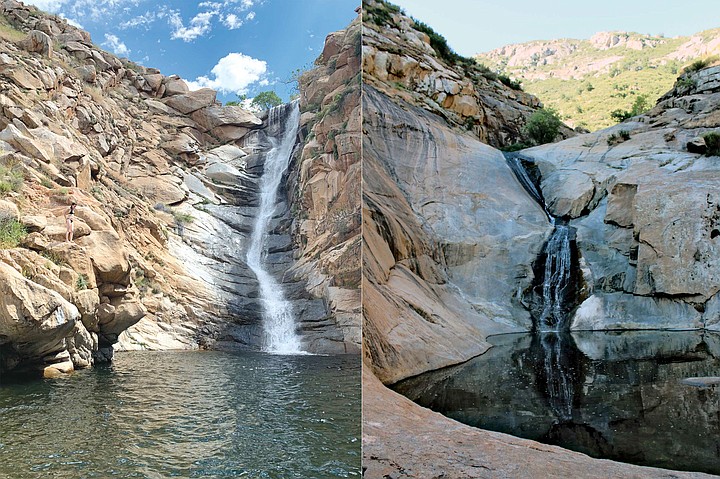
Cedar Creek Falls and Three Sisters Falls are two of many waterfalls benefitting from San Diego's recent rains.
San Diego County's Waterfalls should be at their very best during the next month or two. Just how impressive they will be will depend on the overall amount of winter rainfall. Three of the most accessible waterfalls are: Green Valley Falls at Cuyamaca Rancho State Park; the falls below the first palm grove in Borrego Palm Canyon (Anza-Borrego Desert State Park); and the falls. at the midpoint of Los Peñasquitos Canyon Preserve — a three-mile walk from either its east or west entrance. Hikers and climbers can explore many other waterfalls (some with heights up to 100 feet) in remote areas of the county.
Here's something you might be interested in.
January is our coldest month, Ceanothus blooms early
San Diego's waterfalls should be at their best

January is our coldest month, Ceanothus blooms early
San Diego's waterfalls should be at their best
A snowy road in the Cuyamaca mountains.
Recent Chilly Days and Nights only confirm that San Diego’s lowest temperatures (according to more than a century of weather records) tend to occur during the month of January. January’s mean temperature at Lindbergh Field is about 55 degrees Fahrenheit. (July’s mean is a balmy 70 degrees.) To experience much colder temperatures, journey to the Cuyamaca Mountains; -1 and -4 degree readings — the lowest in the county — were once recorded there.
San Diego Mountain Lilac (ceanothus cyaneus), on the right (east) fork of the Rattlesnake Canyon trail, in Poway.
Ceanothus, or Wild Lilac, normally a late-winter or early-spring blooming native plant, can sometimes be triggered by rain and sunny winter days to bloom early around coastal and inland San Diego County. Blue- and white-flowering varieties of ceanothus are common wherever native sage-scrub and chaparral vegetation grows, from the bluffs of Torrey Pines to the edge of the Anza-Borrego Desert. Black Mountain Open Space Park is a great place to see California lilacs sprout in spring.
Cedar Creek Falls and Three Sisters Falls are two of many waterfalls benefitting from San Diego's recent rains.
San Diego County's Waterfalls should be at their very best during the next month or two. Just how impressive they will be will depend on the overall amount of winter rainfall. Three of the most accessible waterfalls are: Green Valley Falls at Cuyamaca Rancho State Park; the falls below the first palm grove in Borrego Palm Canyon (Anza-Borrego Desert State Park); and the falls. at the midpoint of Los Peñasquitos Canyon Preserve — a three-mile walk from either its east or west entrance. Hikers and climbers can explore many other waterfalls (some with heights up to 100 feet) in remote areas of the county.
Comments