

Here's something you might be interested in.
Ask a Hipster — Advice you didn't know you needed
Big Screen — Movie commentary
Blurt — Music's inside track
Booze News — San Diego spirits
Classical Music — Immortal beauty
Classifieds — Free and easy
Close to Home — What it’s like on the street where you live
Cover Stories — Front-page features
Drinks All Around — Bartenders' drink recipes
Excerpts — Literary and spiritual excerpts
Feast! — Food & drink reviews
Feature Stories — Local news & stories
Fishing Report — What’s getting hooked from ship and shore
From the Archives — Spotlight on the past
Golden Dreams — Talk of the town
The Gonzo Report — Making the musical scene, or at least reporting from it
Letters — Our inbox
Movies@Home — Local movie buffs share favorites
Movie Reviews — Our critics' picks and pans
Musician Interviews — Up close with local artists
Neighborhood News from Stringers — Hyperlocal news
News Ticker — News & politics
Obermeyer — San Diego politics illustrated
Outdoors — Weekly changes in flora and fauna
Overheard in San Diego — Eavesdropping illustrated
Poetry — The old and the new
Reader Travel — Travel section built by travelers
Reading — The hunt for intellectuals
Roam-O-Rama — SoCal's best hiking/biking trails
San Diego Beer — Inside San Diego suds
SD on the QT — Almost factual news
Sheep and Goats — Places of worship
Special Issues — The best of
Street Style — San Diego streets have style
Surf Diego — Real stories from those braving the waves
Theater — On stage in San Diego this week
Tin Fork — Silver spoon alternative
Under the Radar — Matt Potter's undercover work
Unforgettable — Long-ago San Diego
Unreal Estate — San Diego's priciest pads
Your Week — Daily event picks
San Diego's highest monthly rainfall totals occur in January and February
The California Brown Pelican displays colorful plummage
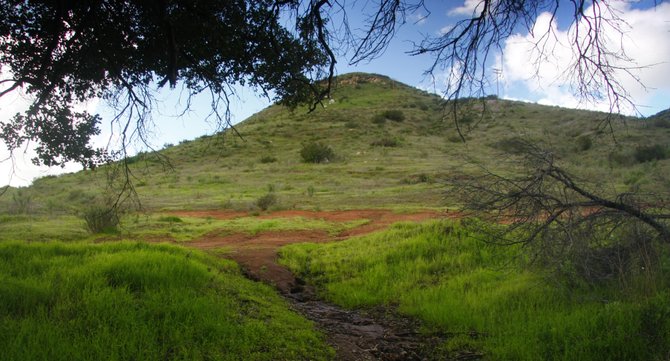
The rain turned our hillsides green again.
Green and Gold Will Be The Colors of the coastal region’s natural landscape in early 2026. The recent rain will trigger the growth of annual grasses and weeds, with greens replacing yellows and browns. At the same time, some autumnal colors remain in the riparian areas, particularly among willows, cottonwoods, and a minority of sycamores.
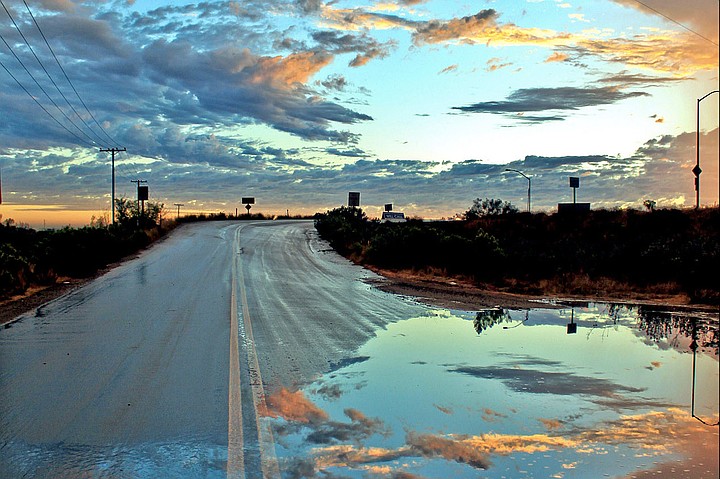
A colorful palatte of reflection on Kearny Villa Road after a rain storm.
Highest Monthly Rainfall Totals In San Diego are most likely to occur in January and February (about 1.9 inches each on average) according to weather-service statistics. If low temperatures accompany the typical Pacific storms of this period, there’s a chance of snow in the mountains, including a very slim chance of snowfall as far west as the coast. Only during the months of December and January have traces of snow ever been recorded at San Diego’s National Weather Service station.
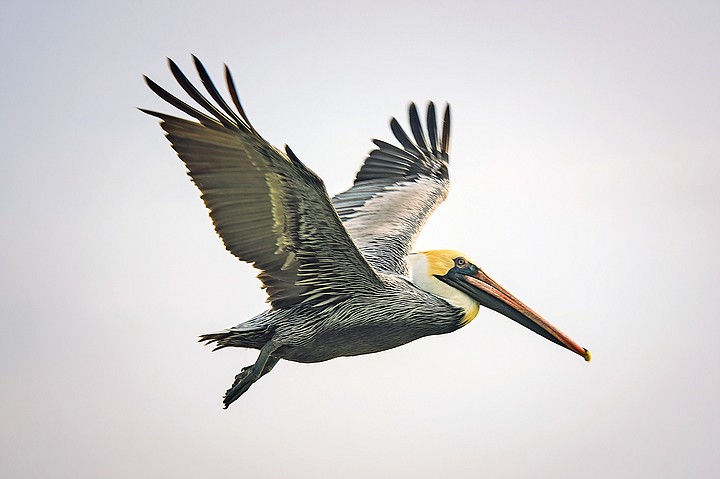
A Brown pelican takes flight
The California Brown Pelican Displays Its Most Colorful Plumage on its head and neck from late December through February in anticipation of the March-April breeding season. Brown pelicans typically stay in flocks, and can often be seen flying in “V” formation along the coast. The brown pelican can spot a fish from heights of 70 feet and dives headfirst into the water to grab its prey. No other known pelican uses this technique to catch fish.
Here's something you might be interested in.
San Diego's highest monthly rainfall totals occur in January and February
The California Brown Pelican displays colorful plummage

San Diego's highest monthly rainfall totals occur in January and February
The California Brown Pelican displays colorful plummage
The rain turned our hillsides green again.
Green and Gold Will Be The Colors of the coastal region’s natural landscape in early 2026. The recent rain will trigger the growth of annual grasses and weeds, with greens replacing yellows and browns. At the same time, some autumnal colors remain in the riparian areas, particularly among willows, cottonwoods, and a minority of sycamores.
A colorful palatte of reflection on Kearny Villa Road after a rain storm.
Highest Monthly Rainfall Totals In San Diego are most likely to occur in January and February (about 1.9 inches each on average) according to weather-service statistics. If low temperatures accompany the typical Pacific storms of this period, there’s a chance of snow in the mountains, including a very slim chance of snowfall as far west as the coast. Only during the months of December and January have traces of snow ever been recorded at San Diego’s National Weather Service station.
A Brown pelican takes flight
The California Brown Pelican Displays Its Most Colorful Plumage on its head and neck from late December through February in anticipation of the March-April breeding season. Brown pelicans typically stay in flocks, and can often be seen flying in “V” formation along the coast. The brown pelican can spot a fish from heights of 70 feet and dives headfirst into the water to grab its prey. No other known pelican uses this technique to catch fish.
Comments