

Here's something you might be interested in.
Ask a Hipster — Advice you didn't know you needed
Big Screen — Movie commentary
Blurt — Music's inside track
Booze News — San Diego spirits
Classical Music — Immortal beauty
Classifieds — Free and easy
Close to Home — What it’s like on the street where you live
Cover Stories — Front-page features
Drinks All Around — Bartenders' drink recipes
Excerpts — Literary and spiritual excerpts
Feast! — Food & drink reviews
Feature Stories — Local news & stories
Fishing Report — What’s getting hooked from ship and shore
From the Archives — Spotlight on the past
Golden Dreams — Talk of the town
The Gonzo Report — Making the musical scene, or at least reporting from it
Letters — Our inbox
Movies@Home — Local movie buffs share favorites
Movie Reviews — Our critics' picks and pans
Musician Interviews — Up close with local artists
Neighborhood News from Stringers — Hyperlocal news
News Ticker — News & politics
Obermeyer — San Diego politics illustrated
Outdoors — Weekly changes in flora and fauna
Overheard in San Diego — Eavesdropping illustrated
Poetry — The old and the new
Reader Travel — Travel section built by travelers
Reading — The hunt for intellectuals
Roam-O-Rama — SoCal's best hiking/biking trails
San Diego Beer — Inside San Diego suds
SD on the QT — Almost factual news
Sheep and Goats — Places of worship
Special Issues — The best of
Street Style — San Diego streets have style
Surf Diego — Real stories from those braving the waves
Theater — On stage in San Diego this week
Tin Fork — Silver spoon alternative
Under the Radar — Matt Potter's undercover work
Unforgettable — Long-ago San Diego
Unreal Estate — San Diego's priciest pads
Your Week — Daily event picks
Plenty of avian action in our coastal wetlands, July is our driest month
Cicadas are often mistaken for rattlesnakes
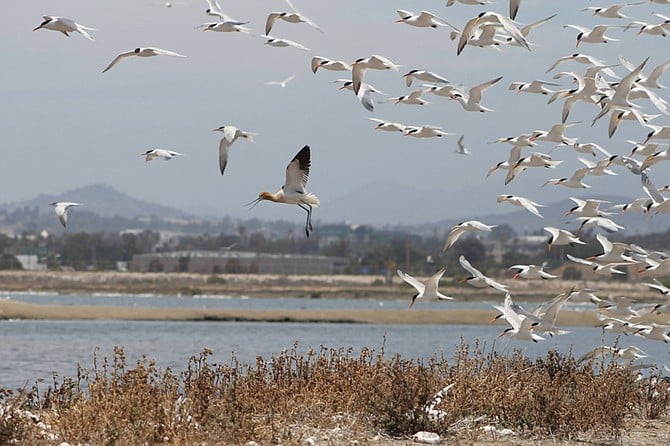
It's a great weekend to observe and identify winter migratory birds at the San Diego Bay National Wildlife Refuge.
Birdwatchers Need Not Despair just because the winter migrants are gone: plenty of shore birds can still be found on summer evenings in the natural coastal wetland areas of San Diego County. From south to north, the publicly accessible coastal wetlands include the Tijuana River Estuary, south San Diego Bay (just north of Imperial Beach and along the bay shore at Chula Vista), the San Diego River channel (inland from Sea World), Los Peñasquitos Lagoon (adjacent to Torrey Pines State Reserve), the San Dieguito River estuary, San Elijo Lagoon, Batiquitos Lagoon, Agua Hedionda Lagoon, and Buena Vista Lagoon. In and around these areas, look for California gulls, American avocets, brown pelicans, snowy egrets, killdeer, and redwing blackbirds.
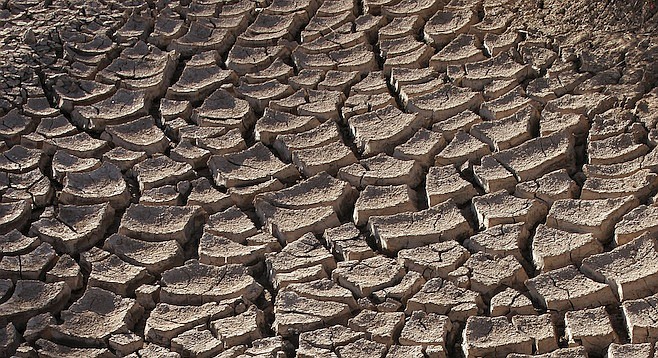
July Is San Diego’s Driest Month, according to precipitation data compiled since the year 1850. On average, only four hundredths of an inch of rain fall this month, compared to almost two inches in January, our wettest month. July also marks the beginning of a new rainfall year, as defined by local meteorological convention.
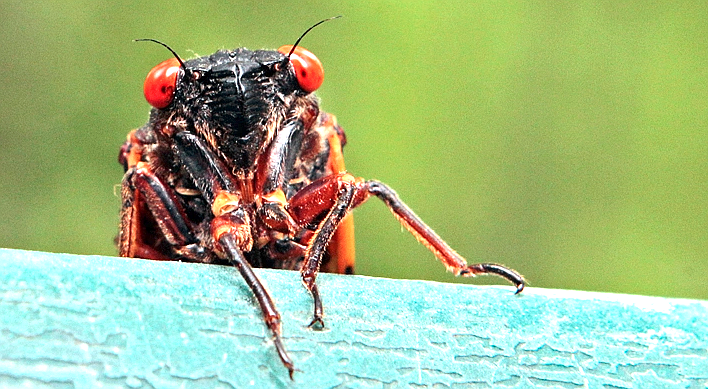
Some 30 species of cicadas inhabit San Diego County.
Cicadas, The Insects That Sound Like Tinny Buzzsaws in the brush, have been putting up a racket around San Diego lately. Occasionally mistaken for the tail buzz of a rattlesnake, the sound is merely that of a male calling to potential mates. Some 30 species of cicadas inhabit San Diego County, but none are of the famous periodical type that emerge en masse every 13 or 17 years to serenade parts of the eastern United States.
Here's something you might be interested in.
Plenty of avian action in our coastal wetlands, July is our driest month
Cicadas are often mistaken for rattlesnakes

Plenty of avian action in our coastal wetlands, July is our driest month
Cicadas are often mistaken for rattlesnakes
It's a great weekend to observe and identify winter migratory birds at the San Diego Bay National Wildlife Refuge.
Birdwatchers Need Not Despair just because the winter migrants are gone: plenty of shore birds can still be found on summer evenings in the natural coastal wetland areas of San Diego County. From south to north, the publicly accessible coastal wetlands include the Tijuana River Estuary, south San Diego Bay (just north of Imperial Beach and along the bay shore at Chula Vista), the San Diego River channel (inland from Sea World), Los Peñasquitos Lagoon (adjacent to Torrey Pines State Reserve), the San Dieguito River estuary, San Elijo Lagoon, Batiquitos Lagoon, Agua Hedionda Lagoon, and Buena Vista Lagoon. In and around these areas, look for California gulls, American avocets, brown pelicans, snowy egrets, killdeer, and redwing blackbirds.
July Is San Diego’s Driest Month, according to precipitation data compiled since the year 1850. On average, only four hundredths of an inch of rain fall this month, compared to almost two inches in January, our wettest month. July also marks the beginning of a new rainfall year, as defined by local meteorological convention.
Some 30 species of cicadas inhabit San Diego County.
Cicadas, The Insects That Sound Like Tinny Buzzsaws in the brush, have been putting up a racket around San Diego lately. Occasionally mistaken for the tail buzz of a rattlesnake, the sound is merely that of a male calling to potential mates. Some 30 species of cicadas inhabit San Diego County, but none are of the famous periodical type that emerge en masse every 13 or 17 years to serenade parts of the eastern United States.
Comments