

Here's something you might be interested in.
Ask a Hipster — Advice you didn't know you needed
Big Screen — Movie commentary
Blurt — Music's inside track
Booze News — San Diego spirits
Classical Music — Immortal beauty
Classifieds — Free and easy
Close to Home — What it’s like on the street where you live
Cover Stories — Front-page features
Drinks All Around — Bartenders' drink recipes
Excerpts — Literary and spiritual excerpts
Feast! — Food & drink reviews
Feature Stories — Local news & stories
Fishing Report — What’s getting hooked from ship and shore
From the Archives — Spotlight on the past
Golden Dreams — Talk of the town
The Gonzo Report — Making the musical scene, or at least reporting from it
Letters — Our inbox
Movies@Home — Local movie buffs share favorites
Movie Reviews — Our critics' picks and pans
Musician Interviews — Up close with local artists
Neighborhood News from Stringers — Hyperlocal news
News Ticker — News & politics
Obermeyer — San Diego politics illustrated
Outdoors — Weekly changes in flora and fauna
Overheard in San Diego — Eavesdropping illustrated
Poetry — The old and the new
Reader Travel — Travel section built by travelers
Reading — The hunt for intellectuals
Roam-O-Rama — SoCal's best hiking/biking trails
San Diego Beer — Inside San Diego suds
SD on the QT — Almost factual news
Sheep and Goats — Places of worship
Special Issues — The best of
Street Style — San Diego streets have style
Surf Diego — Real stories from those braving the waves
Theater — On stage in San Diego this week
Tin Fork — Silver spoon alternative
Under the Radar — Matt Potter's undercover work
Unforgettable — Long-ago San Diego
Unreal Estate — San Diego's priciest pads
Your Week — Daily event picks
Fish Report: Bluefin turn on the heat
Recreational lobster season begins Friday
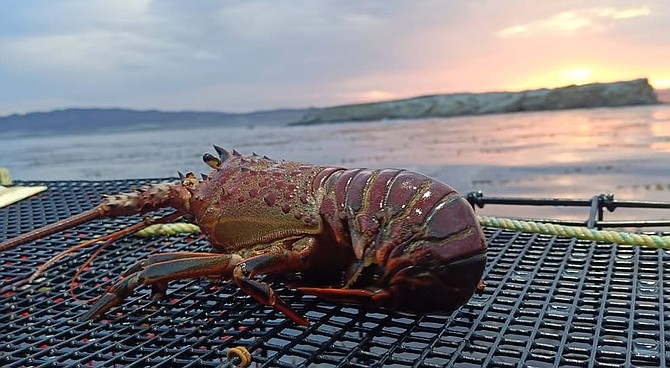
Season opener spiny lobster in Bahia Tortugas, BCS, Mexico.
Dock Totals 9/14 – 9/20: 3227 anglers aboard 151 half-day to 3-day trips out of San Diego landings over the past week caught 4 barracuda, 3991 bluefin tuna (to 249 pounds), 23 bocaccio, 985 bonito, 4 cabezon, 422 calico bass, 2 dorado, 9 halibut, 144 lingcod, 1 mako shark, 4304 rockfish, 1 rubberlip seaperch, 38 sand bass, 910 sculpin, 376 sheephead, 1028 whitefish, 6 white seabass, 16 yellowfin tuna, and 252 yellowtail.
Saltwater: Bluefin tuna seem to be biting well everywhere out there, with boats scoring big hits from the Outer Banks, San Clemente and Coronado Islands down the Baja coast. Much of the fleet limited on bluefin so early that they targeted other species for quality mixed-bag fishing: yellowtail, sheephead, rockfish, and lingcod. Most of the tuna have been on the smallish 15-pound to 30-pound size, but some larger fish to nearly 250 pounds came aboard as well. Deckhands and crews are working hard to keep their clients happy and put fish on the deck. Here is a cool video from Tracy Hartman aboard the Constitution of the action this week.

Solid bluefin caught aboard the Searcher during their 4-day Accurate Fishing sponsored trip.
It's tempting to say "giants" or "cows" when describing the larger bluefin we catch on this side of the Pacific, but the most likely reality is that they are all pre-spawn juveniles and young adults. These tuna are all from one stock which spawns in the Sea of Japan area, where high water temps averaging 76-82 degrees through the season and sargasso mats give the larvae a chance to survive. Yearlings can be as small as 22 inches and 5 pounds when they arrive in our waters, which sometimes gives rise the idea that they are spawning in the Eastern Pacific.
By the time a bluefin tuna is an adult and can spawn, it is around 150 pounds and up. That we catch them to over twice that size does not mean they are spawning here; the water is too cool and there are no sargasso mats until one gets far to the south, where we do not see any bluefin. That is due to the clockwise circulation of currents in the North Pacific, which sends cooler water south on this side and warmer water north on the other side.
By the time they are five to seven years old, bluefin return to the Western Pacific to spawn. Once there, they do not come back to this side of the ocean, but rather remain and range along the Western Pacific as far south as New Zealand, where the All-Tackle World Record Pacific Bluefin was caught at 907 pounds, 6 ounces by angler Donna Pascoe on February 19, 2014. That's more than twice the size of the California State Record of 395 pounds, 6 ounces, caught by Floyd Sparks near Tanner Bank in 2021.
Pacific bluefin are the only one of the three subspecies of bluefin tuna available to anglers in the Northern Pacific. Atlantic bluefin can grow to over 2000-pounds and are of two separate stocks: one that spawns in the Mediterranean Sea, and a western stock that spawns in the Gulf of Mexico. Southern bluefin tuna are found in all temperate waters in the southern hemisphere and grow to only about 500 pounds. That they often overlap with Pacific bluefin near New Zealand, the IGFA requires any potential southern bluefin record be DNA tested to assure it is not a Pacific.
Recreational lobster season opens this Friday, September 26th (the Friday prior to the first Wednesday in October) at 6pm, and will run until 11:59:59 pm on the first Wednesday after the 15th of March. Be sure to know the regulations and be in compliance before you head out. The usual suspects will be running lobster trips beginning this coming week, including the Alicia out of H&M Landing and the private operators that run them. Here are the DFW rules for recreational lobster harvesting for the 2025-2026 season:
Recreational Bag and Possession Limit: Seven lobsters per person.
Minimum Size Limit: 3¼ inches carapace length, measured in a straight line on the midline of the back from the rear edge of the eye socket to the rear edge of the body shell.
License Requirements: CDFW Spiny Lobster Report Card and California sport fishing license, available at CDFW's Online License Sales and Service. An Ocean Enhancement Validation is also required if fishing in ocean waters south of Point Arguello (Santa Barbara County), unless fishing under the authority of a one- or two-day California sport fishing license.
Skin and Scuba Diver Gear Restrictions: All skin and scuba divers must only use their hands to take lobster.
Pier Fishing Gear Restrictions: You may use up to 2 hoop nets while fishing from a public pier.
Vessel Fishing Gear Restrictions: You may possess up to 5 hoop nets while fishing from a vessel, but the total number of hoop nets on a vessel cannot exceed 10, even if there are more than 2 people on the boat.
Commercial lobster season here in Mexico has already begun. I can often buy them from the co-op guys if they have missing antennae or legs, as they mostly ship them overseas only if they alive and unblemished. Sheephead and other toothy fish will often nip at the legs protruding from the traps, or "pots," rendering them less valuable, and I can usually find a few for around 100 pesos each, or $6. Harvesting any shellfish or mollusks in Mexico is illegal for non-citizens. I have been told by a CONAPESCA officer that a few clams for bait or sand crabs is no big deal. Until it is. Sand crabs for bait are allowed, but clams for any reason, no bueno if caught and not a citizen. There are also vedas (closures) and permit requirements in some locations for specific species.
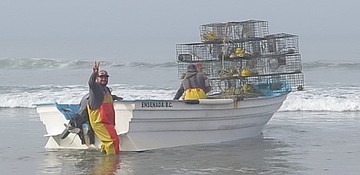
Commercial season began on September 15 in Baja, so I went to watch my local co-op friends launch their pots…and to line up a sale for some nice, slightly damaged "bugs."
As I am compiling this past week’s action, I see that a couple short-range boats have scored some more yellowfin; next week, they will be better represented in the count. Longr-range boats do not always post their catch totals, which is why I total only trips that are up to 3 days. The further south a boat goes, the more yellowfin they will find. Long-range boats have been doing quite well on yellowfin, wahoo, dorado – fish we do not see often caught within 3-day range. The tuna are biting, inshore fishing and rockfish are going off, and it’s going to get buggy out there, so, whether the beach, bay, lake, or offshore, they’re out there so go out and get ‘em!
Here's something you might be interested in.
Fish Report: Bluefin turn on the heat
Recreational lobster season begins Friday

Fish Report: Bluefin turn on the heat
Recreational lobster season begins Friday
Season opener spiny lobster in Bahia Tortugas, BCS, Mexico.
Dock Totals 9/14 – 9/20: 3227 anglers aboard 151 half-day to 3-day trips out of San Diego landings over the past week caught 4 barracuda, 3991 bluefin tuna (to 249 pounds), 23 bocaccio, 985 bonito, 4 cabezon, 422 calico bass, 2 dorado, 9 halibut, 144 lingcod, 1 mako shark, 4304 rockfish, 1 rubberlip seaperch, 38 sand bass, 910 sculpin, 376 sheephead, 1028 whitefish, 6 white seabass, 16 yellowfin tuna, and 252 yellowtail.
Saltwater: Bluefin tuna seem to be biting well everywhere out there, with boats scoring big hits from the Outer Banks, San Clemente and Coronado Islands down the Baja coast. Much of the fleet limited on bluefin so early that they targeted other species for quality mixed-bag fishing: yellowtail, sheephead, rockfish, and lingcod. Most of the tuna have been on the smallish 15-pound to 30-pound size, but some larger fish to nearly 250 pounds came aboard as well. Deckhands and crews are working hard to keep their clients happy and put fish on the deck. Here is a cool video from Tracy Hartman aboard the Constitution of the action this week.
Solid bluefin caught aboard the Searcher during their 4-day Accurate Fishing sponsored trip.
It's tempting to say "giants" or "cows" when describing the larger bluefin we catch on this side of the Pacific, but the most likely reality is that they are all pre-spawn juveniles and young adults. These tuna are all from one stock which spawns in the Sea of Japan area, where high water temps averaging 76-82 degrees through the season and sargasso mats give the larvae a chance to survive. Yearlings can be as small as 22 inches and 5 pounds when they arrive in our waters, which sometimes gives rise the idea that they are spawning in the Eastern Pacific.
By the time a bluefin tuna is an adult and can spawn, it is around 150 pounds and up. That we catch them to over twice that size does not mean they are spawning here; the water is too cool and there are no sargasso mats until one gets far to the south, where we do not see any bluefin. That is due to the clockwise circulation of currents in the North Pacific, which sends cooler water south on this side and warmer water north on the other side.
By the time they are five to seven years old, bluefin return to the Western Pacific to spawn. Once there, they do not come back to this side of the ocean, but rather remain and range along the Western Pacific as far south as New Zealand, where the All-Tackle World Record Pacific Bluefin was caught at 907 pounds, 6 ounces by angler Donna Pascoe on February 19, 2014. That's more than twice the size of the California State Record of 395 pounds, 6 ounces, caught by Floyd Sparks near Tanner Bank in 2021.
Pacific bluefin are the only one of the three subspecies of bluefin tuna available to anglers in the Northern Pacific. Atlantic bluefin can grow to over 2000-pounds and are of two separate stocks: one that spawns in the Mediterranean Sea, and a western stock that spawns in the Gulf of Mexico. Southern bluefin tuna are found in all temperate waters in the southern hemisphere and grow to only about 500 pounds. That they often overlap with Pacific bluefin near New Zealand, the IGFA requires any potential southern bluefin record be DNA tested to assure it is not a Pacific.
Recreational lobster season opens this Friday, September 26th (the Friday prior to the first Wednesday in October) at 6pm, and will run until 11:59:59 pm on the first Wednesday after the 15th of March. Be sure to know the regulations and be in compliance before you head out. The usual suspects will be running lobster trips beginning this coming week, including the Alicia out of H&M Landing and the private operators that run them. Here are the DFW rules for recreational lobster harvesting for the 2025-2026 season:
Recreational Bag and Possession Limit: Seven lobsters per person.
Minimum Size Limit: 3¼ inches carapace length, measured in a straight line on the midline of the back from the rear edge of the eye socket to the rear edge of the body shell.
License Requirements: CDFW Spiny Lobster Report Card and California sport fishing license, available at CDFW's Online License Sales and Service. An Ocean Enhancement Validation is also required if fishing in ocean waters south of Point Arguello (Santa Barbara County), unless fishing under the authority of a one- or two-day California sport fishing license.
Skin and Scuba Diver Gear Restrictions: All skin and scuba divers must only use their hands to take lobster.
Pier Fishing Gear Restrictions: You may use up to 2 hoop nets while fishing from a public pier.
Vessel Fishing Gear Restrictions: You may possess up to 5 hoop nets while fishing from a vessel, but the total number of hoop nets on a vessel cannot exceed 10, even if there are more than 2 people on the boat.
Commercial lobster season here in Mexico has already begun. I can often buy them from the co-op guys if they have missing antennae or legs, as they mostly ship them overseas only if they alive and unblemished. Sheephead and other toothy fish will often nip at the legs protruding from the traps, or "pots," rendering them less valuable, and I can usually find a few for around 100 pesos each, or $6. Harvesting any shellfish or mollusks in Mexico is illegal for non-citizens. I have been told by a CONAPESCA officer that a few clams for bait or sand crabs is no big deal. Until it is. Sand crabs for bait are allowed, but clams for any reason, no bueno if caught and not a citizen. There are also vedas (closures) and permit requirements in some locations for specific species.
Commercial season began on September 15 in Baja, so I went to watch my local co-op friends launch their pots…and to line up a sale for some nice, slightly damaged "bugs."
As I am compiling this past week’s action, I see that a couple short-range boats have scored some more yellowfin; next week, they will be better represented in the count. Longr-range boats do not always post their catch totals, which is why I total only trips that are up to 3 days. The further south a boat goes, the more yellowfin they will find. Long-range boats have been doing quite well on yellowfin, wahoo, dorado – fish we do not see often caught within 3-day range. The tuna are biting, inshore fishing and rockfish are going off, and it’s going to get buggy out there, so, whether the beach, bay, lake, or offshore, they’re out there so go out and get ‘em!
Comments