

Here's something you might be interested in.
Ask a Hipster — Advice you didn't know you needed
Big Screen — Movie commentary
Blurt — Music's inside track
Booze News — San Diego spirits
Classical Music — Immortal beauty
Classifieds — Free and easy
Close to Home — What it’s like on the street where you live
Cover Stories — Front-page features
Drinks All Around — Bartenders' drink recipes
Excerpts — Literary and spiritual excerpts
Feast! — Food & drink reviews
Feature Stories — Local news & stories
Fishing Report — What’s getting hooked from ship and shore
From the Archives — Spotlight on the past
Golden Dreams — Talk of the town
The Gonzo Report — Making the musical scene, or at least reporting from it
Letters — Our inbox
Movies@Home — Local movie buffs share favorites
Movie Reviews — Our critics' picks and pans
Musician Interviews — Up close with local artists
Neighborhood News from Stringers — Hyperlocal news
News Ticker — News & politics
Obermeyer — San Diego politics illustrated
Outdoors — Weekly changes in flora and fauna
Overheard in San Diego — Eavesdropping illustrated
Poetry — The old and the new
Reader Travel — Travel section built by travelers
Reading — The hunt for intellectuals
Roam-O-Rama — SoCal's best hiking/biking trails
San Diego Beer — Inside San Diego suds
SD on the QT — Almost factual news
Sheep and Goats — Places of worship
Special Issues — The best of
Street Style — San Diego streets have style
Surf Diego — Real stories from those braving the waves
Theater — On stage in San Diego this week
Tin Fork — Silver spoon alternative
Under the Radar — Matt Potter's undercover work
Unforgettable — Long-ago San Diego
Unreal Estate — San Diego's priciest pads
Your Week — Daily event picks
Bluefin probably not spawning off of California
Sardinas piled up in rare display of survival
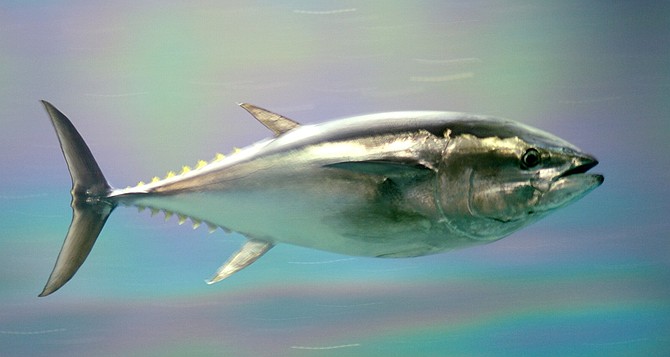
Dock Totals 6/1 – 6/7: 2481 anglers aboard 117 half-day to 3-day trips out of San Diego landings over the past week caught 15 barracuda, 1126 bluefin tuna (to 210 pounds), 31 bonito, 4 cabezon, 1219 calico bass, 10 halibut, 13 lingcod, 4443 rockfish, 133 sand bass, 88 sanddab, 261 sculpin, 148 sheephead, 66 triggerfish, 684 whitefish, 5 white seabass, and 82 yellowtail.
Saltwater: Bluefin tuna catch total for the week finally crossed the 1000-fish threshold for the first time this season. That is just the short-run fleet making 1.5 to 3-day trips; you can add a few hundred more for the long-range boats fishing them on the return leg after targeting yellowfin, wahoo, and other exotics further south. Among those caught was one with apparent eggs, or roe, found while processing the fish. A post about this on a sportfishing Facebook page elicited many comments about the possibility that the species might be spawning in Southern California waters.
To date, there have been no bluefin tuna fry found in the Eastern Pacific. But conjecture is always there, especially on social media, where you can find many “I know for a fact” comments by people who have never actually studied the life cycle of of Pacific bluefin tuna. Here is a brief description of why they do not spawn in our waters. For one thing, as stated above, in all the fine mesh netting of the surface by marine biologists, not one fry from a bluefin tuna has been found. Secondly, bluefin fry need water that is consistently above 75 degrees to survive at all, and the rate of survival goes up fast when water is 78 degrees. You would basically have to got towards Puerto Vallarta or further south to find that, or maybe the Sea of Cortez...both places where bluefin tuna are not found.
Another reason to avoid assuming that they are spawning in our waters is that the state record is 395 pounds. Bluefin return to the Sea of Japan (where they do spawn) once they are between 150 and 400 pounds, and never come back to the Eastern Pacific once they do. This has been documented by tagging projects. Sure, more studies need be done, but this is a species that grows to 1000 pounds, and we only rarely see commercial catches over 400 pounds on our side of the pond. (The world record Pacific bluefin tuna weighed 907 pounds and was caught off New Zealand.)
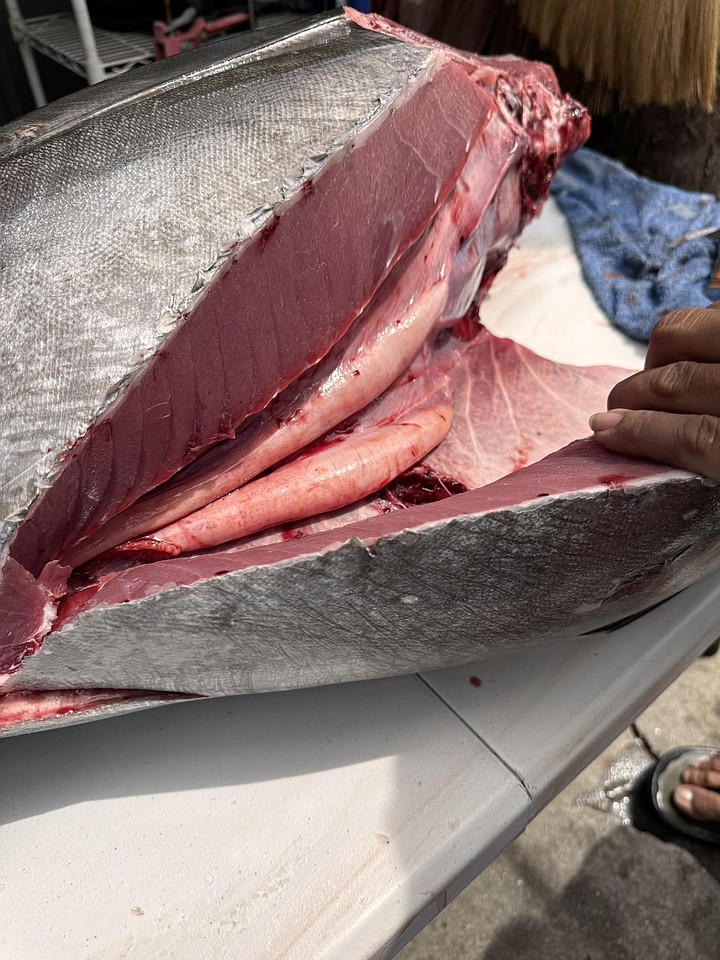
Bluefin tuna being processed with what appears to be roe in the belly.
It is a lot like when one stray albacore gets caught in these days. Social media fishing pages are quickly abuzz with "the albacore are returning" comments. No, they are not. Occasional departures from what is currently normal do not equate a trend; they are just that, an anomaly. These days, albacore pass by our latitude some 700 miles offshore, and bluefin tuna do not spawn in the Eastern Pacific. Will they someday? Who knows? Nobody could have predicted that albacore, once the mainstay of the long-gone San Diego tuna fleet, would disappear. But as it stands, even if the odd fish is carrying roe, the resultant fry would not survive in our cool waters.
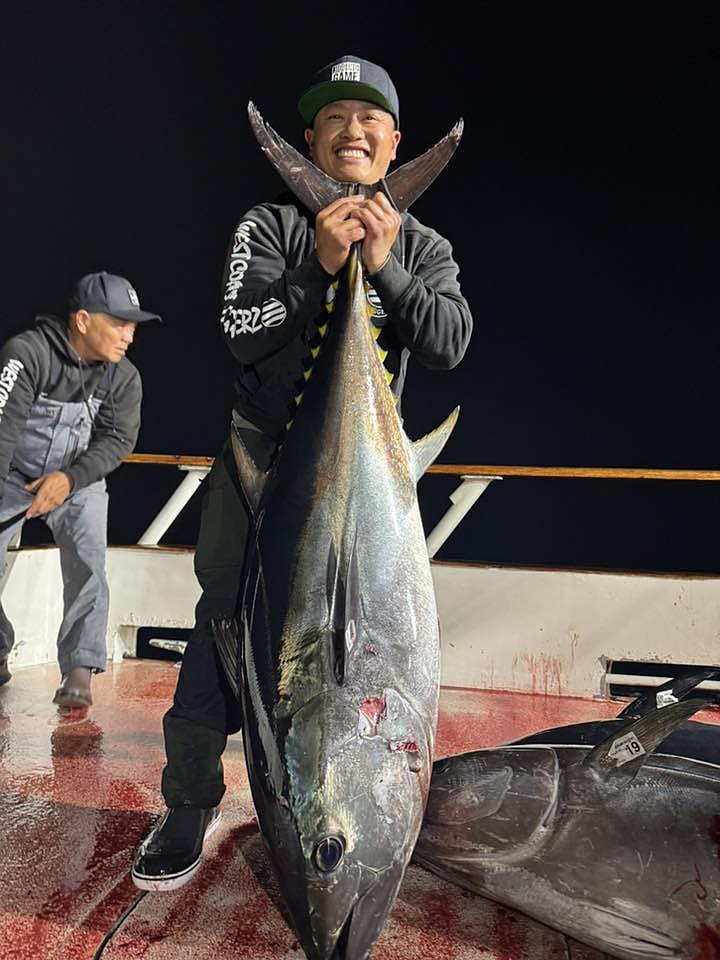
Toan Nguyen with his impressive 110-pound bluefin tuna that had roe inside doesn’t equate bluefin spawning successfully in the Eastern Pacific.
The good news is that you can still buy a fresh-off-the-boat albacore at the Tuna Harbor Dockside Market on Saturdays..Haworth and others who supply it often fish 700 miles west of Point Loma. That's too far from services for our sportboats to make the trip with with passengers aboard. That said, boats are starting to run west to San Clemente and the Cortez and Tanner banks as the bluefin have begun showing up out there. All signs are still good for great bluefin catches going forward this year: many schools have been metered and sighted by spotter planes from off of northern Baja to the Channel Islands.
Another interesting post this week came from my friend Captain Juan Cook. He posted a video from Gonzaga Bay in the upper Sea of Cortez of sardinas — the fatter cousins of our sardines, which are more common south of the border — massing on the surface while being fed upon by gamefish, namely orangemouth corvina. It is a spectacle we do not see too often: baitfish so packed that they are hoisted out of the water by their own panicked school. Even the attacking corvina are heaved out of the water. If Captain Juan’s video doesn’t get your heartbeat up a notch, you need to go fishing.
While rockfish, whitefish, and calico bass are showing well in the counts, yellowtail numbers are not a good indication of the fishing going on out there. Yellowtail have been hit and miss for the fleet, though quite a few have been caught by anglers on long range trips: private boaters from La Jolla to the Coronado Islands, and pangeros operating further south along the coast. Most of what is in the count this week were those caught by 1- to 3-day boats focusing on the bluefin bite and found under floating kelp paddies offshore.
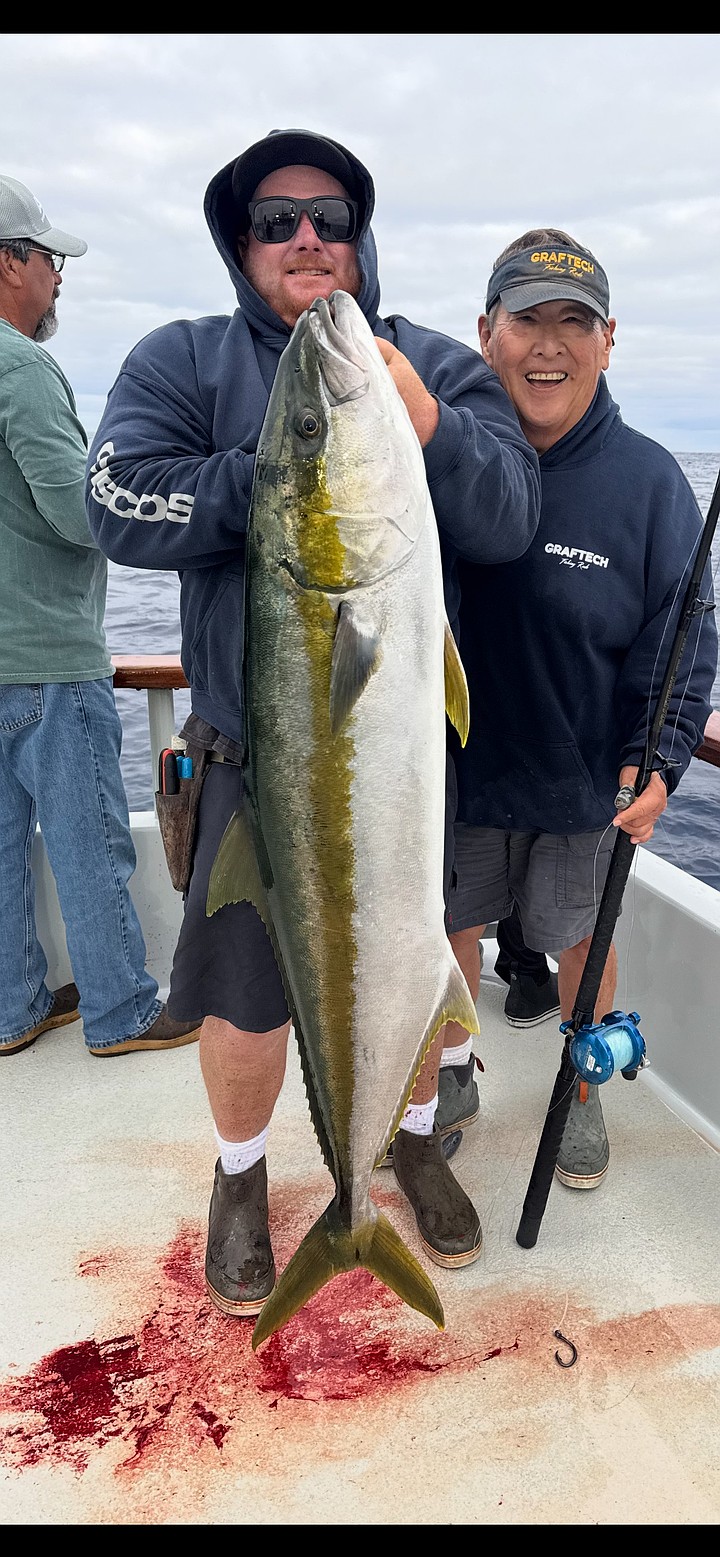
Solid yellowtail caught down the coast during the Independence 8-day run.
As with the bluefin numbers, the yellowtail count would be much higher if I included the long-range catch in the counts. But long-range boats tend to not publish their totals, so I stick with the short-run fleet to give as accurate an example as I can for number of trips, anglers, and fish caught within that parameter. Whether the beach, bay, lake, or offshore, they’re out there so go out and get ‘em!
Here's something you might be interested in.
Bluefin probably not spawning off of California
Sardinas piled up in rare display of survival

Bluefin probably not spawning off of California
Sardinas piled up in rare display of survival
Dock Totals 6/1 – 6/7: 2481 anglers aboard 117 half-day to 3-day trips out of San Diego landings over the past week caught 15 barracuda, 1126 bluefin tuna (to 210 pounds), 31 bonito, 4 cabezon, 1219 calico bass, 10 halibut, 13 lingcod, 4443 rockfish, 133 sand bass, 88 sanddab, 261 sculpin, 148 sheephead, 66 triggerfish, 684 whitefish, 5 white seabass, and 82 yellowtail.
Saltwater: Bluefin tuna catch total for the week finally crossed the 1000-fish threshold for the first time this season. That is just the short-run fleet making 1.5 to 3-day trips; you can add a few hundred more for the long-range boats fishing them on the return leg after targeting yellowfin, wahoo, and other exotics further south. Among those caught was one with apparent eggs, or roe, found while processing the fish. A post about this on a sportfishing Facebook page elicited many comments about the possibility that the species might be spawning in Southern California waters.
To date, there have been no bluefin tuna fry found in the Eastern Pacific. But conjecture is always there, especially on social media, where you can find many “I know for a fact” comments by people who have never actually studied the life cycle of of Pacific bluefin tuna. Here is a brief description of why they do not spawn in our waters. For one thing, as stated above, in all the fine mesh netting of the surface by marine biologists, not one fry from a bluefin tuna has been found. Secondly, bluefin fry need water that is consistently above 75 degrees to survive at all, and the rate of survival goes up fast when water is 78 degrees. You would basically have to got towards Puerto Vallarta or further south to find that, or maybe the Sea of Cortez...both places where bluefin tuna are not found.
Another reason to avoid assuming that they are spawning in our waters is that the state record is 395 pounds. Bluefin return to the Sea of Japan (where they do spawn) once they are between 150 and 400 pounds, and never come back to the Eastern Pacific once they do. This has been documented by tagging projects. Sure, more studies need be done, but this is a species that grows to 1000 pounds, and we only rarely see commercial catches over 400 pounds on our side of the pond. (The world record Pacific bluefin tuna weighed 907 pounds and was caught off New Zealand.)
Bluefin tuna being processed with what appears to be roe in the belly.
It is a lot like when one stray albacore gets caught in these days. Social media fishing pages are quickly abuzz with "the albacore are returning" comments. No, they are not. Occasional departures from what is currently normal do not equate a trend; they are just that, an anomaly. These days, albacore pass by our latitude some 700 miles offshore, and bluefin tuna do not spawn in the Eastern Pacific. Will they someday? Who knows? Nobody could have predicted that albacore, once the mainstay of the long-gone San Diego tuna fleet, would disappear. But as it stands, even if the odd fish is carrying roe, the resultant fry would not survive in our cool waters.
Toan Nguyen with his impressive 110-pound bluefin tuna that had roe inside doesn’t equate bluefin spawning successfully in the Eastern Pacific.
The good news is that you can still buy a fresh-off-the-boat albacore at the Tuna Harbor Dockside Market on Saturdays..Haworth and others who supply it often fish 700 miles west of Point Loma. That's too far from services for our sportboats to make the trip with with passengers aboard. That said, boats are starting to run west to San Clemente and the Cortez and Tanner banks as the bluefin have begun showing up out there. All signs are still good for great bluefin catches going forward this year: many schools have been metered and sighted by spotter planes from off of northern Baja to the Channel Islands.
Another interesting post this week came from my friend Captain Juan Cook. He posted a video from Gonzaga Bay in the upper Sea of Cortez of sardinas — the fatter cousins of our sardines, which are more common south of the border — massing on the surface while being fed upon by gamefish, namely orangemouth corvina. It is a spectacle we do not see too often: baitfish so packed that they are hoisted out of the water by their own panicked school. Even the attacking corvina are heaved out of the water. If Captain Juan’s video doesn’t get your heartbeat up a notch, you need to go fishing.
While rockfish, whitefish, and calico bass are showing well in the counts, yellowtail numbers are not a good indication of the fishing going on out there. Yellowtail have been hit and miss for the fleet, though quite a few have been caught by anglers on long range trips: private boaters from La Jolla to the Coronado Islands, and pangeros operating further south along the coast. Most of what is in the count this week were those caught by 1- to 3-day boats focusing on the bluefin bite and found under floating kelp paddies offshore.
Solid yellowtail caught down the coast during the Independence 8-day run.
As with the bluefin numbers, the yellowtail count would be much higher if I included the long-range catch in the counts. But long-range boats tend to not publish their totals, so I stick with the short-run fleet to give as accurate an example as I can for number of trips, anglers, and fish caught within that parameter. Whether the beach, bay, lake, or offshore, they’re out there so go out and get ‘em!
Comments