

Here's something you might be interested in.
Ask a Hipster — Advice you didn't know you needed
Big Screen — Movie commentary
Blurt — Music's inside track
Booze News — San Diego spirits
Classical Music — Immortal beauty
Classifieds — Free and easy
Close to Home — What it’s like on the street where you live
Cover Stories — Front-page features
Drinks All Around — Bartenders' drink recipes
Excerpts — Literary and spiritual excerpts
Feast! — Food & drink reviews
Feature Stories — Local news & stories
Fishing Report — What’s getting hooked from ship and shore
From the Archives — Spotlight on the past
Golden Dreams — Talk of the town
The Gonzo Report — Making the musical scene, or at least reporting from it
Letters — Our inbox
Movies@Home — Local movie buffs share favorites
Movie Reviews — Our critics' picks and pans
Musician Interviews — Up close with local artists
Neighborhood News from Stringers — Hyperlocal news
News Ticker — News & politics
Obermeyer — San Diego politics illustrated
Outdoors — Weekly changes in flora and fauna
Overheard in San Diego — Eavesdropping illustrated
Poetry — The old and the new
Reader Travel — Travel section built by travelers
Reading — The hunt for intellectuals
Roam-O-Rama — SoCal's best hiking/biking trails
San Diego Beer — Inside San Diego suds
SD on the QT — Almost factual news
Sheep and Goats — Places of worship
Special Issues — The best of
Street Style — San Diego streets have style
Surf Diego — Real stories from those braving the waves
Theater — On stage in San Diego this week
Tin Fork — Silver spoon alternative
Under the Radar — Matt Potter's undercover work
Unforgettable — Long-ago San Diego
Unreal Estate — San Diego's priciest pads
Your Week — Daily event picks
Fish Report: Good fishing in spite of blustery conditions
Great calico fishing down south
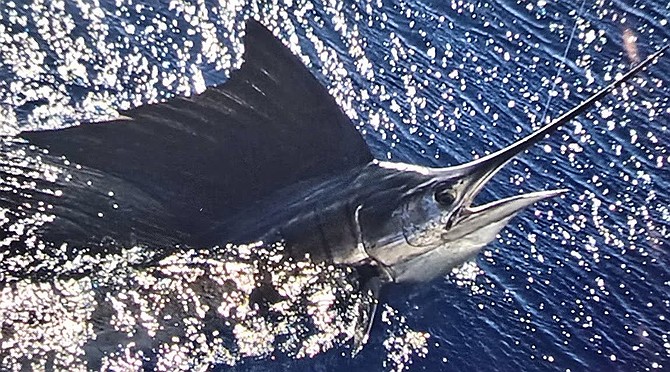
Sailfish like this one, caught during the Independence 7-day trip, are not a common sight on long-range trips targeting the Pacific side of Baja.
Dock Totals 9/7 – 9/13: 3120 anglers aboard 135 half-day to 3-day trips out of San Diego landings over the past week caught 16 barracuda, 884 bluefin tuna (to 150 pounds), 619 bonito, 5 cabezon, 662 calico bass, 12 dorado, 5 halibut, 33 lingcod, 1 mako shark, 3157 rockfish, 110 sand bass, 481 sculpin, 201 sheephead, 30 triggerfish, 588 whitefish, 1 white seabass, 32 yellowfin tuna, and 367 yellowtail.
Saltwater: Blustery conditions for most of the week kept angler numbers 25% lower than the week previous, but fishing was still very good for those who got out on the water. Moderate to strong winds made for white-cappy conditions in the afternoons especially, and the waning of Sunday’s full moon made it tough at times for the pelagic species — especially yellowfin. They seemed to sink out, with only 32 reported by the short-run fleet. (They may be picking back up, as the Sea Adventure 80 reported 15 yellowfin after returning on Sunday the 14th from a tough 2.5-day run.)
Bluefin numbers dropped commensurate with the lower angler count of those targeting them, while yellowtail dropped about 40%. As some boats elected to remain more coastal, the bonito count went up four-fold, and rockfish numbers were close to equal. Some of those bonito have been popping up out near San Clemente Island, but most of it was within range of the half-day fleet. San Clemente Island and the Outer Banks — including Tanner to the southwest, and up north near the Snail Bank — is where a good part of the bluefin action is, although some boats tucked into the south side lee and plunked some quality fish to 60 pounds off the anchor.
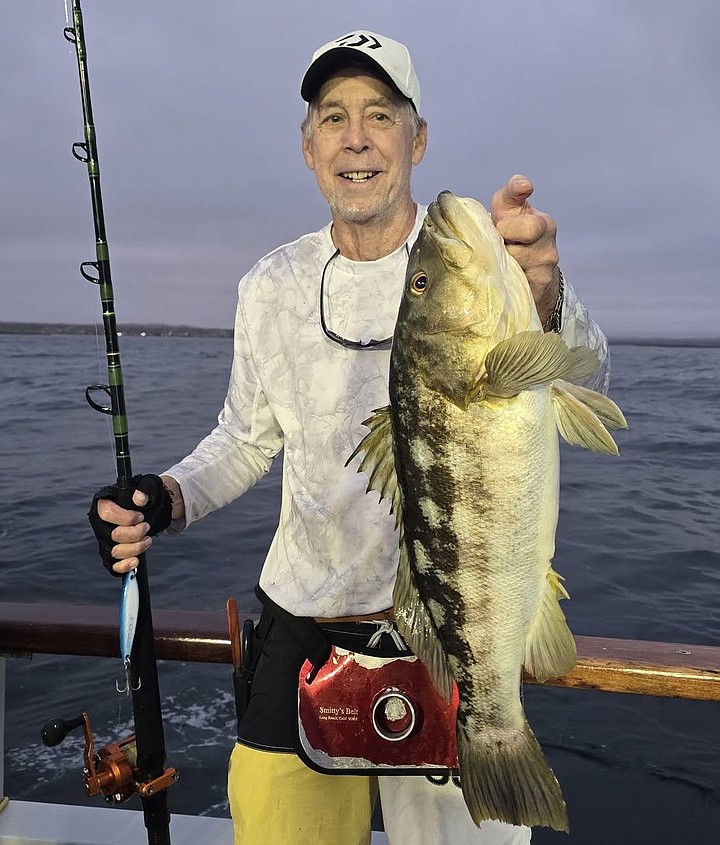
Solid Calico Bass, one of many caught and released from the Independence along the coast of the mid-Baja Peninsula.
It's not that it was "blown out" all week, just choppy and tough at times. So there were pleasant outings and a shot at fish further out. It seems there has been a good concentration of boats out at the banks — including the Snail — that lie about a third of the way between San Clemente’s north end and San Nicholas Island. It is a long run out there but about equal to the run to Cortez and Tanner banks, so within 1.5-day range. Boats running south have been plucking a few bluefin from around the Coronado Islands and yellowfin further south from waters west of Ensenada.
With north winds pushing along the Pacific side of the Baja Peninsula, pangeros and long-range boats often sought shelter along the coast or in the lee of islands to get some fishing in. Given biosphere restrictions, the sportboats out of San Diego maintain distance from protected areas, but that still allows for some of the excellent coastal yellowtail and calico bass fishing, as the Independence reported on their last day coming back from their UC Rod 7-Day trip, which featured great tuna fishing and even a rare sailfish (that was released). Generally, we see sailfish more often on the east side of the southern tip of Baja and across and down the mainland in much warmer water.
I experienced quite a bit of that great mid-peninsula calico action when I lived in Bahia Asuncion from 2019 to 2022. A town centered on a fishing coopertiva established in 1939, Bahia Asuncion is a kayak angler’s dream, with easy access by way of a sheltered launch to world-class fishing within a mile of shore. Located toward the southern end of the kelp forest biosphere, Isla Asuncion and especially Isla San Roque kelps and reefs hold monster calicos. I have paddled out and caught dozens of calicos in the five- to ten-pound range on days when I caught very few under our minimum limit of 14 inches. Still, most were catch and release, and that fishery still has little pressure, as the locals do not target them so much.
Bahia Asuncion was an angler’s Nirvana, for sure, but I now live in San Quintin, back again after moving here first in 2015. San Quintin sits about 160 miles south of the border and while it is a great fishing destination, it is mostly a farming community — a series of towns along the highway centering on San Quintin in the valley between Camalu and El Rosario. I am in the southernmost development along the coast before you get to El Rosario which is 30 miles to the south. Weather here is much cooler and breezier than Asuncion and it can get quite dusty, so much so that the local nickname is ‘San Polvin’ (polvo means dust).
That said, there is an excellent fishery here for calicos as well, albeit further offshore and around San Martin Island. Asuncion was more accommodating for kayak fishing in open ocean, but I have caught several personal bests in the San Quintin Bay mouth, where currents gut out trenches that can hold large halibut and black seabass. One problem here is that tides and wind can often hamper access and fishing in the bay mouth, let alone offshore. But fewer good days for kayak fishing means I just spend more time hitting the surf. And that I now have Rona, my rescued blind street mutt, I tend to keep her with me wherever I go. She loves running on the beach.
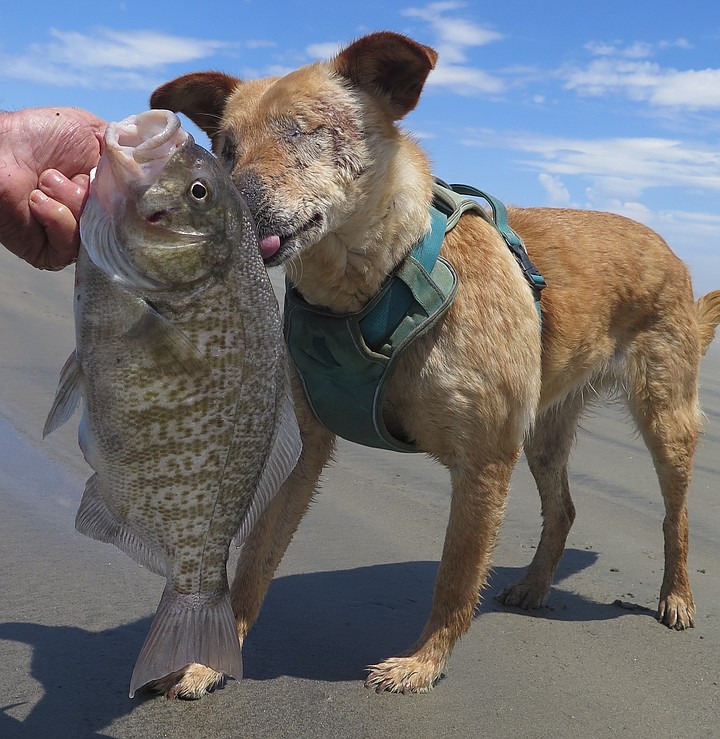
Lately, it’s been mostly surf perch and a few corbina and halibut from the sand while Rona romps and chases waves. She was run over last September, and was okay except for her prolapsed eyes, so we took her on rather than put her down. Since losing my wingman Flash Gordon in April, I am Rona’s only guide, so that’s the gig. And right now, she is "booping" me with her nose because it is time to go hit the beach. So, whether the beach, bay, lake, or offshore, they’re out there so go out and get ‘em!
Here's something you might be interested in.
Fish Report: Good fishing in spite of blustery conditions
Great calico fishing down south

Fish Report: Good fishing in spite of blustery conditions
Great calico fishing down south
Sailfish like this one, caught during the Independence 7-day trip, are not a common sight on long-range trips targeting the Pacific side of Baja.
Dock Totals 9/7 – 9/13: 3120 anglers aboard 135 half-day to 3-day trips out of San Diego landings over the past week caught 16 barracuda, 884 bluefin tuna (to 150 pounds), 619 bonito, 5 cabezon, 662 calico bass, 12 dorado, 5 halibut, 33 lingcod, 1 mako shark, 3157 rockfish, 110 sand bass, 481 sculpin, 201 sheephead, 30 triggerfish, 588 whitefish, 1 white seabass, 32 yellowfin tuna, and 367 yellowtail.
Saltwater: Blustery conditions for most of the week kept angler numbers 25% lower than the week previous, but fishing was still very good for those who got out on the water. Moderate to strong winds made for white-cappy conditions in the afternoons especially, and the waning of Sunday’s full moon made it tough at times for the pelagic species — especially yellowfin. They seemed to sink out, with only 32 reported by the short-run fleet. (They may be picking back up, as the Sea Adventure 80 reported 15 yellowfin after returning on Sunday the 14th from a tough 2.5-day run.)
Bluefin numbers dropped commensurate with the lower angler count of those targeting them, while yellowtail dropped about 40%. As some boats elected to remain more coastal, the bonito count went up four-fold, and rockfish numbers were close to equal. Some of those bonito have been popping up out near San Clemente Island, but most of it was within range of the half-day fleet. San Clemente Island and the Outer Banks — including Tanner to the southwest, and up north near the Snail Bank — is where a good part of the bluefin action is, although some boats tucked into the south side lee and plunked some quality fish to 60 pounds off the anchor.
Solid Calico Bass, one of many caught and released from the Independence along the coast of the mid-Baja Peninsula.
It's not that it was "blown out" all week, just choppy and tough at times. So there were pleasant outings and a shot at fish further out. It seems there has been a good concentration of boats out at the banks — including the Snail — that lie about a third of the way between San Clemente’s north end and San Nicholas Island. It is a long run out there but about equal to the run to Cortez and Tanner banks, so within 1.5-day range. Boats running south have been plucking a few bluefin from around the Coronado Islands and yellowfin further south from waters west of Ensenada.
With north winds pushing along the Pacific side of the Baja Peninsula, pangeros and long-range boats often sought shelter along the coast or in the lee of islands to get some fishing in. Given biosphere restrictions, the sportboats out of San Diego maintain distance from protected areas, but that still allows for some of the excellent coastal yellowtail and calico bass fishing, as the Independence reported on their last day coming back from their UC Rod 7-Day trip, which featured great tuna fishing and even a rare sailfish (that was released). Generally, we see sailfish more often on the east side of the southern tip of Baja and across and down the mainland in much warmer water.
I experienced quite a bit of that great mid-peninsula calico action when I lived in Bahia Asuncion from 2019 to 2022. A town centered on a fishing coopertiva established in 1939, Bahia Asuncion is a kayak angler’s dream, with easy access by way of a sheltered launch to world-class fishing within a mile of shore. Located toward the southern end of the kelp forest biosphere, Isla Asuncion and especially Isla San Roque kelps and reefs hold monster calicos. I have paddled out and caught dozens of calicos in the five- to ten-pound range on days when I caught very few under our minimum limit of 14 inches. Still, most were catch and release, and that fishery still has little pressure, as the locals do not target them so much.
Bahia Asuncion was an angler’s Nirvana, for sure, but I now live in San Quintin, back again after moving here first in 2015. San Quintin sits about 160 miles south of the border and while it is a great fishing destination, it is mostly a farming community — a series of towns along the highway centering on San Quintin in the valley between Camalu and El Rosario. I am in the southernmost development along the coast before you get to El Rosario which is 30 miles to the south. Weather here is much cooler and breezier than Asuncion and it can get quite dusty, so much so that the local nickname is ‘San Polvin’ (polvo means dust).
That said, there is an excellent fishery here for calicos as well, albeit further offshore and around San Martin Island. Asuncion was more accommodating for kayak fishing in open ocean, but I have caught several personal bests in the San Quintin Bay mouth, where currents gut out trenches that can hold large halibut and black seabass. One problem here is that tides and wind can often hamper access and fishing in the bay mouth, let alone offshore. But fewer good days for kayak fishing means I just spend more time hitting the surf. And that I now have Rona, my rescued blind street mutt, I tend to keep her with me wherever I go. She loves running on the beach.
Lately, it’s been mostly surf perch and a few corbina and halibut from the sand while Rona romps and chases waves. She was run over last September, and was okay except for her prolapsed eyes, so we took her on rather than put her down. Since losing my wingman Flash Gordon in April, I am Rona’s only guide, so that’s the gig. And right now, she is "booping" me with her nose because it is time to go hit the beach. So, whether the beach, bay, lake, or offshore, they’re out there so go out and get ‘em!
Comments