

Here's something you might be interested in.
Ask a Hipster — Advice you didn't know you needed
Big Screen — Movie commentary
Blurt — Music's inside track
Booze News — San Diego spirits
Classical Music — Immortal beauty
Classifieds — Free and easy
Close to Home — What it’s like on the street where you live
Cover Stories — Front-page features
Drinks All Around — Bartenders' drink recipes
Excerpts — Literary and spiritual excerpts
Feast! — Food & drink reviews
Feature Stories — Local news & stories
Fishing Report — What’s getting hooked from ship and shore
From the Archives — Spotlight on the past
Golden Dreams — Talk of the town
The Gonzo Report — Making the musical scene, or at least reporting from it
Letters — Our inbox
Movies@Home — Local movie buffs share favorites
Movie Reviews — Our critics' picks and pans
Musician Interviews — Up close with local artists
Neighborhood News from Stringers — Hyperlocal news
News Ticker — News & politics
Obermeyer — San Diego politics illustrated
Outdoors — Weekly changes in flora and fauna
Overheard in San Diego — Eavesdropping illustrated
Poetry — The old and the new
Reader Travel — Travel section built by travelers
Reading — The hunt for intellectuals
Roam-O-Rama — SoCal's best hiking/biking trails
San Diego Beer — Inside San Diego suds
SD on the QT — Almost factual news
Sheep and Goats — Places of worship
Special Issues — The best of
Street Style — San Diego streets have style
Surf Diego — Real stories from those braving the waves
Theater — On stage in San Diego this week
Tin Fork — Silver spoon alternative
Under the Radar — Matt Potter's undercover work
Unforgettable — Long-ago San Diego
Unreal Estate — San Diego's priciest pads
Your Week — Daily event picks
Starting with seeds, a boomlet in San Diego's swapping
One hitch is the left-overs
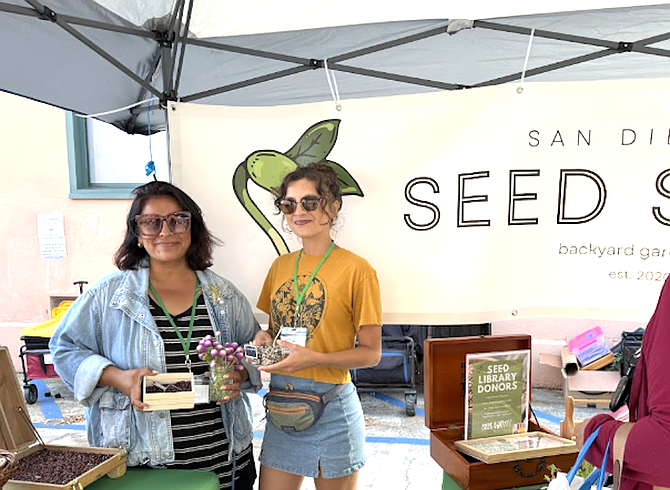
“We want to make it really easy,” said Cassandra Smith, one half of San Diego Seed Swap. The other half is Cristina Santa Maria.
Bartering in San Diego is having a moment. Long a practice between neighbors, friends, Facebook groups, farmers, businesses, and maybe some not-so-above-board operators, trading this for that has not been, typically, a consumer-facing activity. But now, swapping stuff is becoming a customer-focused enterprise, and it's getting bigger.
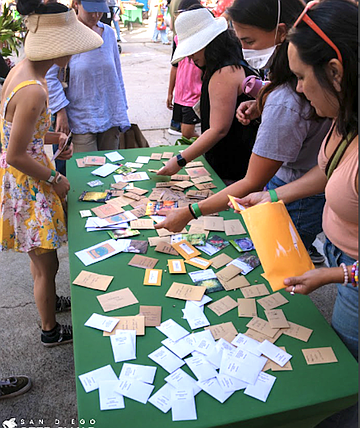
When lockdown lifted, they started organizing in-person free seed-swap events.
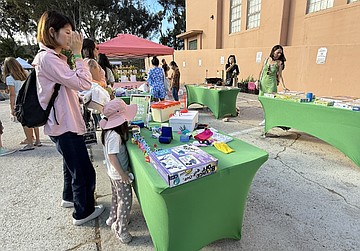
Small swap events around town in the past few years have concentrated on one or two categories of goods, like books or seeds. But interest and participation are growing, and a bigger event called Swap it Like it's Hot, held at Liberty Station, recently displayed San Diego's burgeoning barter economy. Swappable items ranged from seeds and plants, to toys and games, to clothing, crafts, fabric and fibers, and books. According to event organizers, 600 people showed up — some empty-handed, which is perfectly fine. The point here is sharing for sustainability purposes, not necessarily making sure everyone puts in as much as they take out.
“We want to make it really easy, we want people to feel okay about swapping or simply taking something home to reuse, instead of it going to the landfill,” said Cassandra Smith, one half of San Diego Seed Swap, the main force behind the event. The other half is Cristina Santa Maria, who lives in Paradise Hills and studied wildlife management and conservation.
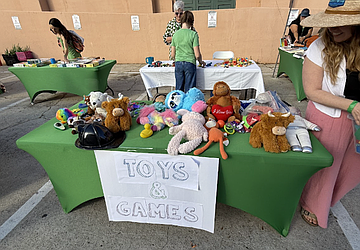
“We want to inspire our kids, to show that sharing can be a lifetime practice, and that they can also follow their passions and turn them into something productive,” Tina said.
Cass and Tina met during the pandemic and began trading seeds by mail among friends, when backyard gardening was booming but was plagued by a shortage of seeds for sale in the usual markets. When lockdown lifted, they started organizing in-person free seed-swap events, and those grew quickly. In October 2024 SDSS teamed up with San Diego Air and Space Museum (where Cass used to work) for a swap that attracted about 500 attendees, with seeds, plants, vendors, crafts, and free museum admission.
“We were excited to support a grassroots non-profit that brings the community together while providing a sustainable service,” said Melissa Paris, director of events at the museum.
“The circular economy is exciting, but in our society it’s a cultural shift.”
“It’s also a great way to attract a new crowd, who might decide to visit the museum again with family or host an event here,” Paris added.
San Diego Book Swap Society, the local chapter of a national brand, has found that swapping mixes well with alcohol. Mission Brewing, Uvas Winery, Weir Beer, and Duckfoot Brewing have all hosted book swaps; a $5 ticket fee goes toward marketing, and the businesses get a reliable crowd that will probably pony up for a few drinks.
Jean Edwards-Herold started a side quest called Commonplace to help these businesses host swaps, though it doesn’t bring in any income for her. “I think what I love most is getting together with the community—and the treasures—and the dopamine, when you see someone taking home something you brought to give away.
“The circular economy is exciting, but in our society it’s a cultural shift,” Jean continued. “It’s embedded in our culture to get something new instead of swapping or repairing something we’ve used.”
Commonplace partners with small businesses to host swaps during slower times, boosting traffic while projecting a message that they value sustainable practices. Jean said the average event attracts about 40 people.
Good Loop Clothing takes a more corporate approach, partnering with large businesses in Los Angeles and San Diego. Good Loop’s event in April 2024 at UTC mall saw 2,000 swappers and almost 10,000 pieces of clothing.
As far as veteran swappers Cass and Tina know, Swap it Like it’s Hot, on September 20, was the largest-scale free swap event with various goods (not limited to seeds, clothes, or books) in San Diego to date. Non-profit San Diego Craft Collective at Liberty Station provided outdoor space for Swap it Like It’s Hot, secured a grant to cover signage and infrastructure, and hosted the fiber, yarn, and fabric component.
“Swaps show us that value doesn’t always come with a price tag—sometimes the most meaningful exchanges are about trust, generosity, and creativity,” said SD Craft Collective president Steffanie Dotson.
But Cass, who has a background in event planning, estimates that if everything at Swap it Like It’s Hot wasn’t donated or covered by grant money — including space, equipment, signage, and advertising — the price tag would be about $10,000. City Farmers Nursery, Tru Organic, Epic Gardening, and Republic Services all donated time and supplies to round out the offerings. “We want it to feel professional, like people paid to come here,” Cass said.
A few sustainability-focused vendors with traditional cash-for-goods businesses were at the swap, too, hoping to make connections with like-minded folks. “We don’t charge vendors for participation,” Cass explained, “we are glad to help them promote products made from thrifted items or with local and sustainable ingredients.”
But Cass and Jean agree that it can be challenging to deal with the swapping leftovers. Cass squirrels away extra items for future events or donations. “There has to be a way to reuse all those clothes after a swap,” Jean said. “We’re exploring how to take it to the next level.”
Here's something you might be interested in.
Starting with seeds, a boomlet in San Diego's swapping
One hitch is the left-overs

Starting with seeds, a boomlet in San Diego's swapping
One hitch is the left-overs
“We want to make it really easy,” said Cassandra Smith, one half of San Diego Seed Swap. The other half is Cristina Santa Maria.
Bartering in San Diego is having a moment. Long a practice between neighbors, friends, Facebook groups, farmers, businesses, and maybe some not-so-above-board operators, trading this for that has not been, typically, a consumer-facing activity. But now, swapping stuff is becoming a customer-focused enterprise, and it's getting bigger.
When lockdown lifted, they started organizing in-person free seed-swap events.
Small swap events around town in the past few years have concentrated on one or two categories of goods, like books or seeds. But interest and participation are growing, and a bigger event called Swap it Like it's Hot, held at Liberty Station, recently displayed San Diego's burgeoning barter economy. Swappable items ranged from seeds and plants, to toys and games, to clothing, crafts, fabric and fibers, and books. According to event organizers, 600 people showed up — some empty-handed, which is perfectly fine. The point here is sharing for sustainability purposes, not necessarily making sure everyone puts in as much as they take out.
“We want to make it really easy, we want people to feel okay about swapping or simply taking something home to reuse, instead of it going to the landfill,” said Cassandra Smith, one half of San Diego Seed Swap, the main force behind the event. The other half is Cristina Santa Maria, who lives in Paradise Hills and studied wildlife management and conservation.
“We want to inspire our kids, to show that sharing can be a lifetime practice, and that they can also follow their passions and turn them into something productive,” Tina said.
Cass and Tina met during the pandemic and began trading seeds by mail among friends, when backyard gardening was booming but was plagued by a shortage of seeds for sale in the usual markets. When lockdown lifted, they started organizing in-person free seed-swap events, and those grew quickly. In October 2024 SDSS teamed up with San Diego Air and Space Museum (where Cass used to work) for a swap that attracted about 500 attendees, with seeds, plants, vendors, crafts, and free museum admission.
“We were excited to support a grassroots non-profit that brings the community together while providing a sustainable service,” said Melissa Paris, director of events at the museum.
“The circular economy is exciting, but in our society it’s a cultural shift.”
“It’s also a great way to attract a new crowd, who might decide to visit the museum again with family or host an event here,” Paris added.
San Diego Book Swap Society, the local chapter of a national brand, has found that swapping mixes well with alcohol. Mission Brewing, Uvas Winery, Weir Beer, and Duckfoot Brewing have all hosted book swaps; a $5 ticket fee goes toward marketing, and the businesses get a reliable crowd that will probably pony up for a few drinks.
Jean Edwards-Herold started a side quest called Commonplace to help these businesses host swaps, though it doesn’t bring in any income for her. “I think what I love most is getting together with the community—and the treasures—and the dopamine, when you see someone taking home something you brought to give away.
“The circular economy is exciting, but in our society it’s a cultural shift,” Jean continued. “It’s embedded in our culture to get something new instead of swapping or repairing something we’ve used.”
Commonplace partners with small businesses to host swaps during slower times, boosting traffic while projecting a message that they value sustainable practices. Jean said the average event attracts about 40 people.
Good Loop Clothing takes a more corporate approach, partnering with large businesses in Los Angeles and San Diego. Good Loop’s event in April 2024 at UTC mall saw 2,000 swappers and almost 10,000 pieces of clothing.
As far as veteran swappers Cass and Tina know, Swap it Like it’s Hot, on September 20, was the largest-scale free swap event with various goods (not limited to seeds, clothes, or books) in San Diego to date. Non-profit San Diego Craft Collective at Liberty Station provided outdoor space for Swap it Like It’s Hot, secured a grant to cover signage and infrastructure, and hosted the fiber, yarn, and fabric component.
“Swaps show us that value doesn’t always come with a price tag—sometimes the most meaningful exchanges are about trust, generosity, and creativity,” said SD Craft Collective president Steffanie Dotson.
But Cass, who has a background in event planning, estimates that if everything at Swap it Like It’s Hot wasn’t donated or covered by grant money — including space, equipment, signage, and advertising — the price tag would be about $10,000. City Farmers Nursery, Tru Organic, Epic Gardening, and Republic Services all donated time and supplies to round out the offerings. “We want it to feel professional, like people paid to come here,” Cass said.
A few sustainability-focused vendors with traditional cash-for-goods businesses were at the swap, too, hoping to make connections with like-minded folks. “We don’t charge vendors for participation,” Cass explained, “we are glad to help them promote products made from thrifted items or with local and sustainable ingredients.”
But Cass and Jean agree that it can be challenging to deal with the swapping leftovers. Cass squirrels away extra items for future events or donations. “There has to be a way to reuse all those clothes after a swap,” Jean said. “We’re exploring how to take it to the next level.”