

Here's something you might be interested in.
Ask a Hipster — Advice you didn't know you needed
Big Screen — Movie commentary
Blurt — Music's inside track
Booze News — San Diego spirits
Classical Music — Immortal beauty
Classifieds — Free and easy
Close to Home — What it’s like on the street where you live
Cover Stories — Front-page features
Drinks All Around — Bartenders' drink recipes
Excerpts — Literary and spiritual excerpts
Feast! — Food & drink reviews
Feature Stories — Local news & stories
Fishing Report — What’s getting hooked from ship and shore
From the Archives — Spotlight on the past
Golden Dreams — Talk of the town
The Gonzo Report — Making the musical scene, or at least reporting from it
Letters — Our inbox
Movies@Home — Local movie buffs share favorites
Movie Reviews — Our critics' picks and pans
Musician Interviews — Up close with local artists
Neighborhood News from Stringers — Hyperlocal news
News Ticker — News & politics
Obermeyer — San Diego politics illustrated
Outdoors — Weekly changes in flora and fauna
Overheard in San Diego — Eavesdropping illustrated
Poetry — The old and the new
Reader Travel — Travel section built by travelers
Reading — The hunt for intellectuals
Roam-O-Rama — SoCal's best hiking/biking trails
San Diego Beer — Inside San Diego suds
SD on the QT — Almost factual news
Sheep and Goats — Places of worship
Special Issues — The best of
Street Style — San Diego streets have style
Surf Diego — Real stories from those braving the waves
Theater — On stage in San Diego this week
Tin Fork — Silver spoon alternative
Under the Radar — Matt Potter's undercover work
Unforgettable — Long-ago San Diego
Unreal Estate — San Diego's priciest pads
Your Week — Daily event picks
It's Orb Weaver Season, Surf Scoters are returning to the bay
"Super" Harvest Moon brings October's highest tides
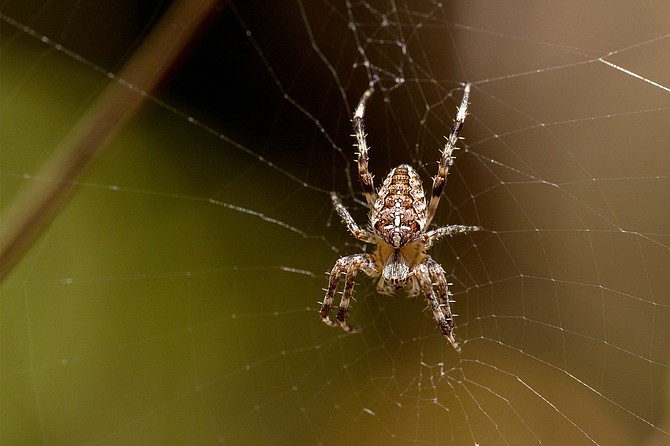
Orb Weaver Spiders often weave webs spanning sidewalks and driveways, watch out tall people!
It's Orb Weaver Spider Season, in case you haven’t already noticed. But if you’re over six feet tall and enjoy evening walks, you’ve probably “faced” a few webs in recent weeks. Orb Weavers come out evenings and weave big circular webs, which can reach several feet between trees and often span a sidewalk or driveway in residential areas. A well-fed female can be as large as 4 centimeters, but while her brown, yellow, and orange colors might look scary, she rarely bites. If you run into an Orb Weaver’s web, they will usually scuttle away and start building a new one.
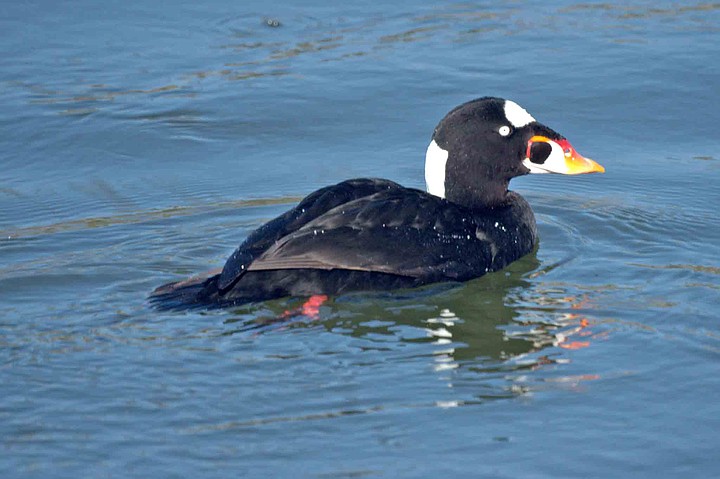
The surf scoter is a small sea duck with a bright yellow, orange, and white bill.
The Surf Scoter Is A Small Sea Duck that typically arrives in Southern California in the fall. By winter, they are the most common bird found in the San Diego Bay. Males are mostly black with a white, orange, and bright yellow bill. Females are slightly smaller and browner. They feed on clams, mussels and other invertebrates by diving more than 30 feet to the sea floor.
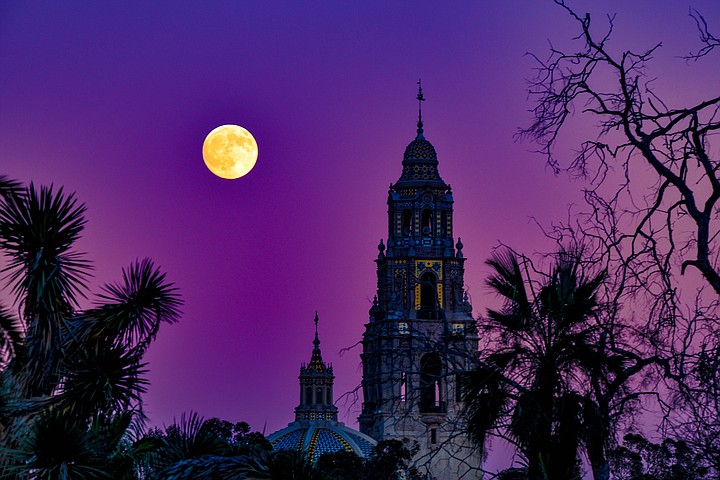
Balboa Park - Harvest Moon
Harvest Moon Is The Name Given To This Month’s Full Moon on Monday, October 6 — approximately two weeks after the autumnal equinox. Like any full moon, the Harvest Moon rises around the same time for several nights in a row. Its peculiarity is this: for a period of about four or five days centered on the time of full Moon, the moonrise on a given evening is only about 30 minutes later than the moonrise on the previous evening (as seen from San Diego). This compares to a 50-minute delay averaged over all the days of a whole month. At more northerly latitudes, the nightly delay of a rising Harvest Moon is reduced to only 10 or 20 minutes. The Harvest Moon acquired its name in the grain belts of Europe and North America more than a century ago: harvesting could continue well into the night with the help of a full or near-full moon that rose dependably around sunset several days in a row. October's full Moon is also the first of three consecutive supermoons; because it is at perigree (it's closest point to earth), it will be largest and brightest full Moon of the year.
Highest Tides For October Are Predicted For 10:18 am On Wednesday the 8th (+7.05 feet) and for 10:55 am on Thursday the 9th (+7:09 feet). The month’s lowest tide (a not-very-low minus 0.89 feet) will occur on Wednesday afternoon, at 5:05 pm. This is the beginning of the six-month-long “season” in which strongly negative tides will occur during afternoon hours — a time of day well suited for exploring tidepools in the lowest-lying intertidal zones.
Here's something you might be interested in.
It's Orb Weaver Season, Surf Scoters are returning to the bay
"Super" Harvest Moon brings October's highest tides

It's Orb Weaver Season, Surf Scoters are returning to the bay
"Super" Harvest Moon brings October's highest tides
Orb Weaver Spiders often weave webs spanning sidewalks and driveways, watch out tall people!
It's Orb Weaver Spider Season, in case you haven’t already noticed. But if you’re over six feet tall and enjoy evening walks, you’ve probably “faced” a few webs in recent weeks. Orb Weavers come out evenings and weave big circular webs, which can reach several feet between trees and often span a sidewalk or driveway in residential areas. A well-fed female can be as large as 4 centimeters, but while her brown, yellow, and orange colors might look scary, she rarely bites. If you run into an Orb Weaver’s web, they will usually scuttle away and start building a new one.
The surf scoter is a small sea duck with a bright yellow, orange, and white bill.
The Surf Scoter Is A Small Sea Duck that typically arrives in Southern California in the fall. By winter, they are the most common bird found in the San Diego Bay. Males are mostly black with a white, orange, and bright yellow bill. Females are slightly smaller and browner. They feed on clams, mussels and other invertebrates by diving more than 30 feet to the sea floor.
Balboa Park - Harvest Moon
Harvest Moon Is The Name Given To This Month’s Full Moon on Monday, October 6 — approximately two weeks after the autumnal equinox. Like any full moon, the Harvest Moon rises around the same time for several nights in a row. Its peculiarity is this: for a period of about four or five days centered on the time of full Moon, the moonrise on a given evening is only about 30 minutes later than the moonrise on the previous evening (as seen from San Diego). This compares to a 50-minute delay averaged over all the days of a whole month. At more northerly latitudes, the nightly delay of a rising Harvest Moon is reduced to only 10 or 20 minutes. The Harvest Moon acquired its name in the grain belts of Europe and North America more than a century ago: harvesting could continue well into the night with the help of a full or near-full moon that rose dependably around sunset several days in a row. October's full Moon is also the first of three consecutive supermoons; because it is at perigree (it's closest point to earth), it will be largest and brightest full Moon of the year.
Highest Tides For October Are Predicted For 10:18 am On Wednesday the 8th (+7.05 feet) and for 10:55 am on Thursday the 9th (+7:09 feet). The month’s lowest tide (a not-very-low minus 0.89 feet) will occur on Wednesday afternoon, at 5:05 pm. This is the beginning of the six-month-long “season” in which strongly negative tides will occur during afternoon hours — a time of day well suited for exploring tidepools in the lowest-lying intertidal zones.
Comments