

Here's something you might be interested in.
Ask a Hipster — Advice you didn't know you needed
Big Screen — Movie commentary
Blurt — Music's inside track
Booze News — San Diego spirits
Classical Music — Immortal beauty
Classifieds — Free and easy
Close to Home — What it’s like on the street where you live
Cover Stories — Front-page features
Drinks All Around — Bartenders' drink recipes
Excerpts — Literary and spiritual excerpts
Feast! — Food & drink reviews
Feature Stories — Local news & stories
Fishing Report — What’s getting hooked from ship and shore
From the Archives — Spotlight on the past
Golden Dreams — Talk of the town
The Gonzo Report — Making the musical scene, or at least reporting from it
Letters — Our inbox
Movies@Home — Local movie buffs share favorites
Movie Reviews — Our critics' picks and pans
Musician Interviews — Up close with local artists
Neighborhood News from Stringers — Hyperlocal news
News Ticker — News & politics
Obermeyer — San Diego politics illustrated
Outdoors — Weekly changes in flora and fauna
Overheard in San Diego — Eavesdropping illustrated
Poetry — The old and the new
Reader Travel — Travel section built by travelers
Reading — The hunt for intellectuals
Roam-O-Rama — SoCal's best hiking/biking trails
San Diego Beer — Inside San Diego suds
SD on the QT — Almost factual news
Sheep and Goats — Places of worship
Special Issues — The best of
Street Style — San Diego streets have style
Surf Diego — Real stories from those braving the waves
Theater — On stage in San Diego this week
Tin Fork — Silver spoon alternative
Under the Radar — Matt Potter's undercover work
Unforgettable — Long-ago San Diego
Unreal Estate — San Diego's priciest pads
Your Week — Daily event picks
Save the San Diego Reader, Day Seven
Bush, Steffenhagen, and musical aficion
Dear San Diego,
First, I want to think everyone who has donated so far to our fundraising campaign. Your generosity has been moving, almost as much as the messages of support that have accompanied your donations. For those who have not yet donated: it’s not too late. But we have just four days left to reach our goal. Please enjoy this story from our music department, and consider supporting the Reader in its hour of need.
Gratefully,
Matthew Lickona
Owner/Editor
San Diego Reader
We often talked about bulls and bull-fighters. I had stopped at the Montoya for several years…Men would come in from distant towns and before they left Pamplona stop and talk for a few minutes with Montoya about bulls. These men were aficionados. Those who were aficionados could always get rooms even when the hotel was full. Montoya introduced me to some of them. They were always very polite at first, and it amused them very much that I should be an American. Somehow it was taken for granted that an American could not have aficion. He might simulate it or confuse it with excitement, but he could not really have it. When they saw that I had aficion, and there was no password, no set questions that could bring it out, rather it was a sort of oral spiritual examination with the questions always a little on the defensive and never apparent, there was this same embarrassed putting the hand on the shoulder, or a "Buen hombre."
— Jake Barnes in Ernest Hemingway’s The Sun Also Rises
On June 15 of 2023, the Reader published its last story from music writer Robert Bush. He was our resident jazz aficionado, and that final missive was a testament to his aficion. Gonzo Report is the Reader’s concert review column, and as its name suggests, it is supposed to function less as a critique of the performance and more as a documentation of the scene — and the writer’s experience of that scene. This is from the story’s opening graf:
“I’ve been feeling like hammered shit due to an ailment that has rendered it impossible to swallow, so I haven’t had a solid meal in two months. As a result, I’ve had to cut the concertizing down to a bare minimum, but I was determined to catch Mark Dresser’s solo bass outing, a CD release party for his new disc Tines of Change, just out on the Pyroclastic Records label. I’ve been following Dresser since I was a teenager, so I was willing to leave the house in search of a transformative experience, despite my aching innards.”
Happily, he got his transformative experience. Dresser performed on two modified basses, and “used a variety of bows to elicit an otherworldly dissertation from each instrument. He eked out impossibly low tones from the 5-string, and coaxed freakish, alien textures from both instruments. At times, the specially amplified overtones made me envision the creaky timbers of a haunted Spanish galleon. Without the aid of electronics or overdubbing, he still often sounded like two or three different players — or at least one guy with three or four hands.”
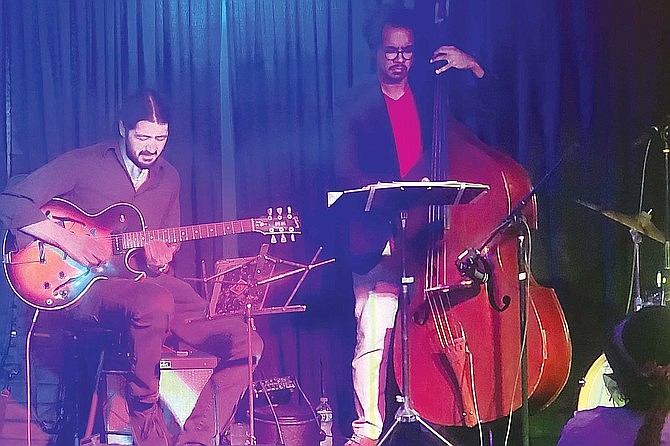
Bush’s ailment was cancer; he died just four months later, on October 19. The day before that, the Reader published a story headlined Strange Sonics: Our music writers try new tastes. That piece sent our man Spike Steffenhagen to a jazz brunch at Tio Leo’s. Looking around before the music started, he noted, One thing is for sure, no one else is wearing a sleeveless shirt with Paul Stanley of KISS’ solo album art on it… As Valenzuela and the piano player, drummer, and bassist begin their set. I look around the room, waiting for someone to bust out a Snoopy dance, because the music reminds me of every Peanuts cartoon I’ve ever watched.”
But it turned out the metalhead at the jazz show was like the American at the Montoya. “The group does a number that was originally recorded with Jaco Pastorius, often considered the Hendrix of bass players, and I feel rather than hear that sensual “muaaah” that I associate with a fretless bass. My inner critic reminds me that fretless electrics were created to imitate the sound of the upright (duh)… I think of Motown bassist James Jamerson playing with Marvin Gaye, with music charts, never missing a beat. He was a jazz guy and, when not recording, he put his job at Motown in jeopardy to go play clubs. Such seems to be the pull of jazz.”
Spike has been our jazz writer ever since. “Covering artists outside my comfort zone has been the biggest payoff,” he told me. “Who knew jazz cats were so cool?” There have been other payoffs as well. “Covering artists ranging from international acts to groups playing their first show has been inspiring on several levels.” He recalled interviewing members of Kavana in a parking lot as they waited for a 10:30 pm slot at Navajo Live. (“They’d like to be in the club, supporting the other groups, perhaps having a beer. But none of them are old enough to drink, and so they are relegated to standing around outside until showtime.”) Come showtime, the room is nearly vacant, but “they’re leaving it all onstage, on a Monday, at a place where they can’t even get drink tickets. Contrary to Drunk Boda’s philosophy, it matters. It reminds me what passion is all about, keeps it burning.”
He continued: “It’s not just about being at a show and interacting with the artists. It’s about the fans and the patrons. The interconnected community that is our art scene. Food vendors, musicians, visual artists all coming together to create a moment in time by supporting each other. The feedback from the people I speak to is always humbling. People telling me they recognize my byline, students asking about how they can intern at the paper, and people being present at an event because of what they read in the publication. Contributing in a small way to something that brings people together. That’s cool.”
It is cool. Please consider donating to help us keep up the good work.
Here's something you might be interested in.
Save the San Diego Reader, Day Seven
Bush, Steffenhagen, and musical aficion

Save the San Diego Reader, Day Seven
Bush, Steffenhagen, and musical aficion
Dear San Diego,
First, I want to think everyone who has donated so far to our fundraising campaign. Your generosity has been moving, almost as much as the messages of support that have accompanied your donations. For those who have not yet donated: it’s not too late. But we have just four days left to reach our goal. Please enjoy this story from our music department, and consider supporting the Reader in its hour of need.
Gratefully,
Matthew Lickona
Owner/Editor
San Diego Reader
We often talked about bulls and bull-fighters. I had stopped at the Montoya for several years…Men would come in from distant towns and before they left Pamplona stop and talk for a few minutes with Montoya about bulls. These men were aficionados. Those who were aficionados could always get rooms even when the hotel was full. Montoya introduced me to some of them. They were always very polite at first, and it amused them very much that I should be an American. Somehow it was taken for granted that an American could not have aficion. He might simulate it or confuse it with excitement, but he could not really have it. When they saw that I had aficion, and there was no password, no set questions that could bring it out, rather it was a sort of oral spiritual examination with the questions always a little on the defensive and never apparent, there was this same embarrassed putting the hand on the shoulder, or a "Buen hombre."
— Jake Barnes in Ernest Hemingway’s The Sun Also Rises
On June 15 of 2023, the Reader published its last story from music writer Robert Bush. He was our resident jazz aficionado, and that final missive was a testament to his aficion. Gonzo Report is the Reader’s concert review column, and as its name suggests, it is supposed to function less as a critique of the performance and more as a documentation of the scene — and the writer’s experience of that scene. This is from the story’s opening graf:
“I’ve been feeling like hammered shit due to an ailment that has rendered it impossible to swallow, so I haven’t had a solid meal in two months. As a result, I’ve had to cut the concertizing down to a bare minimum, but I was determined to catch Mark Dresser’s solo bass outing, a CD release party for his new disc Tines of Change, just out on the Pyroclastic Records label. I’ve been following Dresser since I was a teenager, so I was willing to leave the house in search of a transformative experience, despite my aching innards.”
Happily, he got his transformative experience. Dresser performed on two modified basses, and “used a variety of bows to elicit an otherworldly dissertation from each instrument. He eked out impossibly low tones from the 5-string, and coaxed freakish, alien textures from both instruments. At times, the specially amplified overtones made me envision the creaky timbers of a haunted Spanish galleon. Without the aid of electronics or overdubbing, he still often sounded like two or three different players — or at least one guy with three or four hands.”
Bush’s ailment was cancer; he died just four months later, on October 19. The day before that, the Reader published a story headlined Strange Sonics: Our music writers try new tastes. That piece sent our man Spike Steffenhagen to a jazz brunch at Tio Leo’s. Looking around before the music started, he noted, One thing is for sure, no one else is wearing a sleeveless shirt with Paul Stanley of KISS’ solo album art on it… As Valenzuela and the piano player, drummer, and bassist begin their set. I look around the room, waiting for someone to bust out a Snoopy dance, because the music reminds me of every Peanuts cartoon I’ve ever watched.”
But it turned out the metalhead at the jazz show was like the American at the Montoya. “The group does a number that was originally recorded with Jaco Pastorius, often considered the Hendrix of bass players, and I feel rather than hear that sensual “muaaah” that I associate with a fretless bass. My inner critic reminds me that fretless electrics were created to imitate the sound of the upright (duh)… I think of Motown bassist James Jamerson playing with Marvin Gaye, with music charts, never missing a beat. He was a jazz guy and, when not recording, he put his job at Motown in jeopardy to go play clubs. Such seems to be the pull of jazz.”
Spike has been our jazz writer ever since. “Covering artists outside my comfort zone has been the biggest payoff,” he told me. “Who knew jazz cats were so cool?” There have been other payoffs as well. “Covering artists ranging from international acts to groups playing their first show has been inspiring on several levels.” He recalled interviewing members of Kavana in a parking lot as they waited for a 10:30 pm slot at Navajo Live. (“They’d like to be in the club, supporting the other groups, perhaps having a beer. But none of them are old enough to drink, and so they are relegated to standing around outside until showtime.”) Come showtime, the room is nearly vacant, but “they’re leaving it all onstage, on a Monday, at a place where they can’t even get drink tickets. Contrary to Drunk Boda’s philosophy, it matters. It reminds me what passion is all about, keeps it burning.”
He continued: “It’s not just about being at a show and interacting with the artists. It’s about the fans and the patrons. The interconnected community that is our art scene. Food vendors, musicians, visual artists all coming together to create a moment in time by supporting each other. The feedback from the people I speak to is always humbling. People telling me they recognize my byline, students asking about how they can intern at the paper, and people being present at an event because of what they read in the publication. Contributing in a small way to something that brings people together. That’s cool.”
It is cool. Please consider donating to help us keep up the good work.
Comments