

Here's something you might be interested in.
Ask a Hipster — Advice you didn't know you needed
Big Screen — Movie commentary
Blurt — Music's inside track
Booze News — San Diego spirits
Classical Music — Immortal beauty
Classifieds — Free and easy
Close to Home — What it’s like on the street where you live
Cover Stories — Front-page features
Drinks All Around — Bartenders' drink recipes
Excerpts — Literary and spiritual excerpts
Feast! — Food & drink reviews
Feature Stories — Local news & stories
Fishing Report — What’s getting hooked from ship and shore
From the Archives — Spotlight on the past
Golden Dreams — Talk of the town
The Gonzo Report — Making the musical scene, or at least reporting from it
Letters — Our inbox
Movies@Home — Local movie buffs share favorites
Movie Reviews — Our critics' picks and pans
Musician Interviews — Up close with local artists
Neighborhood News from Stringers — Hyperlocal news
News Ticker — News & politics
Obermeyer — San Diego politics illustrated
Outdoors — Weekly changes in flora and fauna
Overheard in San Diego — Eavesdropping illustrated
Poetry — The old and the new
Reader Travel — Travel section built by travelers
Reading — The hunt for intellectuals
Roam-O-Rama — SoCal's best hiking/biking trails
San Diego Beer — Inside San Diego suds
SD on the QT — Almost factual news
Sheep and Goats — Places of worship
Special Issues — The best of
Street Style — San Diego streets have style
Surf Diego — Real stories from those braving the waves
Theater — On stage in San Diego this week
Tin Fork — Silver spoon alternative
Under the Radar — Matt Potter's undercover work
Unforgettable — Long-ago San Diego
Unreal Estate — San Diego's priciest pads
Your Week — Daily event picks
November is the best month for shorebird watching, Liquidambar trees show their fall spirit
Super Beaver moon brings extreme tides
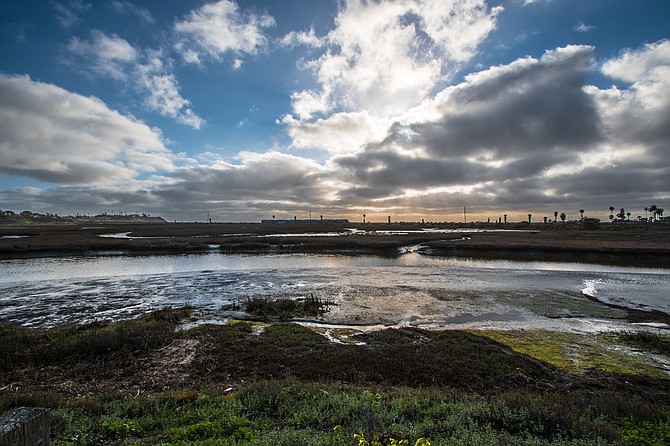
The San Elijo Lagoon offers beautiful views of the ocean, bird-watching, and gentle trails.
Shorebird-Watching Enters Its Most Agreeable Season this month, with migrant and resident birds sharing common winter grounds. Egrets, herons, pelicans, terns, and a variety of other species provide endless entertainment as they go about the business of fishing and feeding in San Diego County’s remaining coastal wetlands. Publicly accessible wetlands include the following (listed north to south): San Luis Rey River mouth, Buena Vista Lagoon, Agua Hedionda Lagoon, Batiquitos Lagoon, San Elijo Lagoon, San Dieguito Lagoon, Los Peñasquitos Lagoon, San Diego River flood channel (south of Sea World Drive), Sweetwater River marsh, southwest San Diego Bay, and Tijuana River Estuary. The same birds can also be seen on the shores of inland reservoirs such as Lake Murray and Lake Miramar.
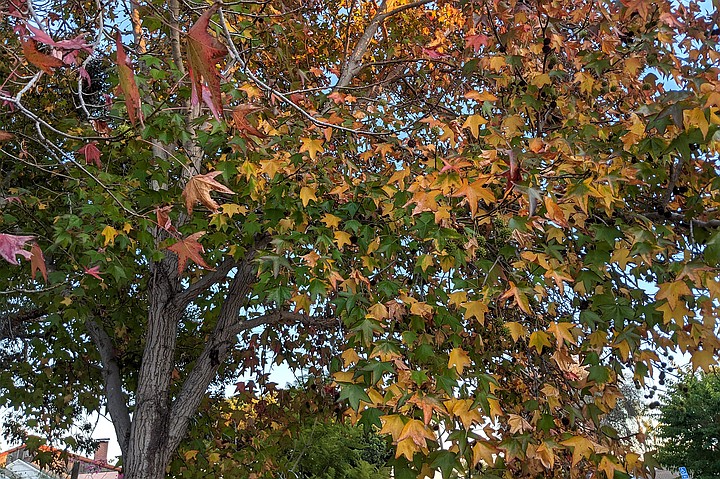
Liquidambars put on a show from Fall into Winter, turning from green to purple to red.
Liquidambar Trees, Or Sweet Gums – deciduous trees that grace numerous front yards, parks, and campuses throughout the San Diego area — have been putting on an exceptionally colorful show of late. The leaves of some varieties turn to purple or red; the leaves of other varieties fade to golden yellow. Still other varieties hold on to their green leaves until sometime in December. Most liquidambars in our area regain their light green foliage by late February.
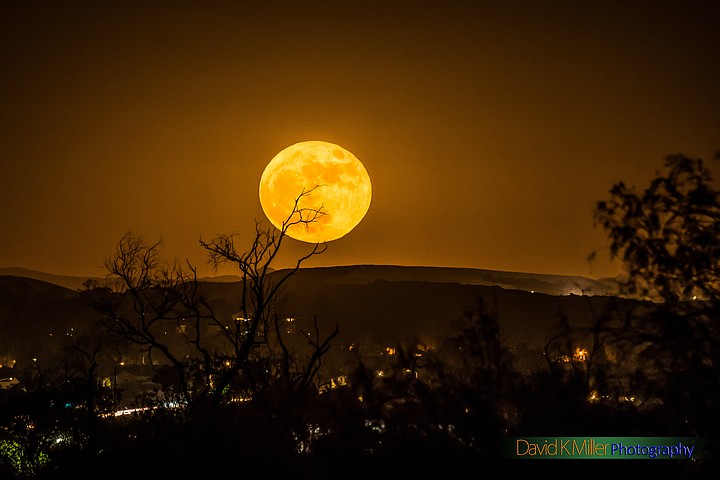
Super Full Moon Rising over Chula Vista at Otay River Valley
November’s Full Beaver Moon Will Rise from the horizon at 4:54 pm Wednesday, November 5. Not only the second of three consecutive supermoons in 2025 but it is also the closest orbiting full moon of the year! November’s full moon is called a Beaver Moon because this is the time of year when beavers begin to take shelter in their lodges, having laid up sufficient stores of food for the long winter ahead. Other November moon names also reference animals readying for winter: Digging (or Scratching) Moon, a Tlingit name, refers to animals foraging for fallen nuts and bears digging their winter dens. The Dakota and Lakota term, Deer Rutting Moon, refers to the time when deer seek mates, and the Algonquin Whitefish Moon describes the spawning time of the whitefish.
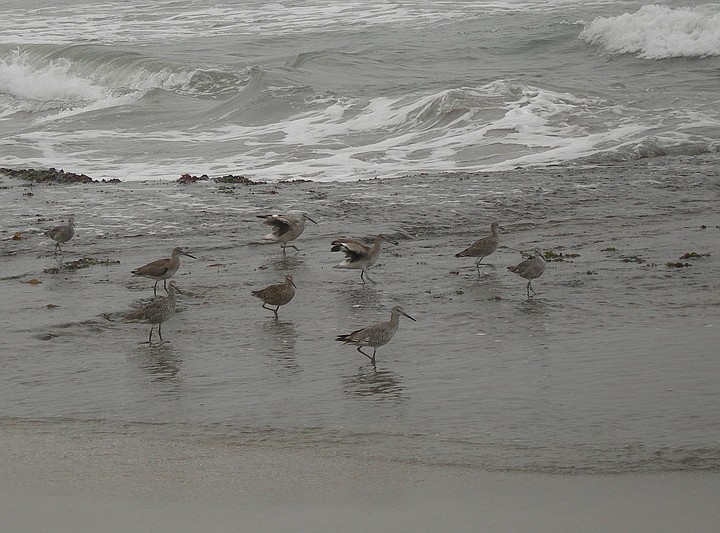
Moonlight Beach at low tide
Extreme High and Low Tides are set to occur over several days in late November. On Wednesday, November 5, the tide reaches a high of +7.48 feet at 8:13 am and then falls to -1.54 feet at 3:11 pm. On Thursday, the tide peaks at +7.45 feet at 8:13 am and a low of -1.64 feet at 4:01 pm. And Friday will see a high of +7.45 feet at 8:13 am and a low of -1.64 feet at 4:01 pm. Any of these low tide occasions are perfect for exploring marine life in the tidepool areas along San Diego County’s coastline. But if any strong winter storm happens to arrive from the west during these peak tides, some flooding of low-lying coastal areas around San Diego is likely. On the brighter side, birdwatchers have an opportunity to spot species of rare shorebirds that get pushed to the edges of local bays and coastal marshes by the high water.
Here's something you might be interested in.
November is the best month for shorebird watching, Liquidambar trees show their fall spirit
Super Beaver moon brings extreme tides

November is the best month for shorebird watching, Liquidambar trees show their fall spirit
Super Beaver moon brings extreme tides
The San Elijo Lagoon offers beautiful views of the ocean, bird-watching, and gentle trails.
Shorebird-Watching Enters Its Most Agreeable Season this month, with migrant and resident birds sharing common winter grounds. Egrets, herons, pelicans, terns, and a variety of other species provide endless entertainment as they go about the business of fishing and feeding in San Diego County’s remaining coastal wetlands. Publicly accessible wetlands include the following (listed north to south): San Luis Rey River mouth, Buena Vista Lagoon, Agua Hedionda Lagoon, Batiquitos Lagoon, San Elijo Lagoon, San Dieguito Lagoon, Los Peñasquitos Lagoon, San Diego River flood channel (south of Sea World Drive), Sweetwater River marsh, southwest San Diego Bay, and Tijuana River Estuary. The same birds can also be seen on the shores of inland reservoirs such as Lake Murray and Lake Miramar.
Liquidambars put on a show from Fall into Winter, turning from green to purple to red.
Liquidambar Trees, Or Sweet Gums – deciduous trees that grace numerous front yards, parks, and campuses throughout the San Diego area — have been putting on an exceptionally colorful show of late. The leaves of some varieties turn to purple or red; the leaves of other varieties fade to golden yellow. Still other varieties hold on to their green leaves until sometime in December. Most liquidambars in our area regain their light green foliage by late February.
Super Full Moon Rising over Chula Vista at Otay River Valley
November’s Full Beaver Moon Will Rise from the horizon at 4:54 pm Wednesday, November 5. Not only the second of three consecutive supermoons in 2025 but it is also the closest orbiting full moon of the year! November’s full moon is called a Beaver Moon because this is the time of year when beavers begin to take shelter in their lodges, having laid up sufficient stores of food for the long winter ahead. Other November moon names also reference animals readying for winter: Digging (or Scratching) Moon, a Tlingit name, refers to animals foraging for fallen nuts and bears digging their winter dens. The Dakota and Lakota term, Deer Rutting Moon, refers to the time when deer seek mates, and the Algonquin Whitefish Moon describes the spawning time of the whitefish.
Moonlight Beach at low tide
Extreme High and Low Tides are set to occur over several days in late November. On Wednesday, November 5, the tide reaches a high of +7.48 feet at 8:13 am and then falls to -1.54 feet at 3:11 pm. On Thursday, the tide peaks at +7.45 feet at 8:13 am and a low of -1.64 feet at 4:01 pm. And Friday will see a high of +7.45 feet at 8:13 am and a low of -1.64 feet at 4:01 pm. Any of these low tide occasions are perfect for exploring marine life in the tidepool areas along San Diego County’s coastline. But if any strong winter storm happens to arrive from the west during these peak tides, some flooding of low-lying coastal areas around San Diego is likely. On the brighter side, birdwatchers have an opportunity to spot species of rare shorebirds that get pushed to the edges of local bays and coastal marshes by the high water.
Comments