

Here's something you might be interested in.
Ask a Hipster — Advice you didn't know you needed
Big Screen — Movie commentary
Blurt — Music's inside track
Booze News — San Diego spirits
Classical Music — Immortal beauty
Classifieds — Free and easy
Close to Home — What it’s like on the street where you live
Cover Stories — Front-page features
Drinks All Around — Bartenders' drink recipes
Excerpts — Literary and spiritual excerpts
Feast! — Food & drink reviews
Feature Stories — Local news & stories
Fishing Report — What’s getting hooked from ship and shore
From the Archives — Spotlight on the past
Golden Dreams — Talk of the town
The Gonzo Report — Making the musical scene, or at least reporting from it
Letters — Our inbox
Movies@Home — Local movie buffs share favorites
Movie Reviews — Our critics' picks and pans
Musician Interviews — Up close with local artists
Neighborhood News from Stringers — Hyperlocal news
News Ticker — News & politics
Obermeyer — San Diego politics illustrated
Outdoors — Weekly changes in flora and fauna
Overheard in San Diego — Eavesdropping illustrated
Poetry — The old and the new
Reader Travel — Travel section built by travelers
Reading — The hunt for intellectuals
Roam-O-Rama — SoCal's best hiking/biking trails
San Diego Beer — Inside San Diego suds
SD on the QT — Almost factual news
Sheep and Goats — Places of worship
Special Issues — The best of
Street Style — San Diego streets have style
Surf Diego — Real stories from those braving the waves
Theater — On stage in San Diego this week
Tin Fork — Silver spoon alternative
Under the Radar — Matt Potter's undercover work
Unforgettable — Long-ago San Diego
Unreal Estate — San Diego's priciest pads
Your Week — Daily event picks
Parked 20 feet from crosswalk? Expect a ticket if San Diego.
Lighter touch for Coronado and North County
"I’ve been jump-scared by pedestrians emerging from behind cars."
Since March 1, San Diego has issued over 4,200 citations under the new 2025 daylighting law, each carrying up to a $117 fine. Local parking enforcement officers cite cars facing marked and unmarked crosswalks within 20 feet. While the law aims to reduce blindspot-related accidents and improve safety for pedestrians, cyclists, and drivers, its enforcement has sparked questions about equity across San Diego neighborhoods.
Locals are asking why some communities are being hit with daylighting fines en masse, while others are getting warnings or nothing at all. Meanwhile, some vehicles parked illegally appear overlooked for the newest parking infractions.
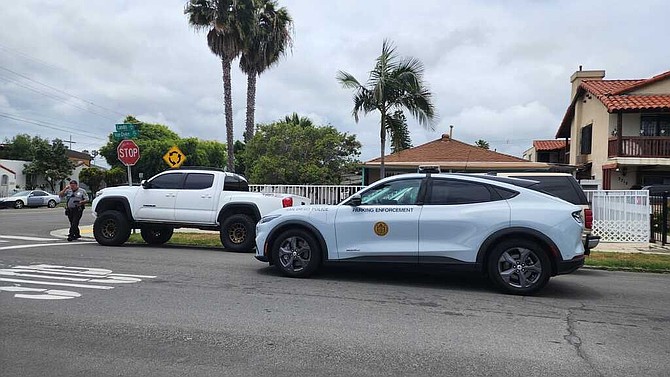
Over the weekend, I spoke with Gallardita Tamayo from City Heights, who photographed a parking enforcement officer in a new Mustang ticketing her neighbor's lifted 4x4 truck. “There were several cars with tickets,” she told me, adding, “We already have a terrible parking situation here in City Heights. Now this is going to make it even worse.” Like many of her neighbors, she feels enforcement priorities are skewed. “They should give tickets to vehicles that aren’t moved for almost two weeks.”
A Coronado driver: "if that's the law, they should paint the curb red."
Another effect of the daylighting law, which officially took effect in January but began being enforced March 1, is the sudden loss of two to four parking spaces near every crosswalk. In turn, residents resort to illegally parking in alleys and even yards because of the lost available street parking.
I lived in Cherokee Point, a City Heights neighborhood, from 2016 to 2019. Our kids went to school in Normal Heights and City Heights, and even back then, parking was so tight that my fellow parents would double or triple park to drop off and pick up their children safely. Six years later, I can only imagine how complex mid-city daily routines have become with fewer available spaces.
Sandra J. echoed those concerns. Her mom lives about a block from where the 4x4 truck above received its ticket. She noted that the streets are so wide, people often double park, assuming it’s not in anyone’s way. “How crazy,” she said. “I’ve seen at least two cars at a time parked side by side, with other cars already parked legally.”
Tamayo added, “In the evenings it’s even worse. People park in the alleys because there’s no street parking. You can’t really take a late-night walk without having to go around cars since they also block the sidewalk.”
Online sentiment in mid-city echoes Tamayo's and Sandra's concerns: is enforcement in these neighborhoods overly focused on daylighting violations while disregarding other issues?
And what about the rest of the county? John M. from Sorrento Valley noted, “They’re not hitting the neighborhoods in North County! Just hitting the easy targets in the less affluent neighborhoods.” Debbie from Normal Heights said, “Coronado doesn’t seem to be affected at all”—which is partly true.
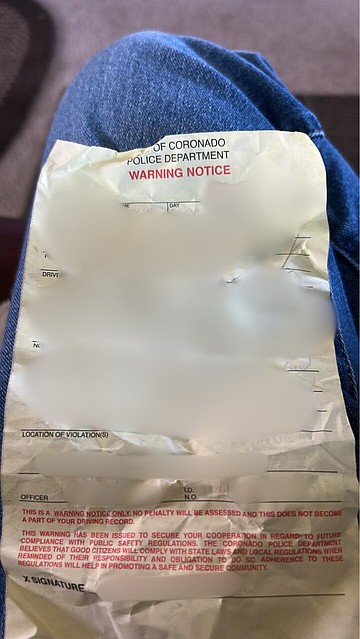
Online, Coronado residents report not receiving tickets for the same daylighting violations enforced across the bridge. “It’s happening here in Coronado,” Alice posted online with a photo of the warning paper left on her car. “I live on a corner across the street from the high school and was given a warning.” Another Coronado driver said they received a like warning, he noted that "if that's the law, they should paint the curb red"—yet another popular solution made by countywide residents to alleviate any confusion and corresponding man hours and court fees.
While some Coronado drivers are receiving only warnings left on their windshields, others believe it's up to each neighborhood's police and parking enforcement departments to decide how aggressively to ticket those who violate the daylighting law.
As debates continue, residents speculate about why their neighborhoods are being ticketed more frequently. A different Debbie online echoed, “Lower-income neighborhoods are being targeted,” while another asked, “Why are Coronado drivers only getting warnings? They are ticketing left and right in low-income neighborhoods.” Some locals even claim older, less valuable cars are more frequently ticketed—a theory that may be a stretch, but not entirely dismissed.
One definite factor: the Get It Done app. San Diegans can report cars parked within inches of the 20-foot rule, effectively deputizing residents to police one another’s parking.
And while no official explanation has been posted by the state, county, city, or police regarding why some neighborhoods are in “full-force ticketing mode” while others are only issuing warnings (or not enforcing at all), one thing seems inevitable: pedestrians, cyclists, and defensive drivers are noticing improvements.
A Redditor named Informal_Ad_7539 wrote: “Good! I hate peeking around cars when I’m trying to cross the road. Even as a driver, I’ve been jump-scared by pedestrians emerging from behind cars parked too close to the intersection.”
Patricia P. from Mission Hills added, “As a pedestrian and bus rider, I’m finding it easier to be seen when I’m crossing at a busy corner, thanks to this change.”
Here's something you might be interested in.
Parked 20 feet from crosswalk? Expect a ticket if San Diego.
Lighter touch for Coronado and North County

Parked 20 feet from crosswalk? Expect a ticket if San Diego.
Lighter touch for Coronado and North County
"I’ve been jump-scared by pedestrians emerging from behind cars."
Since March 1, San Diego has issued over 4,200 citations under the new 2025 daylighting law, each carrying up to a $117 fine. Local parking enforcement officers cite cars facing marked and unmarked crosswalks within 20 feet. While the law aims to reduce blindspot-related accidents and improve safety for pedestrians, cyclists, and drivers, its enforcement has sparked questions about equity across San Diego neighborhoods.
Locals are asking why some communities are being hit with daylighting fines en masse, while others are getting warnings or nothing at all. Meanwhile, some vehicles parked illegally appear overlooked for the newest parking infractions.
Over the weekend, I spoke with Gallardita Tamayo from City Heights, who photographed a parking enforcement officer in a new Mustang ticketing her neighbor's lifted 4x4 truck. “There were several cars with tickets,” she told me, adding, “We already have a terrible parking situation here in City Heights. Now this is going to make it even worse.” Like many of her neighbors, she feels enforcement priorities are skewed. “They should give tickets to vehicles that aren’t moved for almost two weeks.”
A Coronado driver: "if that's the law, they should paint the curb red."
Another effect of the daylighting law, which officially took effect in January but began being enforced March 1, is the sudden loss of two to four parking spaces near every crosswalk. In turn, residents resort to illegally parking in alleys and even yards because of the lost available street parking.
I lived in Cherokee Point, a City Heights neighborhood, from 2016 to 2019. Our kids went to school in Normal Heights and City Heights, and even back then, parking was so tight that my fellow parents would double or triple park to drop off and pick up their children safely. Six years later, I can only imagine how complex mid-city daily routines have become with fewer available spaces.
Sandra J. echoed those concerns. Her mom lives about a block from where the 4x4 truck above received its ticket. She noted that the streets are so wide, people often double park, assuming it’s not in anyone’s way. “How crazy,” she said. “I’ve seen at least two cars at a time parked side by side, with other cars already parked legally.”
Tamayo added, “In the evenings it’s even worse. People park in the alleys because there’s no street parking. You can’t really take a late-night walk without having to go around cars since they also block the sidewalk.”
Online sentiment in mid-city echoes Tamayo's and Sandra's concerns: is enforcement in these neighborhoods overly focused on daylighting violations while disregarding other issues?
And what about the rest of the county? John M. from Sorrento Valley noted, “They’re not hitting the neighborhoods in North County! Just hitting the easy targets in the less affluent neighborhoods.” Debbie from Normal Heights said, “Coronado doesn’t seem to be affected at all”—which is partly true.
Online, Coronado residents report not receiving tickets for the same daylighting violations enforced across the bridge. “It’s happening here in Coronado,” Alice posted online with a photo of the warning paper left on her car. “I live on a corner across the street from the high school and was given a warning.” Another Coronado driver said they received a like warning, he noted that "if that's the law, they should paint the curb red"—yet another popular solution made by countywide residents to alleviate any confusion and corresponding man hours and court fees.
While some Coronado drivers are receiving only warnings left on their windshields, others believe it's up to each neighborhood's police and parking enforcement departments to decide how aggressively to ticket those who violate the daylighting law.
As debates continue, residents speculate about why their neighborhoods are being ticketed more frequently. A different Debbie online echoed, “Lower-income neighborhoods are being targeted,” while another asked, “Why are Coronado drivers only getting warnings? They are ticketing left and right in low-income neighborhoods.” Some locals even claim older, less valuable cars are more frequently ticketed—a theory that may be a stretch, but not entirely dismissed.
One definite factor: the Get It Done app. San Diegans can report cars parked within inches of the 20-foot rule, effectively deputizing residents to police one another’s parking.
And while no official explanation has been posted by the state, county, city, or police regarding why some neighborhoods are in “full-force ticketing mode” while others are only issuing warnings (or not enforcing at all), one thing seems inevitable: pedestrians, cyclists, and defensive drivers are noticing improvements.
A Redditor named Informal_Ad_7539 wrote: “Good! I hate peeking around cars when I’m trying to cross the road. Even as a driver, I’ve been jump-scared by pedestrians emerging from behind cars parked too close to the intersection.”
Patricia P. from Mission Hills added, “As a pedestrian and bus rider, I’m finding it easier to be seen when I’m crossing at a busy corner, thanks to this change.”
Comments