

Here's something you might be interested in.
Ask a Hipster — Advice you didn't know you needed
Big Screen — Movie commentary
Blurt — Music's inside track
Booze News — San Diego spirits
Classical Music — Immortal beauty
Classifieds — Free and easy
Close to Home — What it’s like on the street where you live
Cover Stories — Front-page features
Drinks All Around — Bartenders' drink recipes
Excerpts — Literary and spiritual excerpts
Feast! — Food & drink reviews
Feature Stories — Local news & stories
Fishing Report — What’s getting hooked from ship and shore
From the Archives — Spotlight on the past
Golden Dreams — Talk of the town
The Gonzo Report — Making the musical scene, or at least reporting from it
Letters — Our inbox
Movies@Home — Local movie buffs share favorites
Movie Reviews — Our critics' picks and pans
Musician Interviews — Up close with local artists
Neighborhood News from Stringers — Hyperlocal news
News Ticker — News & politics
Obermeyer — San Diego politics illustrated
Outdoors — Weekly changes in flora and fauna
Overheard in San Diego — Eavesdropping illustrated
Poetry — The old and the new
Reader Travel — Travel section built by travelers
Reading — The hunt for intellectuals
Roam-O-Rama — SoCal's best hiking/biking trails
San Diego Beer — Inside San Diego suds
SD on the QT — Almost factual news
Sheep and Goats — Places of worship
Special Issues — The best of
Street Style — San Diego streets have style
Surf Diego — Real stories from those braving the waves
Theater — On stage in San Diego this week
Tin Fork — Silver spoon alternative
Under the Radar — Matt Potter's undercover work
Unforgettable — Long-ago San Diego
Unreal Estate — San Diego's priciest pads
Your Week — Daily event picks
Carlsbad backtracking on fake grass?
Never watering vs. forever chemicals
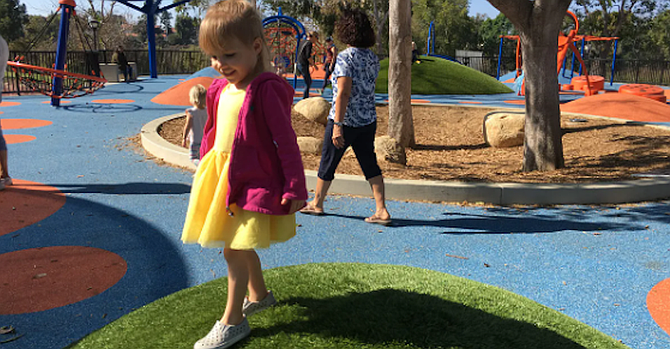
“Carlsbad currently has over 1,212,000 square feet of plastic grass carpet in its schools and parks.”
Tucked into Carlsbad’s budget approved last week is funding to replace its synthetic turf fields. Another goal for next year is ramping up the city’s sustainability efforts. But it seems those two things are at odds.
Fake grass, once lauded as a drought fix, has been increasingly scrutinized for its environmental and health impacts. “I think our city needs to be looking at the big picture, the total life cycle carbon footprint cost of artificial turf,” said Mike McMahon, rattling off the unknown costs of manufacturing, transport, installation, disposal and landfill emissions.
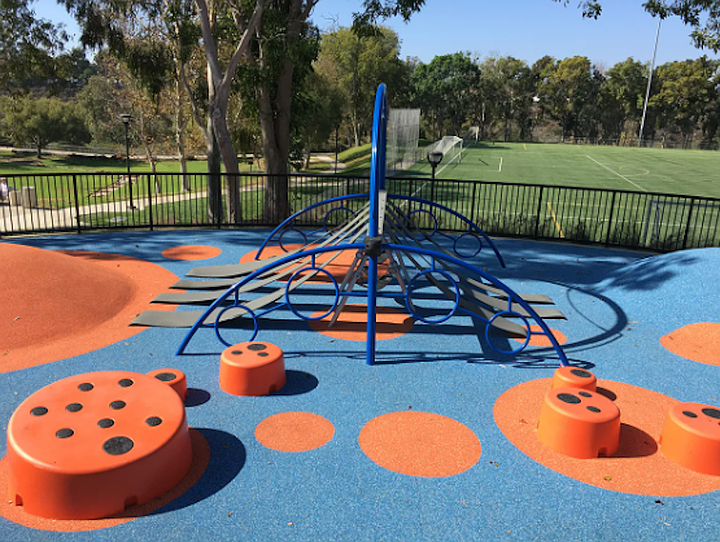
Poinsettia Park. The cities of Millbrae and San Marino have passed bans, while Los Angeles, Santa Clara County and others are considering it.
Several speakers at a recent meeting urged the city to do a comparative analysis of synthetic turf and grass, including the health and environmental costs, and while the issue wasn’t being reviewed by the city council as part of the budget approval, it turned out to be one of the most contentious topics. “The request for nearly $7.5 million dollars for plastic playing fields is unconscionable,” said Dianne Woelke, a member of the advocacy group Safe Healthy Playing Fields. “Carlsbad currently has over 1,212,000 square feet of plastic grass carpet in its schools and parks,” which has resulted in the annual run-off of hundreds of thousands of pounds of microplastics. Michael King, with the Sierra Club, said 306 chemicals have been found in artificial turf, and children are particularly vulnerable to their toxic effects.
It’s not the first time a battle has been waged to get the city to go back to using plain old grass. In 2019, Stagecoach Park was in the spotlight, when its synthetic turf was swapped out and replaced by more of the same. Up next: Poinsettia and Pine Avenue Community Parks, slated for construction next year. They, too, will employ artificial turf, unless the city decides to change course.
A state law passed in 2023 gives cities the authority to ban artificial turf installations. The cities of Millbrae and San Marino have passed bans, while Los Angeles, Santa Clara County and others are considering it. For its part, Carlsbad is taking it one field at a time. “We have eight turf fields that are nearing their end of life,” said city manager Geoff Patnoe. The funding being set aside will begin a "multi-year, multi-park activity that would ultimately result in the replacement of Carlsbad’s existing synthetic turf athletic fields.”
The city’s capital improvement program uses a phased-in approach, so the timeline will vary for different fields. A few are still in the design phase and would not begin construction in the next fiscal year, Patnoe said. When the time comes to move forward with specific park projects, staff will return to council to discuss synthetic turf or grass fields “at a hearing where we will be able to receive input from not just those concerned about synthetic turf but also by the user groups of our fields as well.”
Councilmember Teresa Acosta said people want to see a cost analysis for all eight fields, and not just one by one when it comes time to replace them. “I think there is an interest in looking at the overall, no longer replacing artificial turf with more artificial turf.”
California’s first synthetic turf fields in the 1960s were made of turf carpeting and backing without any infill material to soften the surface. To reduce injuries, turf systems were redesigned in the 1990s with longer blades and infill materials. California now has over 900 synthetic turf fields, and the most common infill used is crumb rubber from recycled waste tires.
As concerns about the potential contaminants have grown, the Department of Resources Recycling and Recovery contracted with the Office of Environmental Health Hazard Assessment to assess the health risks for those exposed to crumb rubber infill from synthetic turf fields. A study released in March 2025 “found no significant health risks to players, coaches, referees and spectators from on-field or off-field exposure to field-related chemicals in crumb rubber infill from synthetic turf fields based on available data.”
Other recent studies, however, have found harmful “forever chemicals” — Polyfluoroalkyl substances, or PFAS — leaching from artificial turf. PFAS have been linked to several kinds of cancers, including the rare brain cancer that took the lives of six former baseball players.
Kyle Lancaster, Carlsbad parks and recreation director, said that when the city replaced the synthetic turf at Stagecoach Park in 2019, it provided analysis of various infill products and the current studies on synthetic turf, along with the costs of a return to grass. They recommended the synthetic turf — “but we went with a premium infill that was polymer coated, didn’t have direct contact with the skin in terms of the crumb rubber, and also had a cooling effect.” Staff now intends to come back to city council with a recommendation for Poinsettia Community Park, the next in the series of expiring fields. “And based on the 2019 determination, staff was intending to develop plans for synthetic turf replacement.”
Synthetic turf is a broad term, Lancaster said. There are newer products that no longer require infill, and others that have organic infill options. Before any work is performed, there will be two more check-ins with the city, with updated costs of options including grass, and the latest studies on fake grass. The next time the council will talk about artificial turf replacement at Poinsettia Park will be this fall, followed by Pine Park in early 2026.
Here's something you might be interested in.
Carlsbad backtracking on fake grass?
Never watering vs. forever chemicals

Carlsbad backtracking on fake grass?
Never watering vs. forever chemicals
“Carlsbad currently has over 1,212,000 square feet of plastic grass carpet in its schools and parks.”
Tucked into Carlsbad’s budget approved last week is funding to replace its synthetic turf fields. Another goal for next year is ramping up the city’s sustainability efforts. But it seems those two things are at odds.
Fake grass, once lauded as a drought fix, has been increasingly scrutinized for its environmental and health impacts. “I think our city needs to be looking at the big picture, the total life cycle carbon footprint cost of artificial turf,” said Mike McMahon, rattling off the unknown costs of manufacturing, transport, installation, disposal and landfill emissions.
Poinsettia Park. The cities of Millbrae and San Marino have passed bans, while Los Angeles, Santa Clara County and others are considering it.
Several speakers at a recent meeting urged the city to do a comparative analysis of synthetic turf and grass, including the health and environmental costs, and while the issue wasn’t being reviewed by the city council as part of the budget approval, it turned out to be one of the most contentious topics. “The request for nearly $7.5 million dollars for plastic playing fields is unconscionable,” said Dianne Woelke, a member of the advocacy group Safe Healthy Playing Fields. “Carlsbad currently has over 1,212,000 square feet of plastic grass carpet in its schools and parks,” which has resulted in the annual run-off of hundreds of thousands of pounds of microplastics. Michael King, with the Sierra Club, said 306 chemicals have been found in artificial turf, and children are particularly vulnerable to their toxic effects.
It’s not the first time a battle has been waged to get the city to go back to using plain old grass. In 2019, Stagecoach Park was in the spotlight, when its synthetic turf was swapped out and replaced by more of the same. Up next: Poinsettia and Pine Avenue Community Parks, slated for construction next year. They, too, will employ artificial turf, unless the city decides to change course.
A state law passed in 2023 gives cities the authority to ban artificial turf installations. The cities of Millbrae and San Marino have passed bans, while Los Angeles, Santa Clara County and others are considering it. For its part, Carlsbad is taking it one field at a time. “We have eight turf fields that are nearing their end of life,” said city manager Geoff Patnoe. The funding being set aside will begin a "multi-year, multi-park activity that would ultimately result in the replacement of Carlsbad’s existing synthetic turf athletic fields.”
The city’s capital improvement program uses a phased-in approach, so the timeline will vary for different fields. A few are still in the design phase and would not begin construction in the next fiscal year, Patnoe said. When the time comes to move forward with specific park projects, staff will return to council to discuss synthetic turf or grass fields “at a hearing where we will be able to receive input from not just those concerned about synthetic turf but also by the user groups of our fields as well.”
Councilmember Teresa Acosta said people want to see a cost analysis for all eight fields, and not just one by one when it comes time to replace them. “I think there is an interest in looking at the overall, no longer replacing artificial turf with more artificial turf.”
California’s first synthetic turf fields in the 1960s were made of turf carpeting and backing without any infill material to soften the surface. To reduce injuries, turf systems were redesigned in the 1990s with longer blades and infill materials. California now has over 900 synthetic turf fields, and the most common infill used is crumb rubber from recycled waste tires.
As concerns about the potential contaminants have grown, the Department of Resources Recycling and Recovery contracted with the Office of Environmental Health Hazard Assessment to assess the health risks for those exposed to crumb rubber infill from synthetic turf fields. A study released in March 2025 “found no significant health risks to players, coaches, referees and spectators from on-field or off-field exposure to field-related chemicals in crumb rubber infill from synthetic turf fields based on available data.”
Other recent studies, however, have found harmful “forever chemicals” — Polyfluoroalkyl substances, or PFAS — leaching from artificial turf. PFAS have been linked to several kinds of cancers, including the rare brain cancer that took the lives of six former baseball players.
Kyle Lancaster, Carlsbad parks and recreation director, said that when the city replaced the synthetic turf at Stagecoach Park in 2019, it provided analysis of various infill products and the current studies on synthetic turf, along with the costs of a return to grass. They recommended the synthetic turf — “but we went with a premium infill that was polymer coated, didn’t have direct contact with the skin in terms of the crumb rubber, and also had a cooling effect.” Staff now intends to come back to city council with a recommendation for Poinsettia Community Park, the next in the series of expiring fields. “And based on the 2019 determination, staff was intending to develop plans for synthetic turf replacement.”
Synthetic turf is a broad term, Lancaster said. There are newer products that no longer require infill, and others that have organic infill options. Before any work is performed, there will be two more check-ins with the city, with updated costs of options including grass, and the latest studies on fake grass. The next time the council will talk about artificial turf replacement at Poinsettia Park will be this fall, followed by Pine Park in early 2026.
Comments