

Here's something you might be interested in.
Ask a Hipster — Advice you didn't know you needed
Big Screen — Movie commentary
Blurt — Music's inside track
Booze News — San Diego spirits
Classical Music — Immortal beauty
Classifieds — Free and easy
Close to Home — What it’s like on the street where you live
Cover Stories — Front-page features
Drinks All Around — Bartenders' drink recipes
Excerpts — Literary and spiritual excerpts
Feast! — Food & drink reviews
Feature Stories — Local news & stories
Fishing Report — What’s getting hooked from ship and shore
From the Archives — Spotlight on the past
Golden Dreams — Talk of the town
The Gonzo Report — Making the musical scene, or at least reporting from it
Letters — Our inbox
Movies@Home — Local movie buffs share favorites
Movie Reviews — Our critics' picks and pans
Musician Interviews — Up close with local artists
Neighborhood News from Stringers — Hyperlocal news
News Ticker — News & politics
Obermeyer — San Diego politics illustrated
Outdoors — Weekly changes in flora and fauna
Overheard in San Diego — Eavesdropping illustrated
Poetry — The old and the new
Reader Travel — Travel section built by travelers
Reading — The hunt for intellectuals
Roam-O-Rama — SoCal's best hiking/biking trails
San Diego Beer — Inside San Diego suds
SD on the QT — Almost factual news
Sheep and Goats — Places of worship
Special Issues — The best of
Street Style — San Diego streets have style
Surf Diego — Real stories from those braving the waves
Theater — On stage in San Diego this week
Tin Fork — Silver spoon alternative
Under the Radar — Matt Potter's undercover work
Unforgettable — Long-ago San Diego
Unreal Estate — San Diego's priciest pads
Your Week — Daily event picks
The end of San Diego's sandy beaches?
Plans for the sea level rise
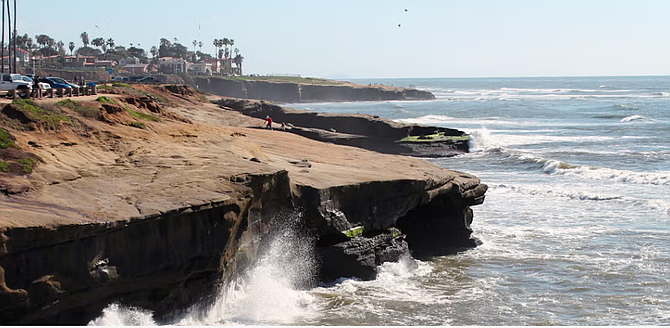
By 2050, California sea levels are expected to rise from 0.5 feet and 1.2 feet compared to 2000 levels.
San Diego’s coastal resiliency master plan, a major pilot project that favors nature over armor to protect beaches from flooding and erosion, is entering phase two, with many details still to work out. But one thing is clear. As sea level rises, retreat is seeping into local coastal planning.
A bathroom here, a staircase there. In Encinitas, for example, Beacon's Beach parking lot is being moved back from the bluff edge.
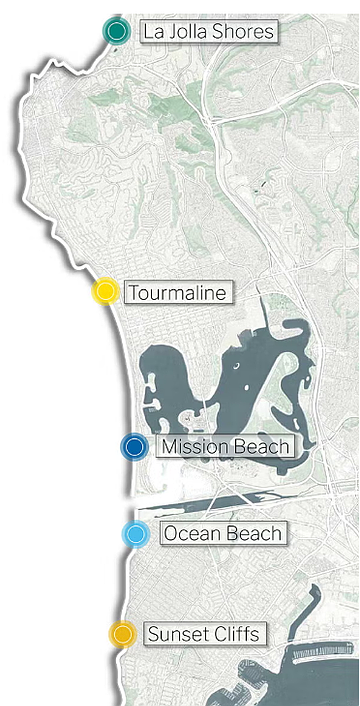
The project locations were based on a study that found them to be most at risk of sea rise impacts.
The city of San Diego's environmental committee last week voted to recommend the city council approval of the coastal resiliency master plan and its environmental impact report. While retreat isn’t a big part of the city’s approach, the possibility was raised for at least two of the six project sites.
“In so many areas, development has happened essentially right up on the beach, the boardwalks, parking lots, streets,” said San Diego councilman Joe LaCava.
By 2050, California sea levels are expected to rise from 0.5 feet and 1.2 feet compared to 2000 levels. The data predicts that a beach drowned by annual king tides today will flood regularly during high tide in 50-60 years.
According to Surfrider San Diego, every foot of sea rise corresponds to 50 or more feet of beach loss.
Instead of seawalls or retreat, the coastal resiliency master plan draws on built or engineered designs modeled after nature, such as wetlands and floodplains, living shorelines, stormwater parks, bioswales, green streets and green roofs.
Funding for the project comes through grants from the National Fish and Wildlife Foundation and the California State Coastal Conservancy, as well as funding from a $1.2 billion state climate bond.
The project locations were based on a study that found them to be most at risk of sea rise impacts. The sites, which span 58.38 acres of land and .26 acre of open water, are La Jolla Shores, Pacific Beach-Tourmaline Surf Park, Mission Beach, Ocean Beach-Dog Beach, Ocean Beach-Pier, and Sunset Cliffs.
Two sites, La Jolla Shores and Tourmaline Surf Park, aren’t part of the current recommendation to move forward due to insufficient funding, said Julia Chase, chief resiliency officer with the city planning department. La Jolla Shores needs more public engagement because there were “significant differing perspectives on designs,” she said, but along with Tourmaline in Pacific Beach, it will be recommended once funding is identified.
There are two design options for La Jolla Shores, one of which would build a 20-foot wide and 500-foot long terraced ‘seawall’ along the seaward edge of the parking lot. The other would realign the existing recreational area to be more seaward and move the parking lot inland; a design meant to absorb impacts from coastal flooding and improve water quality.
LaCava asked if sandy beaches are part of the long-term planning, noting that doesn’t seem to be part of the conversation, despite the vulnerability of the small beach at Tourmaline.
“As we see sea level rise, that beach is going to essentially disappear so people are going to walk off the ramp there and right into the water.”
Project plans for Tourmaline would incorporate a new 50-foot-wide and 175-foot-long elevated sand dune over an existing rip-rap shoreline protection feature – a design critics consider more aesthetic than resilient.
LaCava said the more expensive alternative would be “actually pulling back and restoring or creating a sandy beach at a higher elevation, so even with predicted sea rise we still have a sandy beach between the parking lot and the ocean waters. Or are we just more interested in preserving access from a grassy area that would be elevated” or saving existing parking lots or restrooms?
Chase said that adding sand is a shorter-term solution that can maintain these beaches. The other option is moving structures to allow beaches to naturally expand landward.
“In the longer term where you have development and see impacts of sea rise, oftentimes retreat is a way to maintain those beaches. It’s an approach “we didn’t look at closely for this stage of the planning efforts.”
But it’s not off the table. One alternative for the Ocean Beach-Dog Beach pilot features “resilient relocation” of an existing bathroom. “Certainly, for a site like Tourmaline if there is interest in looking at that as a project design that is something we could do – but it’s a larger undertaking,” she added.
While advocates for coastal access supported the nature-based approach – they didn’t like all of the plans.
“We are not forgetting Tourmaline and La Jolla Shores but we quite frankly feel these plans need to be made a little better,” said Mitch Silverstein, policy manager at the Surfrider Foundation.
“At Tourmaline we’ve got to look at pulling that parking lot landward to increase resilience at this narrow, eroding beach.” And for La Jolla Shores, reconfiguring the park but pulling back the boardwalk.
“The beach is drowned and the boardwalk floods during annual king tides today. If we hold the line, we’ll lose access at a regular high tide in 50-60 years. A plan like this ought to have at least a 75-year life.”
Here's something you might be interested in.
The end of San Diego's sandy beaches?
Plans for the sea level rise

The end of San Diego's sandy beaches?
Plans for the sea level rise
By 2050, California sea levels are expected to rise from 0.5 feet and 1.2 feet compared to 2000 levels.
San Diego’s coastal resiliency master plan, a major pilot project that favors nature over armor to protect beaches from flooding and erosion, is entering phase two, with many details still to work out. But one thing is clear. As sea level rises, retreat is seeping into local coastal planning.
A bathroom here, a staircase there. In Encinitas, for example, Beacon's Beach parking lot is being moved back from the bluff edge.
The project locations were based on a study that found them to be most at risk of sea rise impacts.
The city of San Diego's environmental committee last week voted to recommend the city council approval of the coastal resiliency master plan and its environmental impact report. While retreat isn’t a big part of the city’s approach, the possibility was raised for at least two of the six project sites.
“In so many areas, development has happened essentially right up on the beach, the boardwalks, parking lots, streets,” said San Diego councilman Joe LaCava.
By 2050, California sea levels are expected to rise from 0.5 feet and 1.2 feet compared to 2000 levels. The data predicts that a beach drowned by annual king tides today will flood regularly during high tide in 50-60 years.
According to Surfrider San Diego, every foot of sea rise corresponds to 50 or more feet of beach loss.
Instead of seawalls or retreat, the coastal resiliency master plan draws on built or engineered designs modeled after nature, such as wetlands and floodplains, living shorelines, stormwater parks, bioswales, green streets and green roofs.
Funding for the project comes through grants from the National Fish and Wildlife Foundation and the California State Coastal Conservancy, as well as funding from a $1.2 billion state climate bond.
The project locations were based on a study that found them to be most at risk of sea rise impacts. The sites, which span 58.38 acres of land and .26 acre of open water, are La Jolla Shores, Pacific Beach-Tourmaline Surf Park, Mission Beach, Ocean Beach-Dog Beach, Ocean Beach-Pier, and Sunset Cliffs.
Two sites, La Jolla Shores and Tourmaline Surf Park, aren’t part of the current recommendation to move forward due to insufficient funding, said Julia Chase, chief resiliency officer with the city planning department. La Jolla Shores needs more public engagement because there were “significant differing perspectives on designs,” she said, but along with Tourmaline in Pacific Beach, it will be recommended once funding is identified.
There are two design options for La Jolla Shores, one of which would build a 20-foot wide and 500-foot long terraced ‘seawall’ along the seaward edge of the parking lot. The other would realign the existing recreational area to be more seaward and move the parking lot inland; a design meant to absorb impacts from coastal flooding and improve water quality.
LaCava asked if sandy beaches are part of the long-term planning, noting that doesn’t seem to be part of the conversation, despite the vulnerability of the small beach at Tourmaline.
“As we see sea level rise, that beach is going to essentially disappear so people are going to walk off the ramp there and right into the water.”
Project plans for Tourmaline would incorporate a new 50-foot-wide and 175-foot-long elevated sand dune over an existing rip-rap shoreline protection feature – a design critics consider more aesthetic than resilient.
LaCava said the more expensive alternative would be “actually pulling back and restoring or creating a sandy beach at a higher elevation, so even with predicted sea rise we still have a sandy beach between the parking lot and the ocean waters. Or are we just more interested in preserving access from a grassy area that would be elevated” or saving existing parking lots or restrooms?
Chase said that adding sand is a shorter-term solution that can maintain these beaches. The other option is moving structures to allow beaches to naturally expand landward.
“In the longer term where you have development and see impacts of sea rise, oftentimes retreat is a way to maintain those beaches. It’s an approach “we didn’t look at closely for this stage of the planning efforts.”
But it’s not off the table. One alternative for the Ocean Beach-Dog Beach pilot features “resilient relocation” of an existing bathroom. “Certainly, for a site like Tourmaline if there is interest in looking at that as a project design that is something we could do – but it’s a larger undertaking,” she added.
While advocates for coastal access supported the nature-based approach – they didn’t like all of the plans.
“We are not forgetting Tourmaline and La Jolla Shores but we quite frankly feel these plans need to be made a little better,” said Mitch Silverstein, policy manager at the Surfrider Foundation.
“At Tourmaline we’ve got to look at pulling that parking lot landward to increase resilience at this narrow, eroding beach.” And for La Jolla Shores, reconfiguring the park but pulling back the boardwalk.
“The beach is drowned and the boardwalk floods during annual king tides today. If we hold the line, we’ll lose access at a regular high tide in 50-60 years. A plan like this ought to have at least a 75-year life.”