

Here's something you might be interested in.
Ask a Hipster — Advice you didn't know you needed
Big Screen — Movie commentary
Blurt — Music's inside track
Booze News — San Diego spirits
Classical Music — Immortal beauty
Classifieds — Free and easy
Close to Home — What it’s like on the street where you live
Cover Stories — Front-page features
Drinks All Around — Bartenders' drink recipes
Excerpts — Literary and spiritual excerpts
Feast! — Food & drink reviews
Feature Stories — Local news & stories
Fishing Report — What’s getting hooked from ship and shore
From the Archives — Spotlight on the past
Golden Dreams — Talk of the town
The Gonzo Report — Making the musical scene, or at least reporting from it
Letters — Our inbox
Movies@Home — Local movie buffs share favorites
Movie Reviews — Our critics' picks and pans
Musician Interviews — Up close with local artists
Neighborhood News from Stringers — Hyperlocal news
News Ticker — News & politics
Obermeyer — San Diego politics illustrated
Outdoors — Weekly changes in flora and fauna
Overheard in San Diego — Eavesdropping illustrated
Poetry — The old and the new
Reader Travel — Travel section built by travelers
Reading — The hunt for intellectuals
Roam-O-Rama — SoCal's best hiking/biking trails
San Diego Beer — Inside San Diego suds
SD on the QT — Almost factual news
Sheep and Goats — Places of worship
Special Issues — The best of
Street Style — San Diego streets have style
Surf Diego — Real stories from those braving the waves
Theater — On stage in San Diego this week
Tin Fork — Silver spoon alternative
Under the Radar — Matt Potter's undercover work
Unforgettable — Long-ago San Diego
Unreal Estate — San Diego's priciest pads
Your Week — Daily event picks
Ask a Therapist: Can healthy eating be unhealthy?
Also: when is a relationship over?

Much salad, many smiles.
Hey Sam,
I like to eat really healthily, but recently my therapist suggested my eating might actually be disordered. She also thinks I’m too rigid about exercise. Being conscious of what I’m consuming and taking care of my health is super important to me, but how do I know if I’m going too far?
M.C.
Del Mar
Hi M.C.,
Short of a clearly diagnosable eating disorder, therapists’ opinions about sub-clinical eating disordered behavior can vary. But all would agree that a person can have eating-disordered behavior that is enough to concern herself or others, but not enough to meet the official diagnostic standard — at least at the current severity of the behavior.
Being a therapist, I want to begin responding to your questions with some questions of my own.
Do you respect the opinion of your counselor?
Are you open to being wrong about yourself ?
Is there something about this question that is painful for your image of yourself?
What would it be like for you emotionally if you believed that you do have disordered eating?
How might you live differently if that was the case?
These could all be ways to engage your process in therapy that might assist with this issue.
One of the primary reasons a client seeks therapy is to be provided with an outside view of himself, to have somebody who can see his blind spots. In the case of a problem that is in some way disagreeable to somebody, this can be especially important, because he is less likely to care about it or see it in its full reality— think of the alcoholic or drug addict who feels that people in her life are just overreacting to her behavior. If I am defensive about my problem, I may, for related reasons, be defensive about a label that serves to "call me out." There’s a danger that it will take away a feeling of safety, pleasure, comfort, or control that comes from a particular behavior.
So, when does healthy eating become a problem that would concern a therapist? There is likely a problem when the degree of preoccupation with food begins to get in the way of life, or when the number of food guidelines starts taking up enough time and mental energy to seem obsessive. With food, this could mean a way of eating that disallows the social or pleasurable dimensions of it, and instead allows the eater only the nutritional dimension. These days, this is sometimes called orthorexia — not a diagnosis, but a handy name for eating according to strict guidelines, whether they be of one’s own creation or provided by some protocol (keto, vegan, carnivore, monodiets), and doing so with a lot of rigidity.
A good way to assess rigidity is to see what happens, emotionally and behaviorally, if access to your food particularities is removed, and you don’t get to eat according to your preferences. How anxious or irritable does this make you? Assessing the importance you place on size, appearance, or weight loss is also telling. Usually, disordered eating has some relationship to these.
Another sign of a problematic pattern is when the goal continues to change; this has a way of sneakily happening without our even realizing. (This applies to food, but also, at least potentially, to all addictive or compulsive processes.) And behaviors that are attached to the food may be important to consider. You mention exercise — that’s a good one to notice. I’d add to it cleanses, fasts, or weight loss drugs.
Finally, it is worth mentioning that eating that is ostensibly healthy may actually not be healthy. People may tell others (and even themselves) they care about health, when what they really care about is weight loss. Or they may maintain a stubborn commitment to a certain way of eating that isn’t actually serving them well. Here, we’d want to trust lab tests to see what the body is saying, as well as doctors and dietitians.
*****
The Four Horsemen
Hey Sam,
My relationship has been bad for a long time, and I’m trying to figure out if I should give up hope about it. Tell me: when is a relationship over?
E.V.
Chula Vista
Sorry to hear it, E.V. There are, of course, all kinds of ways for relationships to be bad, but let’s see what we can do here. To help, I’ll bring in an expert to assist.
Though Gottman may not be a household name outside of the psychology world, within it, John and Julie Gottman are top-tier celebrities, and for good reason. They created the Love Lab in 1986 at the University of Washington — “the world’s original couples laboratory” — and have devoted their careers to improving the lives of couples via books, trainings, speaking engagements, and research. John Gottman once famously demonstrated his prowess by achieving a 93.6% accuracy in his predictions of whether couples would divorce or remain together in a 1992 study.
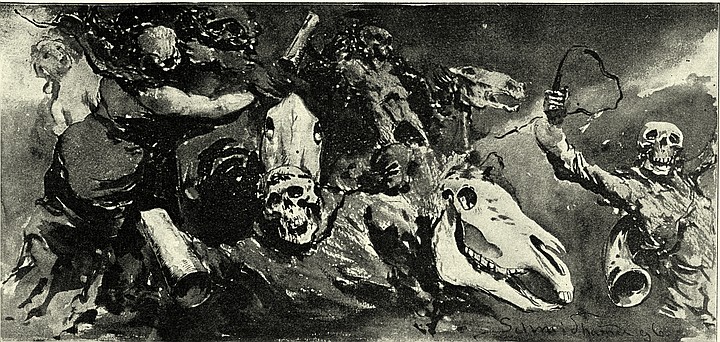
I can’t predict what will happen for you, but I think it’s helpful to consider a short list of the things that Gottman identifies as the “Four Horsemen” that foul up relationships that are in trouble: criticism, contempt, defensiveness, and stonewalling. Couples that exhibit these behaviors and attitudes are not guaranteed to break up, nor are they guaranteed to always relate the way they are at a given moment. But it's fair to say that they are exhibiting features of couples that often do break up.
Each of the Four Horsemen may arise from a number of feelings — pride, anger, grief, or worry are just some of them. They all show up as passive aggression of one sort or another.
Criticism is probably the most self-explanatory. In a good relationship, criticism will be delivered and received fairly, rather than in ways that are mean-spirited, fault-finding, suspicious or attacking. There is also a question of volume here; if a partner feels consistently criticized, this will take its toll. Criticism is also a distancing move. A hypercritical person tends to be hard-hearted and to see people uncharitably, and is often slow to try to help.
According to Gottman, contempt is the most damaging of the four. This can show up as snubbing someone, not taking them seriously, or not seeing them as worthy of time, attention, appreciation, or care.
Defensiveness is also alienating and aggravating, and reduces trust in the relationship. It’s also often tied to blaming. Defensiveness often looks like giving excuses, minimizing, denying, or intellectualizing. It can include only taking responsibility for intended inflictions of pain, which are more rare than unintended damage. It can also take the form of something called projective identification, in which one partner projects his own unwanted qualities onto his partner in a way that actually drives the partner to act accordingly.
Finally, we come to stonewalling: refusing to engage, respond, or participate in the relationship. This could mean shutting down communication (including nonverbal communication such as body language and eye contact), walking away, and simple avoidance.
People who exhibit these responses generally need to get better at regulating their nervous systems, increasing their assertiveness, holding boundaries, and maintaining a realistic self-assessment. Also, each party needs to provide the same ownership and accountability that she expects from the other. Each needs to have a willingness to move out of blame and see things in a systemic way — as a dance between partners.
It's important to note that these Horsemen don't come from nowhere. Often, each will be an understandable response to wounds that have accumulated over the course of a relationship. But if they are allowed free rein, they will often bring about the end of things.
Here's something you might be interested in.
Ask a Therapist: Can healthy eating be unhealthy?
Also: when is a relationship over?

Ask a Therapist: Can healthy eating be unhealthy?
Also: when is a relationship over?
Much salad, many smiles.
Hey Sam,
I like to eat really healthily, but recently my therapist suggested my eating might actually be disordered. She also thinks I’m too rigid about exercise. Being conscious of what I’m consuming and taking care of my health is super important to me, but how do I know if I’m going too far?
M.C.
Del Mar
Hi M.C.,
Short of a clearly diagnosable eating disorder, therapists’ opinions about sub-clinical eating disordered behavior can vary. But all would agree that a person can have eating-disordered behavior that is enough to concern herself or others, but not enough to meet the official diagnostic standard — at least at the current severity of the behavior.
Being a therapist, I want to begin responding to your questions with some questions of my own.
Do you respect the opinion of your counselor?
Are you open to being wrong about yourself ?
Is there something about this question that is painful for your image of yourself?
What would it be like for you emotionally if you believed that you do have disordered eating?
How might you live differently if that was the case?
These could all be ways to engage your process in therapy that might assist with this issue.
One of the primary reasons a client seeks therapy is to be provided with an outside view of himself, to have somebody who can see his blind spots. In the case of a problem that is in some way disagreeable to somebody, this can be especially important, because he is less likely to care about it or see it in its full reality— think of the alcoholic or drug addict who feels that people in her life are just overreacting to her behavior. If I am defensive about my problem, I may, for related reasons, be defensive about a label that serves to "call me out." There’s a danger that it will take away a feeling of safety, pleasure, comfort, or control that comes from a particular behavior.
So, when does healthy eating become a problem that would concern a therapist? There is likely a problem when the degree of preoccupation with food begins to get in the way of life, or when the number of food guidelines starts taking up enough time and mental energy to seem obsessive. With food, this could mean a way of eating that disallows the social or pleasurable dimensions of it, and instead allows the eater only the nutritional dimension. These days, this is sometimes called orthorexia — not a diagnosis, but a handy name for eating according to strict guidelines, whether they be of one’s own creation or provided by some protocol (keto, vegan, carnivore, monodiets), and doing so with a lot of rigidity.
A good way to assess rigidity is to see what happens, emotionally and behaviorally, if access to your food particularities is removed, and you don’t get to eat according to your preferences. How anxious or irritable does this make you? Assessing the importance you place on size, appearance, or weight loss is also telling. Usually, disordered eating has some relationship to these.
Another sign of a problematic pattern is when the goal continues to change; this has a way of sneakily happening without our even realizing. (This applies to food, but also, at least potentially, to all addictive or compulsive processes.) And behaviors that are attached to the food may be important to consider. You mention exercise — that’s a good one to notice. I’d add to it cleanses, fasts, or weight loss drugs.
Finally, it is worth mentioning that eating that is ostensibly healthy may actually not be healthy. People may tell others (and even themselves) they care about health, when what they really care about is weight loss. Or they may maintain a stubborn commitment to a certain way of eating that isn’t actually serving them well. Here, we’d want to trust lab tests to see what the body is saying, as well as doctors and dietitians.
*****
The Four Horsemen
Hey Sam,
My relationship has been bad for a long time, and I’m trying to figure out if I should give up hope about it. Tell me: when is a relationship over?
E.V.
Chula Vista
Sorry to hear it, E.V. There are, of course, all kinds of ways for relationships to be bad, but let’s see what we can do here. To help, I’ll bring in an expert to assist.
Though Gottman may not be a household name outside of the psychology world, within it, John and Julie Gottman are top-tier celebrities, and for good reason. They created the Love Lab in 1986 at the University of Washington — “the world’s original couples laboratory” — and have devoted their careers to improving the lives of couples via books, trainings, speaking engagements, and research. John Gottman once famously demonstrated his prowess by achieving a 93.6% accuracy in his predictions of whether couples would divorce or remain together in a 1992 study.
I can’t predict what will happen for you, but I think it’s helpful to consider a short list of the things that Gottman identifies as the “Four Horsemen” that foul up relationships that are in trouble: criticism, contempt, defensiveness, and stonewalling. Couples that exhibit these behaviors and attitudes are not guaranteed to break up, nor are they guaranteed to always relate the way they are at a given moment. But it's fair to say that they are exhibiting features of couples that often do break up.
Each of the Four Horsemen may arise from a number of feelings — pride, anger, grief, or worry are just some of them. They all show up as passive aggression of one sort or another.
Criticism is probably the most self-explanatory. In a good relationship, criticism will be delivered and received fairly, rather than in ways that are mean-spirited, fault-finding, suspicious or attacking. There is also a question of volume here; if a partner feels consistently criticized, this will take its toll. Criticism is also a distancing move. A hypercritical person tends to be hard-hearted and to see people uncharitably, and is often slow to try to help.
According to Gottman, contempt is the most damaging of the four. This can show up as snubbing someone, not taking them seriously, or not seeing them as worthy of time, attention, appreciation, or care.
Defensiveness is also alienating and aggravating, and reduces trust in the relationship. It’s also often tied to blaming. Defensiveness often looks like giving excuses, minimizing, denying, or intellectualizing. It can include only taking responsibility for intended inflictions of pain, which are more rare than unintended damage. It can also take the form of something called projective identification, in which one partner projects his own unwanted qualities onto his partner in a way that actually drives the partner to act accordingly.
Finally, we come to stonewalling: refusing to engage, respond, or participate in the relationship. This could mean shutting down communication (including nonverbal communication such as body language and eye contact), walking away, and simple avoidance.
People who exhibit these responses generally need to get better at regulating their nervous systems, increasing their assertiveness, holding boundaries, and maintaining a realistic self-assessment. Also, each party needs to provide the same ownership and accountability that she expects from the other. Each needs to have a willingness to move out of blame and see things in a systemic way — as a dance between partners.
It's important to note that these Horsemen don't come from nowhere. Often, each will be an understandable response to wounds that have accumulated over the course of a relationship. But if they are allowed free rein, they will often bring about the end of things.
Comments