

Here's something you might be interested in.
Ask a Hipster — Advice you didn't know you needed
Big Screen — Movie commentary
Blurt — Music's inside track
Booze News — San Diego spirits
Classical Music — Immortal beauty
Classifieds — Free and easy
Close to Home — What it’s like on the street where you live
Cover Stories — Front-page features
Drinks All Around — Bartenders' drink recipes
Excerpts — Literary and spiritual excerpts
Feast! — Food & drink reviews
Feature Stories — Local news & stories
Fishing Report — What’s getting hooked from ship and shore
From the Archives — Spotlight on the past
Golden Dreams — Talk of the town
The Gonzo Report — Making the musical scene, or at least reporting from it
Letters — Our inbox
Movies@Home — Local movie buffs share favorites
Movie Reviews — Our critics' picks and pans
Musician Interviews — Up close with local artists
Neighborhood News from Stringers — Hyperlocal news
News Ticker — News & politics
Obermeyer — San Diego politics illustrated
Outdoors — Weekly changes in flora and fauna
Overheard in San Diego — Eavesdropping illustrated
Poetry — The old and the new
Reader Travel — Travel section built by travelers
Reading — The hunt for intellectuals
Roam-O-Rama — SoCal's best hiking/biking trails
San Diego Beer — Inside San Diego suds
SD on the QT — Almost factual news
Sheep and Goats — Places of worship
Special Issues — The best of
Street Style — San Diego streets have style
Surf Diego — Real stories from those braving the waves
Theater — On stage in San Diego this week
Tin Fork — Silver spoon alternative
Under the Radar — Matt Potter's undercover work
Unforgettable — Long-ago San Diego
Unreal Estate — San Diego's priciest pads
Your Week — Daily event picks
Thunderheads forming in the East county, Elderberry is still in bloom
New moon and high tides improve grunion hunting
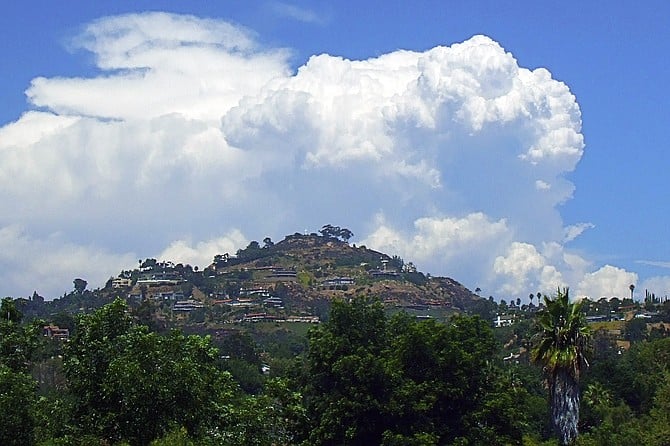
Mt. Helix with an East County Thunderhead in the background.
Cumulonimbus Clouds, Or Thunderheads, Are Most Likely To Form over San Diego County’s deserts and mountains during the latter part of the summer season, beginning around late July. The clouds appear by mid-afternoon — often the result of moist, tropical air entering the county from the south or southeast. If intense, these cloud buildups can be accompanied by enough rain to flood the desert washes and mountain drainages. And when the weather pattern allows the movement of moist air beyond the mountain barriers, even coastal San Diego County can experience the cool spatter of raindrops and spectacular evening lightning displays.
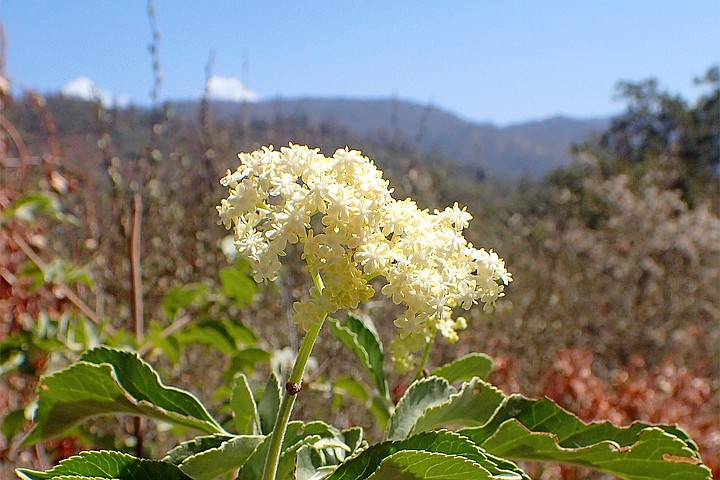
Blue Elderberry(Sambucus Cerulea) is native to the Western United States, from Montana to Northern Mexico.
Elderberry, Two Species Of Which Range Over Most Of San Diego County, is in full bloom this month. The flat-topped, creamy white blossoms of this large shrub (or small tree) can be seen in natural coastal canyon areas such as Tecolote Canyon and Los Peñasquitos Canyon Preserve, as well as in the more moist areas of the foothills and mountains. The elderberry’s tiny fruits, which ripen in late summer, have traditionally been used for various drinks and preserves.
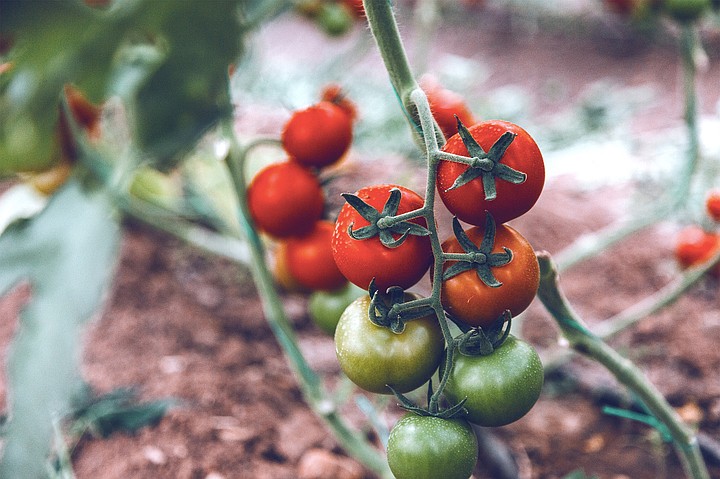
Plant the new moon this week.
July 24 Will Be The New Moon and the beginning of another lunar month. Unlike the calendar month, which averages 30.437 days long, the lunar month averages 29.531 days. So, on average, you'll see each moon phase about one calendar day earlier each month. According to the age-old practice of planting by the Moon, the ground is the most fertile the days leading up to and the days following the new Moon. It might be a good time to plant another round of Summer veggies — or your first round, if you live along the coast and have been waiting for the marine layer to burn off.
Grunion Runs Are Predicted To Occur during the late evening hours (generally 9:35-10:20 pm and before 1 am), following the nocturnal high tide, July 24 through July 27. The small, silvery grunion tend to spawn on wide, gently sloping beaches such as Silver Strand, Mission Beach, Pacific Beach, La Jolla Shores, and Del Mar. Open season for grunion started in March this year, skipped April-June and then resumes July-August. California law allows the taking of grunion in summer (except in those areas classified as ecological preserves). A California fishing license is required for persons 16 years and older — and south of Point Arguello, an Ocean Enhancement Validation is also required. Grunion may be taken by hand only. No holes may be dug in the beach to entrap them. Rule changes in June 2022 limit the daily bag and possession limit for grunion to 30 fish. Check wildlife.ca.gov/Fishing/Ocean/Grunion for more details.
The High Tides On July 23-25 Will Facilitate Grunion Hunting. Wednesday's tide will reach a high of 7.42 ft at 9:01 pm and a low of -1.54 feet at 3:35 am. Thursday's tide will reach a high of 1.34 feet at 9:45 pm and a low of -1.57 ft at 4:16 am. Friday will have a high of 7.02 feet at 10:26 pm and a low of -1.41 feet at 4:53 am.
Here's something you might be interested in.
Thunderheads forming in the East county, Elderberry is still in bloom
New moon and high tides improve grunion hunting

Thunderheads forming in the East county, Elderberry is still in bloom
New moon and high tides improve grunion hunting
Mt. Helix with an East County Thunderhead in the background.
Cumulonimbus Clouds, Or Thunderheads, Are Most Likely To Form over San Diego County’s deserts and mountains during the latter part of the summer season, beginning around late July. The clouds appear by mid-afternoon — often the result of moist, tropical air entering the county from the south or southeast. If intense, these cloud buildups can be accompanied by enough rain to flood the desert washes and mountain drainages. And when the weather pattern allows the movement of moist air beyond the mountain barriers, even coastal San Diego County can experience the cool spatter of raindrops and spectacular evening lightning displays.
Blue Elderberry(Sambucus Cerulea) is native to the Western United States, from Montana to Northern Mexico.
Elderberry, Two Species Of Which Range Over Most Of San Diego County, is in full bloom this month. The flat-topped, creamy white blossoms of this large shrub (or small tree) can be seen in natural coastal canyon areas such as Tecolote Canyon and Los Peñasquitos Canyon Preserve, as well as in the more moist areas of the foothills and mountains. The elderberry’s tiny fruits, which ripen in late summer, have traditionally been used for various drinks and preserves.
Plant the new moon this week.
July 24 Will Be The New Moon and the beginning of another lunar month. Unlike the calendar month, which averages 30.437 days long, the lunar month averages 29.531 days. So, on average, you'll see each moon phase about one calendar day earlier each month. According to the age-old practice of planting by the Moon, the ground is the most fertile the days leading up to and the days following the new Moon. It might be a good time to plant another round of Summer veggies — or your first round, if you live along the coast and have been waiting for the marine layer to burn off.
Grunion Runs Are Predicted To Occur during the late evening hours (generally 9:35-10:20 pm and before 1 am), following the nocturnal high tide, July 24 through July 27. The small, silvery grunion tend to spawn on wide, gently sloping beaches such as Silver Strand, Mission Beach, Pacific Beach, La Jolla Shores, and Del Mar. Open season for grunion started in March this year, skipped April-June and then resumes July-August. California law allows the taking of grunion in summer (except in those areas classified as ecological preserves). A California fishing license is required for persons 16 years and older — and south of Point Arguello, an Ocean Enhancement Validation is also required. Grunion may be taken by hand only. No holes may be dug in the beach to entrap them. Rule changes in June 2022 limit the daily bag and possession limit for grunion to 30 fish. Check wildlife.ca.gov/Fishing/Ocean/Grunion for more details.
The High Tides On July 23-25 Will Facilitate Grunion Hunting. Wednesday's tide will reach a high of 7.42 ft at 9:01 pm and a low of -1.54 feet at 3:35 am. Thursday's tide will reach a high of 1.34 feet at 9:45 pm and a low of -1.57 ft at 4:16 am. Friday will have a high of 7.02 feet at 10:26 pm and a low of -1.41 feet at 4:53 am.
Comments