

Here's something you might be interested in.
Ask a Hipster — Advice you didn't know you needed
Big Screen — Movie commentary
Blurt — Music's inside track
Booze News — San Diego spirits
Classical Music — Immortal beauty
Classifieds — Free and easy
Close to Home — What it’s like on the street where you live
Cover Stories — Front-page features
Drinks All Around — Bartenders' drink recipes
Excerpts — Literary and spiritual excerpts
Feast! — Food & drink reviews
Feature Stories — Local news & stories
Fishing Report — What’s getting hooked from ship and shore
From the Archives — Spotlight on the past
Golden Dreams — Talk of the town
The Gonzo Report — Making the musical scene, or at least reporting from it
Letters — Our inbox
Movies@Home — Local movie buffs share favorites
Movie Reviews — Our critics' picks and pans
Musician Interviews — Up close with local artists
Neighborhood News from Stringers — Hyperlocal news
News Ticker — News & politics
Obermeyer — San Diego politics illustrated
Outdoors — Weekly changes in flora and fauna
Overheard in San Diego — Eavesdropping illustrated
Poetry — The old and the new
Reader Travel — Travel section built by travelers
Reading — The hunt for intellectuals
Roam-O-Rama — SoCal's best hiking/biking trails
San Diego Beer — Inside San Diego suds
SD on the QT — Almost factual news
Sheep and Goats — Places of worship
Special Issues — The best of
Street Style — San Diego streets have style
Surf Diego — Real stories from those braving the waves
Theater — On stage in San Diego this week
Tin Fork — Silver spoon alternative
Under the Radar — Matt Potter's undercover work
Unforgettable — Long-ago San Diego
Unreal Estate — San Diego's priciest pads
Your Week — Daily event picks
Fish Report: No Bluefin in the count? They’re still there!
Going South? Make sure you’re legal.
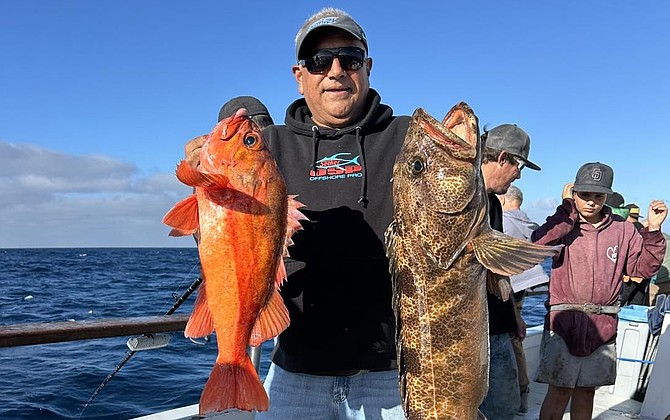
Huge lingcod caught aboard the Tribute 1.5-day run that also had limits of bluefin tuna and vermilion rockfish.
Dock Totals 11/30 – 12/6: 586 anglers aboard 33 half-day to 3-day trips out of San Diego landings over the past week caught 908 bonito, 80 calico bass, 2 halibut, 7 lingcod, 1 mako shark, 1877 rockfish, 109 sand bass, 246 sculpin, 62 sheephead, 81 spiny lobster (198 released), 234 whitefish, and 21 yellowtail.
Saltwater: This feels like the first week in a long time that had no bluefin in the count — at least when there wasn't any bad weather keeping the fleet inside. Maybe it was just a pleasantly warm week and folks were busy getting over their Turkey hangovers, and that led to low numbers of anglers and mostly half-day to three-quarter day trips focusing on rockfish and such. Or maybe it was the full moon phase and few boats out looking. Either way, the bluefin are still out there, and within range: the Tribute called in with limits of 56 bluefin for their 26 anglers early in their 1.5-day trip ending Sunday, so it didn’t make this week’s totals. With bluefin limits met early in the morning, they had plenty of time to target and catch limits of some really nice reds, a few yellowtail, sheephead, and a monster lingcod before heading in.
Shoot, maybe the bluefin needed a little holiday break, too. After all, the half-day to three-day fleet out of our four main landings is well ahead of last year’s numbers, with 51,124 bluefin caught to date in 2025 compared to the total of 44,517 caught during the calendar year of 2024. Given that much of the action is still within 1.5-day range, we should see more bluefin in the counts before the New Year bell rings. The larger fish seem to be more out toward San Clemente and the Outer Banks, and also down south off the mid Baja Peninsula, where long-range boats and local pangeros have been finding them just off the beach.
Lobster hooping has been good, with the strong currents of the king tides and full moon phase stirring up a lot of feed for the bugs, especially in the outer bays along the jetties. With the larger tide swings in daylight hours and slower currents at night, conditions were optimal for lots of lobsters on the prowl between sunset and sunrise. Guess what my favorite hoop bait for lobster is? Yup, bonito. And they’re here, too. They've been feeding steadily just offshore on masses of baitfish and are being caught in good numbers, with some of those caught going over 10 pounds.
Yellowtail are off and on at the Coronado Islands occasionally popping up on bait but are biting much better as close as the San Quintin area, even if the action is often deeper, with fish hitting the yoyo irons. And as always, rockfish have been solid, but when the current is raging during the higher tide phases, the trick is staying on them. As the moon begins to wane, and as long as this pleasant weather above the waterline holds, we should see the numbers pick up heading into the Christmas break.
Further down the Baja coast, yellowtail and bluefin are a stone’s throw from the beach…well, like eight miles or so…in the Bahia Asuncion area. And wahoo, dorado, and big yellowfin tuna are the main targets down out of Bahia Magdelena along the Ridge. After hitting the southern stretch for wahoo and yellowfin with success during an 11-day outing, the Royal Polaris got into some large bluefin tuna, catching a few over 200 pounds not far from San Pablo Canyon, where tuna often show over the deep structure just offshore along the Vizcaino Peninsula.
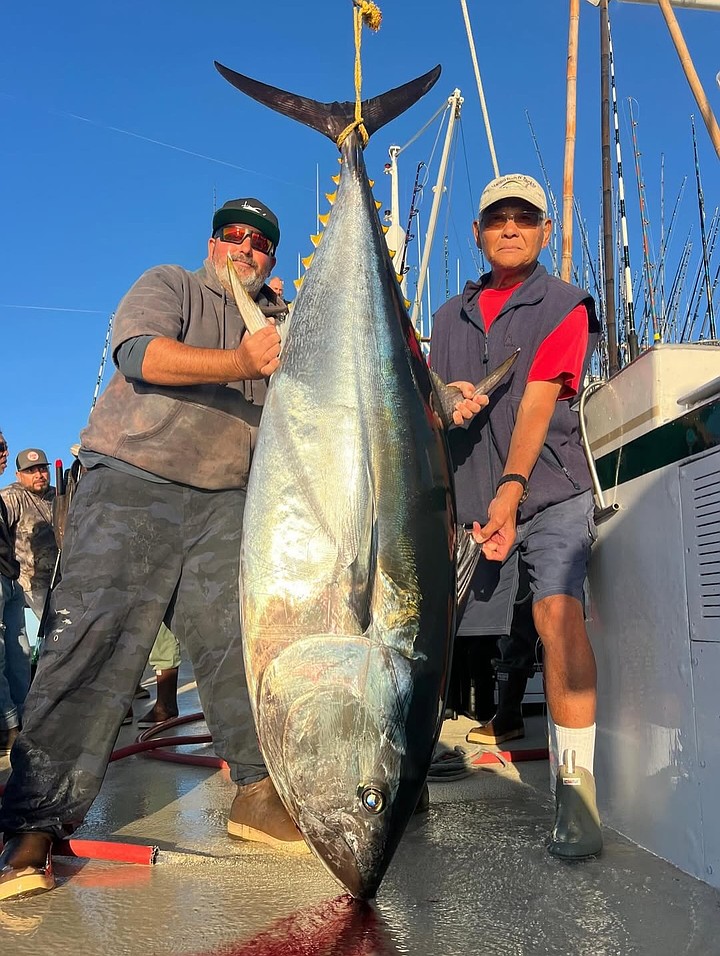
One of the chunky bluefin tuna caught up to 270 pounds off the mid-Baja Peninsula during the Royal Polaris' 11-day Phenix Rods trip.”
This is high season south of the border, especially in the southern half of the peninsula, and lots of folks like to drive down for the warmth, great food, and excellent inshore and offshore fishing. Just a heads up: make sure your ducks are in a row, as military checkpoints have had INM (Mexican immigration) officers pop up, and if you're traveling without an FMM, or the required Forma Migration Multiple for tourists, you may be told to return and get one. They are very easy to obtain at the INM office at all ports of entry, and cost about $50 for 8 to 180 days. For 7 days or less, they are free.
And while there is no license required to fish from shore in Mexico, a Mexican fishing license is required for any person on a fishing vessel, which includes any floating device from which one can fish: a kayak, longboard or SUP, and even float tubes. An annual license in Mexico runs from the date of purchase, so you’ll get a full year whenever you buy one. They run about $55 for an annual license. They’re biting, so, whether the beach, bay, lake, or offshore, they’re out there so go out and get ‘em!
Here's something you might be interested in.
Fish Report: No Bluefin in the count? They’re still there!
Going South? Make sure you’re legal.

Fish Report: No Bluefin in the count? They’re still there!
Going South? Make sure you’re legal.
Huge lingcod caught aboard the Tribute 1.5-day run that also had limits of bluefin tuna and vermilion rockfish.
Dock Totals 11/30 – 12/6: 586 anglers aboard 33 half-day to 3-day trips out of San Diego landings over the past week caught 908 bonito, 80 calico bass, 2 halibut, 7 lingcod, 1 mako shark, 1877 rockfish, 109 sand bass, 246 sculpin, 62 sheephead, 81 spiny lobster (198 released), 234 whitefish, and 21 yellowtail.
Saltwater: This feels like the first week in a long time that had no bluefin in the count — at least when there wasn't any bad weather keeping the fleet inside. Maybe it was just a pleasantly warm week and folks were busy getting over their Turkey hangovers, and that led to low numbers of anglers and mostly half-day to three-quarter day trips focusing on rockfish and such. Or maybe it was the full moon phase and few boats out looking. Either way, the bluefin are still out there, and within range: the Tribute called in with limits of 56 bluefin for their 26 anglers early in their 1.5-day trip ending Sunday, so it didn’t make this week’s totals. With bluefin limits met early in the morning, they had plenty of time to target and catch limits of some really nice reds, a few yellowtail, sheephead, and a monster lingcod before heading in.
Shoot, maybe the bluefin needed a little holiday break, too. After all, the half-day to three-day fleet out of our four main landings is well ahead of last year’s numbers, with 51,124 bluefin caught to date in 2025 compared to the total of 44,517 caught during the calendar year of 2024. Given that much of the action is still within 1.5-day range, we should see more bluefin in the counts before the New Year bell rings. The larger fish seem to be more out toward San Clemente and the Outer Banks, and also down south off the mid Baja Peninsula, where long-range boats and local pangeros have been finding them just off the beach.
Lobster hooping has been good, with the strong currents of the king tides and full moon phase stirring up a lot of feed for the bugs, especially in the outer bays along the jetties. With the larger tide swings in daylight hours and slower currents at night, conditions were optimal for lots of lobsters on the prowl between sunset and sunrise. Guess what my favorite hoop bait for lobster is? Yup, bonito. And they’re here, too. They've been feeding steadily just offshore on masses of baitfish and are being caught in good numbers, with some of those caught going over 10 pounds.
Yellowtail are off and on at the Coronado Islands occasionally popping up on bait but are biting much better as close as the San Quintin area, even if the action is often deeper, with fish hitting the yoyo irons. And as always, rockfish have been solid, but when the current is raging during the higher tide phases, the trick is staying on them. As the moon begins to wane, and as long as this pleasant weather above the waterline holds, we should see the numbers pick up heading into the Christmas break.
Further down the Baja coast, yellowtail and bluefin are a stone’s throw from the beach…well, like eight miles or so…in the Bahia Asuncion area. And wahoo, dorado, and big yellowfin tuna are the main targets down out of Bahia Magdelena along the Ridge. After hitting the southern stretch for wahoo and yellowfin with success during an 11-day outing, the Royal Polaris got into some large bluefin tuna, catching a few over 200 pounds not far from San Pablo Canyon, where tuna often show over the deep structure just offshore along the Vizcaino Peninsula.
One of the chunky bluefin tuna caught up to 270 pounds off the mid-Baja Peninsula during the Royal Polaris' 11-day Phenix Rods trip.”
This is high season south of the border, especially in the southern half of the peninsula, and lots of folks like to drive down for the warmth, great food, and excellent inshore and offshore fishing. Just a heads up: make sure your ducks are in a row, as military checkpoints have had INM (Mexican immigration) officers pop up, and if you're traveling without an FMM, or the required Forma Migration Multiple for tourists, you may be told to return and get one. They are very easy to obtain at the INM office at all ports of entry, and cost about $50 for 8 to 180 days. For 7 days or less, they are free.
And while there is no license required to fish from shore in Mexico, a Mexican fishing license is required for any person on a fishing vessel, which includes any floating device from which one can fish: a kayak, longboard or SUP, and even float tubes. An annual license in Mexico runs from the date of purchase, so you’ll get a full year whenever you buy one. They run about $55 for an annual license. They’re biting, so, whether the beach, bay, lake, or offshore, they’re out there so go out and get ‘em!