

Here's something you might be interested in.
Ask a Hipster — Advice you didn't know you needed
Big Screen — Movie commentary
Blurt — Music's inside track
Booze News — San Diego spirits
Classical Music — Immortal beauty
Classifieds — Free and easy
Close to Home — What it’s like on the street where you live
Cover Stories — Front-page features
Drinks All Around — Bartenders' drink recipes
Excerpts — Literary and spiritual excerpts
Feast! — Food & drink reviews
Feature Stories — Local news & stories
Fishing Report — What’s getting hooked from ship and shore
From the Archives — Spotlight on the past
Golden Dreams — Talk of the town
The Gonzo Report — Making the musical scene, or at least reporting from it
Letters — Our inbox
Movies@Home — Local movie buffs share favorites
Movie Reviews — Our critics' picks and pans
Musician Interviews — Up close with local artists
Neighborhood News from Stringers — Hyperlocal news
News Ticker — News & politics
Obermeyer — San Diego politics illustrated
Outdoors — Weekly changes in flora and fauna
Overheard in San Diego — Eavesdropping illustrated
Poetry — The old and the new
Reader Travel — Travel section built by travelers
Reading — The hunt for intellectuals
Roam-O-Rama — SoCal's best hiking/biking trails
San Diego Beer — Inside San Diego suds
SD on the QT — Almost factual news
Sheep and Goats — Places of worship
Special Issues — The best of
Street Style — San Diego streets have style
Surf Diego — Real stories from those braving the waves
Theater — On stage in San Diego this week
Tin Fork — Silver spoon alternative
Under the Radar — Matt Potter's undercover work
Unforgettable — Long-ago San Diego
Unreal Estate — San Diego's priciest pads
Your Week — Daily event picks
Monsoonal moisture moves through the county, sandpipers are showing up
"Dog Days" refers to Sirius, the Dog Star
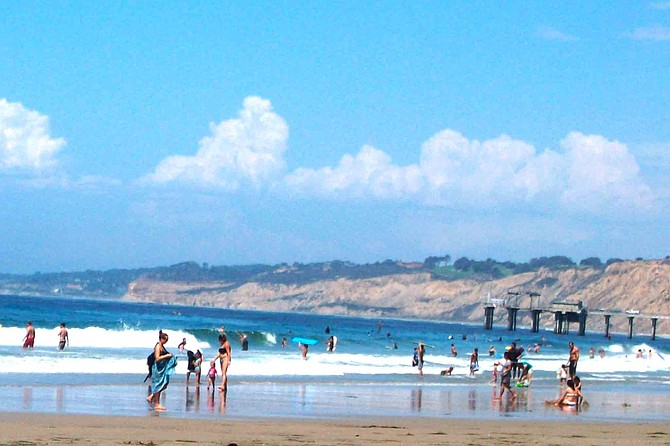
La Jolla Shores with cumulonimbus clouds in the distance.
Towering Thunderheads Have Been Seen Hovering Over The Deserts and mountains of San Diego this past week. As monsoonal moisture moves through the county, afternoon rain showers have already dampened parts of Agua Caliente, Descanso, Pine Valley, Mount Laguna and Julian, with more of the same expected in the next week or two. Usually this kind of activity ceases by sunset, and clearing skies usher in a cloudless night. The marked contrast between the sunny-but bland weather along the coast and the more lively and unpredictable mountain weather is one illustration of San Diego County’s “geography of contrast.”
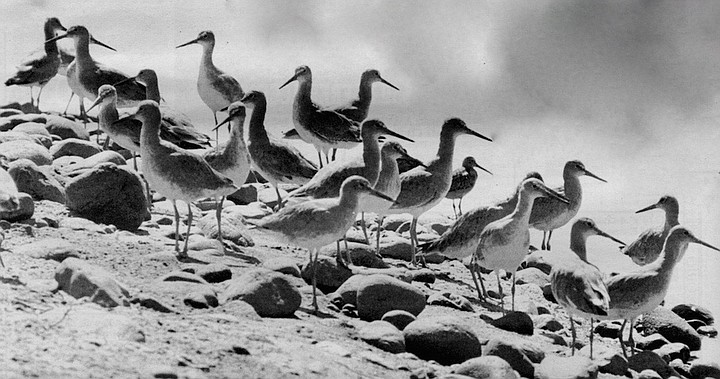
Yearly, the sandpipers migrate from pole to pole and use the estuary as a “carbo-stop” on their long flight.
Sandpipers Are Now Being Seen In Considerable Numbers within San Diego County’s coastal wetland habitats and along the ocean beaches. Some have just arrived from the north; others are juveniles that have bred locally. You’ll find sanderlings and willets scurrying along the wet sand on the beaches. Several other members of the sandpiper family can be found in mudflat areas such as the Tijuana River Estuary, the south end of San Diego Bay, the San Diego River flood channel near Sea World, and the margins of most North County lagoons.
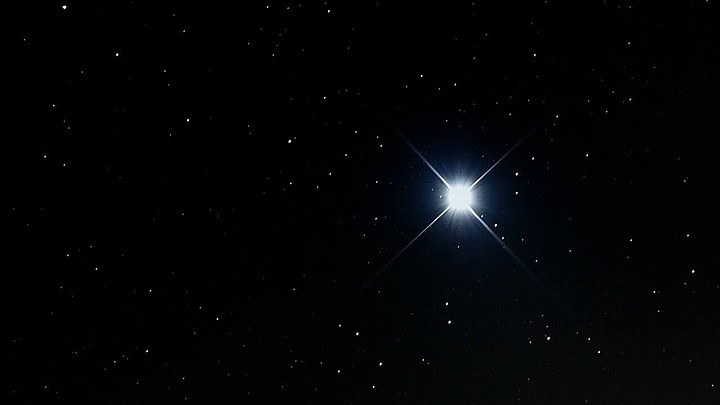
Sirius, the brightest star in the night sky.
The Term “Dog Days” traditionally refers to a period of particularly hot and humid weather occurring during the summer months of July and August in the Northern Hemisphere. This period of sweltering weather coincides with the year’s heliacal (meaning “at sunrise”) rising of Sirius, the Dog Star. Sirius is part of the constellation Canis Majoris, the “Greater Dog”, which is where Sirius gets its canine nickname, as well as its official name, Alpha Canis Majoris. Aside from our own Sun, Sirius is the brightest star in the sky.
Here's something you might be interested in.
Monsoonal moisture moves through the county, sandpipers are showing up
"Dog Days" refers to Sirius, the Dog Star

Monsoonal moisture moves through the county, sandpipers are showing up
"Dog Days" refers to Sirius, the Dog Star
La Jolla Shores with cumulonimbus clouds in the distance.
Towering Thunderheads Have Been Seen Hovering Over The Deserts and mountains of San Diego this past week. As monsoonal moisture moves through the county, afternoon rain showers have already dampened parts of Agua Caliente, Descanso, Pine Valley, Mount Laguna and Julian, with more of the same expected in the next week or two. Usually this kind of activity ceases by sunset, and clearing skies usher in a cloudless night. The marked contrast between the sunny-but bland weather along the coast and the more lively and unpredictable mountain weather is one illustration of San Diego County’s “geography of contrast.”
Yearly, the sandpipers migrate from pole to pole and use the estuary as a “carbo-stop” on their long flight.
Sandpipers Are Now Being Seen In Considerable Numbers within San Diego County’s coastal wetland habitats and along the ocean beaches. Some have just arrived from the north; others are juveniles that have bred locally. You’ll find sanderlings and willets scurrying along the wet sand on the beaches. Several other members of the sandpiper family can be found in mudflat areas such as the Tijuana River Estuary, the south end of San Diego Bay, the San Diego River flood channel near Sea World, and the margins of most North County lagoons.
Sirius, the brightest star in the night sky.
The Term “Dog Days” traditionally refers to a period of particularly hot and humid weather occurring during the summer months of July and August in the Northern Hemisphere. This period of sweltering weather coincides with the year’s heliacal (meaning “at sunrise”) rising of Sirius, the Dog Star. Sirius is part of the constellation Canis Majoris, the “Greater Dog”, which is where Sirius gets its canine nickname, as well as its official name, Alpha Canis Majoris. Aside from our own Sun, Sirius is the brightest star in the sky.
Comments