

Here's something you might be interested in.
Ask a Hipster — Advice you didn't know you needed
Big Screen — Movie commentary
Blurt — Music's inside track
Booze News — San Diego spirits
Classical Music — Immortal beauty
Classifieds — Free and easy
Close to Home — What it’s like on the street where you live
Cover Stories — Front-page features
Drinks All Around — Bartenders' drink recipes
Excerpts — Literary and spiritual excerpts
Feast! — Food & drink reviews
Feature Stories — Local news & stories
Fishing Report — What’s getting hooked from ship and shore
From the Archives — Spotlight on the past
Golden Dreams — Talk of the town
The Gonzo Report — Making the musical scene, or at least reporting from it
Letters — Our inbox
Movies@Home — Local movie buffs share favorites
Movie Reviews — Our critics' picks and pans
Musician Interviews — Up close with local artists
Neighborhood News from Stringers — Hyperlocal news
News Ticker — News & politics
Obermeyer — San Diego politics illustrated
Outdoors — Weekly changes in flora and fauna
Overheard in San Diego — Eavesdropping illustrated
Poetry — The old and the new
Reader Travel — Travel section built by travelers
Reading — The hunt for intellectuals
Roam-O-Rama — SoCal's best hiking/biking trails
San Diego Beer — Inside San Diego suds
SD on the QT — Almost factual news
Sheep and Goats — Places of worship
Special Issues — The best of
Street Style — San Diego streets have style
Surf Diego — Real stories from those braving the waves
Theater — On stage in San Diego this week
Tin Fork — Silver spoon alternative
Under the Radar — Matt Potter's undercover work
Unforgettable — Long-ago San Diego
Unreal Estate — San Diego's priciest pads
Your Week — Daily event picks
Theater Review: The Recipe at La Jolla Playhouse
The journey from Julia McWilliams to Julia Child
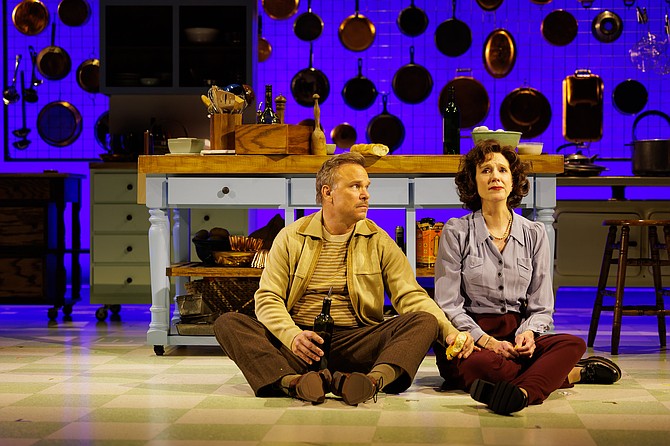
My family lived in Boston from 1978 to 1980, which happens to be the same two years that the great culinary ambassador Julia Child made her second series at WGBH, Julia Child & Company. (The first, The French Chef, had made her famous; the story goes that at one point, whatever ingredient she featured would soon after be sold out at the supermarket.) While we lived there, my mother attended a taping with a friend.
She also accompanied me to a performance of The Recipe, La Jolla Playhouse’s smash hit bioplay of the famous foodie. At the intermission, she turned to me and said, “It’s a perfect story: Cinderella meets Eliza Dolittle.” That was more fulsome than what I had just said to her: “It’s an applause machine.” But what I said was true: the audience was forever breaking out into little bursts of clapping as young Julia McWilliams made her way toward the epiphany that had been foreshadowed in the first scene by her college roommate at Smith: “You have to know what you want to know who you are.”
(What she wanted was to cook. And eat. And drink. And write. And eventually, to share all that with the world. Her transformation from aimless college kid to crusading cook is the Eliza Dolittle part of the story, with Frenchwoman Simone Beck in the part of Henry Higgins — the genius who teaches our gal all she knows, only to realize she can’t control what she’s created.)
I will, however, grant that what I said was true because what Mom said was true. This Cinderella is a poor little rich girl, who had lost her mother at an early age — the mother who told her very tall daughter never to slouch to hide her height, who never taught her homemaking because she assured young Julia she was destined for something more. (But what?) Instead of a wicked stepmother, she has to contend with a grumpy dad: he loves her, but he’s also deeply traditional and very, very American. And here’s Julia, rejecting perfectly suitable suitors, getting a government job, and moving to France. Instead of wicked stepsisters, she must contend with men who see her as a great pal and women who see her as a great big galoot. Plus her own sense of personal failure.
But like Cinderella, she is relentlessly, impossibly, magnificently upbeat. Not quite cheerful; it’s clear she’s sad at times. And not exactly positive; she has things to lament, an she laments them. But never downbeat, never listless, never slouching to hide her height. She draws herself up and presses on with good cheer and a ready wit. It’s downright inspiring. She’s indomitable. Unflappable. Unsinkable. Applaudable. And people applauded.
That was the first act, anyway. Act two got a little darker, as she encountered real failure, real breakups, and real heartbreaks on her way to becoming the Julia known and loved by so many. There were slackenings in pace, bits of telling over showing, expertly choreographed efforts to make cooking look more dramatic than it is, general surrenders to the fact that writing is impossible to make look sexier than it is. Julia's breakthrough, after all, was not as a cook but as the author of a cookbook: the two-volume Mastering the Art of French Cooking.
Somewhere along the way, you may get the notion that the story is about how Julia Child became Julia Child, but the drama is about the romance of Julia McWilliams and Paul Child. I did, anyway. The play goes for a big finish about the way she empowered women and other people who had the duty of cooking but also the chance to find the joy of cooking. And she did all that. But it also presents her as a kind of culinary Steve Jobs, someone who took other people’s technical work and shaped it and made it accessible and cool for the masses. That was her gift. But it’s not what made us applaud here.
Here's something you might be interested in.
Theater Review: The Recipe at La Jolla Playhouse
The journey from Julia McWilliams to Julia Child

Theater Review: The Recipe at La Jolla Playhouse
The journey from Julia McWilliams to Julia Child
My family lived in Boston from 1978 to 1980, which happens to be the same two years that the great culinary ambassador Julia Child made her second series at WGBH, Julia Child & Company. (The first, The French Chef, had made her famous; the story goes that at one point, whatever ingredient she featured would soon after be sold out at the supermarket.) While we lived there, my mother attended a taping with a friend.
She also accompanied me to a performance of The Recipe, La Jolla Playhouse’s smash hit bioplay of the famous foodie. At the intermission, she turned to me and said, “It’s a perfect story: Cinderella meets Eliza Dolittle.” That was more fulsome than what I had just said to her: “It’s an applause machine.” But what I said was true: the audience was forever breaking out into little bursts of clapping as young Julia McWilliams made her way toward the epiphany that had been foreshadowed in the first scene by her college roommate at Smith: “You have to know what you want to know who you are.”
(What she wanted was to cook. And eat. And drink. And write. And eventually, to share all that with the world. Her transformation from aimless college kid to crusading cook is the Eliza Dolittle part of the story, with Frenchwoman Simone Beck in the part of Henry Higgins — the genius who teaches our gal all she knows, only to realize she can’t control what she’s created.)
I will, however, grant that what I said was true because what Mom said was true. This Cinderella is a poor little rich girl, who had lost her mother at an early age — the mother who told her very tall daughter never to slouch to hide her height, who never taught her homemaking because she assured young Julia she was destined for something more. (But what?) Instead of a wicked stepmother, she has to contend with a grumpy dad: he loves her, but he’s also deeply traditional and very, very American. And here’s Julia, rejecting perfectly suitable suitors, getting a government job, and moving to France. Instead of wicked stepsisters, she must contend with men who see her as a great pal and women who see her as a great big galoot. Plus her own sense of personal failure.
But like Cinderella, she is relentlessly, impossibly, magnificently upbeat. Not quite cheerful; it’s clear she’s sad at times. And not exactly positive; she has things to lament, an she laments them. But never downbeat, never listless, never slouching to hide her height. She draws herself up and presses on with good cheer and a ready wit. It’s downright inspiring. She’s indomitable. Unflappable. Unsinkable. Applaudable. And people applauded.
That was the first act, anyway. Act two got a little darker, as she encountered real failure, real breakups, and real heartbreaks on her way to becoming the Julia known and loved by so many. There were slackenings in pace, bits of telling over showing, expertly choreographed efforts to make cooking look more dramatic than it is, general surrenders to the fact that writing is impossible to make look sexier than it is. Julia's breakthrough, after all, was not as a cook but as the author of a cookbook: the two-volume Mastering the Art of French Cooking.
Somewhere along the way, you may get the notion that the story is about how Julia Child became Julia Child, but the drama is about the romance of Julia McWilliams and Paul Child. I did, anyway. The play goes for a big finish about the way she empowered women and other people who had the duty of cooking but also the chance to find the joy of cooking. And she did all that. But it also presents her as a kind of culinary Steve Jobs, someone who took other people’s technical work and shaped it and made it accessible and cool for the masses. That was her gift. But it’s not what made us applaud here.
Comments