

Here's something you might be interested in.
Ask a Hipster — Advice you didn't know you needed
Big Screen — Movie commentary
Blurt — Music's inside track
Booze News — San Diego spirits
Classical Music — Immortal beauty
Classifieds — Free and easy
Close to Home — What it’s like on the street where you live
Cover Stories — Front-page features
Drinks All Around — Bartenders' drink recipes
Excerpts — Literary and spiritual excerpts
Feast! — Food & drink reviews
Feature Stories — Local news & stories
Fishing Report — What’s getting hooked from ship and shore
From the Archives — Spotlight on the past
Golden Dreams — Talk of the town
The Gonzo Report — Making the musical scene, or at least reporting from it
Letters — Our inbox
Movies@Home — Local movie buffs share favorites
Movie Reviews — Our critics' picks and pans
Musician Interviews — Up close with local artists
Neighborhood News from Stringers — Hyperlocal news
News Ticker — News & politics
Obermeyer — San Diego politics illustrated
Outdoors — Weekly changes in flora and fauna
Overheard in San Diego — Eavesdropping illustrated
Poetry — The old and the new
Reader Travel — Travel section built by travelers
Reading — The hunt for intellectuals
Roam-O-Rama — SoCal's best hiking/biking trails
San Diego Beer — Inside San Diego suds
SD on the QT — Almost factual news
Sheep and Goats — Places of worship
Special Issues — The best of
Street Style — San Diego streets have style
Surf Diego — Real stories from those braving the waves
Theater — On stage in San Diego this week
Tin Fork — Silver spoon alternative
Under the Radar — Matt Potter's undercover work
Unforgettable — Long-ago San Diego
Unreal Estate — San Diego's priciest pads
Your Week — Daily event picks
Happy Year of the Horse, plant your veggies on the new moon
Most of San Diego's Acacias were imported from Austraila
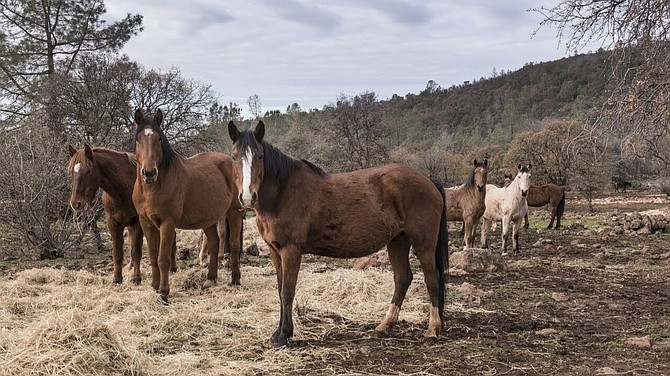
Some of the hundreds of wild horses at the Wild Horse Sanctuary south of the little town of Shingletown, east of Redding, California.
Happy Year of the Horse! In Chinese mythology, the horse has always stood as a powerful symbol of strength, freedom, and vitality. Within the Chinese zodiac, those born under the sign of the horse inherit that same vivacious, wild energy. While there are no more truly "wild" horses in San Diego County, our most famous "wild" population, The Coyote Canyon Heritage Herd, resided in the Anza-Borrego Desert State Park until the were removed in 2003 and 2007 by state officials. Today, descendants of this herd are cared for on private land and preserves in Ramona and Santa Ysabel. While they roam on large acreages (such as near the Sutherland Reservoir), they are managed by the nonprofit Coyote Canyon Caballos d’Anza. DNA testing has linked these horses to the original Spanish stock brought by explorers like Juan Bautista de Anza in the late 1700s.
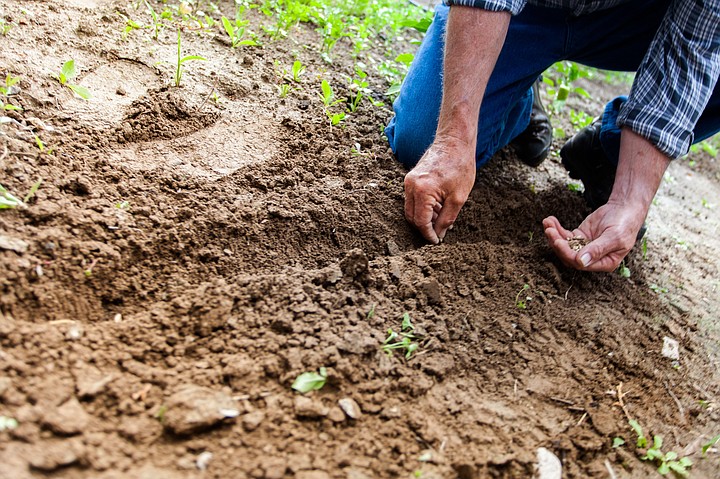
There's still time to plant some winter veggies.
The New Moon Peaks on February 17 at 4:01 am. The New Moon is sometimes seen as a period of rebirth... maybe it’s time to consider planting some seeds in anticipation of the gardening season ahead. Check out a Planting Calendar to see if it’s time to get those seedlings started.
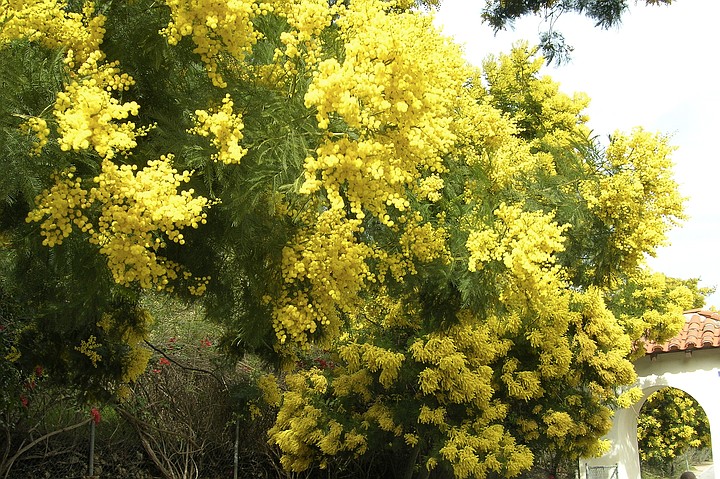
Acacia Decurrens propogate and grow rapidly after a brushfire.
Acacias, Festooned with Myriads of Fluffy Yellow Blossoms, are brightening street-sides, freeway embankments, and backyard gardens throughout the San Diego area this month. Although many acacias are native to subtropical regions, nearly all we see today in San Diego were introduced from Australia. The Anza-Borrego Desert’s native acacia (Acacia greggii) is the notoriously thorny “cat-claw,” known by early desert pioneers as “tear-blanket” and “wait-a-minute bush.”
Here's something you might be interested in.
Happy Year of the Horse, plant your veggies on the new moon
Most of San Diego's Acacias were imported from Austraila

Happy Year of the Horse, plant your veggies on the new moon
Most of San Diego's Acacias were imported from Austraila
Some of the hundreds of wild horses at the Wild Horse Sanctuary south of the little town of Shingletown, east of Redding, California.
Happy Year of the Horse! In Chinese mythology, the horse has always stood as a powerful symbol of strength, freedom, and vitality. Within the Chinese zodiac, those born under the sign of the horse inherit that same vivacious, wild energy. While there are no more truly "wild" horses in San Diego County, our most famous "wild" population, The Coyote Canyon Heritage Herd, resided in the Anza-Borrego Desert State Park until the were removed in 2003 and 2007 by state officials. Today, descendants of this herd are cared for on private land and preserves in Ramona and Santa Ysabel. While they roam on large acreages (such as near the Sutherland Reservoir), they are managed by the nonprofit Coyote Canyon Caballos d’Anza. DNA testing has linked these horses to the original Spanish stock brought by explorers like Juan Bautista de Anza in the late 1700s.
There's still time to plant some winter veggies.
The New Moon Peaks on February 17 at 4:01 am. The New Moon is sometimes seen as a period of rebirth... maybe it’s time to consider planting some seeds in anticipation of the gardening season ahead. Check out a Planting Calendar to see if it’s time to get those seedlings started.
Acacia Decurrens propogate and grow rapidly after a brushfire.
Acacias, Festooned with Myriads of Fluffy Yellow Blossoms, are brightening street-sides, freeway embankments, and backyard gardens throughout the San Diego area this month. Although many acacias are native to subtropical regions, nearly all we see today in San Diego were introduced from Australia. The Anza-Borrego Desert’s native acacia (Acacia greggii) is the notoriously thorny “cat-claw,” known by early desert pioneers as “tear-blanket” and “wait-a-minute bush.”
Comments