

Here's something you might be interested in.
Ask a Hipster — Advice you didn't know you needed
Big Screen — Movie commentary
Blurt — Music's inside track
Booze News — San Diego spirits
Classical Music — Immortal beauty
Classifieds — Free and easy
Close to Home — What it’s like on the street where you live
Cover Stories — Front-page features
Drinks All Around — Bartenders' drink recipes
Excerpts — Literary and spiritual excerpts
Feast! — Food & drink reviews
Feature Stories — Local news & stories
Fishing Report — What’s getting hooked from ship and shore
From the Archives — Spotlight on the past
Golden Dreams — Talk of the town
The Gonzo Report — Making the musical scene, or at least reporting from it
Letters — Our inbox
Movies@Home — Local movie buffs share favorites
Movie Reviews — Our critics' picks and pans
Musician Interviews — Up close with local artists
Neighborhood News from Stringers — Hyperlocal news
News Ticker — News & politics
Obermeyer — San Diego politics illustrated
Outdoors — Weekly changes in flora and fauna
Overheard in San Diego — Eavesdropping illustrated
Poetry — The old and the new
Reader Travel — Travel section built by travelers
Reading — The hunt for intellectuals
Roam-O-Rama — SoCal's best hiking/biking trails
San Diego Beer — Inside San Diego suds
SD on the QT — Almost factual news
Sheep and Goats — Places of worship
Special Issues — The best of
Street Style — San Diego streets have style
Surf Diego — Real stories from those braving the waves
Theater — On stage in San Diego this week
Tin Fork — Silver spoon alternative
Under the Radar — Matt Potter's undercover work
Unforgettable — Long-ago San Diego
Unreal Estate — San Diego's priciest pads
Your Week — Daily event picks
Laurel Sumac is very frost-sensitive, Lupines are popping up in grassy areas
The sun is setting almost minute later each day
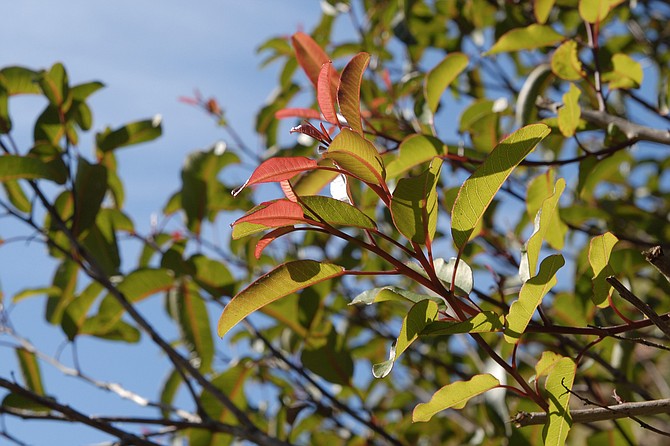
Laurel sumac (Malosma laurina) has green foliage year-round, new leaves are reddish-bronze in color. Leaves tend to fold resembling taco shells which gives it the common name "taco plant."
The Frost-Nipped Legacies of the past winter’s cold spells might not be hard to spot in February, especially in the inland areas where overnight lows dipped to below freezing. Look for brown lawns, half-dead-looking avocado trees, and wilted ornamental plants like poinsettias. One common frost-sensitive native plant, the laurel sumac, is responsive to the reach of cold air. Laurel sumac is often the largest and most conspicuous plant growing within the coastal sage scrub type of vegetation native to San Diego’s undisturbed canyon hillsides. Wherever freezing-cold air has sunk into low lying canyons and basins, laurel sumac bushes tell the story by appearing brown and withered a few weeks later.
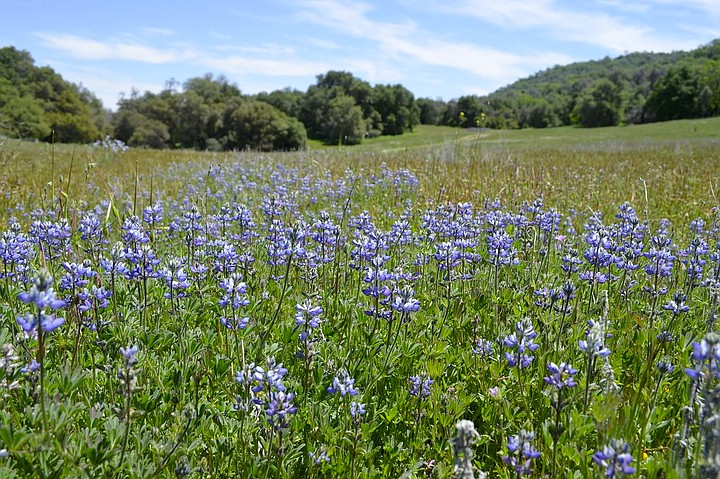
Lupines, Whose Spiky, Purple (sometimes yellow) Flower Clusters adorn grassy areas and disturbed patches of soil, are beginning to pop up all over San Diego County. If desert rainfall cooperates, you’ll spot lupines along the sandy washes or in roadside gullies where water temporarily collects. Coastal lupines should be in full flower by late March. Higher-elevation lupines will be blooming in the mountain areas in May and early June. The generic name Lupinus, meaning “wolf,” was given these plants in the belief that they robbed the soil of nutrients. Actually the reverse is true: Their ability to fix nitrogen through root nodules helps them survive on poor soils and may, in fact, enrich the soil around them.

La Jolla winter sunset. Natures natural artist.
The Sun Strides North in February, swinging higher across the sky each successive day. Already quite noticeable is the change in the time of sunset, currently almost a minute later per day, and sunrise, currently almost a minute earlier per day.
Here's something you might be interested in.
Laurel Sumac is very frost-sensitive, Lupines are popping up in grassy areas
The sun is setting almost minute later each day

Laurel Sumac is very frost-sensitive, Lupines are popping up in grassy areas
The sun is setting almost minute later each day
Laurel sumac (Malosma laurina) has green foliage year-round, new leaves are reddish-bronze in color. Leaves tend to fold resembling taco shells which gives it the common name "taco plant."
The Frost-Nipped Legacies of the past winter’s cold spells might not be hard to spot in February, especially in the inland areas where overnight lows dipped to below freezing. Look for brown lawns, half-dead-looking avocado trees, and wilted ornamental plants like poinsettias. One common frost-sensitive native plant, the laurel sumac, is responsive to the reach of cold air. Laurel sumac is often the largest and most conspicuous plant growing within the coastal sage scrub type of vegetation native to San Diego’s undisturbed canyon hillsides. Wherever freezing-cold air has sunk into low lying canyons and basins, laurel sumac bushes tell the story by appearing brown and withered a few weeks later.
Lupines, Whose Spiky, Purple (sometimes yellow) Flower Clusters adorn grassy areas and disturbed patches of soil, are beginning to pop up all over San Diego County. If desert rainfall cooperates, you’ll spot lupines along the sandy washes or in roadside gullies where water temporarily collects. Coastal lupines should be in full flower by late March. Higher-elevation lupines will be blooming in the mountain areas in May and early June. The generic name Lupinus, meaning “wolf,” was given these plants in the belief that they robbed the soil of nutrients. Actually the reverse is true: Their ability to fix nitrogen through root nodules helps them survive on poor soils and may, in fact, enrich the soil around them.
La Jolla winter sunset. Natures natural artist.
The Sun Strides North in February, swinging higher across the sky each successive day. Already quite noticeable is the change in the time of sunset, currently almost a minute later per day, and sunrise, currently almost a minute earlier per day.
Comments