

Here's something you might be interested in.
Ask a Hipster — Advice you didn't know you needed
Big Screen — Movie commentary
Blurt — Music's inside track
Booze News — San Diego spirits
Classical Music — Immortal beauty
Classifieds — Free and easy
Close to Home — What it’s like on the street where you live
Cover Stories — Front-page features
Drinks All Around — Bartenders' drink recipes
Excerpts — Literary and spiritual excerpts
Feast! — Food & drink reviews
Feature Stories — Local news & stories
Fishing Report — What’s getting hooked from ship and shore
From the Archives — Spotlight on the past
Golden Dreams — Talk of the town
The Gonzo Report — Making the musical scene, or at least reporting from it
Letters — Our inbox
Movies@Home — Local movie buffs share favorites
Movie Reviews — Our critics' picks and pans
Musician Interviews — Up close with local artists
Neighborhood News from Stringers — Hyperlocal news
News Ticker — News & politics
Obermeyer — San Diego politics illustrated
Outdoors — Weekly changes in flora and fauna
Overheard in San Diego — Eavesdropping illustrated
Poetry — The old and the new
Reader Travel — Travel section built by travelers
Reading — The hunt for intellectuals
Roam-O-Rama — SoCal's best hiking/biking trails
San Diego Beer — Inside San Diego suds
SD on the QT — Almost factual news
Sheep and Goats — Places of worship
Special Issues — The best of
Street Style — San Diego streets have style
Surf Diego — Real stories from those braving the waves
Theater — On stage in San Diego this week
Tin Fork — Silver spoon alternative
Under the Radar — Matt Potter's undercover work
Unforgettable — Long-ago San Diego
Unreal Estate — San Diego's priciest pads
Your Week — Daily event picks
Saint Brigid’s Day is tomorrow, "Moon Illusion" is psychological
Very high and low tides occur this week
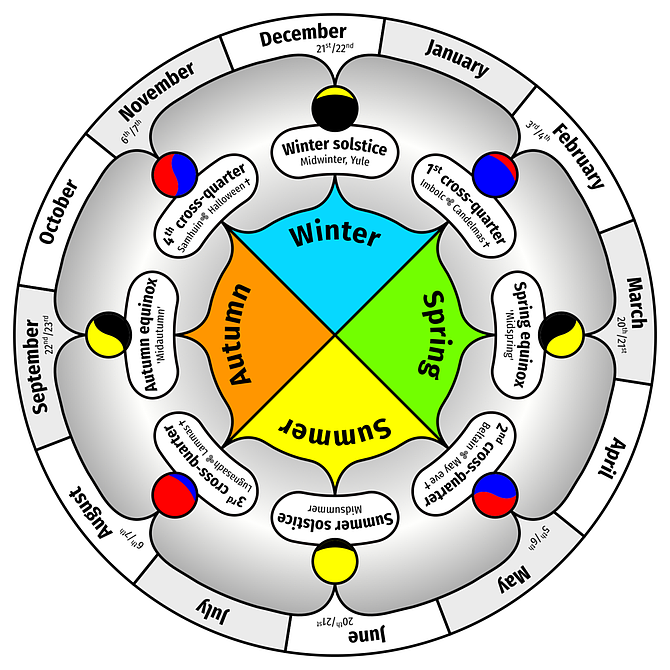
A perpetual, circular, solar calendar for the northern hemisphere.
Tuesday is Imbolc or Saint Brigid’s Day, one of the four traditional “cross-quarter” days midway between the solstices and the equinoxes. More or less. In the many centuries after this tradition took hold in the British Isles, the calendar drifted with respect to Earth’s position in its orbit, until our current Gregorian calendar system was instituted a few centuries ago to put an end to such problems. So this winter, the midpoint between the December solstice and the March equinox actually falls on February 3rd at 7:42 pm PST.
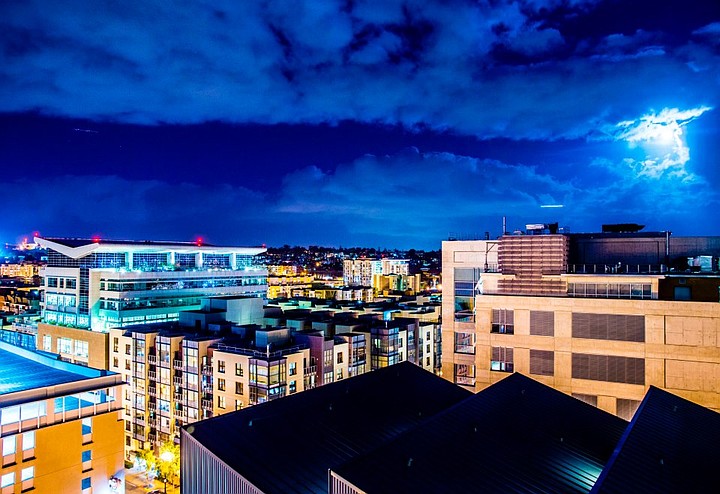
A bright full moon over downtown
February’s Full Moon was last night, February 1. This time of year, the moon rises right before sunset and will drift above the horizon in the east and reach its highest point in the sky around midnight. You can watch it fade in the dawn’s glare while it sinks into the Pacific. Whenever the moon is seen near the horizon, it seems to be larger than life. There have been many attempts to explain the visual effect, called the “moon illusion,” but it appears to be purely psychological.
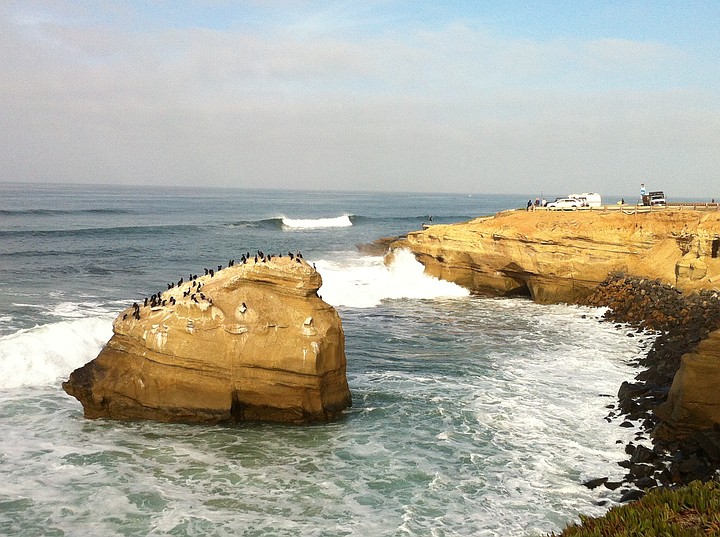
High tide and rising surf meet Sunset Cliffs
Exceptionally High and Low Tides are occurring because of the full moon during this first week of February. A peak high tide of +7.02 feet occurs on Monday, February 2, at 9:10am. Tuesday's high tide of +6.53 feet occurs at 9:51am. If any strong winter storm happens to arrive from the west during these extreme high-tide episodes, then flooding of low-lying coastal areas around San Diego is likely. Several exceptionally low tides will also occur within the same time period. On Monday, February 2, the tide falls to -1.51 feet at 4:02pm. Tuesday's low tide of -1.02 feet bottoms out at 4:34pm. These days are great for exploring marine life in the tidepool areas along San Diego County’s coastline.
Here's something you might be interested in.
Saint Brigid’s Day is tomorrow, "Moon Illusion" is psychological
Very high and low tides occur this week

Saint Brigid’s Day is tomorrow, "Moon Illusion" is psychological
Very high and low tides occur this week
A perpetual, circular, solar calendar for the northern hemisphere.
Tuesday is Imbolc or Saint Brigid’s Day, one of the four traditional “cross-quarter” days midway between the solstices and the equinoxes. More or less. In the many centuries after this tradition took hold in the British Isles, the calendar drifted with respect to Earth’s position in its orbit, until our current Gregorian calendar system was instituted a few centuries ago to put an end to such problems. So this winter, the midpoint between the December solstice and the March equinox actually falls on February 3rd at 7:42 pm PST.
A bright full moon over downtown
February’s Full Moon was last night, February 1. This time of year, the moon rises right before sunset and will drift above the horizon in the east and reach its highest point in the sky around midnight. You can watch it fade in the dawn’s glare while it sinks into the Pacific. Whenever the moon is seen near the horizon, it seems to be larger than life. There have been many attempts to explain the visual effect, called the “moon illusion,” but it appears to be purely psychological.
High tide and rising surf meet Sunset Cliffs
Exceptionally High and Low Tides are occurring because of the full moon during this first week of February. A peak high tide of +7.02 feet occurs on Monday, February 2, at 9:10am. Tuesday's high tide of +6.53 feet occurs at 9:51am. If any strong winter storm happens to arrive from the west during these extreme high-tide episodes, then flooding of low-lying coastal areas around San Diego is likely. Several exceptionally low tides will also occur within the same time period. On Monday, February 2, the tide falls to -1.51 feet at 4:02pm. Tuesday's low tide of -1.02 feet bottoms out at 4:34pm. These days are great for exploring marine life in the tidepool areas along San Diego County’s coastline.
Comments