

Here's something you might be interested in.
Ask a Hipster — Advice you didn't know you needed
Big Screen — Movie commentary
Blurt — Music's inside track
Booze News — San Diego spirits
Classical Music — Immortal beauty
Classifieds — Free and easy
Close to Home — What it’s like on the street where you live
Cover Stories — Front-page features
Drinks All Around — Bartenders' drink recipes
Excerpts — Literary and spiritual excerpts
Feast! — Food & drink reviews
Feature Stories — Local news & stories
Fishing Report — What’s getting hooked from ship and shore
From the Archives — Spotlight on the past
Golden Dreams — Talk of the town
The Gonzo Report — Making the musical scene, or at least reporting from it
Letters — Our inbox
Movies@Home — Local movie buffs share favorites
Movie Reviews — Our critics' picks and pans
Musician Interviews — Up close with local artists
Neighborhood News from Stringers — Hyperlocal news
News Ticker — News & politics
Obermeyer — San Diego politics illustrated
Outdoors — Weekly changes in flora and fauna
Overheard in San Diego — Eavesdropping illustrated
Poetry — The old and the new
Reader Travel — Travel section built by travelers
Reading — The hunt for intellectuals
Roam-O-Rama — SoCal's best hiking/biking trails
San Diego Beer — Inside San Diego suds
SD on the QT — Almost factual news
Sheep and Goats — Places of worship
Special Issues — The best of
Street Style — San Diego streets have style
Surf Diego — Real stories from those braving the waves
Theater — On stage in San Diego this week
Tin Fork — Silver spoon alternative
Under the Radar — Matt Potter's undercover work
Unforgettable — Long-ago San Diego
Unreal Estate — San Diego's priciest pads
Your Week — Daily event picks
Physical media rules: THE CARDBOARD LOVER (1928)
1928 was a stellar three-picture year for Marion Davies at MGM
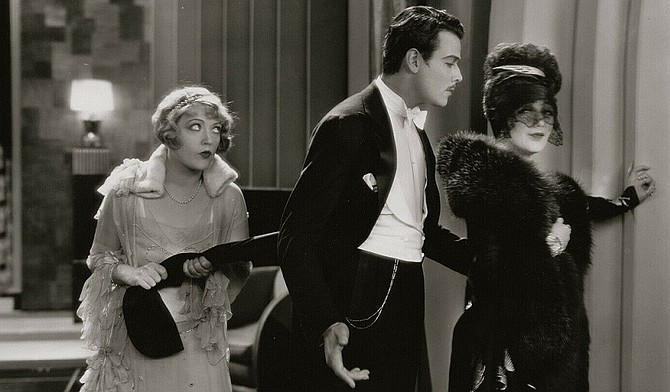
Marion Davies, Nils Asther, and Jetta Goudal in The Cardboard Lover (1928)
THE CARDBOARD LOVER (1928) Robert Z. Leonard / Written by Lucille Newmark & Carey Wilson / Cinematography: John Arnold (1.33:1) / 2026 Musical Score Composed and Performed by Ben Model / Design: Cedric Gibbons / Editor: Basil Wrangell / Costumes: Howard Greer / Acted by: Marion Davies, Andrés de Segurola, Tenen Holta and Pepi Lederer / USA / An Undercrank Productions/Library of Congress Release of an M-G-M Picture / Length: 95 mins.
A recent dive down an internet rabbit hole turned up some interesting inconsistencies regarding the The Cardboard Lover. The first thing I noticed was the variety of websites crediting it as the source material for a Buster Keaton picture. I’ve seen every scrap of film available starring the Great Stoneface, and for the life of me, I couldn’t connect the title with any of his shorts or features.
Then I learned that The Passionate Plumber, a dismal Keaton talkie from 1932, was based on the play The Cardboard Lover. Frederick Lonsdale is frequently (and incorrectly) credited by various databases, IMDB among them, as the play's co-writer. The story of how Lonsdale became tangled up with it involves a mix of theatrical adaptation, Hollywood's penchant for remakes, and the classic studio system administrative blunders that followed.
Credit for the original story belongs to French playwright Jacques Deval, who wrote the 1926 French farce Dans Sa Candeur Naïve. When the play hit Broadway in 1927 as Her Cardboard Lover, credit for the American adaptation went to Valerie Wyngate and noted humorist P.G. Wodehouse.
Lonsdale, a popular British playwright at the time, was under contract with Metro-Goldwyn-Mayer. Because his witty, sophisticated style perfectly matched the tone of The Cardboard Lover, his name became mistakenly credited with or added alongside Wodehouse's. This mix-up directly impacted the film adaptation of The Passionate Plumber.
When MGM produced the movie, official studio records credited the story to both Jacques Deval's original French play and "the play 'Her Cardboard Lover' by Frederick Lonsdale". Consequently, decades of movie records, database listings, and film historians continue to name Lonsdale as an uncredited source writer for the Keaton film, even though Wodehouse and Wyngate were the ones who penned the English-language theatrical adaptation.
According to Wikipedia, Lonsdale's contribution is that of a ghost writer, born from his close relationship with MGM and his dominance in 1930s high-society comedy theater. In the Broadway version, a woman hires a man to pose as her fake suitor to break an ailing romance. MGM acquired the rights to the play with the intention of turning it into a vehicle starring Marion Davies. The resulting pronoun trouble caused the studio to drop the Her and release it as the genderfluid The Cardboard Lover. The screenplay for the 1928 version is credited to Lucille Newmark and Carey Wilson.
Then there's a third adaptation released in 1942, directed by George Cukor and starring Norma Shearer and Robert Taylor, but we’ll stick to the version at hand.
1928 was a stellar three-picture year for Marion Davies at Metro. Sandwiched between The Patsy and Show People, a pair of sparkling comedies directed by King Vidor, Robert Z. Leonard’s The Cardboard Lover, the weakest of the three, still remains a sterling example of Ms. Davies wide-ranging comedic capabilities.
One of Ms. Davies specialties was her unerring habit of vamping other stars. In The Patsy she impersonated Lillian Gish, Greta Garbo, and Pola Negri. Show People found her aping Gloria Swanson and Charlie Chaplin. In The Cardboard Lover, she took to mimicking her co-star, Jetta Goudal.
IMDB reports, “Goudal had hidden her real Dutch heritage and passed herself off as an exotic, elite Parisian. To maintain her fierce French persona, she stubbornly refused to speak English to the crew and would only speak French on the MGM set.” The language hurdle was a tough one for the film’s star to overcome. By way of retaliation, Ms. Davies delivered a spot-on mimicry of Goudal’s haughty affectations. (Unenamored with her behavior, Metro saw to it that this was Goudal’s one and only picture for the studio.)
The film opens with a busload of 25 college girls on a continental tour, among them our lead Sally (Marion Davies), arriving in Monte Carlo via the Metro backlot. The first time we see Miss Davies, she’s so eager to see the sites — aka anyone wealthy and dressed in evening wear — she punches a hole through the bus window. Autograph snatcher Sally is determined to add another signature to her burgeoning book of inscriptions. Before it’s over, she manages to trick a famed tennis player, played by Nils Ashter, to scribble his moniker on a marriage license.
At this point in his career, Robert Z. Leonard had worked with every star in the Metro firmament. As biographer I.S. Mowsis kindly put it, “Though not generally regarded by film critics as among the top echelon of Hollywood directors, Leonard nevertheless capably handled a variety of A-grade pictures.” In this case, considering his sluggish comedic timing, Leonard’s work on the picture is best described as that of a cardboard loafer. Still, I’m not one to pass up a silent film restoration, particularly one showcasing the naturally gifted comedic chops of Marion Davies.
Special Features: Marion Davies: Steward of Her Legacy (2026) 9 mins.
Side-By-Side Restoration Comparison 10 mins.
For more information, visit Undercrank Productions.
Here's something you might be interested in.
Physical media rules: THE CARDBOARD LOVER (1928)
1928 was a stellar three-picture year for Marion Davies at MGM

Physical media rules: THE CARDBOARD LOVER (1928)
1928 was a stellar three-picture year for Marion Davies at MGM
Marion Davies, Nils Asther, and Jetta Goudal in The Cardboard Lover (1928)
THE CARDBOARD LOVER (1928) Robert Z. Leonard / Written by Lucille Newmark & Carey Wilson / Cinematography: John Arnold (1.33:1) / 2026 Musical Score Composed and Performed by Ben Model / Design: Cedric Gibbons / Editor: Basil Wrangell / Costumes: Howard Greer / Acted by: Marion Davies, Andrés de Segurola, Tenen Holta and Pepi Lederer / USA / An Undercrank Productions/Library of Congress Release of an M-G-M Picture / Length: 95 mins.
A recent dive down an internet rabbit hole turned up some interesting inconsistencies regarding the The Cardboard Lover. The first thing I noticed was the variety of websites crediting it as the source material for a Buster Keaton picture. I’ve seen every scrap of film available starring the Great Stoneface, and for the life of me, I couldn’t connect the title with any of his shorts or features.
Then I learned that The Passionate Plumber, a dismal Keaton talkie from 1932, was based on the play The Cardboard Lover. Frederick Lonsdale is frequently (and incorrectly) credited by various databases, IMDB among them, as the play's co-writer. The story of how Lonsdale became tangled up with it involves a mix of theatrical adaptation, Hollywood's penchant for remakes, and the classic studio system administrative blunders that followed.
Credit for the original story belongs to French playwright Jacques Deval, who wrote the 1926 French farce Dans Sa Candeur Naïve. When the play hit Broadway in 1927 as Her Cardboard Lover, credit for the American adaptation went to Valerie Wyngate and noted humorist P.G. Wodehouse.
Lonsdale, a popular British playwright at the time, was under contract with Metro-Goldwyn-Mayer. Because his witty, sophisticated style perfectly matched the tone of The Cardboard Lover, his name became mistakenly credited with or added alongside Wodehouse's. This mix-up directly impacted the film adaptation of The Passionate Plumber.
When MGM produced the movie, official studio records credited the story to both Jacques Deval's original French play and "the play 'Her Cardboard Lover' by Frederick Lonsdale". Consequently, decades of movie records, database listings, and film historians continue to name Lonsdale as an uncredited source writer for the Keaton film, even though Wodehouse and Wyngate were the ones who penned the English-language theatrical adaptation.
According to Wikipedia, Lonsdale's contribution is that of a ghost writer, born from his close relationship with MGM and his dominance in 1930s high-society comedy theater. In the Broadway version, a woman hires a man to pose as her fake suitor to break an ailing romance. MGM acquired the rights to the play with the intention of turning it into a vehicle starring Marion Davies. The resulting pronoun trouble caused the studio to drop the Her and release it as the genderfluid The Cardboard Lover. The screenplay for the 1928 version is credited to Lucille Newmark and Carey Wilson.
Then there's a third adaptation released in 1942, directed by George Cukor and starring Norma Shearer and Robert Taylor, but we’ll stick to the version at hand.
1928 was a stellar three-picture year for Marion Davies at Metro. Sandwiched between The Patsy and Show People, a pair of sparkling comedies directed by King Vidor, Robert Z. Leonard’s The Cardboard Lover, the weakest of the three, still remains a sterling example of Ms. Davies wide-ranging comedic capabilities.
One of Ms. Davies specialties was her unerring habit of vamping other stars. In The Patsy she impersonated Lillian Gish, Greta Garbo, and Pola Negri. Show People found her aping Gloria Swanson and Charlie Chaplin. In The Cardboard Lover, she took to mimicking her co-star, Jetta Goudal.
IMDB reports, “Goudal had hidden her real Dutch heritage and passed herself off as an exotic, elite Parisian. To maintain her fierce French persona, she stubbornly refused to speak English to the crew and would only speak French on the MGM set.” The language hurdle was a tough one for the film’s star to overcome. By way of retaliation, Ms. Davies delivered a spot-on mimicry of Goudal’s haughty affectations. (Unenamored with her behavior, Metro saw to it that this was Goudal’s one and only picture for the studio.)
The film opens with a busload of 25 college girls on a continental tour, among them our lead Sally (Marion Davies), arriving in Monte Carlo via the Metro backlot. The first time we see Miss Davies, she’s so eager to see the sites — aka anyone wealthy and dressed in evening wear — she punches a hole through the bus window. Autograph snatcher Sally is determined to add another signature to her burgeoning book of inscriptions. Before it’s over, she manages to trick a famed tennis player, played by Nils Ashter, to scribble his moniker on a marriage license.
At this point in his career, Robert Z. Leonard had worked with every star in the Metro firmament. As biographer I.S. Mowsis kindly put it, “Though not generally regarded by film critics as among the top echelon of Hollywood directors, Leonard nevertheless capably handled a variety of A-grade pictures.” In this case, considering his sluggish comedic timing, Leonard’s work on the picture is best described as that of a cardboard loafer. Still, I’m not one to pass up a silent film restoration, particularly one showcasing the naturally gifted comedic chops of Marion Davies.
Special Features: Marion Davies: Steward of Her Legacy (2026) 9 mins.
Side-By-Side Restoration Comparison 10 mins.
For more information, visit Undercrank Productions.