

Here's something you might be interested in.
Ask a Hipster — Advice you didn't know you needed
Big Screen — Movie commentary
Blurt — Music's inside track
Booze News — San Diego spirits
Classical Music — Immortal beauty
Classifieds — Free and easy
Close to Home — What it’s like on the street where you live
Cover Stories — Front-page features
Drinks All Around — Bartenders' drink recipes
Excerpts — Literary and spiritual excerpts
Feast! — Food & drink reviews
Feature Stories — Local news & stories
Fishing Report — What’s getting hooked from ship and shore
From the Archives — Spotlight on the past
Golden Dreams — Talk of the town
The Gonzo Report — Making the musical scene, or at least reporting from it
Letters — Our inbox
Movies@Home — Local movie buffs share favorites
Movie Reviews — Our critics' picks and pans
Musician Interviews — Up close with local artists
Neighborhood News from Stringers — Hyperlocal news
News Ticker — News & politics
Obermeyer — San Diego politics illustrated
Outdoors — Weekly changes in flora and fauna
Overheard in San Diego — Eavesdropping illustrated
Poetry — The old and the new
Reader Travel — Travel section built by travelers
Reading — The hunt for intellectuals
Roam-O-Rama — SoCal's best hiking/biking trails
San Diego Beer — Inside San Diego suds
SD on the QT — Almost factual news
Sheep and Goats — Places of worship
Special Issues — The best of
Street Style — San Diego streets have style
Surf Diego — Real stories from those braving the waves
Theater — On stage in San Diego this week
Tin Fork — Silver spoon alternative
Under the Radar — Matt Potter's undercover work
Unforgettable — Long-ago San Diego
Unreal Estate — San Diego's priciest pads
Your Week — Daily event picks
Hare Krishnas move into semi-rural Escondido
Six cows, one horse, no elephants or homeless on Rincon Ave.
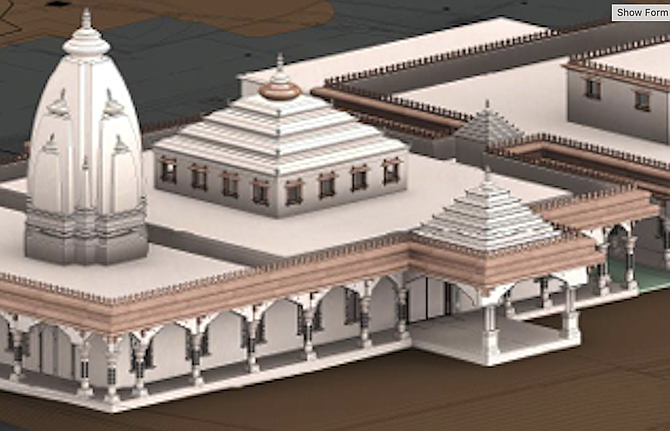
Part of the proposed Escondido temple front
A Hindu temple in northeastern Escondido, 25 years in the works, is one step closer to approval. The planning commission last week voted 4-1 to recommend it to the city council. It’s a smaller version of a 2020 proposal, but it still faced stiff opposition in the semi-rural neighborhood, unlike the temple’s sister site in Pacific Beach.
Dhiruh Tantod, the applicant who represents ISKCON of Escondido, Inc. — the International Society for Krishna Consciousness, also known as Hare Krishna – said the P.B. temple isn’t going away. But that building is shaped like a box, and they envision a better design for the new temple up north. There are two other Hindu temples in the county, and they’re both in strip malls, he said, adding, “We want to build a traditional temple.”
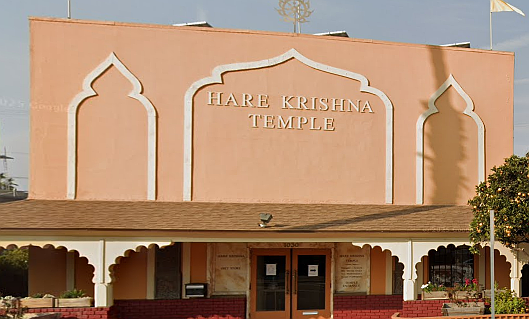
Pacific Beach Iskcon box-like temple
The project includes 10 residential lots (no homes will be built as part of the current proposal) and an 11,767 square-foot Krishna Temple on a 24-acre site on Rincon Avenue.
In a packed public hearing, applicants fended off complaints common to most new development proposals — about noise, fire risks, and traffic. There were also some uncommon concerns expressed, such as the new site functioning as an animal sanctuary. Or possibly, a petting zoo.
“There isn’t an animal sanctuary,” Tantod said in response to questions from the commission. “I don’t know what kind of loose terminology is used there,” he added, but the applicants have around six cows and a horse, all of which are allowed in the zone. “We are against factory farming.”
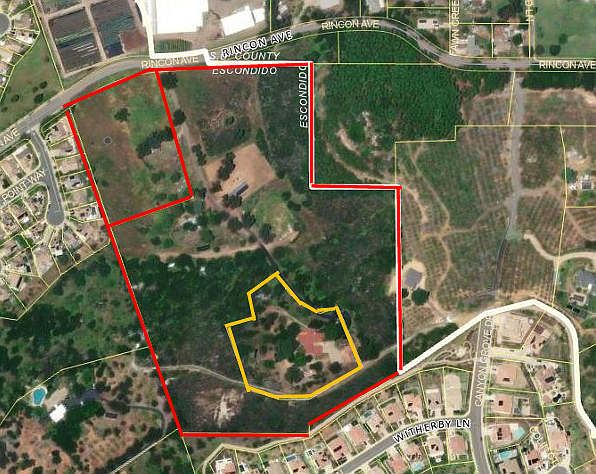
Escondido temple site outlined in yellow
Allen Williams, president of Rocky Pointe Ranch homeowners association, voiced skepticism that there would ever be 10 homes built on the property, saying an easement road promised 25 years ago was never built. The project’s residential portion is located within the Housing Element’s suitable sites inventory, forecasted to provide six above-moderate income units. But the project exceeds that number since it provides for 10 units (two low-income and eight above-moderate units).
It meets all necessary fire codes for the zone, which is dubbed high-risk rather than “very high,” and so doesn’t require a secondary access road.
Tantod denied that the applicants would be feeding the homeless at the Escondido temple, a practice that neighbors predicted would attract throngs of strangers. “It’s a long walk from Broadway to our site. We don’t have the factors that are going to make it a mecca for the homeless.”
Bryan Nichols, who lives in the area and supports the temple, said that instead, the Hare Krishnas go out into the community to feed the homeless. “They’re compassionate, loving people and if people need food, they’re going to bring it to them.”
Many said the temple was the right mission with the wrong logistics, calling it a good project that would be better realized somewhere else. They warned about bottlenecks at choke points – Rincon and Conway, and further down, at Broadway and Rincon, noting the seven daily services that will be held throughout the day, each drawing up to 30 attendees, with the earliest service at 4:30 am. On weekends, as many as 250 people could show up. Plus, there will be at least three major festivals each year, as well as weddings. “This is not a neighborhood church; this is a destination temple,” said neighbor Mark Skok.
Mike Bridges, one of the main clergy at the Pacific Beach temple, said thah they only do a few weddings there each year because they can’t fit large numbers of people. “You don’t have to worry about elephants and horses and a lot of noise because this temple is not being built for that kind of wedding.” Escondido principal planner Ivan Flores said the average wedding attendance is 50-100 people.
San Diego’s Hindu community is small compared to other cities, Bridges said. A few years ago, they had a mailing list of 5000-6000 families, tops. And that congregation is divided among the city’s four temples, not just ISKCON.
In May, in an effort to appease neighbors worried about the 51-foot-tall portions of the temple, the applicants floated a pair of large balloons at heights of up to 53 feet to help residents visualize the effect of the proposed tower on the surrounding community.
Here's something you might be interested in.
Hare Krishnas move into semi-rural Escondido
Six cows, one horse, no elephants or homeless on Rincon Ave.

Hare Krishnas move into semi-rural Escondido
Six cows, one horse, no elephants or homeless on Rincon Ave.
Part of the proposed Escondido temple front
A Hindu temple in northeastern Escondido, 25 years in the works, is one step closer to approval. The planning commission last week voted 4-1 to recommend it to the city council. It’s a smaller version of a 2020 proposal, but it still faced stiff opposition in the semi-rural neighborhood, unlike the temple’s sister site in Pacific Beach.
Dhiruh Tantod, the applicant who represents ISKCON of Escondido, Inc. — the International Society for Krishna Consciousness, also known as Hare Krishna – said the P.B. temple isn’t going away. But that building is shaped like a box, and they envision a better design for the new temple up north. There are two other Hindu temples in the county, and they’re both in strip malls, he said, adding, “We want to build a traditional temple.”
Pacific Beach Iskcon box-like temple
The project includes 10 residential lots (no homes will be built as part of the current proposal) and an 11,767 square-foot Krishna Temple on a 24-acre site on Rincon Avenue.
In a packed public hearing, applicants fended off complaints common to most new development proposals — about noise, fire risks, and traffic. There were also some uncommon concerns expressed, such as the new site functioning as an animal sanctuary. Or possibly, a petting zoo.
“There isn’t an animal sanctuary,” Tantod said in response to questions from the commission. “I don’t know what kind of loose terminology is used there,” he added, but the applicants have around six cows and a horse, all of which are allowed in the zone. “We are against factory farming.”
Escondido temple site outlined in yellow
Allen Williams, president of Rocky Pointe Ranch homeowners association, voiced skepticism that there would ever be 10 homes built on the property, saying an easement road promised 25 years ago was never built. The project’s residential portion is located within the Housing Element’s suitable sites inventory, forecasted to provide six above-moderate income units. But the project exceeds that number since it provides for 10 units (two low-income and eight above-moderate units).
It meets all necessary fire codes for the zone, which is dubbed high-risk rather than “very high,” and so doesn’t require a secondary access road.
Tantod denied that the applicants would be feeding the homeless at the Escondido temple, a practice that neighbors predicted would attract throngs of strangers. “It’s a long walk from Broadway to our site. We don’t have the factors that are going to make it a mecca for the homeless.”
Bryan Nichols, who lives in the area and supports the temple, said that instead, the Hare Krishnas go out into the community to feed the homeless. “They’re compassionate, loving people and if people need food, they’re going to bring it to them.”
Many said the temple was the right mission with the wrong logistics, calling it a good project that would be better realized somewhere else. They warned about bottlenecks at choke points – Rincon and Conway, and further down, at Broadway and Rincon, noting the seven daily services that will be held throughout the day, each drawing up to 30 attendees, with the earliest service at 4:30 am. On weekends, as many as 250 people could show up. Plus, there will be at least three major festivals each year, as well as weddings. “This is not a neighborhood church; this is a destination temple,” said neighbor Mark Skok.
Mike Bridges, one of the main clergy at the Pacific Beach temple, said thah they only do a few weddings there each year because they can’t fit large numbers of people. “You don’t have to worry about elephants and horses and a lot of noise because this temple is not being built for that kind of wedding.” Escondido principal planner Ivan Flores said the average wedding attendance is 50-100 people.
San Diego’s Hindu community is small compared to other cities, Bridges said. A few years ago, they had a mailing list of 5000-6000 families, tops. And that congregation is divided among the city’s four temples, not just ISKCON.
In May, in an effort to appease neighbors worried about the 51-foot-tall portions of the temple, the applicants floated a pair of large balloons at heights of up to 53 feet to help residents visualize the effect of the proposed tower on the surrounding community.
Comments