

Here's something you might be interested in.
Ask a Hipster — Advice you didn't know you needed
Big Screen — Movie commentary
Blurt — Music's inside track
Booze News — San Diego spirits
Classical Music — Immortal beauty
Classifieds — Free and easy
Close to Home — What it’s like on the street where you live
Cover Stories — Front-page features
Drinks All Around — Bartenders' drink recipes
Excerpts — Literary and spiritual excerpts
Feast! — Food & drink reviews
Feature Stories — Local news & stories
Fishing Report — What’s getting hooked from ship and shore
From the Archives — Spotlight on the past
Golden Dreams — Talk of the town
The Gonzo Report — Making the musical scene, or at least reporting from it
Letters — Our inbox
Movies@Home — Local movie buffs share favorites
Movie Reviews — Our critics' picks and pans
Musician Interviews — Up close with local artists
Neighborhood News from Stringers — Hyperlocal news
News Ticker — News & politics
Obermeyer — San Diego politics illustrated
Outdoors — Weekly changes in flora and fauna
Overheard in San Diego — Eavesdropping illustrated
Poetry — The old and the new
Reader Travel — Travel section built by travelers
Reading — The hunt for intellectuals
Roam-O-Rama — SoCal's best hiking/biking trails
San Diego Beer — Inside San Diego suds
SD on the QT — Almost factual news
Sheep and Goats — Places of worship
Special Issues — The best of
Street Style — San Diego streets have style
Surf Diego — Real stories from those braving the waves
Theater — On stage in San Diego this week
Tin Fork — Silver spoon alternative
Under the Radar — Matt Potter's undercover work
Unforgettable — Long-ago San Diego
Unreal Estate — San Diego's priciest pads
Your Week — Daily event picks
Reggae metaphysics with Rafael Pondé
"All these concepts and readings are imbued in the new album."
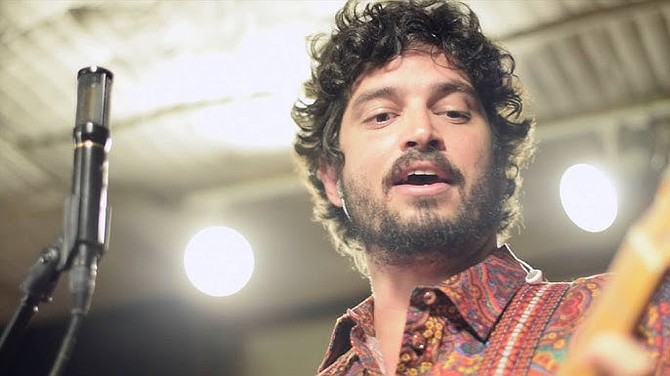
Rafael Pondé moved from Brazil to Ocean Beach to play reggae in 2022. He spent a year living — and meditating — in a minivan. His music — meditational reggae, heavy on the metaphysics — makes it clear how he sees those two seemingly-unrelated categories intersecting.
Pondé grew up in Salvador, Bahia, Brazil, and describes it as “the most black city outside of Africa. My family is from the middle class, so we were never deprived of food or anything. My father had a little farm in the countryside with no electricity, so we were able to enjoy such simple things as the harvest for food and having a candle at night as our source of light.”
He recalls that “we used to pray in the patio of my childhood school before the start of class. We lived in an apartment in a neighborhood called Pituba in Salvador. Later on, when I was about 9 years old, we moved to a beach town called Villas do Atlantico, to a bigger house that my parents built. My childhood was spent on the streets, playing soccer with the poor people who used to take care of the houses.”
Music came along quickly enough. “In the ‘80s, there was a musical movement called ‘Samba Reggae’ that was created in my hometown by the black people, that used to be played on big drums by 20 to 30 people together, later by Olodum, [a band] who collaborated with Paul Simon and Michael Jackson. This movement revolutionized the music of Brazil and influenced me a lot. In the countryside, there was a music called ‘Forro’ that also influenced me a lot. I am highly influenced by singer-songwriters like Tom Jobim, Djavan, Luiz Gonzaga, Gilberto Gil, among others. The first reggae artist I heard was Bob Marley when I was about 14 years old, at school in 1990, and his music absorbed all my soul and thoughts.”
Pondé speaks Portuguese, English, and Spanish. “I started to learn English in school when I was nine years old in Brazil. Being multilingual influences a lot of my music because, over the years, I was able to go to different countries and really interact with the local culture, making friends, playing music together. In the USA, when I lived on the East Coast, I got really close to Colombians, Puerto Ricans, Cubans, and Dominicans, and this really helped to shape what I did musically since then.”
He got started in a reggae band called Diamba back in 1996, as part of a Brazilian nationwide revival of the roots reggae sounds. 2017 brought Pondé to American soil, after an invitation from the Brazilian state of Bahia, to help promote Brazilian music in the US. He logged time in Philadelphia and Washington D.C., but headed to San Diego when he found himself missing the beach.
Video:
Rafa Pondé: Ocean Beach
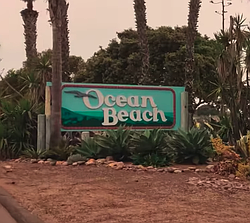
The minivan phase lasted about a year. “That was a wonderful time, practicing my meditation, yoga, fasting, psychedelics, and meeting a lot of people living in that same condition. Later, I moved to an apartment in Pacific Beach with a male roommate. Now, I live with my girlfriend, her two daughters, and her sister in an apartment in Clairemont. These were all different experiences, and I wrote most of the new songs of my new album in the first two places.”
That album, The Brazilian Reggae Experience Part 2, dropped several weeks back. Pondé produced the record and provides guitar and vocals, with Robert Lemos on drums, Pedro Oliveira from Rio grande do Sul [a Brazilian state] on bass, Rafa Reis from São Paulo on keys, Jon McKnight on keys and trombone, and Pati Miranda from Rio de Janeiro on backing vocals. “During the pandemic, I started doing psychological and coaching therapy with a Colombian Therapist called Mireya, and she introduced me to yoga and meditation, and to the works of Joe Dispenza, which opened up a new worldview for me. ‘Cause I could see all the principles of quantum physics applied to the behavioral and psychological realms, and this really helped me on my path to evolution. All these concepts and readings are imbued in the new album.”
He gives generally mixed marks to the San Diego reggae scene. “I can tell you, since 2022, the scene has been growing a lot, but it still needs more professionalization. It still needs more booking agents, managers, sponsors, and band strategies. Mainly, the artists should organize themselves and start to build real connection and collaboration, instead of viewing themselves as individual entities.”
Here's something you might be interested in.
Reggae metaphysics with Rafael Pondé
"All these concepts and readings are imbued in the new album."

Reggae metaphysics with Rafael Pondé
"All these concepts and readings are imbued in the new album."
Rafael Pondé moved from Brazil to Ocean Beach to play reggae in 2022. He spent a year living — and meditating — in a minivan. His music — meditational reggae, heavy on the metaphysics — makes it clear how he sees those two seemingly-unrelated categories intersecting.
Pondé grew up in Salvador, Bahia, Brazil, and describes it as “the most black city outside of Africa. My family is from the middle class, so we were never deprived of food or anything. My father had a little farm in the countryside with no electricity, so we were able to enjoy such simple things as the harvest for food and having a candle at night as our source of light.”
He recalls that “we used to pray in the patio of my childhood school before the start of class. We lived in an apartment in a neighborhood called Pituba in Salvador. Later on, when I was about 9 years old, we moved to a beach town called Villas do Atlantico, to a bigger house that my parents built. My childhood was spent on the streets, playing soccer with the poor people who used to take care of the houses.”
Music came along quickly enough. “In the ‘80s, there was a musical movement called ‘Samba Reggae’ that was created in my hometown by the black people, that used to be played on big drums by 20 to 30 people together, later by Olodum, [a band] who collaborated with Paul Simon and Michael Jackson. This movement revolutionized the music of Brazil and influenced me a lot. In the countryside, there was a music called ‘Forro’ that also influenced me a lot. I am highly influenced by singer-songwriters like Tom Jobim, Djavan, Luiz Gonzaga, Gilberto Gil, among others. The first reggae artist I heard was Bob Marley when I was about 14 years old, at school in 1990, and his music absorbed all my soul and thoughts.”
Pondé speaks Portuguese, English, and Spanish. “I started to learn English in school when I was nine years old in Brazil. Being multilingual influences a lot of my music because, over the years, I was able to go to different countries and really interact with the local culture, making friends, playing music together. In the USA, when I lived on the East Coast, I got really close to Colombians, Puerto Ricans, Cubans, and Dominicans, and this really helped to shape what I did musically since then.”
He got started in a reggae band called Diamba back in 1996, as part of a Brazilian nationwide revival of the roots reggae sounds. 2017 brought Pondé to American soil, after an invitation from the Brazilian state of Bahia, to help promote Brazilian music in the US. He logged time in Philadelphia and Washington D.C., but headed to San Diego when he found himself missing the beach.
Video:
Rafa Pondé: Ocean Beach
The minivan phase lasted about a year. “That was a wonderful time, practicing my meditation, yoga, fasting, psychedelics, and meeting a lot of people living in that same condition. Later, I moved to an apartment in Pacific Beach with a male roommate. Now, I live with my girlfriend, her two daughters, and her sister in an apartment in Clairemont. These were all different experiences, and I wrote most of the new songs of my new album in the first two places.”
That album, The Brazilian Reggae Experience Part 2, dropped several weeks back. Pondé produced the record and provides guitar and vocals, with Robert Lemos on drums, Pedro Oliveira from Rio grande do Sul [a Brazilian state] on bass, Rafa Reis from São Paulo on keys, Jon McKnight on keys and trombone, and Pati Miranda from Rio de Janeiro on backing vocals. “During the pandemic, I started doing psychological and coaching therapy with a Colombian Therapist called Mireya, and she introduced me to yoga and meditation, and to the works of Joe Dispenza, which opened up a new worldview for me. ‘Cause I could see all the principles of quantum physics applied to the behavioral and psychological realms, and this really helped me on my path to evolution. All these concepts and readings are imbued in the new album.”
He gives generally mixed marks to the San Diego reggae scene. “I can tell you, since 2022, the scene has been growing a lot, but it still needs more professionalization. It still needs more booking agents, managers, sponsors, and band strategies. Mainly, the artists should organize themselves and start to build real connection and collaboration, instead of viewing themselves as individual entities.”
Comments