

Here's something you might be interested in.
Ask a Hipster — Advice you didn't know you needed
Big Screen — Movie commentary
Blurt — Music's inside track
Booze News — San Diego spirits
Classical Music — Immortal beauty
Classifieds — Free and easy
Close to Home — What it’s like on the street where you live
Cover Stories — Front-page features
Drinks All Around — Bartenders' drink recipes
Excerpts — Literary and spiritual excerpts
Feast! — Food & drink reviews
Feature Stories — Local news & stories
Fishing Report — What’s getting hooked from ship and shore
From the Archives — Spotlight on the past
Golden Dreams — Talk of the town
The Gonzo Report — Making the musical scene, or at least reporting from it
Letters — Our inbox
Movies@Home — Local movie buffs share favorites
Movie Reviews — Our critics' picks and pans
Musician Interviews — Up close with local artists
Neighborhood News from Stringers — Hyperlocal news
News Ticker — News & politics
Obermeyer — San Diego politics illustrated
Outdoors — Weekly changes in flora and fauna
Overheard in San Diego — Eavesdropping illustrated
Poetry — The old and the new
Reader Travel — Travel section built by travelers
Reading — The hunt for intellectuals
Roam-O-Rama — SoCal's best hiking/biking trails
San Diego Beer — Inside San Diego suds
SD on the QT — Almost factual news
Sheep and Goats — Places of worship
Special Issues — The best of
Street Style — San Diego streets have style
Surf Diego — Real stories from those braving the waves
Theater — On stage in San Diego this week
Tin Fork — Silver spoon alternative
Under the Radar — Matt Potter's undercover work
Unforgettable — Long-ago San Diego
Unreal Estate — San Diego's priciest pads
Your Week — Daily event picks
Sheep and Goats: St. David’s Episcopal Church
"To follow Jesus, loving our neighbors as ourselves, without exception."
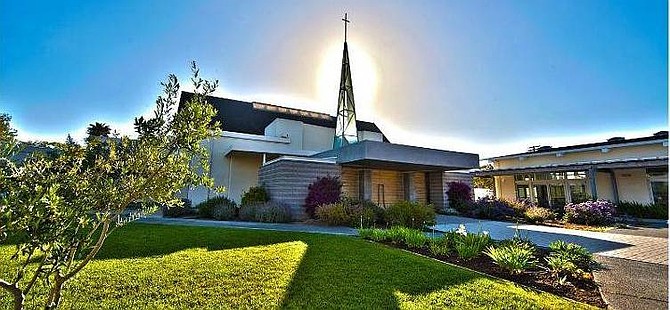
Contact: 5050 Milton St., San Diego 619-276-4567 www.saintdavidschurch.com
Membership: 120 (Attendance: 55-60)
Interim Priest-in-Charge: Father Kirby M. Smith
Age: 71
Born: Mount Clemens, MI
Formation: Vanderbilt University, Nashville, TN; Lieutenant, U.S. Army (1976-1980); University of San Diego-Knauss School of Business; Claremont School of Theology, Los Angeles
Years Ordained: 17
San Diego Reader: Why did you become a priest?
Father Kirby Smith: My call was evolutionary, not revolutionary. I didn’t have a revelation one day: “Yes, I need to be a priest.” It developed over time. After I left the banking industry, deciding that was not the area where I wanted to spend the rest of my life, I looked at various lines of work and non-profit work stood out, especially work in drug and alcohol rehab, and adult and youth mental health, particularly of gay and lesbian youth. I was working on the financial side; I wasn’t a counselor in these fields. One of those non-profits was a church; so, I became more interested in that. Since 1982, I have been an active member of the Episcopal Church. I was able to see the inner functions of church—how they make the sausage, so to speak. I felt drawn to serving the church and around 1997 I decided to attend a class at a seminary because I had never had a philosophy class and that was what they were offering. I became interested in learning more and the next semester I took two classes and eventually enrolled for a degree which led to my ordination.
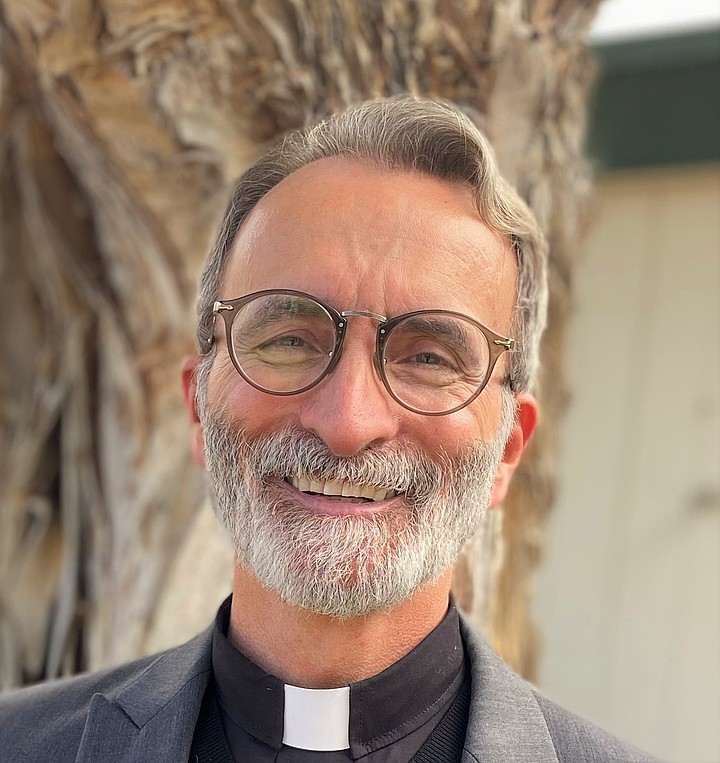
SDR: What is the mission of your church?
FS: To follow Jesus, loving our neighbors as ourselves, without exception. Following Jesus is becoming disciples of Jesus — we’re trying to learn about Jesus’ teachings and incorporate them into our lives. “Transformation” is an important word I use in my sermons. Once we accept Jesus, our lives will be different, changed. Transformation is what we can offer the wider community; implicit in that is transformation to a better way of living through a relationship with God. Loving our neighbors as ourselves is a social justice statement: in the parable of the Good Samaritan, it turns out our neighbors are virtually everybody. So, we…reach out to people around us who might not be members or might not have heard about the good news of Jesus. Without exception — that is one of our core values — we are inclusive to everybody. The Episcopal Church tends to be progressive in its views toward gays and lesbians, racial differences and differences in languages. We try to make sure that people will feel welcomed here even if they might not look like everyone else sitting in the pews.
SDR: Where do you go when you die?
FS: The Jesuit thinker Pierre Teilhard de Chardin says, “We are not physical being having a spiritual experience; rather, we are spiritual beings having a physical experience.” I view the afterlife as a kind of homecoming. We are being reunited with God and others who have preceded us… One of the hallmarks of the progressive movement is that we emphasize the loving nature of God and that God wants us to be the best people we can be. So, we will make mistakes, but as far as having a judgment or fingers pointing one way or another, we tend not to think about heaven in that way… The final judgment is going to be up to God; it’s not in our job description as human beings. I tend to view hell as being an isolation from God… Our goal is to become closer to God, so hell is when we feel we’re isolated from God, but even in the afterlife we’re able to try to grow closer to God.
Here's something you might be interested in.
Sheep and Goats: St. David’s Episcopal Church
"To follow Jesus, loving our neighbors as ourselves, without exception."

Sheep and Goats: St. David’s Episcopal Church
"To follow Jesus, loving our neighbors as ourselves, without exception."
Contact: 5050 Milton St., San Diego 619-276-4567 www.saintdavidschurch.com
Membership: 120 (Attendance: 55-60)
Interim Priest-in-Charge: Father Kirby M. Smith
Age: 71
Born: Mount Clemens, MI
Formation: Vanderbilt University, Nashville, TN; Lieutenant, U.S. Army (1976-1980); University of San Diego-Knauss School of Business; Claremont School of Theology, Los Angeles
Years Ordained: 17
San Diego Reader: Why did you become a priest?
Father Kirby Smith: My call was evolutionary, not revolutionary. I didn’t have a revelation one day: “Yes, I need to be a priest.” It developed over time. After I left the banking industry, deciding that was not the area where I wanted to spend the rest of my life, I looked at various lines of work and non-profit work stood out, especially work in drug and alcohol rehab, and adult and youth mental health, particularly of gay and lesbian youth. I was working on the financial side; I wasn’t a counselor in these fields. One of those non-profits was a church; so, I became more interested in that. Since 1982, I have been an active member of the Episcopal Church. I was able to see the inner functions of church—how they make the sausage, so to speak. I felt drawn to serving the church and around 1997 I decided to attend a class at a seminary because I had never had a philosophy class and that was what they were offering. I became interested in learning more and the next semester I took two classes and eventually enrolled for a degree which led to my ordination.
SDR: What is the mission of your church?
FS: To follow Jesus, loving our neighbors as ourselves, without exception. Following Jesus is becoming disciples of Jesus — we’re trying to learn about Jesus’ teachings and incorporate them into our lives. “Transformation” is an important word I use in my sermons. Once we accept Jesus, our lives will be different, changed. Transformation is what we can offer the wider community; implicit in that is transformation to a better way of living through a relationship with God. Loving our neighbors as ourselves is a social justice statement: in the parable of the Good Samaritan, it turns out our neighbors are virtually everybody. So, we…reach out to people around us who might not be members or might not have heard about the good news of Jesus. Without exception — that is one of our core values — we are inclusive to everybody. The Episcopal Church tends to be progressive in its views toward gays and lesbians, racial differences and differences in languages. We try to make sure that people will feel welcomed here even if they might not look like everyone else sitting in the pews.
SDR: Where do you go when you die?
FS: The Jesuit thinker Pierre Teilhard de Chardin says, “We are not physical being having a spiritual experience; rather, we are spiritual beings having a physical experience.” I view the afterlife as a kind of homecoming. We are being reunited with God and others who have preceded us… One of the hallmarks of the progressive movement is that we emphasize the loving nature of God and that God wants us to be the best people we can be. So, we will make mistakes, but as far as having a judgment or fingers pointing one way or another, we tend not to think about heaven in that way… The final judgment is going to be up to God; it’s not in our job description as human beings. I tend to view hell as being an isolation from God… Our goal is to become closer to God, so hell is when we feel we’re isolated from God, but even in the afterlife we’re able to try to grow closer to God.
Comments