

Here's something you might be interested in.
Ask a Hipster — Advice you didn't know you needed
Big Screen — Movie commentary
Blurt — Music's inside track
Booze News — San Diego spirits
Classical Music — Immortal beauty
Classifieds — Free and easy
Close to Home — What it’s like on the street where you live
Cover Stories — Front-page features
Drinks All Around — Bartenders' drink recipes
Excerpts — Literary and spiritual excerpts
Feast! — Food & drink reviews
Feature Stories — Local news & stories
Fishing Report — What’s getting hooked from ship and shore
From the Archives — Spotlight on the past
Golden Dreams — Talk of the town
The Gonzo Report — Making the musical scene, or at least reporting from it
Letters — Our inbox
Movies@Home — Local movie buffs share favorites
Movie Reviews — Our critics' picks and pans
Musician Interviews — Up close with local artists
Neighborhood News from Stringers — Hyperlocal news
News Ticker — News & politics
Obermeyer — San Diego politics illustrated
Outdoors — Weekly changes in flora and fauna
Overheard in San Diego — Eavesdropping illustrated
Poetry — The old and the new
Reader Travel — Travel section built by travelers
Reading — The hunt for intellectuals
Roam-O-Rama — SoCal's best hiking/biking trails
San Diego Beer — Inside San Diego suds
SD on the QT — Almost factual news
Sheep and Goats — Places of worship
Special Issues — The best of
Street Style — San Diego streets have style
Surf Diego — Real stories from those braving the waves
Theater — On stage in San Diego this week
Tin Fork — Silver spoon alternative
Under the Radar — Matt Potter's undercover work
Unforgettable — Long-ago San Diego
Unreal Estate — San Diego's priciest pads
Your Week — Daily event picks
First Presbyterian Church of San Diego: unlearning the culture around us
Sometimes the new way is a return to the old
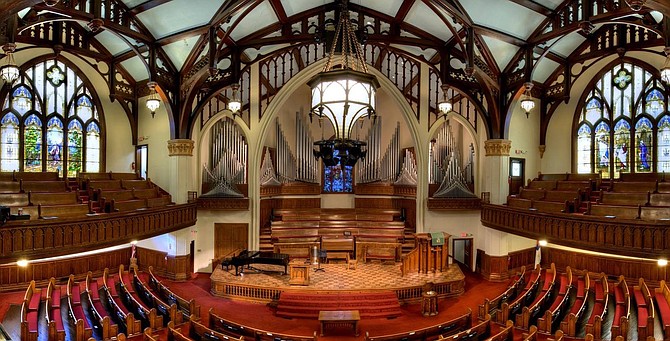
Contact: 320 Date St., San Diego 619-232-7513 www.fpcsd.org
Membership: about 300
Pastor: Jeff Myers
Age: 40
Born: Renton, WA
Formation: Hillsdale College, Hillsdale, MI; Indiana University, Bloomington, IN; Gordon-Conwell Theological Seminary, Roxbury, MA
Years Ordained: 6
San Diego Reader: What’s your favorite subject on which to preach?
Pastor Jeff Myers: The gospel — the fact that God has freed us through Jesus Christ; the message of deliverance from death and sin. That’s what it all comes down to — every sermon eventually finds its way to our need for Jesus Christ and how he’s given us victory.
SDR: What’s your main concern as a member of the clergy?
PM: I’m always prayerfully asking, “What is God calling us to change or what is the fresh way of proclaiming the good news which is going to find ears to hear it?” Sometimes that new way is a return. In our church, we found it through a return to historical traditions from centuries past and it has gained a new appreciation. It has been tempting for the church to resemble the consumeristic culture around us — and we are unlearning that. For example, we’ve found that confessions of the church, historic confessions and catechisms, answer a lot of the questions we’re asking today. Likewise, in worship, much of the great hymnody from hundreds of years ago express the Biblical faith in an engaging way.
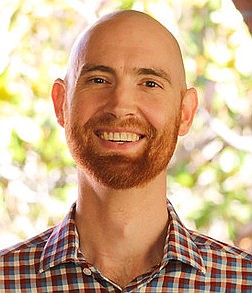
Pastor Jeff Myers
SDR: What is the mission of your church?
PM: First Presbyterian is one of three churches founded the same year that San Diego became a city in 1850. Our mission has always been the Great Commission of our Lord to make disciples — specifically through corporate worship, mercy ministries to the urban poor and homeless, and educating the next generation through our Christian school. Those are the three big rocks in our identity as First Presbyterian Church. We believe disciples are formed in corporate worship and study. We also feed up to 300 people on Sundays at a community meal we call Ladle Fellowship. We serve our neighbors, many of whom are unhoused or are living in subsidized housing in the area, through medical care, haircuts, discipleship — Bible study and prayer — a clothing bank, and a home-cooked meal. Our school, City Tree Christian School (infants through eighth grade), and Ladle have been going strong for over 40 years. If someone gets connected to our church, it’s usually through one of these three areas — corporate worship, mercy ministries or our school.
SDR: What book has had an important influence on your ministry?
PM: I read Mere Christianity by C.S. Lewis at least once every five years. The word “mere” is an ironic term: Lewis is boiling down Christianity to its essence that every historic Christian will have in common; and yet because it is the truth of Christianity and it so beautiful to behold it can never really be described as “mere.”
SDR: Where do you go when you die?
PM: I understand the Bible to teach that those who are in Christ Jesus are with God forever and that there will be a new heavens and new earth, a physical, material place animated by the spirit of God, just as Jesus resurrected with a physical body which could be touched and ate meals, and yet never would suffer decay again. Those who are not in Christ Jesus will be, according to 2 Thessalonians, “cast away from the presence of God in eternal suffering.” Meanwhile, we’re awaiting resurrection, when are souls are reunited with our bodies at Jesus’ return. Paul says, “We are not as those who breathe without hope.” We look at death and it’s awful, but we have hope beyond the grave because Jesus rose from the dead and conquered death.
Here's something you might be interested in.
First Presbyterian Church of San Diego: unlearning the culture around us
Sometimes the new way is a return to the old

First Presbyterian Church of San Diego: unlearning the culture around us
Sometimes the new way is a return to the old
Contact: 320 Date St., San Diego 619-232-7513 www.fpcsd.org
Membership: about 300
Pastor: Jeff Myers
Age: 40
Born: Renton, WA
Formation: Hillsdale College, Hillsdale, MI; Indiana University, Bloomington, IN; Gordon-Conwell Theological Seminary, Roxbury, MA
Years Ordained: 6
San Diego Reader: What’s your favorite subject on which to preach?
Pastor Jeff Myers: The gospel — the fact that God has freed us through Jesus Christ; the message of deliverance from death and sin. That’s what it all comes down to — every sermon eventually finds its way to our need for Jesus Christ and how he’s given us victory.
SDR: What’s your main concern as a member of the clergy?
PM: I’m always prayerfully asking, “What is God calling us to change or what is the fresh way of proclaiming the good news which is going to find ears to hear it?” Sometimes that new way is a return. In our church, we found it through a return to historical traditions from centuries past and it has gained a new appreciation. It has been tempting for the church to resemble the consumeristic culture around us — and we are unlearning that. For example, we’ve found that confessions of the church, historic confessions and catechisms, answer a lot of the questions we’re asking today. Likewise, in worship, much of the great hymnody from hundreds of years ago express the Biblical faith in an engaging way.
Pastor Jeff Myers
SDR: What is the mission of your church?
PM: First Presbyterian is one of three churches founded the same year that San Diego became a city in 1850. Our mission has always been the Great Commission of our Lord to make disciples — specifically through corporate worship, mercy ministries to the urban poor and homeless, and educating the next generation through our Christian school. Those are the three big rocks in our identity as First Presbyterian Church. We believe disciples are formed in corporate worship and study. We also feed up to 300 people on Sundays at a community meal we call Ladle Fellowship. We serve our neighbors, many of whom are unhoused or are living in subsidized housing in the area, through medical care, haircuts, discipleship — Bible study and prayer — a clothing bank, and a home-cooked meal. Our school, City Tree Christian School (infants through eighth grade), and Ladle have been going strong for over 40 years. If someone gets connected to our church, it’s usually through one of these three areas — corporate worship, mercy ministries or our school.
SDR: What book has had an important influence on your ministry?
PM: I read Mere Christianity by C.S. Lewis at least once every five years. The word “mere” is an ironic term: Lewis is boiling down Christianity to its essence that every historic Christian will have in common; and yet because it is the truth of Christianity and it so beautiful to behold it can never really be described as “mere.”
SDR: Where do you go when you die?
PM: I understand the Bible to teach that those who are in Christ Jesus are with God forever and that there will be a new heavens and new earth, a physical, material place animated by the spirit of God, just as Jesus resurrected with a physical body which could be touched and ate meals, and yet never would suffer decay again. Those who are not in Christ Jesus will be, according to 2 Thessalonians, “cast away from the presence of God in eternal suffering.” Meanwhile, we’re awaiting resurrection, when are souls are reunited with our bodies at Jesus’ return. Paul says, “We are not as those who breathe without hope.” We look at death and it’s awful, but we have hope beyond the grave because Jesus rose from the dead and conquered death.
Comments