

Here's something you might be interested in.
Ask a Hipster — Advice you didn't know you needed
Big Screen — Movie commentary
Blurt — Music's inside track
Booze News — San Diego spirits
Classical Music — Immortal beauty
Classifieds — Free and easy
Close to Home — What it’s like on the street where you live
Cover Stories — Front-page features
Drinks All Around — Bartenders' drink recipes
Excerpts — Literary and spiritual excerpts
Feast! — Food & drink reviews
Feature Stories — Local news & stories
Fishing Report — What’s getting hooked from ship and shore
From the Archives — Spotlight on the past
Golden Dreams — Talk of the town
The Gonzo Report — Making the musical scene, or at least reporting from it
Letters — Our inbox
Movies@Home — Local movie buffs share favorites
Movie Reviews — Our critics' picks and pans
Musician Interviews — Up close with local artists
Neighborhood News from Stringers — Hyperlocal news
News Ticker — News & politics
Obermeyer — San Diego politics illustrated
Outdoors — Weekly changes in flora and fauna
Overheard in San Diego — Eavesdropping illustrated
Poetry — The old and the new
Reader Travel — Travel section built by travelers
Reading — The hunt for intellectuals
Roam-O-Rama — SoCal's best hiking/biking trails
San Diego Beer — Inside San Diego suds
SD on the QT — Almost factual news
Sheep and Goats — Places of worship
Special Issues — The best of
Street Style — San Diego streets have style
Surf Diego — Real stories from those braving the waves
Theater — On stage in San Diego this week
Tin Fork — Silver spoon alternative
Under the Radar — Matt Potter's undercover work
Unforgettable — Long-ago San Diego
Unreal Estate — San Diego's priciest pads
Your Week — Daily event picks
Now Playing: RIEFENSTAHL (2024)
A superb jumping off point for those curious in the ways of cinema’s foremost Nazi mouthpiece.
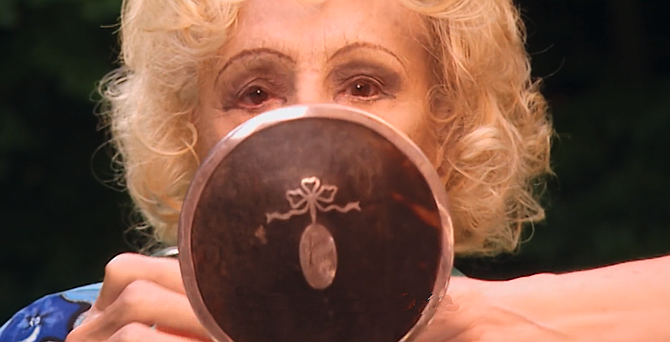
Mirror, mirror in my hand, who spread fear throughout Deutschland?
Riefenstahl (2024) Writer & Director: Andres Veiel / Editors: Stephan Krumbiegel & Olaf Voigtländer / Cinematographer: Toby Cornish (1.85 : 1) / Composer: Freya Arde / Editors: Editors: Alfredo Castro,
Stephan Krumbiegel, & Olaf Voigtländer / Personnel: Leni Riefenstahl, Adolf Hitler, Joseph Goebbels, Rudolf Hess, Albert Speer, and a cast of 6 million / Germany / Distributor: Kino Lorber / Not Rated / Length: 115 mins.
Everything you always wanted to confirm about Hitler's personal Nazi propagandist (that was pretty much already presumed factual). Leni Riefenstahl died in 2003 at the age of 101. Thirteen years later, Sandra Maischberger caught wind of the passing of Riefenstahl’s much-younger partner and wound up gaining access to the house they shared. What she found inside was enough in the way of archival material — films, video, photos, recordings and letters — to produce this riveting "found footage" documentary.
Video:
Trailer: RIEFENSTAHL
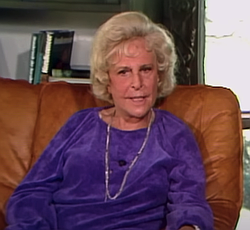
To her credit, Riefenstahl was a good German, never once denying her party affiliation while wanting very much to move past it. And if you harbor any doubt about Riefenstahl's awareness of the Holocaust around her, Veiel makes it clear by evoking the old saying, “For something to be remembered, other things must be forgotten.” (Nazi sympathizer is a big “other thing” to disregard.) That may account for Reifenstahl's resenting being called a “Nazi-era filmmaker." As she said, “In all the films I made so far, I was captivated by the beauty of the subject.” And that, along with the matter of the Hitler affiliation, is precisely why Riefenstahl’s name is still up for discussion.
Despite the competition, and it is plentiful, no film or television broadcast of any Olympic ceremony comes close to matching Olympia (1938), the might and coverage of which is so meticulously transcribed you’d swear it was storyboarded. She was no slouch in the horror department, either; when people ask me to name a favorite film in the genre, something the mere mention of which is enough to set the spine to tingling, I’m all over Triumph of the Will (1935), Riefenstahl’s account of the 1934 Nuremberg Rally.
The monstrosities begins with a mother hoisting her infant high above her head so that the babe may catch a glimpse of Der Fuhrer’s plane descending from the sky like an angel from heaven, before climaxing in a Teutonic tizzy of hate speech from the master of the form. I'm still trying to track down a legible, reasonably priced home video pressing of her Hitler docs. In the meantime, this is a superb jumping off point for those curious in the ways of cinema’s foremost Nazi mouthpiece. ***
Here's something you might be interested in.
Now Playing: RIEFENSTAHL (2024)
A superb jumping off point for those curious in the ways of cinema’s foremost Nazi mouthpiece.

Now Playing: RIEFENSTAHL (2024)
A superb jumping off point for those curious in the ways of cinema’s foremost Nazi mouthpiece.
Mirror, mirror in my hand, who spread fear throughout Deutschland?
Riefenstahl (2024) Writer & Director: Andres Veiel / Editors: Stephan Krumbiegel & Olaf Voigtländer / Cinematographer: Toby Cornish (1.85 : 1) / Composer: Freya Arde / Editors: Editors: Alfredo Castro,
Stephan Krumbiegel, & Olaf Voigtländer / Personnel: Leni Riefenstahl, Adolf Hitler, Joseph Goebbels, Rudolf Hess, Albert Speer, and a cast of 6 million / Germany / Distributor: Kino Lorber / Not Rated / Length: 115 mins.
Everything you always wanted to confirm about Hitler's personal Nazi propagandist (that was pretty much already presumed factual). Leni Riefenstahl died in 2003 at the age of 101. Thirteen years later, Sandra Maischberger caught wind of the passing of Riefenstahl’s much-younger partner and wound up gaining access to the house they shared. What she found inside was enough in the way of archival material — films, video, photos, recordings and letters — to produce this riveting "found footage" documentary.
Video:
Trailer: RIEFENSTAHL
To her credit, Riefenstahl was a good German, never once denying her party affiliation while wanting very much to move past it. And if you harbor any doubt about Riefenstahl's awareness of the Holocaust around her, Veiel makes it clear by evoking the old saying, “For something to be remembered, other things must be forgotten.” (Nazi sympathizer is a big “other thing” to disregard.) That may account for Reifenstahl's resenting being called a “Nazi-era filmmaker." As she said, “In all the films I made so far, I was captivated by the beauty of the subject.” And that, along with the matter of the Hitler affiliation, is precisely why Riefenstahl’s name is still up for discussion.
Despite the competition, and it is plentiful, no film or television broadcast of any Olympic ceremony comes close to matching Olympia (1938), the might and coverage of which is so meticulously transcribed you’d swear it was storyboarded. She was no slouch in the horror department, either; when people ask me to name a favorite film in the genre, something the mere mention of which is enough to set the spine to tingling, I’m all over Triumph of the Will (1935), Riefenstahl’s account of the 1934 Nuremberg Rally.
The monstrosities begins with a mother hoisting her infant high above her head so that the babe may catch a glimpse of Der Fuhrer’s plane descending from the sky like an angel from heaven, before climaxing in a Teutonic tizzy of hate speech from the master of the form. I'm still trying to track down a legible, reasonably priced home video pressing of her Hitler docs. In the meantime, this is a superb jumping off point for those curious in the ways of cinema’s foremost Nazi mouthpiece. ***
Now Playing at the Digital Gym
Comments