

Here's something you might be interested in.
Ask a Hipster — Advice you didn't know you needed
Big Screen — Movie commentary
Blurt — Music's inside track
Booze News — San Diego spirits
Classical Music — Immortal beauty
Classifieds — Free and easy
Close to Home — What it’s like on the street where you live
Cover Stories — Front-page features
Drinks All Around — Bartenders' drink recipes
Excerpts — Literary and spiritual excerpts
Feast! — Food & drink reviews
Feature Stories — Local news & stories
Fishing Report — What’s getting hooked from ship and shore
From the Archives — Spotlight on the past
Golden Dreams — Talk of the town
The Gonzo Report — Making the musical scene, or at least reporting from it
Letters — Our inbox
Movies@Home — Local movie buffs share favorites
Movie Reviews — Our critics' picks and pans
Musician Interviews — Up close with local artists
Neighborhood News from Stringers — Hyperlocal news
News Ticker — News & politics
Obermeyer — San Diego politics illustrated
Outdoors — Weekly changes in flora and fauna
Overheard in San Diego — Eavesdropping illustrated
Poetry — The old and the new
Reader Travel — Travel section built by travelers
Reading — The hunt for intellectuals
Roam-O-Rama — SoCal's best hiking/biking trails
San Diego Beer — Inside San Diego suds
SD on the QT — Almost factual news
Sheep and Goats — Places of worship
Special Issues — The best of
Street Style — San Diego streets have style
Surf Diego — Real stories from those braving the waves
Theater — On stage in San Diego this week
Tin Fork — Silver spoon alternative
Under the Radar — Matt Potter's undercover work
Unforgettable — Long-ago San Diego
Unreal Estate — San Diego's priciest pads
Your Week — Daily event picks
"Locals Summer" begins now, Sage scrub vegetation is waiting for rain
Corn Harvest Moon rises this weekend
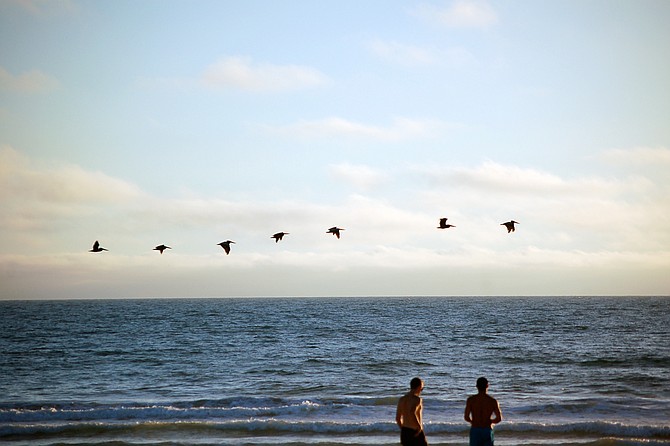
A Summer sunset in Mission Beach.
“Locals Summer” Begins Now. At last: the span of warm weather after Labor Day, when the kids are back in school, the days are still long, and the tourists are gone (for the most part). Spend an evening at the beach, or kayaking La Jolla Cove. This is your time to enjoy your town, San Diego locals.
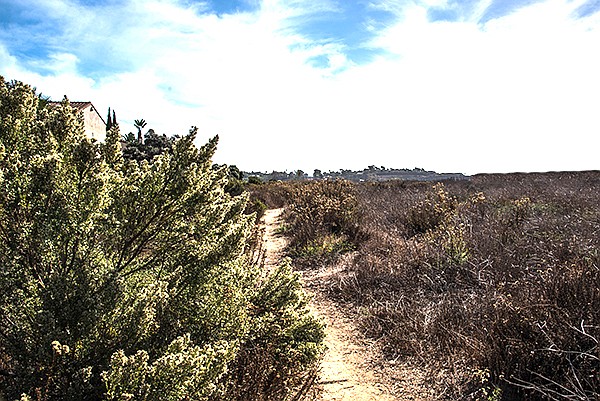
San Diego’s coastal Sage-scrub vegetation is now at the very nadir of its growth cycle.
San Diego’s Coastal SageScrub Vegetation is now at the very nadir of its growth cycle. Shades of gray and yellow have replaced the bright greens that carpeted many of the still-wild coastal hillsides up until April or May of this year. Some coastal regions received a small amount of rain last week but sometime within the next several weeks, the first substantial autumn rain will shatter the usual summer drought, and our “summer-deciduous” vegetation could bounce back in a matter of days.
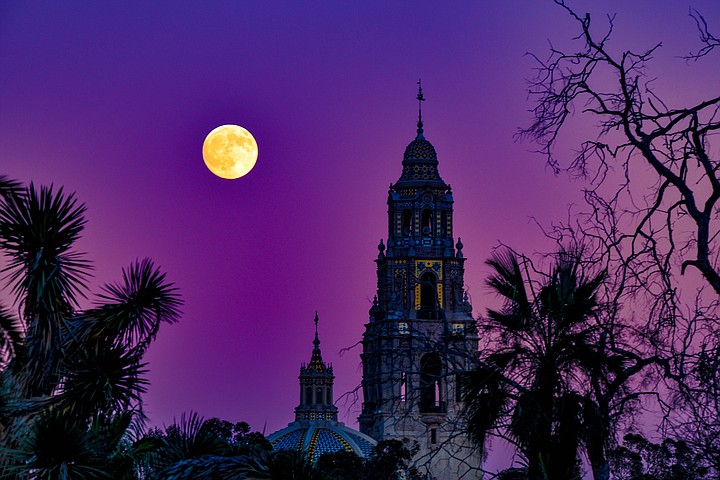
Balboa Park - Harvest Moon
September's Corn Harvest Moon Is Named Such Because corn is typically ready to harvest around this time. The full Moon rises around sunset for several nights in a row, which gives farmers extra light for them to finish their harvests before the colder fall temperatures begin. The Moon usually rises about an hour later each night, but around the time of the fall equinox, the angle of the Moon’s orbit and the tilt of the Earth cause the Moon to rise only about 20 to 30 minutes after sunset each night.
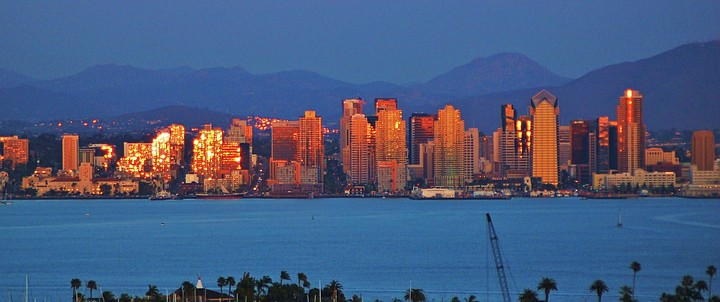
San Diego Skyline at Sunset ....
Catch The Corn Harvest Full Moon Rising this weekend, Sunday, September 7, from the boat-launching area on Shelter Island. You’ll witness (weather permitting) a beautiful spectacle: As the sun sets behind Point Loma, the west-facing facets of several mirrored buildings downtown will reflect a rosy or golden glow straight back toward Shelter Island. It will appear as if the skyline is glowing. The moon will already be high above and to the right of the skyline. This full-moon alignment occurs around this time of the year (near the autumnal equinox) and also near vernal equinox, which is in late March. If the moon happens to appear a little larger than usual, it’s no accident: The full-moon phase this month coincides with lunar perigee — the moon’s closest approach to Earth.
Here's something you might be interested in.
"Locals Summer" begins now, Sage scrub vegetation is waiting for rain
Corn Harvest Moon rises this weekend

"Locals Summer" begins now, Sage scrub vegetation is waiting for rain
Corn Harvest Moon rises this weekend
A Summer sunset in Mission Beach.
“Locals Summer” Begins Now. At last: the span of warm weather after Labor Day, when the kids are back in school, the days are still long, and the tourists are gone (for the most part). Spend an evening at the beach, or kayaking La Jolla Cove. This is your time to enjoy your town, San Diego locals.
San Diego’s coastal Sage-scrub vegetation is now at the very nadir of its growth cycle.
San Diego’s Coastal SageScrub Vegetation is now at the very nadir of its growth cycle. Shades of gray and yellow have replaced the bright greens that carpeted many of the still-wild coastal hillsides up until April or May of this year. Some coastal regions received a small amount of rain last week but sometime within the next several weeks, the first substantial autumn rain will shatter the usual summer drought, and our “summer-deciduous” vegetation could bounce back in a matter of days.
Balboa Park - Harvest Moon
September's Corn Harvest Moon Is Named Such Because corn is typically ready to harvest around this time. The full Moon rises around sunset for several nights in a row, which gives farmers extra light for them to finish their harvests before the colder fall temperatures begin. The Moon usually rises about an hour later each night, but around the time of the fall equinox, the angle of the Moon’s orbit and the tilt of the Earth cause the Moon to rise only about 20 to 30 minutes after sunset each night.
San Diego Skyline at Sunset ....
Catch The Corn Harvest Full Moon Rising this weekend, Sunday, September 7, from the boat-launching area on Shelter Island. You’ll witness (weather permitting) a beautiful spectacle: As the sun sets behind Point Loma, the west-facing facets of several mirrored buildings downtown will reflect a rosy or golden glow straight back toward Shelter Island. It will appear as if the skyline is glowing. The moon will already be high above and to the right of the skyline. This full-moon alignment occurs around this time of the year (near the autumnal equinox) and also near vernal equinox, which is in late March. If the moon happens to appear a little larger than usual, it’s no accident: The full-moon phase this month coincides with lunar perigee — the moon’s closest approach to Earth.
Comments