

Here's something you might be interested in.
Ask a Hipster — Advice you didn't know you needed
Big Screen — Movie commentary
Blurt — Music's inside track
Booze News — San Diego spirits
Classical Music — Immortal beauty
Classifieds — Free and easy
Close to Home — What it’s like on the street where you live
Cover Stories — Front-page features
Drinks All Around — Bartenders' drink recipes
Excerpts — Literary and spiritual excerpts
Feast! — Food & drink reviews
Feature Stories — Local news & stories
Fishing Report — What’s getting hooked from ship and shore
From the Archives — Spotlight on the past
Golden Dreams — Talk of the town
The Gonzo Report — Making the musical scene, or at least reporting from it
Letters — Our inbox
Movies@Home — Local movie buffs share favorites
Movie Reviews — Our critics' picks and pans
Musician Interviews — Up close with local artists
Neighborhood News from Stringers — Hyperlocal news
News Ticker — News & politics
Obermeyer — San Diego politics illustrated
Outdoors — Weekly changes in flora and fauna
Overheard in San Diego — Eavesdropping illustrated
Poetry — The old and the new
Reader Travel — Travel section built by travelers
Reading — The hunt for intellectuals
Roam-O-Rama — SoCal's best hiking/biking trails
San Diego Beer — Inside San Diego suds
SD on the QT — Almost factual news
Sheep and Goats — Places of worship
Special Issues — The best of
Street Style — San Diego streets have style
Surf Diego — Real stories from those braving the waves
Theater — On stage in San Diego this week
Tin Fork — Silver spoon alternative
Under the Radar — Matt Potter's undercover work
Unforgettable — Long-ago San Diego
Unreal Estate — San Diego's priciest pads
Your Week — Daily event picks
10 films to haunt your Halloween weekend
And with nary a CGI effect in the bunch!

There's no better way to preface any of the below than with a viewing of Bob Clampett's The Great Piggy Bank Robbery!
Behold: ten films that aim to shock, frighten, revulse, enlighten, and tickle, sometimes all at once. No costumed goons, no effects-driven tedium, and just one jump-scare in the bunch! Let's start at the top and gradually work our way down to Ed Wood. Happy Halloween!
UN CHIEN ANDALOU (1929) Luis Buñuel & Salvador Dali
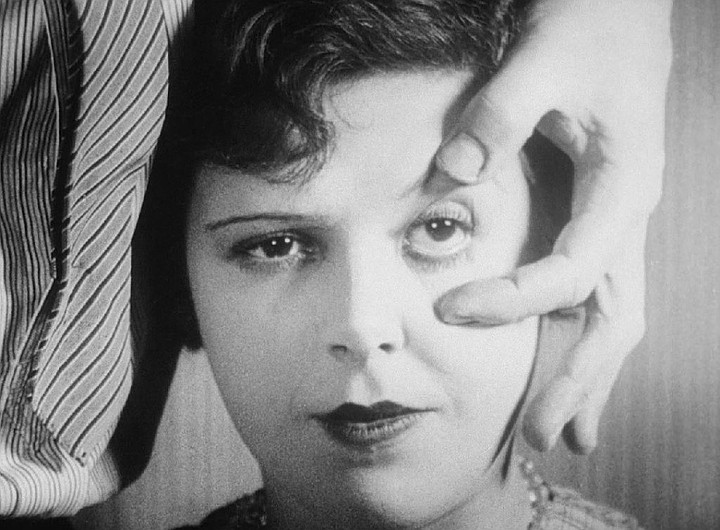
Luis Buñuel opened this, his first film, by slicing open our collective eyeballs, and then rang down the curtain on his final act, That Obscure Object of Desire, by blowing up the world. At the height of the Surrealist movement in Paris, which was founded by poet André Breton in 1924, Buñuel and Salvador Dali teamed up for this “nightmare movie.” Together, they piled horror upon horror, deliberately sidestepping anything that even remotely made sense, gleefully flouting all conventions of aesthetics, decency, and taste, aiming only to shock and perplex the elegant audiences that came to interpret their film. It remains pretty potent: at once anarchic, sensual, egoistic, and deliberately perverse, as though a Dali painting had come to life. Buñuel said of the finished product, "I don't want the film to please you, but to offend you. I would be sorry if you enjoyed it." It’s in that spirit that I say I hope the film consumes you with rage.
THE UNKNOWN (1927) Tod Browning
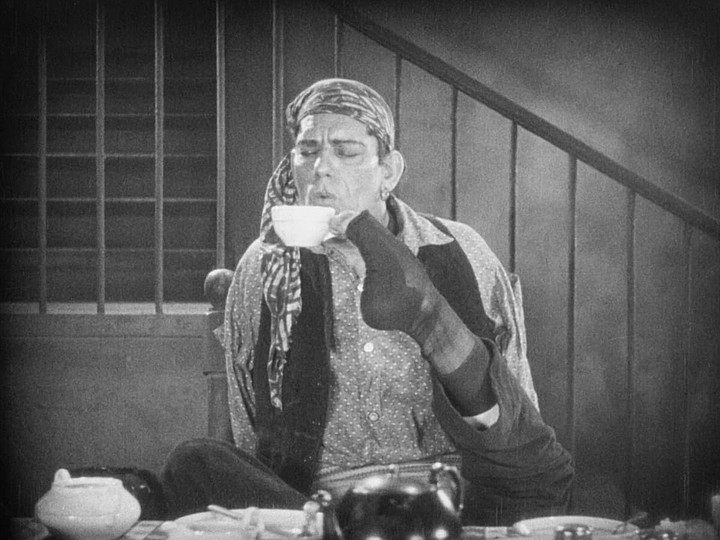
A crook on the lam (Lon Chaney) finds refuge as a circus novelty act, binding his limbs to his side and posing as an armless knife thrower. Joan Crawford co-stars as the ringmaster’s daughter (and Chaney’s object of desire), a young woman sickened by the thought of men pawing at her with their “beastly hands.” Calling in a favor from a sawbones, Chaney has both arms amputated in the name of love. Alas, the joke’s on him when Crawford gives her heart to the circus strongman. Stop me if you’ve heard this one. Consider it director Tod Browning’s rehearsal for Freaks, a monumentally daunting sideshow attraction with a cast composed of real-life anomalies and curiosities of medicine. Known as the Man of a Thousand Faces, the chameleon-like Chaney was a living practical effect. The Unknown ends on such a gutsily downbeat note that, even in an era where CGI could pull it off with the greatest of ease, no one has dared to shop around a remake.
LOST HIGHWAY (1997) David Lynch
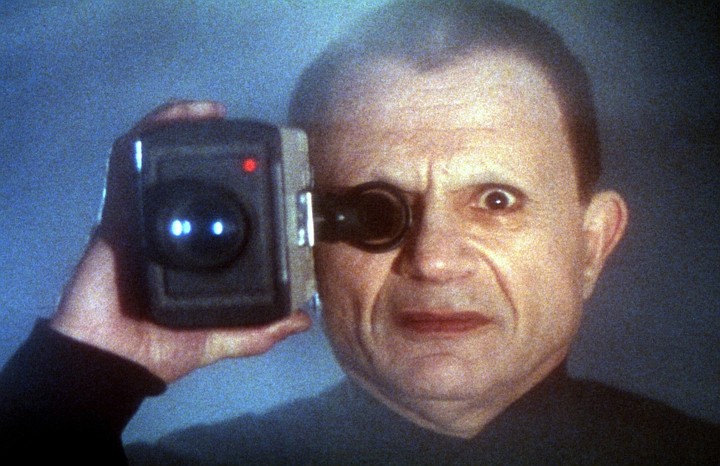
Bill Pullman stars as Fred, a wealthy jazz musician found guilty of killing his wife. Balthazar Getty is a young grease-monkey courting a sinister gangster's girlfriend. Somewhere along the way, the two characters merge, and all we are asked to do is accept the fact that male protagonists in film noir are basically interchangeable. So much for the plot. The exact appeal of the film lies somewhere within the fabric of Lynch's disturbingly well-manicured ‘Scope compositions. From both a visual and storytelling perspective, at the time of its release it stood as Lynch’s most nightmarish work, only to be slightly eclipsed by Inland Empire. Oddly, the dreamlike, semi-coherent structure miffed a lot of fans. Who did they expect to find touring Lynch's Route 666? Jurassic Park tourists? Travelers tooling Lynch’s turnpike include Patricia Arquette in the Kim Novak role(s), Robert Blake as Satan's videographer, Gary Busey and Lucy Butler as the concerned parents, Richard Pryor as the wheelchair-bound proprietor of Arnie's Complete Car Service, and last, but certainly not least, Robert Loggia as Mr. Eddie, a tailgater’s worst nightmare. I miss David Lynch something awful and regret that he wasn’t afforded the opportunity to leave behind a filmography that rivaled Clint and Woody’s for length. Fortunately, the air of unexplainability that permeates every frame in his canon lends itself to innumerable viewings.
THE HITCHER (1985) Robert Harmon
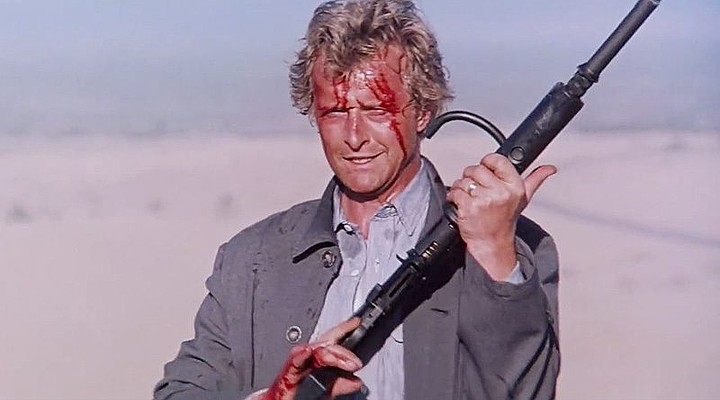
The film that coined the phrase, “You want fries with that finger?” Not since Val Lewton’s peerless series of 1940’s horror noirs for RKO has so much offscreen evil been applied to such unnerving effect. C. Thomas Howell is an innocent college student transporting a car to another state. For no apparent reason, other than to scare the bejeezus out of the audience, serial killer Rutger Hauer sticks out his thumb and begins stalking our hero, eventually implicating him in a series of murders. A scorchingly effective horror film written by Eric Red (Near Dark, Body Parts) and directed with tension-building efficiency by Robert Harmon (Eyes of an Angel, Gotti). I recall driving home after my first theatrical viewing and finding myself incapable of un-gluing my eyes from the rearview.
MIKE’S MURDER (1984) James Bridges
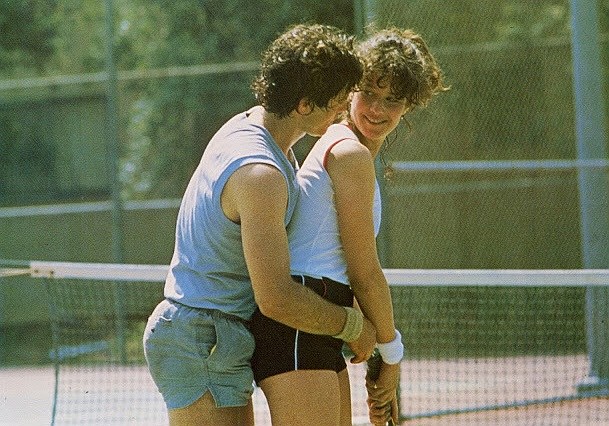
Mike (Mark Keyloun) is a tennis instructor whose boyish good looks mask a teetering dark side. Hustling both on and off the court, he has a one-night stand that leaves Betty (Debra Winger), a simple-hearted bank clerk who craves substance, yearning for a sequel. After the title deed is done, Betty begins to investigate the unsettling past of the man she thought she loved, and it’s not long before the inquiry consumes her. Ceremonious Brit Leslie Halliwell called it “a turn off: a combination of unlikely narrative, a mediocre script, sleazy characters, and indifferent performances.” To Mr. Halliwell I say, every so often a film comes along that nails a specific locale and point in history. I was living in Glendale at the time of its release (it opened at the NuArt), and I can attest: it would have been difficult to point a camera at Los Angeles in the mid-'80s and not find sleaze. Indifferent performances, you say? Not only is this a Debra Winger picture worth searching for, Paul Winfield’s menacing turn as the record producer who also loved Mike is both subjective and truthful. Trivial business: the film was produced by Jack Larson, TV’s Jimmy Olsen.
CARRIE (1976) Brian De Palma
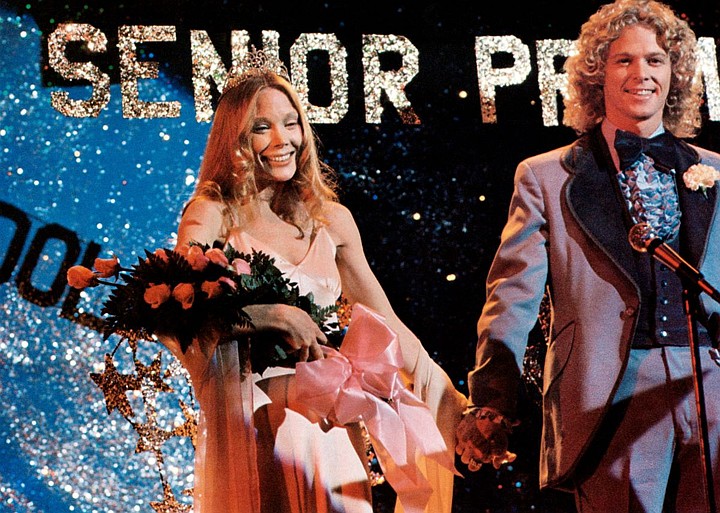
Foremost Hitchcock suck-up Brian De Palma's stylish commercial breakthrough still ranks amongst his best. Sissy Spacek stars as a painfully backward high school senior voted Most Likely to be Tormented. Blood begets blood, and once Carrie White gets in touch with her paranormal side, all hell rigorously breaks loose. Piper Laurie, absent from the screen for a dozen years, returns in exceptional form as Carrie's bible-toting mother, who uses the good book as a weapon of enlightenment. Those who have seen the film will never forget Margaret White's pitched to perfection, “They're all going to laugh at you!” The poster screamed, "If you have a taste for terror, take Carrie to the prom.” As hyped, the film lives up to its terrifying promise of fright, building to a final jump-scare that left the skull imprints of leaping patrons on theater ceilings across America. Stephen King once again proves the old Hitchcock adage that the worst books make the best movies! The cast of mostly newcomers includes John Travolta, William Katt, Amy Irving, Nancy Allen, Betty Buckley, and the inimitable P. J. Souls.
MASSACRE AT CENTRAL HIGH (1976) Renee Daalder
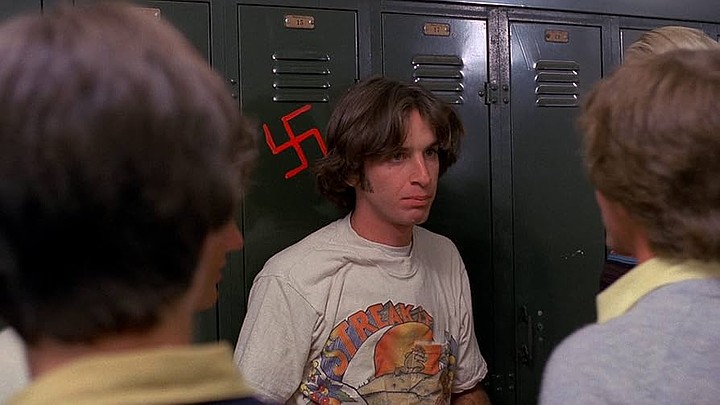
It's a film geared for drive-ins that deserved four walls and a roof. David (Derrel Maury) refuses an invitation from a childhood friend (Andrew Stevens) to join his gang of "little league Gestapo" bullies who relish keeping weaker students in line. After three well-groomed punks park a car on top of David and cost him a leg, he embarks on a gruesome revenge tour, systematically doing away with his oppressors and making the deaths seem like accidents. But this tactic opens up a few vacancies on the dishonor roll that the spoiled rich nerds have no problem filling both effectively and with extreme prejudice. After seeing the monsters his vigilante efforts have spawned, David concludes that the only sane thing to do is blow up the school. Director Renee Daalder successfully borrows from Roger Corman's New World Pictures credo of a lot of action, a little sex, and a pinch of social commentary. Released the same year as Carrie, this economical co-feature once again proves that a big effects budget will never take the place of imagination. After the bloodletting ends, be sure to stick around for the ill-fitting love theme that escorts the credits.
THEY SAVED HITLER’S BRAIN (1968) David Bradley
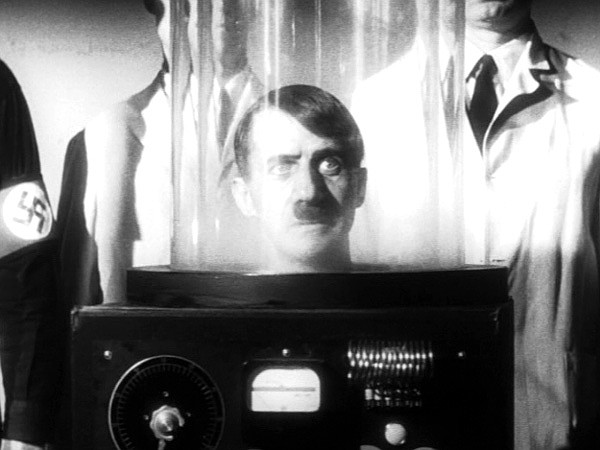
The film originally began production in the 1950s under the name Madmen of Mandoras. A decade later, several overly-ambitious UCLA film students took the footage, shot by iconic lensman Stanley Cortez (The Magnificent Ambersons, Shock Corridor), mixed in some godawful scenes of their own, and somehow got it released. Their problem, and our pleasure, was a total lack of continuity between the two so-called “visions.” It seems Der Führer’s melon is being kept alive on a prime strip of remote Caribbean property owned by Nazi landlords. “Mr. H,” as the head is reverently referred to, gives his stooges the nod to spread biological warfare throughout every major American metropolis. Somewhere in our wonderful nation, a passionate script writer is vigorously preparing a brain-saving present-day interpretation to fit our current administration, yet they cannot identify an Einstein in the bunch.
GLEN OR GLENDA (1953) Edward D. Wood
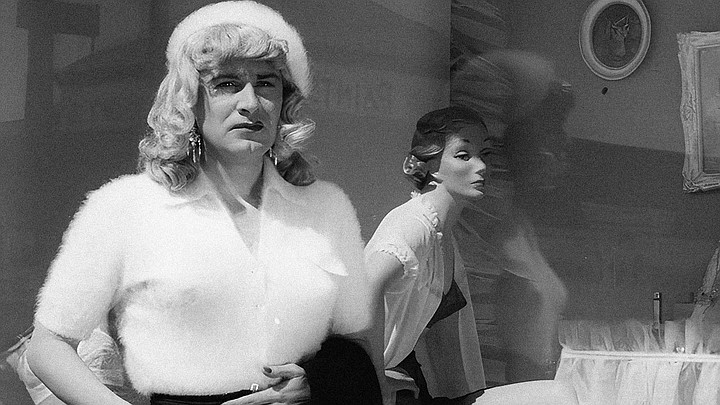
Bela Lugosi is your host for this inadvertently riotous expose loosely based on the life of Christine Jorgensen, the first American to become internationally famous for undergoing gender-affirming surgery. Bella's narration, a stream of non sequiturs that would perplex Norm Crosby, leads off in the direction of snips, snails, puppy dogs tails, brassiere's, girdles, green-eyed monsters eager to devour, and don't forget to pull the string! If you can make sense of the incoherent ramblings of a drug-addled career vampire, I’ll pass on the number of a clinic in TJ. This was a very personal subject for Mr. Wood, himself a cross-dresser. Not only did he assume the title role(s), Ed cast his patient and understanding girlfriend Dolores Fuller to play opposite him. Yikes! You won't know what to laugh at first: the acting, dialog, or staging. Take a vacation from filmmaking and have a good time at the expense of Ed Wood, the best of the worst. If nothing else, you'll learn how to mentally undress the next lineman you spot atop a telephone pole.
PLAN 9 FROM OUTER SPACE (1959) Edward D. Wood
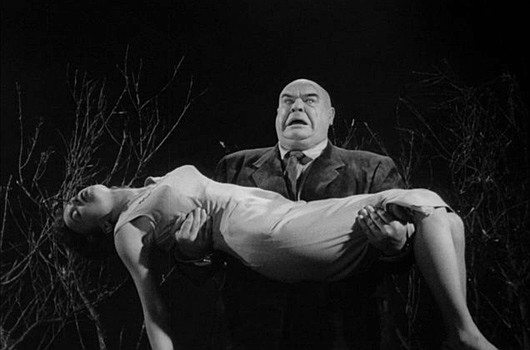
Flying percolator lids attack Los Angeles! Greetings, my friends, and welcome to what many are proud to proclaim the worst movie ever made. The marginal plot concerns the dead coming back to life and terrorizing a bunch of inept “actors" on a soundstage. It's so bad that one can learn much from studying it. Narrated by professional diviner Criswell (he's the one with the Shinola spit curl) and starring an end-of-life Bella Lugosi… well, at least for four days of the shoot, until he died in his room and was replaced by the director's chiropractor. It's a work of profound clumsiness that has become an essential midnight movie since its rediscovery in the 1970s. If you’ve never seen it, why not?
Here's something you might be interested in.
10 films to haunt your Halloween weekend
And with nary a CGI effect in the bunch!

10 films to haunt your Halloween weekend
And with nary a CGI effect in the bunch!
There's no better way to preface any of the below than with a viewing of Bob Clampett's The Great Piggy Bank Robbery!
Behold: ten films that aim to shock, frighten, revulse, enlighten, and tickle, sometimes all at once. No costumed goons, no effects-driven tedium, and just one jump-scare in the bunch! Let's start at the top and gradually work our way down to Ed Wood. Happy Halloween!
UN CHIEN ANDALOU (1929) Luis Buñuel & Salvador Dali
Luis Buñuel opened this, his first film, by slicing open our collective eyeballs, and then rang down the curtain on his final act, That Obscure Object of Desire, by blowing up the world. At the height of the Surrealist movement in Paris, which was founded by poet André Breton in 1924, Buñuel and Salvador Dali teamed up for this “nightmare movie.” Together, they piled horror upon horror, deliberately sidestepping anything that even remotely made sense, gleefully flouting all conventions of aesthetics, decency, and taste, aiming only to shock and perplex the elegant audiences that came to interpret their film. It remains pretty potent: at once anarchic, sensual, egoistic, and deliberately perverse, as though a Dali painting had come to life. Buñuel said of the finished product, "I don't want the film to please you, but to offend you. I would be sorry if you enjoyed it." It’s in that spirit that I say I hope the film consumes you with rage.
THE UNKNOWN (1927) Tod Browning
A crook on the lam (Lon Chaney) finds refuge as a circus novelty act, binding his limbs to his side and posing as an armless knife thrower. Joan Crawford co-stars as the ringmaster’s daughter (and Chaney’s object of desire), a young woman sickened by the thought of men pawing at her with their “beastly hands.” Calling in a favor from a sawbones, Chaney has both arms amputated in the name of love. Alas, the joke’s on him when Crawford gives her heart to the circus strongman. Stop me if you’ve heard this one. Consider it director Tod Browning’s rehearsal for Freaks, a monumentally daunting sideshow attraction with a cast composed of real-life anomalies and curiosities of medicine. Known as the Man of a Thousand Faces, the chameleon-like Chaney was a living practical effect. The Unknown ends on such a gutsily downbeat note that, even in an era where CGI could pull it off with the greatest of ease, no one has dared to shop around a remake.
LOST HIGHWAY (1997) David Lynch
Bill Pullman stars as Fred, a wealthy jazz musician found guilty of killing his wife. Balthazar Getty is a young grease-monkey courting a sinister gangster's girlfriend. Somewhere along the way, the two characters merge, and all we are asked to do is accept the fact that male protagonists in film noir are basically interchangeable. So much for the plot. The exact appeal of the film lies somewhere within the fabric of Lynch's disturbingly well-manicured ‘Scope compositions. From both a visual and storytelling perspective, at the time of its release it stood as Lynch’s most nightmarish work, only to be slightly eclipsed by Inland Empire. Oddly, the dreamlike, semi-coherent structure miffed a lot of fans. Who did they expect to find touring Lynch's Route 666? Jurassic Park tourists? Travelers tooling Lynch’s turnpike include Patricia Arquette in the Kim Novak role(s), Robert Blake as Satan's videographer, Gary Busey and Lucy Butler as the concerned parents, Richard Pryor as the wheelchair-bound proprietor of Arnie's Complete Car Service, and last, but certainly not least, Robert Loggia as Mr. Eddie, a tailgater’s worst nightmare. I miss David Lynch something awful and regret that he wasn’t afforded the opportunity to leave behind a filmography that rivaled Clint and Woody’s for length. Fortunately, the air of unexplainability that permeates every frame in his canon lends itself to innumerable viewings.
THE HITCHER (1985) Robert Harmon
The film that coined the phrase, “You want fries with that finger?” Not since Val Lewton’s peerless series of 1940’s horror noirs for RKO has so much offscreen evil been applied to such unnerving effect. C. Thomas Howell is an innocent college student transporting a car to another state. For no apparent reason, other than to scare the bejeezus out of the audience, serial killer Rutger Hauer sticks out his thumb and begins stalking our hero, eventually implicating him in a series of murders. A scorchingly effective horror film written by Eric Red (Near Dark, Body Parts) and directed with tension-building efficiency by Robert Harmon (Eyes of an Angel, Gotti). I recall driving home after my first theatrical viewing and finding myself incapable of un-gluing my eyes from the rearview.
MIKE’S MURDER (1984) James Bridges
Mike (Mark Keyloun) is a tennis instructor whose boyish good looks mask a teetering dark side. Hustling both on and off the court, he has a one-night stand that leaves Betty (Debra Winger), a simple-hearted bank clerk who craves substance, yearning for a sequel. After the title deed is done, Betty begins to investigate the unsettling past of the man she thought she loved, and it’s not long before the inquiry consumes her. Ceremonious Brit Leslie Halliwell called it “a turn off: a combination of unlikely narrative, a mediocre script, sleazy characters, and indifferent performances.” To Mr. Halliwell I say, every so often a film comes along that nails a specific locale and point in history. I was living in Glendale at the time of its release (it opened at the NuArt), and I can attest: it would have been difficult to point a camera at Los Angeles in the mid-'80s and not find sleaze. Indifferent performances, you say? Not only is this a Debra Winger picture worth searching for, Paul Winfield’s menacing turn as the record producer who also loved Mike is both subjective and truthful. Trivial business: the film was produced by Jack Larson, TV’s Jimmy Olsen.
CARRIE (1976) Brian De Palma
Foremost Hitchcock suck-up Brian De Palma's stylish commercial breakthrough still ranks amongst his best. Sissy Spacek stars as a painfully backward high school senior voted Most Likely to be Tormented. Blood begets blood, and once Carrie White gets in touch with her paranormal side, all hell rigorously breaks loose. Piper Laurie, absent from the screen for a dozen years, returns in exceptional form as Carrie's bible-toting mother, who uses the good book as a weapon of enlightenment. Those who have seen the film will never forget Margaret White's pitched to perfection, “They're all going to laugh at you!” The poster screamed, "If you have a taste for terror, take Carrie to the prom.” As hyped, the film lives up to its terrifying promise of fright, building to a final jump-scare that left the skull imprints of leaping patrons on theater ceilings across America. Stephen King once again proves the old Hitchcock adage that the worst books make the best movies! The cast of mostly newcomers includes John Travolta, William Katt, Amy Irving, Nancy Allen, Betty Buckley, and the inimitable P. J. Souls.
MASSACRE AT CENTRAL HIGH (1976) Renee Daalder
It's a film geared for drive-ins that deserved four walls and a roof. David (Derrel Maury) refuses an invitation from a childhood friend (Andrew Stevens) to join his gang of "little league Gestapo" bullies who relish keeping weaker students in line. After three well-groomed punks park a car on top of David and cost him a leg, he embarks on a gruesome revenge tour, systematically doing away with his oppressors and making the deaths seem like accidents. But this tactic opens up a few vacancies on the dishonor roll that the spoiled rich nerds have no problem filling both effectively and with extreme prejudice. After seeing the monsters his vigilante efforts have spawned, David concludes that the only sane thing to do is blow up the school. Director Renee Daalder successfully borrows from Roger Corman's New World Pictures credo of a lot of action, a little sex, and a pinch of social commentary. Released the same year as Carrie, this economical co-feature once again proves that a big effects budget will never take the place of imagination. After the bloodletting ends, be sure to stick around for the ill-fitting love theme that escorts the credits.
THEY SAVED HITLER’S BRAIN (1968) David Bradley
The film originally began production in the 1950s under the name Madmen of Mandoras. A decade later, several overly-ambitious UCLA film students took the footage, shot by iconic lensman Stanley Cortez (The Magnificent Ambersons, Shock Corridor), mixed in some godawful scenes of their own, and somehow got it released. Their problem, and our pleasure, was a total lack of continuity between the two so-called “visions.” It seems Der Führer’s melon is being kept alive on a prime strip of remote Caribbean property owned by Nazi landlords. “Mr. H,” as the head is reverently referred to, gives his stooges the nod to spread biological warfare throughout every major American metropolis. Somewhere in our wonderful nation, a passionate script writer is vigorously preparing a brain-saving present-day interpretation to fit our current administration, yet they cannot identify an Einstein in the bunch.
GLEN OR GLENDA (1953) Edward D. Wood
Bela Lugosi is your host for this inadvertently riotous expose loosely based on the life of Christine Jorgensen, the first American to become internationally famous for undergoing gender-affirming surgery. Bella's narration, a stream of non sequiturs that would perplex Norm Crosby, leads off in the direction of snips, snails, puppy dogs tails, brassiere's, girdles, green-eyed monsters eager to devour, and don't forget to pull the string! If you can make sense of the incoherent ramblings of a drug-addled career vampire, I’ll pass on the number of a clinic in TJ. This was a very personal subject for Mr. Wood, himself a cross-dresser. Not only did he assume the title role(s), Ed cast his patient and understanding girlfriend Dolores Fuller to play opposite him. Yikes! You won't know what to laugh at first: the acting, dialog, or staging. Take a vacation from filmmaking and have a good time at the expense of Ed Wood, the best of the worst. If nothing else, you'll learn how to mentally undress the next lineman you spot atop a telephone pole.
PLAN 9 FROM OUTER SPACE (1959) Edward D. Wood
Flying percolator lids attack Los Angeles! Greetings, my friends, and welcome to what many are proud to proclaim the worst movie ever made. The marginal plot concerns the dead coming back to life and terrorizing a bunch of inept “actors" on a soundstage. It's so bad that one can learn much from studying it. Narrated by professional diviner Criswell (he's the one with the Shinola spit curl) and starring an end-of-life Bella Lugosi… well, at least for four days of the shoot, until he died in his room and was replaced by the director's chiropractor. It's a work of profound clumsiness that has become an essential midnight movie since its rediscovery in the 1970s. If you’ve never seen it, why not?