

Here's something you might be interested in.
Ask a Hipster — Advice you didn't know you needed
Big Screen — Movie commentary
Blurt — Music's inside track
Booze News — San Diego spirits
Classical Music — Immortal beauty
Classifieds — Free and easy
Close to Home — What it’s like on the street where you live
Cover Stories — Front-page features
Drinks All Around — Bartenders' drink recipes
Excerpts — Literary and spiritual excerpts
Feast! — Food & drink reviews
Feature Stories — Local news & stories
Fishing Report — What’s getting hooked from ship and shore
From the Archives — Spotlight on the past
Golden Dreams — Talk of the town
The Gonzo Report — Making the musical scene, or at least reporting from it
Letters — Our inbox
Movies@Home — Local movie buffs share favorites
Movie Reviews — Our critics' picks and pans
Musician Interviews — Up close with local artists
Neighborhood News from Stringers — Hyperlocal news
News Ticker — News & politics
Obermeyer — San Diego politics illustrated
Outdoors — Weekly changes in flora and fauna
Overheard in San Diego — Eavesdropping illustrated
Poetry — The old and the new
Reader Travel — Travel section built by travelers
Reading — The hunt for intellectuals
Roam-O-Rama — SoCal's best hiking/biking trails
San Diego Beer — Inside San Diego suds
SD on the QT — Almost factual news
Sheep and Goats — Places of worship
Special Issues — The best of
Street Style — San Diego streets have style
Surf Diego — Real stories from those braving the waves
Theater — On stage in San Diego this week
Tin Fork — Silver spoon alternative
Under the Radar — Matt Potter's undercover work
Unforgettable — Long-ago San Diego
Unreal Estate — San Diego's priciest pads
Your Week — Daily event picks
Dances with Death, The Golden Calf, and burning babies
Classical music for spooky season
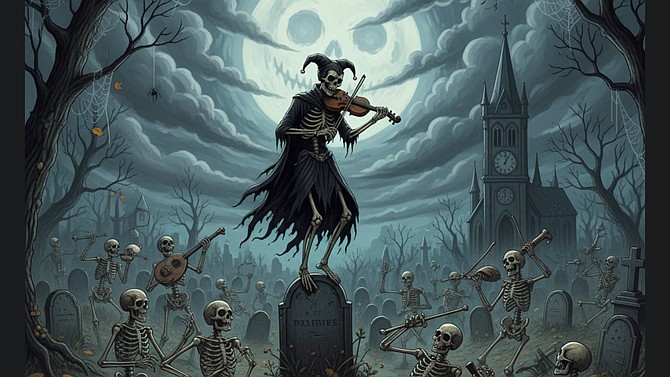
'Tis the season of Halloween. Pumpkins are being carved, costume decisions are being debated, and a bountiful harvest of candy is being readied. Classical music stands ready to do its part. Beneath the veneer of elegance, dark forces move through classical music and opera. It’s not all Viennese waltzes and lovesick Italian arias.
Every Halloween, at midnight, Death appears and summons the dead from their slumber, graveyards become ballrooms, and Death conducts the ball. It is a dance of death, a Danse Macabre, and Camille Saint-Saëns depicts it perfectly. The piece was composed in 1874 and uses all the orchestral tricks. The solo violin is Death or the Devil, and the orchestra is the swirling dead. Saint-Saëns uses the xylophone to depict the clattering of bones as the dance gains momentum. Of course, the dawn of All Saints Day arrives, and the bones return from whence they came.
Video:
Camille Saint-Saëns - La danse macabre
“The Song of the Golden Calf” from Faust by Charles Gounod describes Satan controlling a much larger dance. The text translates to something like, "The golden calf is still standing... Nations and kings whirl in a frenzied ring, and Satan leads the dance! To the sound of golden coins, they dance a wild round... In its absurd glory, the abject monster insults heaven!"
There are no jump scares or gore here. This is a haunting of the nations. Who’s to blame for the $102 trillion of combined national debts? The Devil.
Video:
Gounod's Faust - Song of the Golden Calf
I would add Night on the Bald Mountain to my list of Halloween season compositions, but it takes place on midsummer’s night, and that just doesn’t fit. However, the witches' sabbath that it depicts does fit, and we have another such depiction in Hector Berlioz’s Symphony Fantastique.
What is a witches’ sabbath, exactly? First of all, let me say that there is no evidence of a witches’ sabbath having ever taken place. With that out of the way, here’s how it works: a bunch of witches take a male adolescent goat out into the wilderness. They make a witches’ brew and begin dancing around the goat. Satan takes possession of the goat and then begins having sex with the witches. This is hall-of-fame level paganism — if it ever happened.
Video:
Berlioz Symphonie fantastique: The Witches' Sabbath
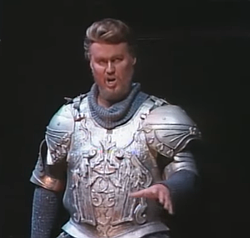
Il Trovatore by Giuseppe Verdi opens with the telling of a ghastly story. The scene takes place in the castle of Count de Luna. The captain of the guard is trying to keep the soldiers awake by telling them a scary story about de Luna’s baby brother. At dawn, the baby’s nurse awakened to find a crone standing next to the baby, casting her bloody eye upon the child. The witch was expelled from the castle, but the child was cursed with a terrible illness. The witch is seized and burned at the stake, but the child disappears, and the bones of a burnt baby were found in the ashes.
Witches cursing, abducting, and burning babies is peak Halloween.
Video:
Verdi: Il Trovatore
Here's something you might be interested in.
Dances with Death, The Golden Calf, and burning babies
Classical music for spooky season

Dances with Death, The Golden Calf, and burning babies
Classical music for spooky season
'Tis the season of Halloween. Pumpkins are being carved, costume decisions are being debated, and a bountiful harvest of candy is being readied. Classical music stands ready to do its part. Beneath the veneer of elegance, dark forces move through classical music and opera. It’s not all Viennese waltzes and lovesick Italian arias.
Every Halloween, at midnight, Death appears and summons the dead from their slumber, graveyards become ballrooms, and Death conducts the ball. It is a dance of death, a Danse Macabre, and Camille Saint-Saëns depicts it perfectly. The piece was composed in 1874 and uses all the orchestral tricks. The solo violin is Death or the Devil, and the orchestra is the swirling dead. Saint-Saëns uses the xylophone to depict the clattering of bones as the dance gains momentum. Of course, the dawn of All Saints Day arrives, and the bones return from whence they came.
Video:
Camille Saint-Saëns - La danse macabre
“The Song of the Golden Calf” from Faust by Charles Gounod describes Satan controlling a much larger dance. The text translates to something like, "The golden calf is still standing... Nations and kings whirl in a frenzied ring, and Satan leads the dance! To the sound of golden coins, they dance a wild round... In its absurd glory, the abject monster insults heaven!"
There are no jump scares or gore here. This is a haunting of the nations. Who’s to blame for the $102 trillion of combined national debts? The Devil.
Video:
Gounod's Faust - Song of the Golden Calf
I would add Night on the Bald Mountain to my list of Halloween season compositions, but it takes place on midsummer’s night, and that just doesn’t fit. However, the witches' sabbath that it depicts does fit, and we have another such depiction in Hector Berlioz’s Symphony Fantastique.
What is a witches’ sabbath, exactly? First of all, let me say that there is no evidence of a witches’ sabbath having ever taken place. With that out of the way, here’s how it works: a bunch of witches take a male adolescent goat out into the wilderness. They make a witches’ brew and begin dancing around the goat. Satan takes possession of the goat and then begins having sex with the witches. This is hall-of-fame level paganism — if it ever happened.
Video:
Berlioz Symphonie fantastique: The Witches' Sabbath
Il Trovatore by Giuseppe Verdi opens with the telling of a ghastly story. The scene takes place in the castle of Count de Luna. The captain of the guard is trying to keep the soldiers awake by telling them a scary story about de Luna’s baby brother. At dawn, the baby’s nurse awakened to find a crone standing next to the baby, casting her bloody eye upon the child. The witch was expelled from the castle, but the child was cursed with a terrible illness. The witch is seized and burned at the stake, but the child disappears, and the bones of a burnt baby were found in the ashes.
Witches cursing, abducting, and burning babies is peak Halloween.
Video:
Verdi: Il Trovatore