

Here's something you might be interested in.
Ask a Hipster — Advice you didn't know you needed
Big Screen — Movie commentary
Blurt — Music's inside track
Booze News — San Diego spirits
Classical Music — Immortal beauty
Classifieds — Free and easy
Close to Home — What it’s like on the street where you live
Cover Stories — Front-page features
Drinks All Around — Bartenders' drink recipes
Excerpts — Literary and spiritual excerpts
Feast! — Food & drink reviews
Feature Stories — Local news & stories
Fishing Report — What’s getting hooked from ship and shore
From the Archives — Spotlight on the past
Golden Dreams — Talk of the town
The Gonzo Report — Making the musical scene, or at least reporting from it
Letters — Our inbox
Movies@Home — Local movie buffs share favorites
Movie Reviews — Our critics' picks and pans
Musician Interviews — Up close with local artists
Neighborhood News from Stringers — Hyperlocal news
News Ticker — News & politics
Obermeyer — San Diego politics illustrated
Outdoors — Weekly changes in flora and fauna
Overheard in San Diego — Eavesdropping illustrated
Poetry — The old and the new
Reader Travel — Travel section built by travelers
Reading — The hunt for intellectuals
Roam-O-Rama — SoCal's best hiking/biking trails
San Diego Beer — Inside San Diego suds
SD on the QT — Almost factual news
Sheep and Goats — Places of worship
Special Issues — The best of
Street Style — San Diego streets have style
Surf Diego — Real stories from those braving the waves
Theater — On stage in San Diego this week
Tin Fork — Silver spoon alternative
Under the Radar — Matt Potter's undercover work
Unforgettable — Long-ago San Diego
Unreal Estate — San Diego's priciest pads
Your Week — Daily event picks
Three sonnets by Lady Mary Wroth on her 488th birthday
One of the first women to write a sonnet sequence
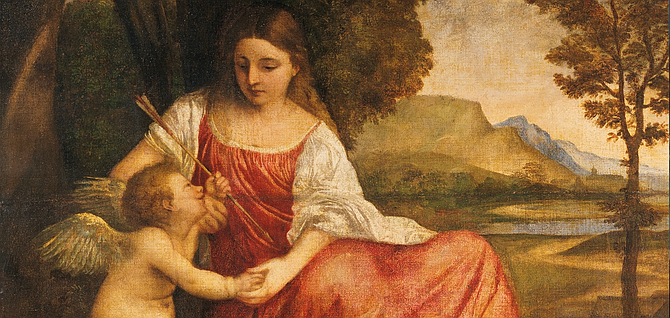
Detail from a painting of Venus and Cupid by Titian
1.
When night's blacke Mantle could most darknesse prove,
And sleepe (deaths Image) did my senses hyre,
From Knowledge of my selfe, then thoughts did move
Swifter then those, most [swiftnesse] neede require.
In sleepe, a Chariot drawne by wing'd Desire,
I saw; where sate bright Venus Queene of Love,
And at her feete her Sonne, still adding Fire
To burning hearts, which she did hold above,
But one heart flaming more then all the rest,
The Goddesse held, and put it to my breast,
Deare Sonne now [shoot], said she: thus must we winne;
He her obey'd, and martyr'd my poore heart.
I waking hop'd as dreames it would depart,
Yet since, O me, a Lover I have beene.
2.
Deare eyes how well indeed, you doe adorne
That blessed Sphere, which gazing soules hold deare?
The loved place of sought for triumphs, neere
The Court of Glory, where Loves force was borne.
How may they terme you Aprills sweetest morne?
When pleasing lookes, from those bright lights appeare
A Sunne-shine day, from clowdes, and mists still cleare:
Kinde nursing fires for wishes yet unborne.
Two Starres of Heaven sent downe to grace the Earth,
Plac'd in that Throne which gives all joyes their birthe,
Shining, and burning; pleasing yet their Charmes:
Which wounding, even in hurts are deem'd delights;
So pleasant is their force, so great their mights,
As happy they can tryumph in their harmes.
3.
Yet is there hope, then Love but play thy part,
Remember well thy selfe, and think on me;
Shine in those eyes which conquer'd have my heart,
And see if mine, be slacke to answer thee.
Lodge in that breast, and pitty moving see,
For flames which in mine burne in truest smart,
Exiling thoughts, that touch Inconstancy,
Or those which waste not in the constant Art,
Watch but my sleepe, if I take any rest,
For thought of you, my spirit so distrest,
As, pale and famish'd, I for mercy cry.
Will you your servant leave: thinke but on this,
Who weares Love's Crowne, must not doe so amisse
But seeke their good, who on thy force do lye.
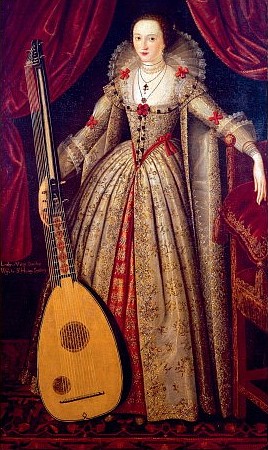
Lady Mary Wroth (1587-1651/3) an English poet and noblewoman of the English Renaissance, was among the first female writers to enjoy literary fame during her lifetime and an enduring legacy after her death. She was niece to another prominent female writer at the time, Mary Herbert (Sidney) and Sir Philip Sidney, one of the great poets of the Elizabethan era. Much of Wroth’s fame rests on her sonnet sequence, Pamphilia to Amphilanthus, which was first published in 1621. The sequence, one of the first to be written by a woman, include 105 sonnets and was greatly influenced by her uncle Philip Sidney’s 1580 sonnet sequence Astrophel and Stella. She was born on October 18.
Here's something you might be interested in.
Three sonnets by Lady Mary Wroth on her 488th birthday
One of the first women to write a sonnet sequence

Three sonnets by Lady Mary Wroth on her 488th birthday
One of the first women to write a sonnet sequence
Detail from a painting of Venus and Cupid by Titian
1.
When night's blacke Mantle could most darknesse prove,
And sleepe (deaths Image) did my senses hyre,
From Knowledge of my selfe, then thoughts did move
Swifter then those, most [swiftnesse] neede require.
In sleepe, a Chariot drawne by wing'd Desire,
I saw; where sate bright Venus Queene of Love,
And at her feete her Sonne, still adding Fire
To burning hearts, which she did hold above,
But one heart flaming more then all the rest,
The Goddesse held, and put it to my breast,
Deare Sonne now [shoot], said she: thus must we winne;
He her obey'd, and martyr'd my poore heart.
I waking hop'd as dreames it would depart,
Yet since, O me, a Lover I have beene.
2.
Deare eyes how well indeed, you doe adorne
That blessed Sphere, which gazing soules hold deare?
The loved place of sought for triumphs, neere
The Court of Glory, where Loves force was borne.
How may they terme you Aprills sweetest morne?
When pleasing lookes, from those bright lights appeare
A Sunne-shine day, from clowdes, and mists still cleare:
Kinde nursing fires for wishes yet unborne.
Two Starres of Heaven sent downe to grace the Earth,
Plac'd in that Throne which gives all joyes their birthe,
Shining, and burning; pleasing yet their Charmes:
Which wounding, even in hurts are deem'd delights;
So pleasant is their force, so great their mights,
As happy they can tryumph in their harmes.
3.
Yet is there hope, then Love but play thy part,
Remember well thy selfe, and think on me;
Shine in those eyes which conquer'd have my heart,
And see if mine, be slacke to answer thee.
Lodge in that breast, and pitty moving see,
For flames which in mine burne in truest smart,
Exiling thoughts, that touch Inconstancy,
Or those which waste not in the constant Art,
Watch but my sleepe, if I take any rest,
For thought of you, my spirit so distrest,
As, pale and famish'd, I for mercy cry.
Will you your servant leave: thinke but on this,
Who weares Love's Crowne, must not doe so amisse
But seeke their good, who on thy force do lye.
Lady Mary Wroth (1587-1651/3) an English poet and noblewoman of the English Renaissance, was among the first female writers to enjoy literary fame during her lifetime and an enduring legacy after her death. She was niece to another prominent female writer at the time, Mary Herbert (Sidney) and Sir Philip Sidney, one of the great poets of the Elizabethan era. Much of Wroth’s fame rests on her sonnet sequence, Pamphilia to Amphilanthus, which was first published in 1621. The sequence, one of the first to be written by a woman, include 105 sonnets and was greatly influenced by her uncle Philip Sidney’s 1580 sonnet sequence Astrophel and Stella. She was born on October 18.
Comments