

Here's something you might be interested in.
Ask a Hipster — Advice you didn't know you needed
Big Screen — Movie commentary
Blurt — Music's inside track
Booze News — San Diego spirits
Classical Music — Immortal beauty
Classifieds — Free and easy
Close to Home — What it’s like on the street where you live
Cover Stories — Front-page features
Drinks All Around — Bartenders' drink recipes
Excerpts — Literary and spiritual excerpts
Feast! — Food & drink reviews
Feature Stories — Local news & stories
Fishing Report — What’s getting hooked from ship and shore
From the Archives — Spotlight on the past
Golden Dreams — Talk of the town
The Gonzo Report — Making the musical scene, or at least reporting from it
Letters — Our inbox
Movies@Home — Local movie buffs share favorites
Movie Reviews — Our critics' picks and pans
Musician Interviews — Up close with local artists
Neighborhood News from Stringers — Hyperlocal news
News Ticker — News & politics
Obermeyer — San Diego politics illustrated
Outdoors — Weekly changes in flora and fauna
Overheard in San Diego — Eavesdropping illustrated
Poetry — The old and the new
Reader Travel — Travel section built by travelers
Reading — The hunt for intellectuals
Roam-O-Rama — SoCal's best hiking/biking trails
San Diego Beer — Inside San Diego suds
SD on the QT — Almost factual news
Sheep and Goats — Places of worship
Special Issues — The best of
Street Style — San Diego streets have style
Surf Diego — Real stories from those braving the waves
Theater — On stage in San Diego this week
Tin Fork — Silver spoon alternative
Under the Radar — Matt Potter's undercover work
Unforgettable — Long-ago San Diego
Unreal Estate — San Diego's priciest pads
Your Week — Daily event picks
Three poems by Giosuè Carducci for his 190th birthday
The first Italian to receive the Nobel Prize in Literature
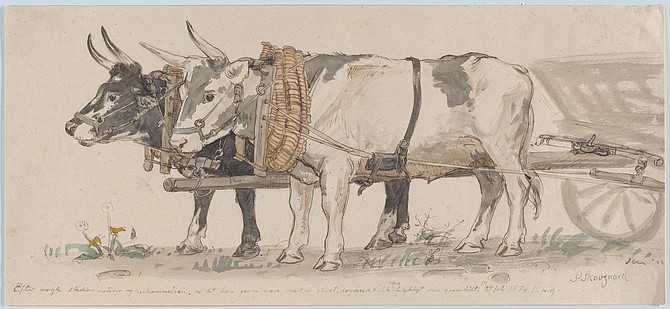
Two Oxen Pulling a Cart, drawing, Peter Christian Thamsen Skovgaard
The Ox
I love thee, pious ox; a gentle feeling
Of vigour and of peace thou giv'st my heart.
How solemn, like a monument, thou art!
Over wide fertile fields thy calm gaze stealing,
Unto the yoke with grave contentment kneeling,
To man's quick work thou dost thy strength impart.
He shouts and goads, and answering thy smart,
Thou turn'st on him thy patient eyes appealing.
From thy broad nostrils, black and wet, arise
Thy breath's soft fumes; and on the still air swells,
Like happy hymn, thy lowing's mellow strain.
In the grave sweetness of thy tranquil eyes
Of emerald, broad and still reflected dwells
All the divine green silence of the plain.
Outside the Certosa
The dead are saying: “Blessed are ye who walk along the hillsides
Flooded with the warm rays of the golden sun.
“Cool murmur the waters through flowery slopes descending.
Singing are the birds to the verdure, singing the leaves to the wind.
“For you are smiling the flowers ever new on the earth;
For you smile the stars, the flowers eternal of heaven.”
The dead are saying: “Gather the flowers, for they too pass away;
Adore the stars, for they pass never away.
“Rotted away are the garlands that lay around our damp skulls.
Roses place ye around the tresses golden and black.
“Down here it is cold. We are alone. Oh, love ye the sun!
Shine, constant star of Love, on the life which passes away!”
Madrigal
Breaking his way through the white clouds in the azure,
The sun laughs out and cries:
“O Springtime, come!”
Across the greening hills with placid murmurs
The streams sing back to the breeze:
“O Springtime, come!”
“O Springtime, come!” to his heart the poet is saying,
While gazing, O pure Lalage, in thine eyes!
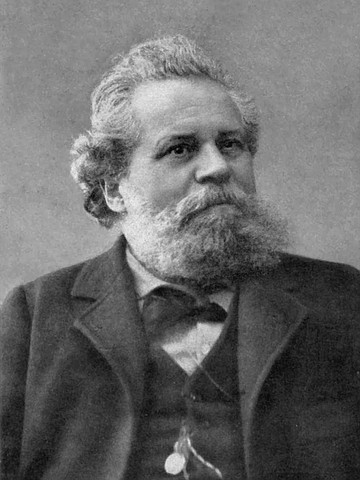
Giosuè Carducci (1835-1907) was an Italian poet, writer, and literary critic who in his time was considered the national poet of Italy. In 1906, he was the first Italian to receive the Nobel Prize in Literature. In his poetry, Carducci sought to return Italian literature to the classical modes of the Greek and Latin poets. Although he wrote at the height of Romanticism, his adherence to the classical models of the past and the dexterity with which he rejuvenated them for a modern reading public allowed him to transcend the literary trends of the day to become one of the great poets of Italian literature. He was born on July 27, 1835.
Here's something you might be interested in.
Three poems by Giosuè Carducci for his 190th birthday
The first Italian to receive the Nobel Prize in Literature

Three poems by Giosuè Carducci for his 190th birthday
The first Italian to receive the Nobel Prize in Literature
Two Oxen Pulling a Cart, drawing, Peter Christian Thamsen Skovgaard
The Ox
I love thee, pious ox; a gentle feeling
Of vigour and of peace thou giv'st my heart.
How solemn, like a monument, thou art!
Over wide fertile fields thy calm gaze stealing,
Unto the yoke with grave contentment kneeling,
To man's quick work thou dost thy strength impart.
He shouts and goads, and answering thy smart,
Thou turn'st on him thy patient eyes appealing.
From thy broad nostrils, black and wet, arise
Thy breath's soft fumes; and on the still air swells,
Like happy hymn, thy lowing's mellow strain.
In the grave sweetness of thy tranquil eyes
Of emerald, broad and still reflected dwells
All the divine green silence of the plain.
Outside the Certosa
The dead are saying: “Blessed are ye who walk along the hillsides
Flooded with the warm rays of the golden sun.
“Cool murmur the waters through flowery slopes descending.
Singing are the birds to the verdure, singing the leaves to the wind.
“For you are smiling the flowers ever new on the earth;
For you smile the stars, the flowers eternal of heaven.”
The dead are saying: “Gather the flowers, for they too pass away;
Adore the stars, for they pass never away.
“Rotted away are the garlands that lay around our damp skulls.
Roses place ye around the tresses golden and black.
“Down here it is cold. We are alone. Oh, love ye the sun!
Shine, constant star of Love, on the life which passes away!”
Madrigal
Breaking his way through the white clouds in the azure,
The sun laughs out and cries:
“O Springtime, come!”
Across the greening hills with placid murmurs
The streams sing back to the breeze:
“O Springtime, come!”
“O Springtime, come!” to his heart the poet is saying,
While gazing, O pure Lalage, in thine eyes!
Giosuè Carducci (1835-1907) was an Italian poet, writer, and literary critic who in his time was considered the national poet of Italy. In 1906, he was the first Italian to receive the Nobel Prize in Literature. In his poetry, Carducci sought to return Italian literature to the classical modes of the Greek and Latin poets. Although he wrote at the height of Romanticism, his adherence to the classical models of the past and the dexterity with which he rejuvenated them for a modern reading public allowed him to transcend the literary trends of the day to become one of the great poets of Italian literature. He was born on July 27, 1835.
Comments