

Here's something you might be interested in.
Ask a Hipster — Advice you didn't know you needed
Big Screen — Movie commentary
Blurt — Music's inside track
Booze News — San Diego spirits
Classical Music — Immortal beauty
Classifieds — Free and easy
Close to Home — What it’s like on the street where you live
Cover Stories — Front-page features
Drinks All Around — Bartenders' drink recipes
Excerpts — Literary and spiritual excerpts
Feast! — Food & drink reviews
Feature Stories — Local news & stories
Fishing Report — What’s getting hooked from ship and shore
From the Archives — Spotlight on the past
Golden Dreams — Talk of the town
The Gonzo Report — Making the musical scene, or at least reporting from it
Letters — Our inbox
Movies@Home — Local movie buffs share favorites
Movie Reviews — Our critics' picks and pans
Musician Interviews — Up close with local artists
Neighborhood News from Stringers — Hyperlocal news
News Ticker — News & politics
Obermeyer — San Diego politics illustrated
Outdoors — Weekly changes in flora and fauna
Overheard in San Diego — Eavesdropping illustrated
Poetry — The old and the new
Reader Travel — Travel section built by travelers
Reading — The hunt for intellectuals
Roam-O-Rama — SoCal's best hiking/biking trails
San Diego Beer — Inside San Diego suds
SD on the QT — Almost factual news
Sheep and Goats — Places of worship
Special Issues — The best of
Street Style — San Diego streets have style
Surf Diego — Real stories from those braving the waves
Theater — On stage in San Diego this week
Tin Fork — Silver spoon alternative
Under the Radar — Matt Potter's undercover work
Unforgettable — Long-ago San Diego
Unreal Estate — San Diego's priciest pads
Your Week — Daily event picks
Bat populations increase in coastal San Diego, Floss silk tree blooms
Local riparian woodland begins its seasonal change
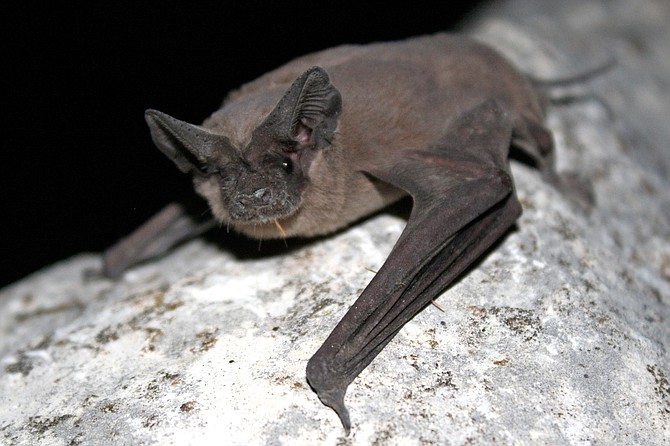
The Mexican Free-Tailed Bat prefers roosting in caves but will roost in any building with a dark recess.
Bat populations Increase In Coastal Areas of San Diego County during the fall and winter due to migration. Not only are there bats that are migrating to and through the county coastal areas on north-south migration routes, there are also local migrations, in which bats from inland areas move closer to the coast. You can usually see bats in areas where open water occurs near riparian trees and close to exposed rocky habitat, such as Mission Trails Regional Park near the old Mission dam, or Los Peñasquitos Canyon Preserve near the waterfall. The most common bats in San Diego County include the Mexican free-tailed bat, Yuma myotis, and big brown bat.
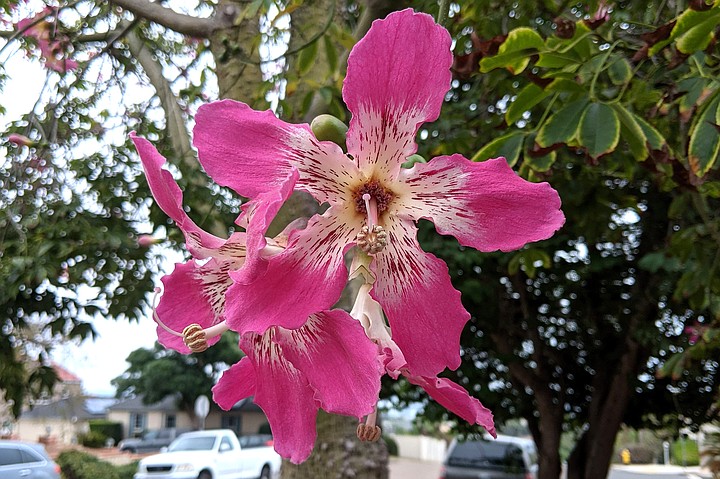
A Silk Floss tree flower on a gray October evening in Point Loma.
The Floss Silk Tree, a conspicuous “autumn bloomer” that grows here and there around San Diego, has been showing off its pinkish (or purplish) hibiscus-like flowers for at least a month now. The broad, heavy trunks of this South American import — which are studded with fat, cone-shaped spines — makes it easy to identify.
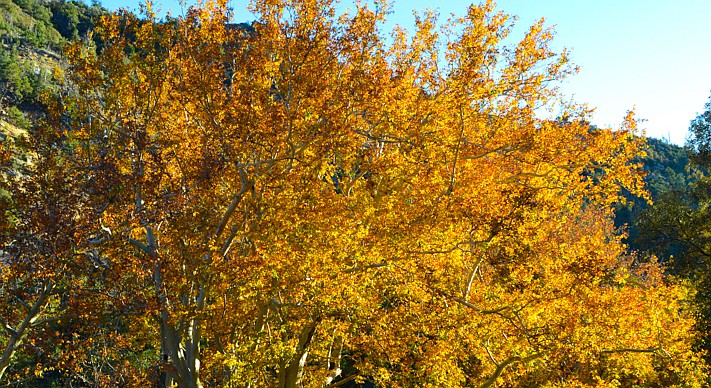
Hundreds of sycamores can be seen in San Clemente Canyon along Freeway 52.
Leaves Are Beginning to Turn in coastal San Diego County’s riparian woodland and oak woodland habitats. The summer-green crowns of willows and sycamores are fading from green to yellow and brown. Beneath the oaks, the deciduous poison oak is flushing red. Good locations for autumnal walks this month and next include San Clemente Canyon (Marian Bear) Park adjacent to Freeway 52, Los Peñasquitos Canyon Preserve north of Mira Mesa, and Wilderness Gardens Preserve County Park east of Pala in North County.
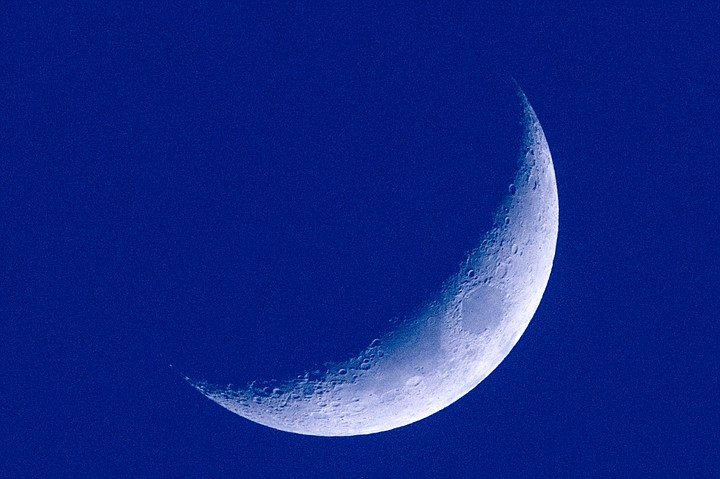
The crescent Moon is always low in the sky and around dawn or dusk, never in darkness.
The Moon’s Tilted, Cheshire-cat Smile Returns to the evening sky Thursday evening, October 16. You’ll spot its thin crescent shape low in the southwest about one-half hour after sunset. On succeeding evenings (after nightfall), you can observe the moon’s thickening crescent and its increased prominence in the sky as the week goes by.
Here's something you might be interested in.
Bat populations increase in coastal San Diego, Floss silk tree blooms
Local riparian woodland begins its seasonal change

Bat populations increase in coastal San Diego, Floss silk tree blooms
Local riparian woodland begins its seasonal change
The Mexican Free-Tailed Bat prefers roosting in caves but will roost in any building with a dark recess.
Bat populations Increase In Coastal Areas of San Diego County during the fall and winter due to migration. Not only are there bats that are migrating to and through the county coastal areas on north-south migration routes, there are also local migrations, in which bats from inland areas move closer to the coast. You can usually see bats in areas where open water occurs near riparian trees and close to exposed rocky habitat, such as Mission Trails Regional Park near the old Mission dam, or Los Peñasquitos Canyon Preserve near the waterfall. The most common bats in San Diego County include the Mexican free-tailed bat, Yuma myotis, and big brown bat.
A Silk Floss tree flower on a gray October evening in Point Loma.
The Floss Silk Tree, a conspicuous “autumn bloomer” that grows here and there around San Diego, has been showing off its pinkish (or purplish) hibiscus-like flowers for at least a month now. The broad, heavy trunks of this South American import — which are studded with fat, cone-shaped spines — makes it easy to identify.
Hundreds of sycamores can be seen in San Clemente Canyon along Freeway 52.
Leaves Are Beginning to Turn in coastal San Diego County’s riparian woodland and oak woodland habitats. The summer-green crowns of willows and sycamores are fading from green to yellow and brown. Beneath the oaks, the deciduous poison oak is flushing red. Good locations for autumnal walks this month and next include San Clemente Canyon (Marian Bear) Park adjacent to Freeway 52, Los Peñasquitos Canyon Preserve north of Mira Mesa, and Wilderness Gardens Preserve County Park east of Pala in North County.
The crescent Moon is always low in the sky and around dawn or dusk, never in darkness.
The Moon’s Tilted, Cheshire-cat Smile Returns to the evening sky Thursday evening, October 16. You’ll spot its thin crescent shape low in the southwest about one-half hour after sunset. On succeeding evenings (after nightfall), you can observe the moon’s thickening crescent and its increased prominence in the sky as the week goes by.
Comments