

Here's something you might be interested in.
Ask a Hipster — Advice you didn't know you needed
Big Screen — Movie commentary
Blurt — Music's inside track
Booze News — San Diego spirits
Classical Music — Immortal beauty
Classifieds — Free and easy
Close to Home — What it’s like on the street where you live
Cover Stories — Front-page features
Drinks All Around — Bartenders' drink recipes
Excerpts — Literary and spiritual excerpts
Feast! — Food & drink reviews
Feature Stories — Local news & stories
Fishing Report — What’s getting hooked from ship and shore
From the Archives — Spotlight on the past
Golden Dreams — Talk of the town
The Gonzo Report — Making the musical scene, or at least reporting from it
Letters — Our inbox
Movies@Home — Local movie buffs share favorites
Movie Reviews — Our critics' picks and pans
Musician Interviews — Up close with local artists
Neighborhood News from Stringers — Hyperlocal news
News Ticker — News & politics
Obermeyer — San Diego politics illustrated
Outdoors — Weekly changes in flora and fauna
Overheard in San Diego — Eavesdropping illustrated
Poetry — The old and the new
Reader Travel — Travel section built by travelers
Reading — The hunt for intellectuals
Roam-O-Rama — SoCal's best hiking/biking trails
San Diego Beer — Inside San Diego suds
SD on the QT — Almost factual news
Sheep and Goats — Places of worship
Special Issues — The best of
Street Style — San Diego streets have style
Surf Diego — Real stories from those braving the waves
Theater — On stage in San Diego this week
Tin Fork — Silver spoon alternative
Under the Radar — Matt Potter's undercover work
Unforgettable — Long-ago San Diego
Unreal Estate — San Diego's priciest pads
Your Week — Daily event picks
Monarch butterflies are here for the winter, our earliest sunset is not on the shortest day
The moon's cheshire cat smile
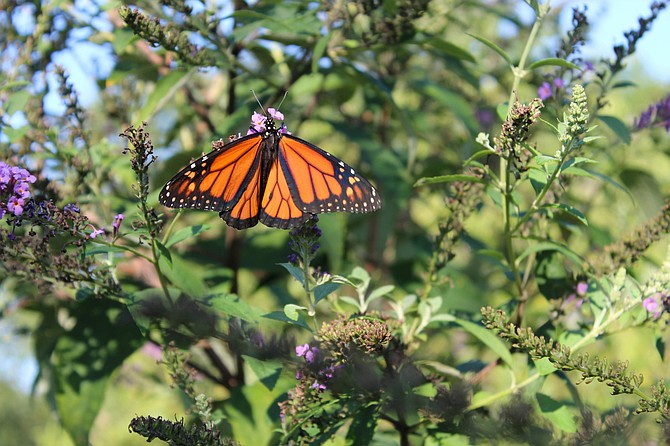
Monarch Butterflies Arrive Along The California Coast this month, migrating from their summer homes in the Sierra Nevada and the Rocky Mountains. Some 25 of their 260 wintering sites on the West Coast lie within San Diego County. The local sites include Presidio Park in San Diego, the UCSD campus, Quail Botanical Gardens in Encinitas, and Hosp Grove in Carlsbad.
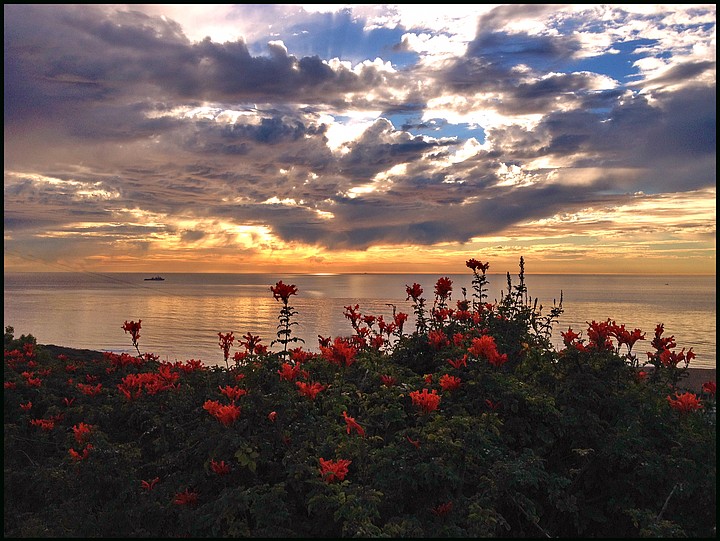
Point Loma December sunset - PLNU PARK.
Our Earliest Sunset (4:42 p.m. from San Diego) Occurs Monday, December 3 or 4, a date that is not coincident with the shortest day (winter solstice – December 21) because of factors relating to the non-circular shape of Earth’s orbit around the sun and the tilt of Earth’s rotational axis. Because of the elliptical orbit of the earth, when the earth is closer to the sun, its orbit is quicker. Because of the rotational axis of the earth, a solstice occurs when one of the poles is leaning towards the sun, while an equinox occurs when neither pole is leaning towards the sun. Our clocks are set so that every day is exactly 86,400 seconds, but in reality, the solar day can be up to 22 seconds shorter or 29 seconds longer than 24 hours. Early December is a good time to view the setting sun from the spectacular vantage point of Cabrillo National Monument at the tip of Point Loma. (During most of the year, you can’t do that, since sunset occurs well after the park’s closing time of 5 pm.)
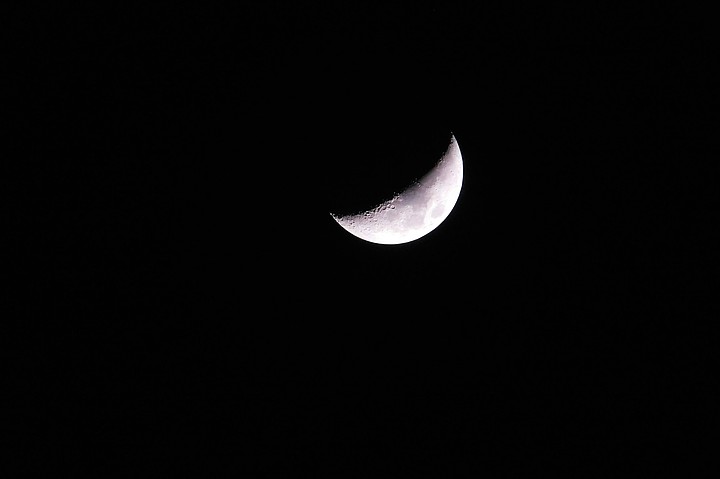
The Moon’s Cheshire-cat Smile Returns to the evening sky Tuesday evening, November 25. You’ll spot its very thin crescent shape low in the southwest about one half hour after sunset. On succeeding evenings observe the moon’s thickening crescent and its increased prominence in the early evening sky.
Here's something you might be interested in.
Monarch butterflies are here for the winter, our earliest sunset is not on the shortest day
The moon's cheshire cat smile

Monarch butterflies are here for the winter, our earliest sunset is not on the shortest day
The moon's cheshire cat smile
Monarch Butterflies Arrive Along The California Coast this month, migrating from their summer homes in the Sierra Nevada and the Rocky Mountains. Some 25 of their 260 wintering sites on the West Coast lie within San Diego County. The local sites include Presidio Park in San Diego, the UCSD campus, Quail Botanical Gardens in Encinitas, and Hosp Grove in Carlsbad.
Point Loma December sunset - PLNU PARK.
Our Earliest Sunset (4:42 p.m. from San Diego) Occurs Monday, December 3 or 4, a date that is not coincident with the shortest day (winter solstice – December 21) because of factors relating to the non-circular shape of Earth’s orbit around the sun and the tilt of Earth’s rotational axis. Because of the elliptical orbit of the earth, when the earth is closer to the sun, its orbit is quicker. Because of the rotational axis of the earth, a solstice occurs when one of the poles is leaning towards the sun, while an equinox occurs when neither pole is leaning towards the sun. Our clocks are set so that every day is exactly 86,400 seconds, but in reality, the solar day can be up to 22 seconds shorter or 29 seconds longer than 24 hours. Early December is a good time to view the setting sun from the spectacular vantage point of Cabrillo National Monument at the tip of Point Loma. (During most of the year, you can’t do that, since sunset occurs well after the park’s closing time of 5 pm.)
The Moon’s Cheshire-cat Smile Returns to the evening sky Tuesday evening, November 25. You’ll spot its very thin crescent shape low in the southwest about one half hour after sunset. On succeeding evenings observe the moon’s thickening crescent and its increased prominence in the early evening sky.
Comments