

Here's something you might be interested in.
Ask a Hipster — Advice you didn't know you needed
Big Screen — Movie commentary
Blurt — Music's inside track
Booze News — San Diego spirits
Classical Music — Immortal beauty
Classifieds — Free and easy
Close to Home — What it’s like on the street where you live
Cover Stories — Front-page features
Drinks All Around — Bartenders' drink recipes
Excerpts — Literary and spiritual excerpts
Feast! — Food & drink reviews
Feature Stories — Local news & stories
Fishing Report — What’s getting hooked from ship and shore
From the Archives — Spotlight on the past
Golden Dreams — Talk of the town
The Gonzo Report — Making the musical scene, or at least reporting from it
Letters — Our inbox
Movies@Home — Local movie buffs share favorites
Movie Reviews — Our critics' picks and pans
Musician Interviews — Up close with local artists
Neighborhood News from Stringers — Hyperlocal news
News Ticker — News & politics
Obermeyer — San Diego politics illustrated
Outdoors — Weekly changes in flora and fauna
Overheard in San Diego — Eavesdropping illustrated
Poetry — The old and the new
Reader Travel — Travel section built by travelers
Reading — The hunt for intellectuals
Roam-O-Rama — SoCal's best hiking/biking trails
San Diego Beer — Inside San Diego suds
SD on the QT — Almost factual news
Sheep and Goats — Places of worship
Special Issues — The best of
Street Style — San Diego streets have style
Surf Diego — Real stories from those braving the waves
Theater — On stage in San Diego this week
Tin Fork — Silver spoon alternative
Under the Radar — Matt Potter's undercover work
Unforgettable — Long-ago San Diego
Unreal Estate — San Diego's priciest pads
Your Week — Daily event picks
Hood Wellness author on writing for your community
Tamela Julia Gordon addresses the San Diego Writers Festival
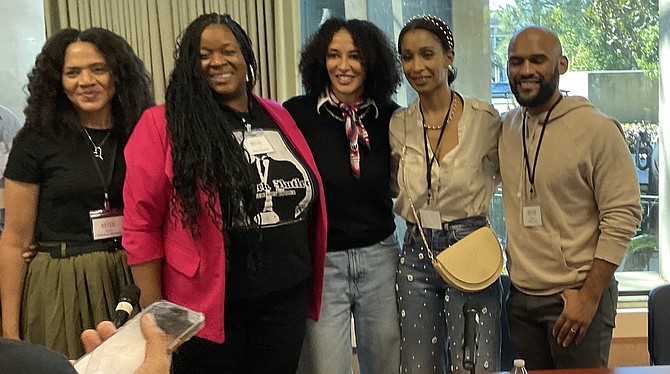
Tamela Julia Gordon, second from left, with other authors at the San Diego Writers Festival.
“It is very expensive to be a successful black author," says Tamela Julia Gordon.
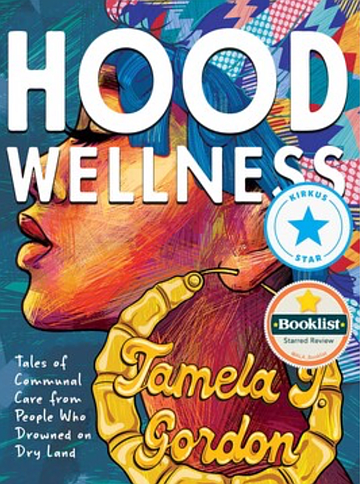
Her audience pays close attention when she speaks, and why not? She is a writer who cracked the publishing nut. No less a house than Simon and Schuster has published her book, Hood Wellness: Tales of Communal Care from People who Drowned on Dry Land. Today, she’s addressing black writers here at the San Diego Writers Festival. Her book has garnered both attention and cool reviews. “In the spirit of the Underground Railroad, Hood Wellness leads us to care for ourselves and each other with grace, tenderness, and ferocity,” writes Tanya Denise Fields, founder of The Black Feminist Project.
Today, Gordon is addressing black writers here at the San Diego Writer's Festival. “I personally was the kind of author that did not have representation,” she says. “My first go-to was looking for the publishing houses that were offering advances,, but not requiring a book proposal. Most often a literary agent has to submit for you. When it comes to [getting] an advance, it really does tie in with things like agism, and above all, accessibility. The bottom line is that it’s very expensive. It doesn’t start with you getting an idea, it doesn’t start when you talk to your editor. It starts when you sit down and you start writing. From that very moment, you begin to realize, ‘This is going to be fifty times harder for me because I don’t have this access and I don’t have those platforms.’ So it really is about doing the legwork [of networking, finding influencers]. I mean, I did a fundraiser just so I could get here, just so I can look cute as I sit here.”
Everybody breaks into applause and laughter.
Mainly, she says, if you’re a wannabe black author, it’s about finding your crowd, identifying your target audience. “When it comes to accessibility and when it comes to what you’re writing, more often than not, [you’re writing for] your community, and I don’t just mean abstract black people. I mean whatever the piece that you’re writing, the black people that would read that — that’s your market. More often than not, you’ve got this money, you’re putting it into this machine: you’re sending books out to all those reviewers, and you’re [aiming for] the top of the ladder. Whereas a lot of black authors realize: we should work within our community. So I’m passing [my] book out to local black book clubs, black book influencers. At one point, Simon and Schuster were very much opposed to Hood Wellness being printed as a paperback. Because even though it would cost $10 less, it wouldn’t get the attention. At least when you’re locked into the audience you are writing for, even though it’s still a mountain to climb, it’s a lot more climbable.”
Here's something you might be interested in.
Hood Wellness author on writing for your community
Tamela Julia Gordon addresses the San Diego Writers Festival

Hood Wellness author on writing for your community
Tamela Julia Gordon addresses the San Diego Writers Festival
Tamela Julia Gordon, second from left, with other authors at the San Diego Writers Festival.
“It is very expensive to be a successful black author," says Tamela Julia Gordon.
Her audience pays close attention when she speaks, and why not? She is a writer who cracked the publishing nut. No less a house than Simon and Schuster has published her book, Hood Wellness: Tales of Communal Care from People who Drowned on Dry Land. Today, she’s addressing black writers here at the San Diego Writers Festival. Her book has garnered both attention and cool reviews. “In the spirit of the Underground Railroad, Hood Wellness leads us to care for ourselves and each other with grace, tenderness, and ferocity,” writes Tanya Denise Fields, founder of The Black Feminist Project.
Today, Gordon is addressing black writers here at the San Diego Writer's Festival. “I personally was the kind of author that did not have representation,” she says. “My first go-to was looking for the publishing houses that were offering advances,, but not requiring a book proposal. Most often a literary agent has to submit for you. When it comes to [getting] an advance, it really does tie in with things like agism, and above all, accessibility. The bottom line is that it’s very expensive. It doesn’t start with you getting an idea, it doesn’t start when you talk to your editor. It starts when you sit down and you start writing. From that very moment, you begin to realize, ‘This is going to be fifty times harder for me because I don’t have this access and I don’t have those platforms.’ So it really is about doing the legwork [of networking, finding influencers]. I mean, I did a fundraiser just so I could get here, just so I can look cute as I sit here.”
Everybody breaks into applause and laughter.
Mainly, she says, if you’re a wannabe black author, it’s about finding your crowd, identifying your target audience. “When it comes to accessibility and when it comes to what you’re writing, more often than not, [you’re writing for] your community, and I don’t just mean abstract black people. I mean whatever the piece that you’re writing, the black people that would read that — that’s your market. More often than not, you’ve got this money, you’re putting it into this machine: you’re sending books out to all those reviewers, and you’re [aiming for] the top of the ladder. Whereas a lot of black authors realize: we should work within our community. So I’m passing [my] book out to local black book clubs, black book influencers. At one point, Simon and Schuster were very much opposed to Hood Wellness being printed as a paperback. Because even though it would cost $10 less, it wouldn’t get the attention. At least when you’re locked into the audience you are writing for, even though it’s still a mountain to climb, it’s a lot more climbable.”
Comments