

Here's something you might be interested in.
Ask a Hipster — Advice you didn't know you needed
Big Screen — Movie commentary
Blurt — Music's inside track
Booze News — San Diego spirits
Classical Music — Immortal beauty
Classifieds — Free and easy
Close to Home — What it’s like on the street where you live
Cover Stories — Front-page features
Drinks All Around — Bartenders' drink recipes
Excerpts — Literary and spiritual excerpts
Feast! — Food & drink reviews
Feature Stories — Local news & stories
Fishing Report — What’s getting hooked from ship and shore
From the Archives — Spotlight on the past
Golden Dreams — Talk of the town
The Gonzo Report — Making the musical scene, or at least reporting from it
Letters — Our inbox
Movies@Home — Local movie buffs share favorites
Movie Reviews — Our critics' picks and pans
Musician Interviews — Up close with local artists
Neighborhood News from Stringers — Hyperlocal news
News Ticker — News & politics
Obermeyer — San Diego politics illustrated
Outdoors — Weekly changes in flora and fauna
Overheard in San Diego — Eavesdropping illustrated
Poetry — The old and the new
Reader Travel — Travel section built by travelers
Reading — The hunt for intellectuals
Roam-O-Rama — SoCal's best hiking/biking trails
San Diego Beer — Inside San Diego suds
SD on the QT — Almost factual news
Sheep and Goats — Places of worship
Special Issues — The best of
Street Style — San Diego streets have style
Surf Diego — Real stories from those braving the waves
Theater — On stage in San Diego this week
Tin Fork — Silver spoon alternative
Under the Radar — Matt Potter's undercover work
Unforgettable — Long-ago San Diego
Unreal Estate — San Diego's priciest pads
Your Week — Daily event picks
Dust up – UC researchers sound the alarm
Scripps scientist puts equipment next to Salton Sea
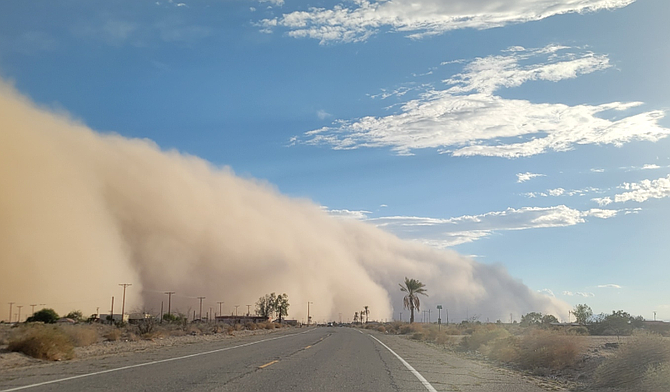
After 2022 dust storm inImperial Valley, a warning was issued by the National Weather Service.
A new report by University of California researchers warns that it’s time to get serious about dust storms. Historical records suggest the state’s dust emissions are now higher than ever, while the forecast points to increasing dustiness and a rising toll on public health, the environment and farming.
Windblown soil is a feature of the state’s desert lands, and it can wind up in oceans, mountains and valleys thousands of miles away, scientists say.
Even San Diego has experienced dust storms, including one in 1961 that caused accidents and road closures. In 2022, after a huge dust storm hit the Imperial Valley, a warning was issued by the National Weather Service for communities along Interstate 8 in San Diego County.
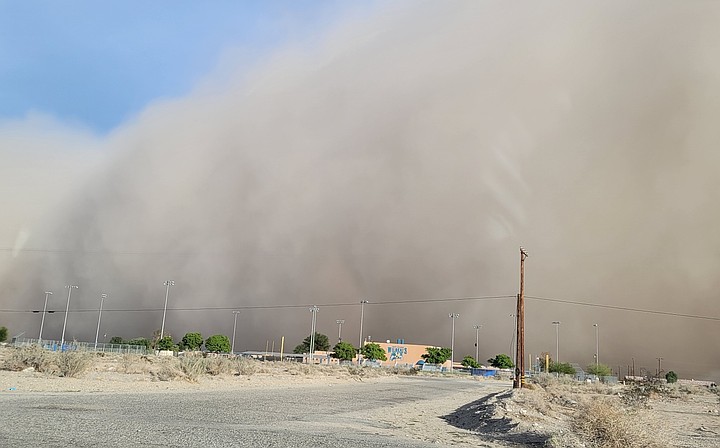
As the Salton Sea dries up, observers expect airborne dust to increase.
The Salton Sea, 100 miles east, with its exposed lakebed, is one of five main regions where dust storms occur in California.
But despite their history of occurrences, the report reveals that not much is being done to help communities facing the greatest risk from dust storms. There is no system in place to reliably predict their timing or what’s in the noxious brew.
The traveling haze combines natural materials like soil and clay and human-caused dust that isn’t so natural. Toxic chemicals may lurk. The thick air can cause severe respiratory illness or death, along with the hazards of reduced visibility for drivers.
Dust can cause asthma, Valley fever, and heart issues, according to Alexandria Heaney, a climate and health epidemiologist at UC San Diego.
Scripps researcher Amato Evan, an atmospheric scientist who led the collaboration of seven UC campuses, has been studying dust outbreaks by placing equipment next to the Salton Sea. As the sea dries up, they expect airborne dust to increase. “We want to measure and be able to predict what air quality will be like for the hundreds of thousands of people that live in this region.”
Imperial County has the highest rate of childhood asthma hospitalization in the state.
While it’s clear the drying of the climate is pushing the problem by eroding soil, along with changes in land cover and land use, one big question they hope to answer is if dust storms make the earth colder or warmer.
The scientists want to better understand the feedback loops between dust emission and landscape degradation, which they say could lead to irreversible shifts in California’s dryland ecosystems. Dust deposited on mountain snowpacks adds to stress on the state’s water resources while windblown soil reduces agricultural productivity.
The study synthesizes work reported in hundreds of papers and reports from recent years.
Here's something you might be interested in.
Dust up – UC researchers sound the alarm
Scripps scientist puts equipment next to Salton Sea

Dust up – UC researchers sound the alarm
Scripps scientist puts equipment next to Salton Sea
After 2022 dust storm inImperial Valley, a warning was issued by the National Weather Service.
A new report by University of California researchers warns that it’s time to get serious about dust storms. Historical records suggest the state’s dust emissions are now higher than ever, while the forecast points to increasing dustiness and a rising toll on public health, the environment and farming.
Windblown soil is a feature of the state’s desert lands, and it can wind up in oceans, mountains and valleys thousands of miles away, scientists say.
Even San Diego has experienced dust storms, including one in 1961 that caused accidents and road closures. In 2022, after a huge dust storm hit the Imperial Valley, a warning was issued by the National Weather Service for communities along Interstate 8 in San Diego County.
As the Salton Sea dries up, observers expect airborne dust to increase.
The Salton Sea, 100 miles east, with its exposed lakebed, is one of five main regions where dust storms occur in California.
But despite their history of occurrences, the report reveals that not much is being done to help communities facing the greatest risk from dust storms. There is no system in place to reliably predict their timing or what’s in the noxious brew.
The traveling haze combines natural materials like soil and clay and human-caused dust that isn’t so natural. Toxic chemicals may lurk. The thick air can cause severe respiratory illness or death, along with the hazards of reduced visibility for drivers.
Dust can cause asthma, Valley fever, and heart issues, according to Alexandria Heaney, a climate and health epidemiologist at UC San Diego.
Scripps researcher Amato Evan, an atmospheric scientist who led the collaboration of seven UC campuses, has been studying dust outbreaks by placing equipment next to the Salton Sea. As the sea dries up, they expect airborne dust to increase. “We want to measure and be able to predict what air quality will be like for the hundreds of thousands of people that live in this region.”
Imperial County has the highest rate of childhood asthma hospitalization in the state.
While it’s clear the drying of the climate is pushing the problem by eroding soil, along with changes in land cover and land use, one big question they hope to answer is if dust storms make the earth colder or warmer.
The scientists want to better understand the feedback loops between dust emission and landscape degradation, which they say could lead to irreversible shifts in California’s dryland ecosystems. Dust deposited on mountain snowpacks adds to stress on the state’s water resources while windblown soil reduces agricultural productivity.
The study synthesizes work reported in hundreds of papers and reports from recent years.
Comments