

Here's something you might be interested in.
Ask a Hipster — Advice you didn't know you needed
Big Screen — Movie commentary
Blurt — Music's inside track
Booze News — San Diego spirits
Classical Music — Immortal beauty
Classifieds — Free and easy
Close to Home — What it’s like on the street where you live
Cover Stories — Front-page features
Drinks All Around — Bartenders' drink recipes
Excerpts — Literary and spiritual excerpts
Feast! — Food & drink reviews
Feature Stories — Local news & stories
Fishing Report — What’s getting hooked from ship and shore
From the Archives — Spotlight on the past
Golden Dreams — Talk of the town
The Gonzo Report — Making the musical scene, or at least reporting from it
Letters — Our inbox
Movies@Home — Local movie buffs share favorites
Movie Reviews — Our critics' picks and pans
Musician Interviews — Up close with local artists
Neighborhood News from Stringers — Hyperlocal news
News Ticker — News & politics
Obermeyer — San Diego politics illustrated
Outdoors — Weekly changes in flora and fauna
Overheard in San Diego — Eavesdropping illustrated
Poetry — The old and the new
Reader Travel — Travel section built by travelers
Reading — The hunt for intellectuals
Roam-O-Rama — SoCal's best hiking/biking trails
San Diego Beer — Inside San Diego suds
SD on the QT — Almost factual news
Sheep and Goats — Places of worship
Special Issues — The best of
Street Style — San Diego streets have style
Surf Diego — Real stories from those braving the waves
Theater — On stage in San Diego this week
Tin Fork — Silver spoon alternative
Under the Radar — Matt Potter's undercover work
Unforgettable — Long-ago San Diego
Unreal Estate — San Diego's priciest pads
Your Week — Daily event picks
A poem for wedding season by Edmund Spenser
Creator of the Spenserian Sonnet
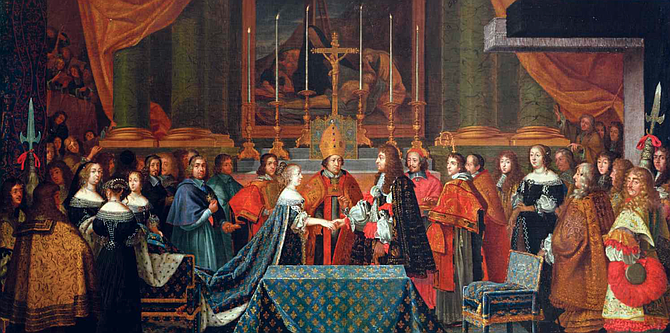
From Epithalamion
Ye learned sisters which have oftentimes
Beene to me ayding, others to adorne:
Whom ye thought worthy of your gracefull rymes,
That even the greatest did not greatly scorne
To heare theyr names sung in your simple layes,
But joyed in theyr prayse.
And when ye list your owne mishaps to mourne,
Which death, or love, or fortunes wreck did rayse,
Your string could soone to sadder tenor turne,
And teach the woods and waters to lament
Your dolefull dreriment.
Now lay those sorrowfull complaints aside,
And having all your heads with girland crownd,
Helpe me mine owne loves prayses to resound,
Ne let the same of any be envide:
So Orpheus did for his owne bride,
So I unto my selfe alone will sing,
The woods shall to me answer and my Eccho ring.
Early before the worlds light giving lampe,
His golden beame upon the hils doth spred,
Having disperst the nights unchearefull dampe,
Doe ye awake, and with fresh lusty hed,
Go to the bowre of my beloved love,
My truest turtle dove,
Bid her awake; for Hymen is awake,
And long since ready forth his maske to move,
With his bright Tead that flames with many a flake,
And many a bachelor to waite on him,
In theyr fresh garments trim.
Bid her awake therefore and soone her dight,
For lo the wished day is come at last,
That shall for al the paynes and sorrowes past,
Pay to her usury of long delight:
And whylest she doth her dight,
Doe ye to her of joy and solace sing,
That all the woods may answer and your eccho ring.
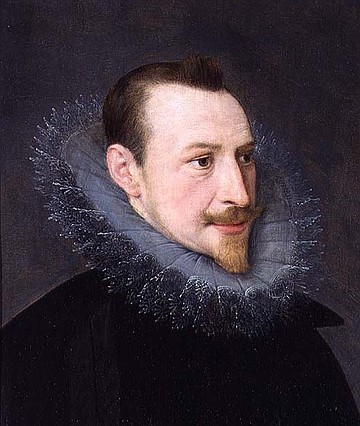
Edmund Spenser (1552-1559) was an English poet and, along with Chaucer, Shakespeare, and Milton, one of the premiere poets in the development of English prosody. Best known for his epic poem, The Faerie Queen, an homage to Queen Elizabeth I, Spenser also contributed two poetic forms to English literature: The Spenserian Stanza, the nine-line stanza (rhyme scheme: ababbcbcc) used in The Faerie Queen, is written in iambic pentameter in the first eight lines with an extra foot in the final line. The Spenserian Sonnet, also written in iambic pentameter, utilizes a rhyme scheme which connects the last line of each quatrain to the first line of next before concluding with a couplet: ababbcbccdcdee. The Epithalamion, which Spenser wrote for the occasion of his marriage to his second wife, Elizabeth Boyle, also reveals the intricacy of Spenser’s craft. The entire poem contains 24 stanzas and 433 lines—365 of which are longer lines, representing Spenser’s year-long engagement to Boyle leading up to the wedding, while the poem itself begins at midnight—each stanza representing an hour of the wedding day. The final two lines of each stanza serve as a refrain with variations adapted to the theme of the stanza which it concludes.
Here's something you might be interested in.
A poem for wedding season by Edmund Spenser
Creator of the Spenserian Sonnet

A poem for wedding season by Edmund Spenser
Creator of the Spenserian Sonnet
From Epithalamion
Ye learned sisters which have oftentimes
Beene to me ayding, others to adorne:
Whom ye thought worthy of your gracefull rymes,
That even the greatest did not greatly scorne
To heare theyr names sung in your simple layes,
But joyed in theyr prayse.
And when ye list your owne mishaps to mourne,
Which death, or love, or fortunes wreck did rayse,
Your string could soone to sadder tenor turne,
And teach the woods and waters to lament
Your dolefull dreriment.
Now lay those sorrowfull complaints aside,
And having all your heads with girland crownd,
Helpe me mine owne loves prayses to resound,
Ne let the same of any be envide:
So Orpheus did for his owne bride,
So I unto my selfe alone will sing,
The woods shall to me answer and my Eccho ring.
Early before the worlds light giving lampe,
His golden beame upon the hils doth spred,
Having disperst the nights unchearefull dampe,
Doe ye awake, and with fresh lusty hed,
Go to the bowre of my beloved love,
My truest turtle dove,
Bid her awake; for Hymen is awake,
And long since ready forth his maske to move,
With his bright Tead that flames with many a flake,
And many a bachelor to waite on him,
In theyr fresh garments trim.
Bid her awake therefore and soone her dight,
For lo the wished day is come at last,
That shall for al the paynes and sorrowes past,
Pay to her usury of long delight:
And whylest she doth her dight,
Doe ye to her of joy and solace sing,
That all the woods may answer and your eccho ring.
Edmund Spenser (1552-1559) was an English poet and, along with Chaucer, Shakespeare, and Milton, one of the premiere poets in the development of English prosody. Best known for his epic poem, The Faerie Queen, an homage to Queen Elizabeth I, Spenser also contributed two poetic forms to English literature: The Spenserian Stanza, the nine-line stanza (rhyme scheme: ababbcbcc) used in The Faerie Queen, is written in iambic pentameter in the first eight lines with an extra foot in the final line. The Spenserian Sonnet, also written in iambic pentameter, utilizes a rhyme scheme which connects the last line of each quatrain to the first line of next before concluding with a couplet: ababbcbccdcdee. The Epithalamion, which Spenser wrote for the occasion of his marriage to his second wife, Elizabeth Boyle, also reveals the intricacy of Spenser’s craft. The entire poem contains 24 stanzas and 433 lines—365 of which are longer lines, representing Spenser’s year-long engagement to Boyle leading up to the wedding, while the poem itself begins at midnight—each stanza representing an hour of the wedding day. The final two lines of each stanza serve as a refrain with variations adapted to the theme of the stanza which it concludes.
Comments