

Here's something you might be interested in.
Ask a Hipster — Advice you didn't know you needed
Big Screen — Movie commentary
Blurt — Music's inside track
Booze News — San Diego spirits
Classical Music — Immortal beauty
Classifieds — Free and easy
Close to Home — What it’s like on the street where you live
Cover Stories — Front-page features
Drinks All Around — Bartenders' drink recipes
Excerpts — Literary and spiritual excerpts
Feast! — Food & drink reviews
Feature Stories — Local news & stories
Fishing Report — What’s getting hooked from ship and shore
From the Archives — Spotlight on the past
Golden Dreams — Talk of the town
The Gonzo Report — Making the musical scene, or at least reporting from it
Letters — Our inbox
Movies@Home — Local movie buffs share favorites
Movie Reviews — Our critics' picks and pans
Musician Interviews — Up close with local artists
Neighborhood News from Stringers — Hyperlocal news
News Ticker — News & politics
Obermeyer — San Diego politics illustrated
Outdoors — Weekly changes in flora and fauna
Overheard in San Diego — Eavesdropping illustrated
Poetry — The old and the new
Reader Travel — Travel section built by travelers
Reading — The hunt for intellectuals
Roam-O-Rama — SoCal's best hiking/biking trails
San Diego Beer — Inside San Diego suds
SD on the QT — Almost factual news
Sheep and Goats — Places of worship
Special Issues — The best of
Street Style — San Diego streets have style
Surf Diego — Real stories from those braving the waves
Theater — On stage in San Diego this week
Tin Fork — Silver spoon alternative
Under the Radar — Matt Potter's undercover work
Unforgettable — Long-ago San Diego
Unreal Estate — San Diego's priciest pads
Your Week — Daily event picks
Fish Report: Inconsistent bluefin bite under the Full Moon
Great flatfish fishing off Southern California
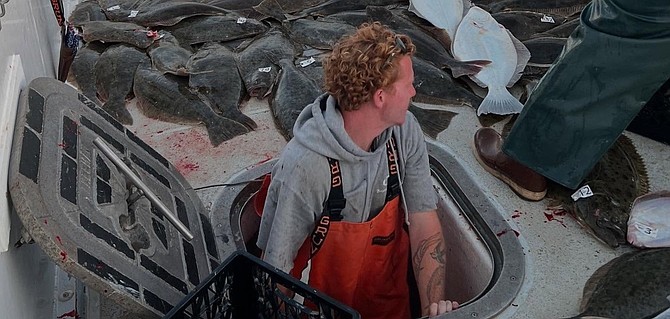
Halibut and white seabass haul aboard the Freedom as they return to 22nd Street Landing from fishing Santa Rosa Island during a day-and-a-half trip.
Dock Totals 6/8 – 6/14: 2728 anglers aboard 125 half-day to 3-day trips out of San Diego landings over the past week caught 35 barracuda, 416 bluefin tuna (to 200 pounds), 112 bonito, 21 cabezon, 2312 calico bass, 37 halibut, 15 lingcod, 4495 rockfish, 692 sand bass, 250 sanddab, 227 sculpin, 160 sheephead, 1122 whitefish, 5 white seabass, and 116 yellowtail.
Saltwater: A good sign: we're halfway through June and pushing 3000 anglers for the week on the short-run boats to three days. Unfortunately for those targeting bluefin, the moon phase (or some other trigger) shut the bite down for some boats, while it was wide open for others off Ensenada within overnight range. As a result, the numbers are low for the short-run fleet, but longer range boats like the Polaris Supreme and the Constitution that do not normally publish their counts did very well in the same area in both daylight and dark hours. As a result, the actual number of fish caught was a bit higher, but still below last week’s total. Weather offshore has been relatively good and the fish are there, but the bite is somewhat inconsistent right now; it's a kind of feast or famine situation. As these things go with bluefin, this situation can change in a week or a day.
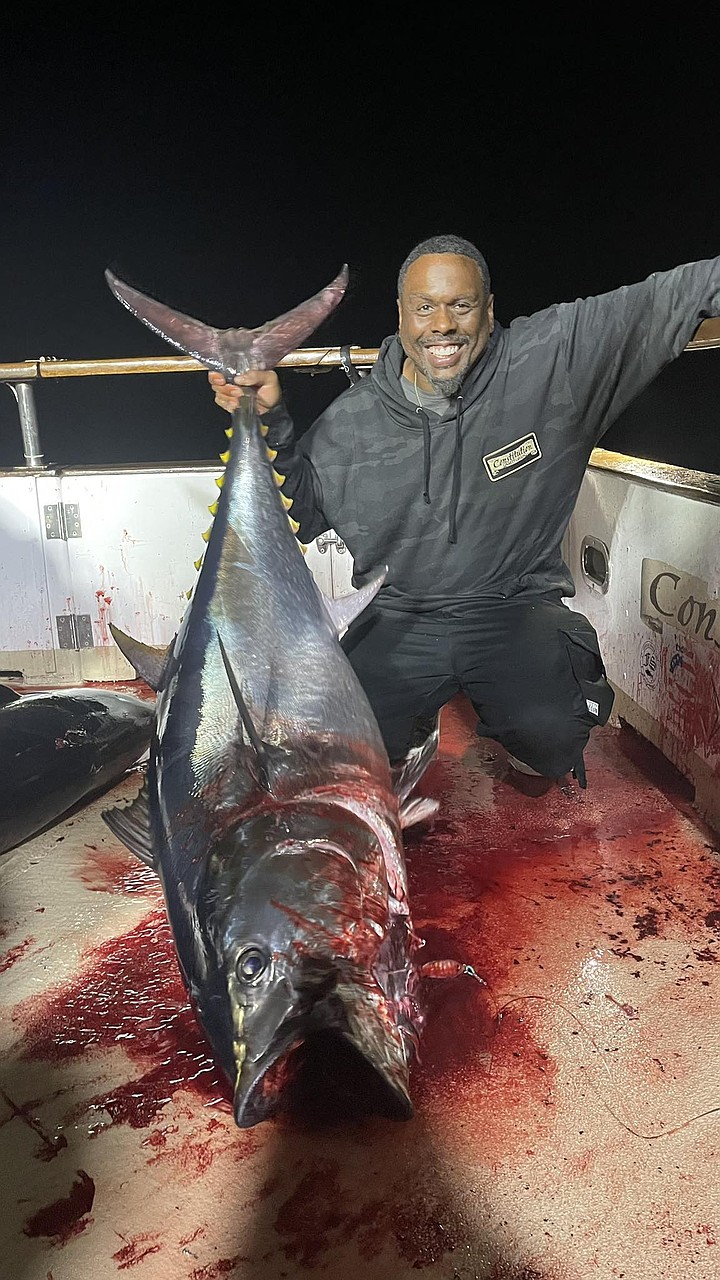
Solid bluefin tuna landed aboard the Constitution during their 2-day run this past weekend.
White seabass and halibut have been biting well, and though the meat of that activity is to the north, from Clemente to the Channel Islands, I don’t remember many weekly counts with over 30 legal-sized halibut caught. The Dolphin Wednesday Halibut Derby trips would have about half that on a great day if counting only legal fish, and halibut are not otherwise specifically targeted by San Diego boats. We’re usually fishing for either bass or yellowtail when the occasional legal comes aboard. The further north you go, the more operations focus time on the sometimes finicky halibut.
An interesting note on our California halibut is that they are not true halibut, nor a flounder, but a distinct species. Pacific halibut are a true halibut and are normally caught in the cooler, deeper waters from above Dana Point to Alaska. The main difference between the two species is size. Pacific halibut grow to over 500 pounds, with the all-tackle world record at 515 pounds, caught by Jack Tragis off Dutch Harbor, Alaska, on June 11, 1996. California halibut grow to 50 pounds or more, with the all-tackle record at 67 pounds, 4 ounces, caught by Fransisco Rivera near Santa Rosa Island on July 1, 2011. The spearfishing world record was shot by William Skwarlo at Santa Cruz Island in 1982 and weighed in officially at 72 pounds, 8 ounces.
Having caught a large California halibut on my kayak, I think spearing a large halibut sounds a bit risky. Mine was "only" 48 inches long and pushing 45 pounds and it may have come up slow and heavy, but it did explode when gaffed and was a handful to subdue. I couldn’t get a good bat on it and instead leashed it and towed it, bucking all the way, the quarter-mile back to the launch. I was happy I caught it in the mouth of San Quintin Bay where good fishing is close to the launch. Anyhow, that thought inspired me to look up the spearfishing world record for the larger of the two species. How would one approach spearing a halibut that grows to a quarter ton?
Well, turns out that is not a thing, really. The largest Pacific halibut shot was really big, but nowhere near their top size range. The spearfishing world record is 149 pounds, captured by John Dornellas in Homer, Alaska in 2019. Still, when one considers their strength, that is an extraordinary feat. If they're caught on a boat, as per protocol among the guides who target the big flatfish in Alaska, Pacific halibut can be so violent that even after a prolonged battle on rod and reel, they are shot before they are brought aboard.
More remarkable still: Dornellas was a free diver, and he didn’t use a buoy system that would have allowed him to shoot the fish and then haul it to a boat by the buoyed line. Instead, he shot it with a hand-held reel system and fought for a long time to subdue the fish. Given that larger halibut tend to haunt deeper, cooler water, that record may stand for quite some time. Dornellas spent years on his quest before he had any success — due to depth, cold, sharks, and other inhibiting factors.
As mentioned, we do not often see Pacific halibut in our warmer marine climes, even though their range is listed as far south as Camalu in northern Baja. When we do hear of one, it isn’t usually very large, and usually comes from deeper waters around the Channel Islands or north of there. That said, the Channel Islands pumped out some nice California Halibut for anglers aboard the Freedom’s most recent trip, as reported by Phil Friedman of Friedman Adventures.
The sister ship of H&M’s Grande, the Freedom runs out of the 22nd Street Landing and provides mostly overnight to 1.5-day trips to Catalina, Clemente, the outer banks, and the Channel Islands. This weekend, they ran a 1.5-day out to the Channel Islands — specifically the northwest side of Santa Rosa Island — citing great white seabass and halibut potential. The trip did not disappoint: they returned to the dock with limits of 34 white seabass and 81 legal-sized California halibut for the 34 anglers aboard.
That we are seeing good numbers of California halibut here in our local waters is a good sign, and this is the best time of the year to target them in San Diego. They tend to bite best while the water is still on the cool side and bait population is rising. It can be especially good from the beach around grunion runs, or when they slide in spawning. California halibut typically spawn in late spring/early summer, but as batch spawners in small groups, they can spawn any time of year. Whether the beach, bay, lake, or offshore, they’re out there so go out and get ‘em!
Here's something you might be interested in.
Fish Report: Inconsistent bluefin bite under the Full Moon
Great flatfish fishing off Southern California

Fish Report: Inconsistent bluefin bite under the Full Moon
Great flatfish fishing off Southern California
Halibut and white seabass haul aboard the Freedom as they return to 22nd Street Landing from fishing Santa Rosa Island during a day-and-a-half trip.
Dock Totals 6/8 – 6/14: 2728 anglers aboard 125 half-day to 3-day trips out of San Diego landings over the past week caught 35 barracuda, 416 bluefin tuna (to 200 pounds), 112 bonito, 21 cabezon, 2312 calico bass, 37 halibut, 15 lingcod, 4495 rockfish, 692 sand bass, 250 sanddab, 227 sculpin, 160 sheephead, 1122 whitefish, 5 white seabass, and 116 yellowtail.
Saltwater: A good sign: we're halfway through June and pushing 3000 anglers for the week on the short-run boats to three days. Unfortunately for those targeting bluefin, the moon phase (or some other trigger) shut the bite down for some boats, while it was wide open for others off Ensenada within overnight range. As a result, the numbers are low for the short-run fleet, but longer range boats like the Polaris Supreme and the Constitution that do not normally publish their counts did very well in the same area in both daylight and dark hours. As a result, the actual number of fish caught was a bit higher, but still below last week’s total. Weather offshore has been relatively good and the fish are there, but the bite is somewhat inconsistent right now; it's a kind of feast or famine situation. As these things go with bluefin, this situation can change in a week or a day.
Solid bluefin tuna landed aboard the Constitution during their 2-day run this past weekend.
White seabass and halibut have been biting well, and though the meat of that activity is to the north, from Clemente to the Channel Islands, I don’t remember many weekly counts with over 30 legal-sized halibut caught. The Dolphin Wednesday Halibut Derby trips would have about half that on a great day if counting only legal fish, and halibut are not otherwise specifically targeted by San Diego boats. We’re usually fishing for either bass or yellowtail when the occasional legal comes aboard. The further north you go, the more operations focus time on the sometimes finicky halibut.
An interesting note on our California halibut is that they are not true halibut, nor a flounder, but a distinct species. Pacific halibut are a true halibut and are normally caught in the cooler, deeper waters from above Dana Point to Alaska. The main difference between the two species is size. Pacific halibut grow to over 500 pounds, with the all-tackle world record at 515 pounds, caught by Jack Tragis off Dutch Harbor, Alaska, on June 11, 1996. California halibut grow to 50 pounds or more, with the all-tackle record at 67 pounds, 4 ounces, caught by Fransisco Rivera near Santa Rosa Island on July 1, 2011. The spearfishing world record was shot by William Skwarlo at Santa Cruz Island in 1982 and weighed in officially at 72 pounds, 8 ounces.
Having caught a large California halibut on my kayak, I think spearing a large halibut sounds a bit risky. Mine was "only" 48 inches long and pushing 45 pounds and it may have come up slow and heavy, but it did explode when gaffed and was a handful to subdue. I couldn’t get a good bat on it and instead leashed it and towed it, bucking all the way, the quarter-mile back to the launch. I was happy I caught it in the mouth of San Quintin Bay where good fishing is close to the launch. Anyhow, that thought inspired me to look up the spearfishing world record for the larger of the two species. How would one approach spearing a halibut that grows to a quarter ton?
Well, turns out that is not a thing, really. The largest Pacific halibut shot was really big, but nowhere near their top size range. The spearfishing world record is 149 pounds, captured by John Dornellas in Homer, Alaska in 2019. Still, when one considers their strength, that is an extraordinary feat. If they're caught on a boat, as per protocol among the guides who target the big flatfish in Alaska, Pacific halibut can be so violent that even after a prolonged battle on rod and reel, they are shot before they are brought aboard.
More remarkable still: Dornellas was a free diver, and he didn’t use a buoy system that would have allowed him to shoot the fish and then haul it to a boat by the buoyed line. Instead, he shot it with a hand-held reel system and fought for a long time to subdue the fish. Given that larger halibut tend to haunt deeper, cooler water, that record may stand for quite some time. Dornellas spent years on his quest before he had any success — due to depth, cold, sharks, and other inhibiting factors.
As mentioned, we do not often see Pacific halibut in our warmer marine climes, even though their range is listed as far south as Camalu in northern Baja. When we do hear of one, it isn’t usually very large, and usually comes from deeper waters around the Channel Islands or north of there. That said, the Channel Islands pumped out some nice California Halibut for anglers aboard the Freedom’s most recent trip, as reported by Phil Friedman of Friedman Adventures.
The sister ship of H&M’s Grande, the Freedom runs out of the 22nd Street Landing and provides mostly overnight to 1.5-day trips to Catalina, Clemente, the outer banks, and the Channel Islands. This weekend, they ran a 1.5-day out to the Channel Islands — specifically the northwest side of Santa Rosa Island — citing great white seabass and halibut potential. The trip did not disappoint: they returned to the dock with limits of 34 white seabass and 81 legal-sized California halibut for the 34 anglers aboard.
That we are seeing good numbers of California halibut here in our local waters is a good sign, and this is the best time of the year to target them in San Diego. They tend to bite best while the water is still on the cool side and bait population is rising. It can be especially good from the beach around grunion runs, or when they slide in spawning. California halibut typically spawn in late spring/early summer, but as batch spawners in small groups, they can spawn any time of year. Whether the beach, bay, lake, or offshore, they’re out there so go out and get ‘em!
Comments