

Here's something you might be interested in.
Ask a Hipster — Advice you didn't know you needed
Big Screen — Movie commentary
Blurt — Music's inside track
Booze News — San Diego spirits
Classical Music — Immortal beauty
Classifieds — Free and easy
Close to Home — What it’s like on the street where you live
Cover Stories — Front-page features
Drinks All Around — Bartenders' drink recipes
Excerpts — Literary and spiritual excerpts
Feast! — Food & drink reviews
Feature Stories — Local news & stories
Fishing Report — What’s getting hooked from ship and shore
From the Archives — Spotlight on the past
Golden Dreams — Talk of the town
The Gonzo Report — Making the musical scene, or at least reporting from it
Letters — Our inbox
Movies@Home — Local movie buffs share favorites
Movie Reviews — Our critics' picks and pans
Musician Interviews — Up close with local artists
Neighborhood News from Stringers — Hyperlocal news
News Ticker — News & politics
Obermeyer — San Diego politics illustrated
Outdoors — Weekly changes in flora and fauna
Overheard in San Diego — Eavesdropping illustrated
Poetry — The old and the new
Reader Travel — Travel section built by travelers
Reading — The hunt for intellectuals
Roam-O-Rama — SoCal's best hiking/biking trails
San Diego Beer — Inside San Diego suds
SD on the QT — Almost factual news
Sheep and Goats — Places of worship
Special Issues — The best of
Street Style — San Diego streets have style
Surf Diego — Real stories from those braving the waves
Theater — On stage in San Diego this week
Tin Fork — Silver spoon alternative
Under the Radar — Matt Potter's undercover work
Unforgettable — Long-ago San Diego
Unreal Estate — San Diego's priciest pads
Your Week — Daily event picks
Appellate court rules against Cal Fire plan to clear chaparral
Environmental groups argued that it would actually increase risk of disastrous wildfires
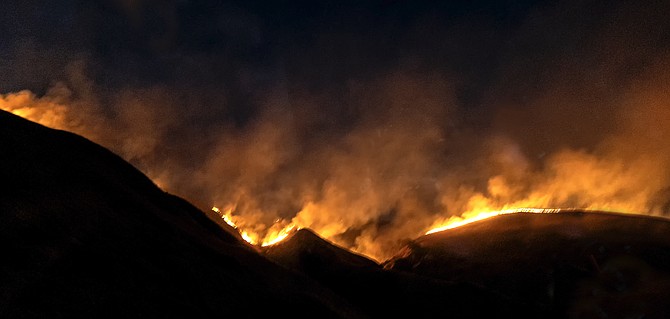
California brush fire
For decades, a debate has raged over how best to balance the desire to preserve California's threatened chaparral and coastal sage scrub plants while at the same time mitigating the risk of deadly fires fueled by dry vegetation.
In the latest development, a Cal Fire plan to clear thousands of acres of native habitat each year in order to reduce wildfire risk is now facing a setback. On May 30, the California Appellate Court ruled in favor of environmental groups who argued that the plan could lead to an even more flammable landscape.
This particular lawsuit began in 2020, when the Endangered Habitats League and Chaparral Institute unsuccessfully sued Cal Fire and the State Board of Forestry and Fire Protection over its vegetation treatment program, which had been approved the year before. Previous fuel reduction methods had been limited to prescribed burning, trimming, and using equipment to cut and uproot plants on an average of around 33,000 acres per year. The methods didn’t include treating forested lands, using herbicides or upping the mechanical ante to include mowing and chipping.
But that changed in 2019. As California's heat and drought conditions worsened, and as firefighters struggled to keep up with the increasing risk posed by the the crispy landscape, the government's arsenal of tools for vegetation removal was expanded — and so was its target acreage. The Board’s Strategic Fire Plan laid out goals in the state responsibility areas of the wildland-urban interface. That included managing vegetation that could become fire fuel “on up to 250,000 acres of treatable landscape annually.”
Treating vegetation was only one strategy in the overall firefighting regime, and officials said it would reduce the likelihood of a ground fire increasing in intensity, and would help first responders contain a fire before it got out of control. The program aimed to “safely mimic the effects of a natural fire regime” and so protect the sensitive scrub habitat that was already being destroyed by development and non-native weeds.
To the conservation groups, it was too little, too late. They argued that the new plan would not halt the large, wind-driven fires that cause the most damage in California — a claim the agency granted. According to one study, fall and winter Santa Ana winds have been responsible for the largest and most destructive wildfires in southern California since 1950. But the program targeted the more numerous fires that the study found occurred from May to October — on days without Santa Ana winds.
The groups further argued that the brush clearance would actually make fires worse, because more flammable non-native annual grasses would replace the cleared native scrub and so keep it from regenerating. The result would be what is known as “type conversion,” a process in which landscapes no longer nourish the suite of native species that have evolved together in an ecosystem. Finally, according to a study of California’s chaparral ecosystem, this sort of management can devastate wild bird populations and provides only a temporary reduction of fire risk.

Type conversion, illustrated.
Now that the earlier judgment in the case has been reversed, Cal Fire will have to revise its vegetation program to ensure a more diverse, less flammable landscape.
Here's something you might be interested in.
Appellate court rules against Cal Fire plan to clear chaparral
Environmental groups argued that it would actually increase risk of disastrous wildfires

Appellate court rules against Cal Fire plan to clear chaparral
Environmental groups argued that it would actually increase risk of disastrous wildfires
California brush fire
For decades, a debate has raged over how best to balance the desire to preserve California's threatened chaparral and coastal sage scrub plants while at the same time mitigating the risk of deadly fires fueled by dry vegetation.
In the latest development, a Cal Fire plan to clear thousands of acres of native habitat each year in order to reduce wildfire risk is now facing a setback. On May 30, the California Appellate Court ruled in favor of environmental groups who argued that the plan could lead to an even more flammable landscape.
This particular lawsuit began in 2020, when the Endangered Habitats League and Chaparral Institute unsuccessfully sued Cal Fire and the State Board of Forestry and Fire Protection over its vegetation treatment program, which had been approved the year before. Previous fuel reduction methods had been limited to prescribed burning, trimming, and using equipment to cut and uproot plants on an average of around 33,000 acres per year. The methods didn’t include treating forested lands, using herbicides or upping the mechanical ante to include mowing and chipping.
But that changed in 2019. As California's heat and drought conditions worsened, and as firefighters struggled to keep up with the increasing risk posed by the the crispy landscape, the government's arsenal of tools for vegetation removal was expanded — and so was its target acreage. The Board’s Strategic Fire Plan laid out goals in the state responsibility areas of the wildland-urban interface. That included managing vegetation that could become fire fuel “on up to 250,000 acres of treatable landscape annually.”
Treating vegetation was only one strategy in the overall firefighting regime, and officials said it would reduce the likelihood of a ground fire increasing in intensity, and would help first responders contain a fire before it got out of control. The program aimed to “safely mimic the effects of a natural fire regime” and so protect the sensitive scrub habitat that was already being destroyed by development and non-native weeds.
To the conservation groups, it was too little, too late. They argued that the new plan would not halt the large, wind-driven fires that cause the most damage in California — a claim the agency granted. According to one study, fall and winter Santa Ana winds have been responsible for the largest and most destructive wildfires in southern California since 1950. But the program targeted the more numerous fires that the study found occurred from May to October — on days without Santa Ana winds.
The groups further argued that the brush clearance would actually make fires worse, because more flammable non-native annual grasses would replace the cleared native scrub and so keep it from regenerating. The result would be what is known as “type conversion,” a process in which landscapes no longer nourish the suite of native species that have evolved together in an ecosystem. Finally, according to a study of California’s chaparral ecosystem, this sort of management can devastate wild bird populations and provides only a temporary reduction of fire risk.
Type conversion, illustrated.
Now that the earlier judgment in the case has been reversed, Cal Fire will have to revise its vegetation program to ensure a more diverse, less flammable landscape.
Comments