

Here's something you might be interested in.
Ask a Hipster — Advice you didn't know you needed
Big Screen — Movie commentary
Blurt — Music's inside track
Booze News — San Diego spirits
Classical Music — Immortal beauty
Classifieds — Free and easy
Close to Home — What it’s like on the street where you live
Cover Stories — Front-page features
Drinks All Around — Bartenders' drink recipes
Excerpts — Literary and spiritual excerpts
Feast! — Food & drink reviews
Feature Stories — Local news & stories
Fishing Report — What’s getting hooked from ship and shore
From the Archives — Spotlight on the past
Golden Dreams — Talk of the town
The Gonzo Report — Making the musical scene, or at least reporting from it
Letters — Our inbox
Movies@Home — Local movie buffs share favorites
Movie Reviews — Our critics' picks and pans
Musician Interviews — Up close with local artists
Neighborhood News from Stringers — Hyperlocal news
News Ticker — News & politics
Obermeyer — San Diego politics illustrated
Outdoors — Weekly changes in flora and fauna
Overheard in San Diego — Eavesdropping illustrated
Poetry — The old and the new
Reader Travel — Travel section built by travelers
Reading — The hunt for intellectuals
Roam-O-Rama — SoCal's best hiking/biking trails
San Diego Beer — Inside San Diego suds
SD on the QT — Almost factual news
Sheep and Goats — Places of worship
Special Issues — The best of
Street Style — San Diego streets have style
Surf Diego — Real stories from those braving the waves
Theater — On stage in San Diego this week
Tin Fork — Silver spoon alternative
Under the Radar — Matt Potter's undercover work
Unforgettable — Long-ago San Diego
Unreal Estate — San Diego's priciest pads
Your Week — Daily event picks
Santee sizes up its subarea
Will Fanita Ranch finally get built?
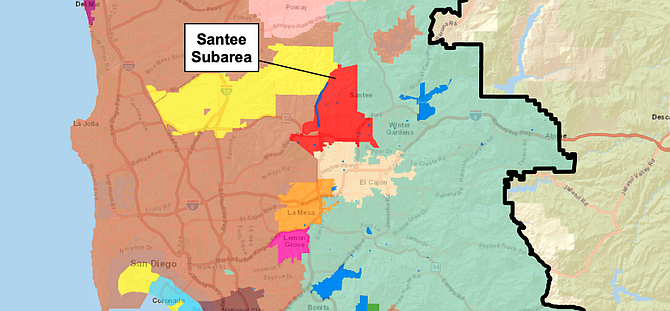
Santee has taken almost three decades to come up with a citywide plan to protect its open space, putting it behind Poway, San Diego, La Mesa and Chula Vista. But earlier this month, the city finally released both a draft plan and an environmental report, which are open for public comment until September 17.
“If completed, the Santee subarea plan is the final jewel for the crown,” said Sean Skaggs, an attorney specializing in endangered species and habitat plans who spoke at a city workshop last week. The “crown” in question is San Diego’s 1997 Multiple Species Conservation Program, which identifies lands where permanent conservation of habitat will be accomplished through individual subarea plans. At the time, the spotted owl was giving developers migraines in northern parts of the state.
Explained Skaggs, “We were about to see the next train wreck story right here,” all because of a small bird proposed for listing in San Diego: the coastal California gnatcatcher. “The listing was expected to bring development to a screeching halt.”
To head off conflicts between developers and protected wildlife, the county got busy creating a 172,000-acre preserve system covering 86 species of plants and animals. The goal was to allow for development while preserving wild habitat, and was well received, becoming a model for other regions — from Coachella Valley to Orange County and beyond. Santee was involved from the start, signing an enrollment agreement in the early '90s, drafting a subarea plan that went out for review, and using its take authorization for the gnatcatcher question, which allowed a lot of projects to move forward in the early '90s.
While Santee’s subarea plan sets aside 2,263 acres for permanent conservation, it also designates approximately 2,600 acres of the city for potential development. Over the years, the biggest development proposal has been Fanita Ranch, one of the preserve’s subunits, which spans about 2,638 acres in northern Santee. One of the largest undeveloped tracts in the region, its lands are ecologically sensitive and also prime for housing and industrial growth — a conflict that slowed the subarea plan, which Skaggs has been working on since 2019. (The Fanita project proposes to build 3000 homes, setting aside roughly 1660 acres as habitat preserve under Santee’s conservation plan.)
The city first approved Fanita in 2020 after several previous failed attempts, including a ballot measure that voters defeated twice. But a coalition of environmental groups sued the city for failing to properly evaluate its impacts, including fire safety and impacts on sensitive species, and the city was forced to rescind the approvals.
In 2022, it was approved again after the city council classified it as “essential housing” in order to comply with a state mandate. Doing so allowed the city to avoid a public vote on the project. Last month, the groups sued again, focusing on the area’s extreme wildfire risks and the lack of a public vote.
Currently the city's plan covers 20 sensitive species, such as the federally endangered Quino checkerspot butterfly, coastal California gnatcatcher, and San Diego fairy shrimp. The land holds coastal sage scrub, chaparral, riparian corridors, vernal pools, and grasslands. Some of the species, like San Diego mesa mint, no longer occur, but will be reintroduced into vernal pools if the plan is adopted.
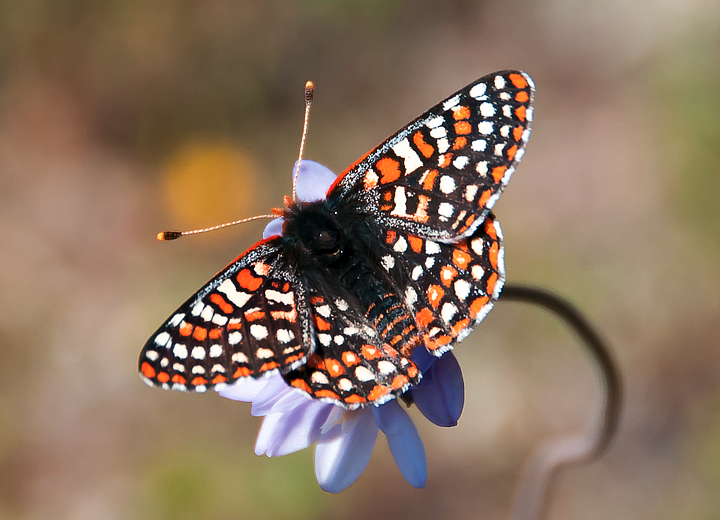
Checkmate, checkerspot?
One of the plan’s objectives is to maintain functional biological corridors and habitat linkages. While the subarea plan’s 2263 acres makes for a large preserve, opponents have pointed out that the risk of fragmentation remains. Among the parcels not guaranteed protection under the plan is one northwest of Fanita Parkway, where a transitional zone between Fanita Ranch and Goodan Ranch linkage provides habitat for both the gnatcatcher and bobcat. Like the Quino checkerspot butterfly, these species need wide swaths of land to thrive, and development pressure from Fanita Ranch could sever the corridor.
Another main purpose, Skaggs said, is to put local jurisdictions in the driver's seat, with wildlife agencies taking more of an oversight role. The 35-year permits authorizing “take” of listed species would be handled by the city. But city officials were skeptical, accepting that the city is “stuck” with the plan, including such costs as hiring three new staff. “We’re in the driver’s seat as long as we do exactly what the environmentalists or the state of California tells us, because if we don’t, then they’re going to fine us in some way or we’re going to get sued in some way," noted Mayor John Minto.
"How is that local control?”
Skaggs said state and federal law require the city to either avoid take or minimize and mitigate to the extent possible. “You either have a choice of no action or you get the permit, and if you get the permit on a project-by-project basis, you just fight this fight again and again.”
Here's something you might be interested in.
Santee sizes up its subarea
Will Fanita Ranch finally get built?

Santee sizes up its subarea
Will Fanita Ranch finally get built?
Santee has taken almost three decades to come up with a citywide plan to protect its open space, putting it behind Poway, San Diego, La Mesa and Chula Vista. But earlier this month, the city finally released both a draft plan and an environmental report, which are open for public comment until September 17.
“If completed, the Santee subarea plan is the final jewel for the crown,” said Sean Skaggs, an attorney specializing in endangered species and habitat plans who spoke at a city workshop last week. The “crown” in question is San Diego’s 1997 Multiple Species Conservation Program, which identifies lands where permanent conservation of habitat will be accomplished through individual subarea plans. At the time, the spotted owl was giving developers migraines in northern parts of the state.
Explained Skaggs, “We were about to see the next train wreck story right here,” all because of a small bird proposed for listing in San Diego: the coastal California gnatcatcher. “The listing was expected to bring development to a screeching halt.”
To head off conflicts between developers and protected wildlife, the county got busy creating a 172,000-acre preserve system covering 86 species of plants and animals. The goal was to allow for development while preserving wild habitat, and was well received, becoming a model for other regions — from Coachella Valley to Orange County and beyond. Santee was involved from the start, signing an enrollment agreement in the early '90s, drafting a subarea plan that went out for review, and using its take authorization for the gnatcatcher question, which allowed a lot of projects to move forward in the early '90s.
While Santee’s subarea plan sets aside 2,263 acres for permanent conservation, it also designates approximately 2,600 acres of the city for potential development. Over the years, the biggest development proposal has been Fanita Ranch, one of the preserve’s subunits, which spans about 2,638 acres in northern Santee. One of the largest undeveloped tracts in the region, its lands are ecologically sensitive and also prime for housing and industrial growth — a conflict that slowed the subarea plan, which Skaggs has been working on since 2019. (The Fanita project proposes to build 3000 homes, setting aside roughly 1660 acres as habitat preserve under Santee’s conservation plan.)
The city first approved Fanita in 2020 after several previous failed attempts, including a ballot measure that voters defeated twice. But a coalition of environmental groups sued the city for failing to properly evaluate its impacts, including fire safety and impacts on sensitive species, and the city was forced to rescind the approvals.
In 2022, it was approved again after the city council classified it as “essential housing” in order to comply with a state mandate. Doing so allowed the city to avoid a public vote on the project. Last month, the groups sued again, focusing on the area’s extreme wildfire risks and the lack of a public vote.
Currently the city's plan covers 20 sensitive species, such as the federally endangered Quino checkerspot butterfly, coastal California gnatcatcher, and San Diego fairy shrimp. The land holds coastal sage scrub, chaparral, riparian corridors, vernal pools, and grasslands. Some of the species, like San Diego mesa mint, no longer occur, but will be reintroduced into vernal pools if the plan is adopted.
Checkmate, checkerspot?
One of the plan’s objectives is to maintain functional biological corridors and habitat linkages. While the subarea plan’s 2263 acres makes for a large preserve, opponents have pointed out that the risk of fragmentation remains. Among the parcels not guaranteed protection under the plan is one northwest of Fanita Parkway, where a transitional zone between Fanita Ranch and Goodan Ranch linkage provides habitat for both the gnatcatcher and bobcat. Like the Quino checkerspot butterfly, these species need wide swaths of land to thrive, and development pressure from Fanita Ranch could sever the corridor.
Another main purpose, Skaggs said, is to put local jurisdictions in the driver's seat, with wildlife agencies taking more of an oversight role. The 35-year permits authorizing “take” of listed species would be handled by the city. But city officials were skeptical, accepting that the city is “stuck” with the plan, including such costs as hiring three new staff. “We’re in the driver’s seat as long as we do exactly what the environmentalists or the state of California tells us, because if we don’t, then they’re going to fine us in some way or we’re going to get sued in some way," noted Mayor John Minto.
"How is that local control?”
Skaggs said state and federal law require the city to either avoid take or minimize and mitigate to the extent possible. “You either have a choice of no action or you get the permit, and if you get the permit on a project-by-project basis, you just fight this fight again and again.”
Comments