

Here's something you might be interested in.
Ask a Hipster — Advice you didn't know you needed
Big Screen — Movie commentary
Blurt — Music's inside track
Booze News — San Diego spirits
Classical Music — Immortal beauty
Classifieds — Free and easy
Close to Home — What it’s like on the street where you live
Cover Stories — Front-page features
Drinks All Around — Bartenders' drink recipes
Excerpts — Literary and spiritual excerpts
Feast! — Food & drink reviews
Feature Stories — Local news & stories
Fishing Report — What’s getting hooked from ship and shore
From the Archives — Spotlight on the past
Golden Dreams — Talk of the town
The Gonzo Report — Making the musical scene, or at least reporting from it
Letters — Our inbox
Movies@Home — Local movie buffs share favorites
Movie Reviews — Our critics' picks and pans
Musician Interviews — Up close with local artists
Neighborhood News from Stringers — Hyperlocal news
News Ticker — News & politics
Obermeyer — San Diego politics illustrated
Outdoors — Weekly changes in flora and fauna
Overheard in San Diego — Eavesdropping illustrated
Poetry — The old and the new
Reader Travel — Travel section built by travelers
Reading — The hunt for intellectuals
Roam-O-Rama — SoCal's best hiking/biking trails
San Diego Beer — Inside San Diego suds
SD on the QT — Almost factual news
Sheep and Goats — Places of worship
Special Issues — The best of
Street Style — San Diego streets have style
Surf Diego — Real stories from those braving the waves
Theater — On stage in San Diego this week
Tin Fork — Silver spoon alternative
Under the Radar — Matt Potter's undercover work
Unforgettable — Long-ago San Diego
Unreal Estate — San Diego's priciest pads
Your Week — Daily event picks
Desert willows and smoke trees continue to bloom
Strawberry Moon on Wednesday
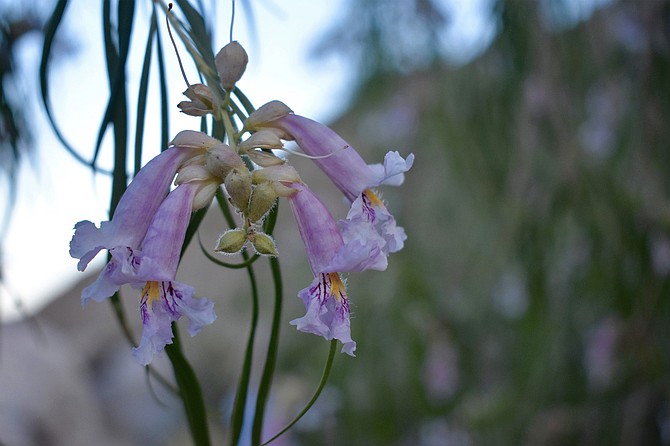
A Desert Willow blooms in Anza Borrego.
The Blooming Of Desert Annuals Is Over, but not that of the region's stolid desert willows and smoke trees. Rooted in the beds of dry washes throughout Anza-Borrego’s lower valleys, both plants gather enough energy this time of year to put on an impressive floral show. The graceful, drooping branches of the desert willow hold fragrant white blossoms, while the spindly smoke tree exhibits a myriad of blue-purple flowers. To avoid the intense midday heat, confine your desert explorations to early morning or early evening. And watch out for bees — they’re attracted to the blossoms, too.
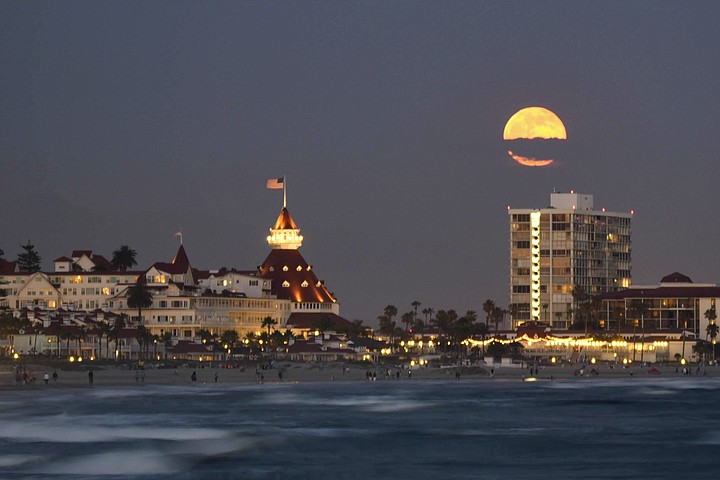
A strawberry full moon over the Hotel Del Coronado in 2016.
June's Full Moon Occurs Wednesday, the 11th. Watch as it arcs upward into the darkening eastern sky, starting some 15 minutes after the time of sunset. June's full moon has been called the "Rose Moon," "Strawberry Moon," or "Honey Moon" because of its tinted color. When seen from a northern latitude such as our own, the June full moon traces a low-lying nightly path across the sky, very similar to the sun's daytime, low-lying path at the winter solstice. At such low positions, the Moon's light tends to be filtered and reddened by its passage through the atmosphere, producing the appearance of a warm, slightly yellow color.
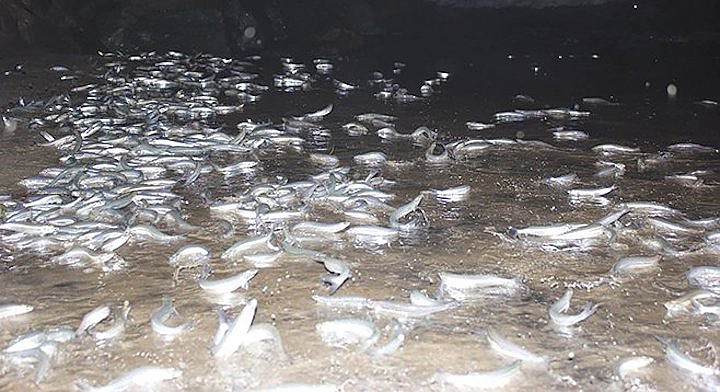
Grunion tend to spawn on wide, gently sloping beaches such as Silver Strand, Mission Beach, Pacific Beach, La Jolla Shores, and Del Mar.
Grunion Runs Are Predicted To Occur during the late evening hours (generally after 10 pm and before 1 am), following the nocturnal high tide Wednesday through Saturday, June 11-14. The small, silvery fish tend to spawn on wide, gently sloping beaches such as Silver Strand, Mission Beach, Pacific Beach, La Jolla Shores, and Del Mar. Open season for grunion typically starts in June, but doesn't begin until July this year, and from then until the end of August the fish can be collected in reasonable numbers using the hands only. Until then, only observation is allowed. For more information, visit wildlife.ca.gov
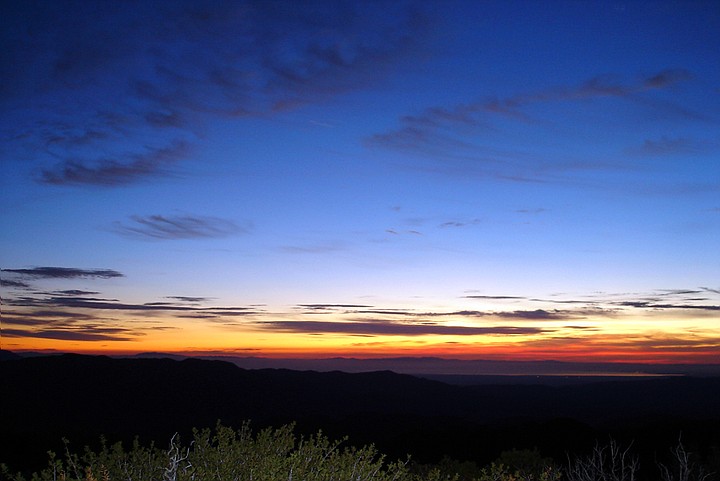
Pre-sunrise early Morning -in-Laguna-Mountains "Chartier"
The Earliest Sunrise Of The Year, reckoned in Daylight Saving Time, occurs Saturday, June 14, at 5:40 am. This event occurs about a week before the longest day of the year — the summer solstice — because of factors related to the shape of the Earth’s orbit and the angle between Earth’s axis and the plane of its revolution around the sun.
Here's something you might be interested in.
Desert willows and smoke trees continue to bloom
Strawberry Moon on Wednesday

Desert willows and smoke trees continue to bloom
Strawberry Moon on Wednesday
A Desert Willow blooms in Anza Borrego.
The Blooming Of Desert Annuals Is Over, but not that of the region's stolid desert willows and smoke trees. Rooted in the beds of dry washes throughout Anza-Borrego’s lower valleys, both plants gather enough energy this time of year to put on an impressive floral show. The graceful, drooping branches of the desert willow hold fragrant white blossoms, while the spindly smoke tree exhibits a myriad of blue-purple flowers. To avoid the intense midday heat, confine your desert explorations to early morning or early evening. And watch out for bees — they’re attracted to the blossoms, too.
A strawberry full moon over the Hotel Del Coronado in 2016.
June's Full Moon Occurs Wednesday, the 11th. Watch as it arcs upward into the darkening eastern sky, starting some 15 minutes after the time of sunset. June's full moon has been called the "Rose Moon," "Strawberry Moon," or "Honey Moon" because of its tinted color. When seen from a northern latitude such as our own, the June full moon traces a low-lying nightly path across the sky, very similar to the sun's daytime, low-lying path at the winter solstice. At such low positions, the Moon's light tends to be filtered and reddened by its passage through the atmosphere, producing the appearance of a warm, slightly yellow color.
Grunion tend to spawn on wide, gently sloping beaches such as Silver Strand, Mission Beach, Pacific Beach, La Jolla Shores, and Del Mar.
Grunion Runs Are Predicted To Occur during the late evening hours (generally after 10 pm and before 1 am), following the nocturnal high tide Wednesday through Saturday, June 11-14. The small, silvery fish tend to spawn on wide, gently sloping beaches such as Silver Strand, Mission Beach, Pacific Beach, La Jolla Shores, and Del Mar. Open season for grunion typically starts in June, but doesn't begin until July this year, and from then until the end of August the fish can be collected in reasonable numbers using the hands only. Until then, only observation is allowed. For more information, visit wildlife.ca.gov
Pre-sunrise early Morning -in-Laguna-Mountains "Chartier"
The Earliest Sunrise Of The Year, reckoned in Daylight Saving Time, occurs Saturday, June 14, at 5:40 am. This event occurs about a week before the longest day of the year — the summer solstice — because of factors related to the shape of the Earth’s orbit and the angle between Earth’s axis and the plane of its revolution around the sun.
Comments