

Here's something you might be interested in.
Ask a Hipster — Advice you didn't know you needed
Big Screen — Movie commentary
Blurt — Music's inside track
Booze News — San Diego spirits
Classical Music — Immortal beauty
Classifieds — Free and easy
Close to Home — What it’s like on the street where you live
Cover Stories — Front-page features
Drinks All Around — Bartenders' drink recipes
Excerpts — Literary and spiritual excerpts
Feast! — Food & drink reviews
Feature Stories — Local news & stories
Fishing Report — What’s getting hooked from ship and shore
From the Archives — Spotlight on the past
Golden Dreams — Talk of the town
The Gonzo Report — Making the musical scene, or at least reporting from it
Letters — Our inbox
Movies@Home — Local movie buffs share favorites
Movie Reviews — Our critics' picks and pans
Musician Interviews — Up close with local artists
Neighborhood News from Stringers — Hyperlocal news
News Ticker — News & politics
Obermeyer — San Diego politics illustrated
Outdoors — Weekly changes in flora and fauna
Overheard in San Diego — Eavesdropping illustrated
Poetry — The old and the new
Reader Travel — Travel section built by travelers
Reading — The hunt for intellectuals
Roam-O-Rama — SoCal's best hiking/biking trails
San Diego Beer — Inside San Diego suds
SD on the QT — Almost factual news
Sheep and Goats — Places of worship
Special Issues — The best of
Street Style — San Diego streets have style
Surf Diego — Real stories from those braving the waves
Theater — On stage in San Diego this week
Tin Fork — Silver spoon alternative
Under the Radar — Matt Potter's undercover work
Unforgettable — Long-ago San Diego
Unreal Estate — San Diego's priciest pads
Your Week — Daily event picks
Girls in the Grill at Santaluz?
Not yet, but some members are agitating for all-gender access
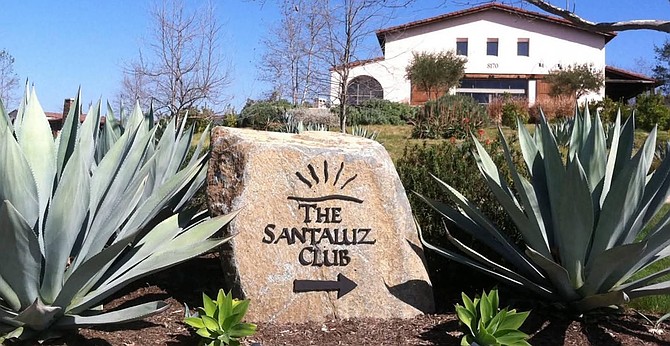
Some members of the exclusive Santaluz Club in North San Diego County are speaking out against the Men’s Grill, the club’s longstanding men’s-only bar and restaurant.
“Our goal is to end that policy and ensure all members regardless of gender can enjoy the amenities they help fund,” a member identified as John wrote in an email, arguing that the grill should be brought into alignment with modern values like equal access. John said that some members are reluctant to use their full names publicly, “due to fears of retaliation under strict club policies, including possible expulsion."
The informal group’s main mode of communication is via a website “run by a large group of engaged members who prefer to stay behind the curtain,” according to team member Josh. It’s intended to facilitate communication and dialogue among club members and, he hopes, serve as a bridge to the board — with which the group frequently butts heads.
“The fact that in 2025 women are still restricted from a dining area at a country club because of their gender feels like a relic from another era,” wrote John. But while it may feel seem that way, especially in a progressive state like California, the Santaluz Club — which opened in 2003 and is centered around a 300-acre golf course — is not an anomaly. Its sex-restricted Men’s Grill is a feature common to many golf and country clubs across the country.
A Santaluz Club representative said the club is committed to its “tradition of honoring member preferences.” But what is the true preference of their members on this hot-button issue? To find out, resistance members used their website to poll members on whether the club ought to give women members access to the coveted grill and so end the “current gender-based discrimination.” Of the club’s 1200 members, 616 cast votes; of those, 76 percent were in favor of modernizing the policy, while just under a quarter of respondents opted for the status quo. In an email message, John wrote that “support for change has been overwhelming” and emphasized the poll’s credibility, which he said was designed with multiple safeguards, including a one-vote-per-IP-address limit.
The club’s management didn’t have much to say about the issue, only this from PR rep Azucena Moreno: “Our Club offers a variety of spaces designed to provide choice, comfort, and community - including a women’s fireplace lounge, a men’s locker room grill, and a main dining room and Tavern open to all.”
Club members in support of the gender restriction have also chimed in on the group’s website. One, known on the message board as Richard Cranium, argued that “having a men’s-only area where women and unaccompanied children are not allowed is not restrictive” and further, that those members opposing the policy joined the club in spite of it. "It’s a men’s-only area so there isn’t concern about smoking cigars, poker, and jokes that women would find offensive and not appropriate for children. It was never intended to be a family area.” Jeff Shugarman said the Men’s Grill is simply too small an area to accommodate the demand from both men and women. If they were to open it up, he wrote, “my guess is, you will end up with both men and women being unhappy.”
But Beth Gilas questioned the concept of tradition bandied about by the keep-them-out faction. “Lots of things were different when members joined the club up to 20 years ago too – but that doesn’t in any way logically support why something is still appropriate to continue today.” And Robert asked, “What’s next on the discrimination list? It’s starting to feel more like a cult than a club.”
Legal and ethical questions
Is the Men’s Grill policy in compliance with the law? “Many members have voiced frustration” over these “outdated restrictions,” John wrote, “and even question their legality, especially since the club regularly hosts public events like golf tournaments, tennis matches, and weddings.”
The argument here is that excluding women violates the state’s Unruh Civil Rights Act, which prohibits business establishments from discrimination. Country clubs are not regular businesses — the courts have ruled they’re private associations that aren’t open to the general public, and as such, have the right to free assembly. A civil rights attorney I spoke to explained it this way: “Generally, in choosing members, private clubs are exempt from laws that forbid discrimination. Just as an individual can decide whom to invite into his or her own home as a guest, no matter how silly or unfair the criteria, private clubs can decide whom to admit and whom not to admit. The catch is that the 'private club' needs to really be a private club to be exempt from any otherwise applicable nondiscrimination laws.” And, argue John and his allies, by opening its facilities for non-member events like weddings, golf tournaments, and tennis matches, Santaluz Club has essentially surrendered its private club status. “The board needs to acknowledge that this isn’t just a matter of tradition — it’s likely a legal issue,” said John.
"Likely" is doing a lot of lifting there, which may be why some lawyers have argued that in the case of private associations, imposing pressure can create change faster than lawsuits. One member agrees: “A fair, inclusive process led by the membership” is what’s needed to bring Santaluz policies “into line with modern values and the law.” But management seems to disagree. “We’re aware that club management is already spending money trying to shut down this platform,” John said of TheSantaluz.com. “Instead of fighting us — their own members — leadership could choose to collaborate, listen, and adapt. That would be a far more productive (and fiscally responsible) path forward.”
But if that doesn’t happen, what then? Does the injustice rise to the level of, say, leaving the club? “Some members have said they’re thinking about selling their memberships because of it,” one member told me. “Others are sticking around and hoping for change.” For now, let the process play itself out, they say. “The conversation is ongoing, and people are watching closely.”
Board elections will be held later this month, carrying with them the hope that new members sympathetic to inclusivists' cause will be voted in. For its part, Santaluz Club management is keeping it positive, touting in an email its commitment “to fostering a welcoming, inclusive, and respectful environment.”
Here's something you might be interested in.
Girls in the Grill at Santaluz?
Not yet, but some members are agitating for all-gender access

Girls in the Grill at Santaluz?
Not yet, but some members are agitating for all-gender access
Some members of the exclusive Santaluz Club in North San Diego County are speaking out against the Men’s Grill, the club’s longstanding men’s-only bar and restaurant.
“Our goal is to end that policy and ensure all members regardless of gender can enjoy the amenities they help fund,” a member identified as John wrote in an email, arguing that the grill should be brought into alignment with modern values like equal access. John said that some members are reluctant to use their full names publicly, “due to fears of retaliation under strict club policies, including possible expulsion."
The informal group’s main mode of communication is via a website “run by a large group of engaged members who prefer to stay behind the curtain,” according to team member Josh. It’s intended to facilitate communication and dialogue among club members and, he hopes, serve as a bridge to the board — with which the group frequently butts heads.
“The fact that in 2025 women are still restricted from a dining area at a country club because of their gender feels like a relic from another era,” wrote John. But while it may feel seem that way, especially in a progressive state like California, the Santaluz Club — which opened in 2003 and is centered around a 300-acre golf course — is not an anomaly. Its sex-restricted Men’s Grill is a feature common to many golf and country clubs across the country.
A Santaluz Club representative said the club is committed to its “tradition of honoring member preferences.” But what is the true preference of their members on this hot-button issue? To find out, resistance members used their website to poll members on whether the club ought to give women members access to the coveted grill and so end the “current gender-based discrimination.” Of the club’s 1200 members, 616 cast votes; of those, 76 percent were in favor of modernizing the policy, while just under a quarter of respondents opted for the status quo. In an email message, John wrote that “support for change has been overwhelming” and emphasized the poll’s credibility, which he said was designed with multiple safeguards, including a one-vote-per-IP-address limit.
The club’s management didn’t have much to say about the issue, only this from PR rep Azucena Moreno: “Our Club offers a variety of spaces designed to provide choice, comfort, and community - including a women’s fireplace lounge, a men’s locker room grill, and a main dining room and Tavern open to all.”
Club members in support of the gender restriction have also chimed in on the group’s website. One, known on the message board as Richard Cranium, argued that “having a men’s-only area where women and unaccompanied children are not allowed is not restrictive” and further, that those members opposing the policy joined the club in spite of it. "It’s a men’s-only area so there isn’t concern about smoking cigars, poker, and jokes that women would find offensive and not appropriate for children. It was never intended to be a family area.” Jeff Shugarman said the Men’s Grill is simply too small an area to accommodate the demand from both men and women. If they were to open it up, he wrote, “my guess is, you will end up with both men and women being unhappy.”
But Beth Gilas questioned the concept of tradition bandied about by the keep-them-out faction. “Lots of things were different when members joined the club up to 20 years ago too – but that doesn’t in any way logically support why something is still appropriate to continue today.” And Robert asked, “What’s next on the discrimination list? It’s starting to feel more like a cult than a club.”
Legal and ethical questions
Is the Men’s Grill policy in compliance with the law? “Many members have voiced frustration” over these “outdated restrictions,” John wrote, “and even question their legality, especially since the club regularly hosts public events like golf tournaments, tennis matches, and weddings.”
The argument here is that excluding women violates the state’s Unruh Civil Rights Act, which prohibits business establishments from discrimination. Country clubs are not regular businesses — the courts have ruled they’re private associations that aren’t open to the general public, and as such, have the right to free assembly. A civil rights attorney I spoke to explained it this way: “Generally, in choosing members, private clubs are exempt from laws that forbid discrimination. Just as an individual can decide whom to invite into his or her own home as a guest, no matter how silly or unfair the criteria, private clubs can decide whom to admit and whom not to admit. The catch is that the 'private club' needs to really be a private club to be exempt from any otherwise applicable nondiscrimination laws.” And, argue John and his allies, by opening its facilities for non-member events like weddings, golf tournaments, and tennis matches, Santaluz Club has essentially surrendered its private club status. “The board needs to acknowledge that this isn’t just a matter of tradition — it’s likely a legal issue,” said John.
"Likely" is doing a lot of lifting there, which may be why some lawyers have argued that in the case of private associations, imposing pressure can create change faster than lawsuits. One member agrees: “A fair, inclusive process led by the membership” is what’s needed to bring Santaluz policies “into line with modern values and the law.” But management seems to disagree. “We’re aware that club management is already spending money trying to shut down this platform,” John said of TheSantaluz.com. “Instead of fighting us — their own members — leadership could choose to collaborate, listen, and adapt. That would be a far more productive (and fiscally responsible) path forward.”
But if that doesn’t happen, what then? Does the injustice rise to the level of, say, leaving the club? “Some members have said they’re thinking about selling their memberships because of it,” one member told me. “Others are sticking around and hoping for change.” For now, let the process play itself out, they say. “The conversation is ongoing, and people are watching closely.”
Board elections will be held later this month, carrying with them the hope that new members sympathetic to inclusivists' cause will be voted in. For its part, Santaluz Club management is keeping it positive, touting in an email its commitment “to fostering a welcoming, inclusive, and respectful environment.”
Comments